
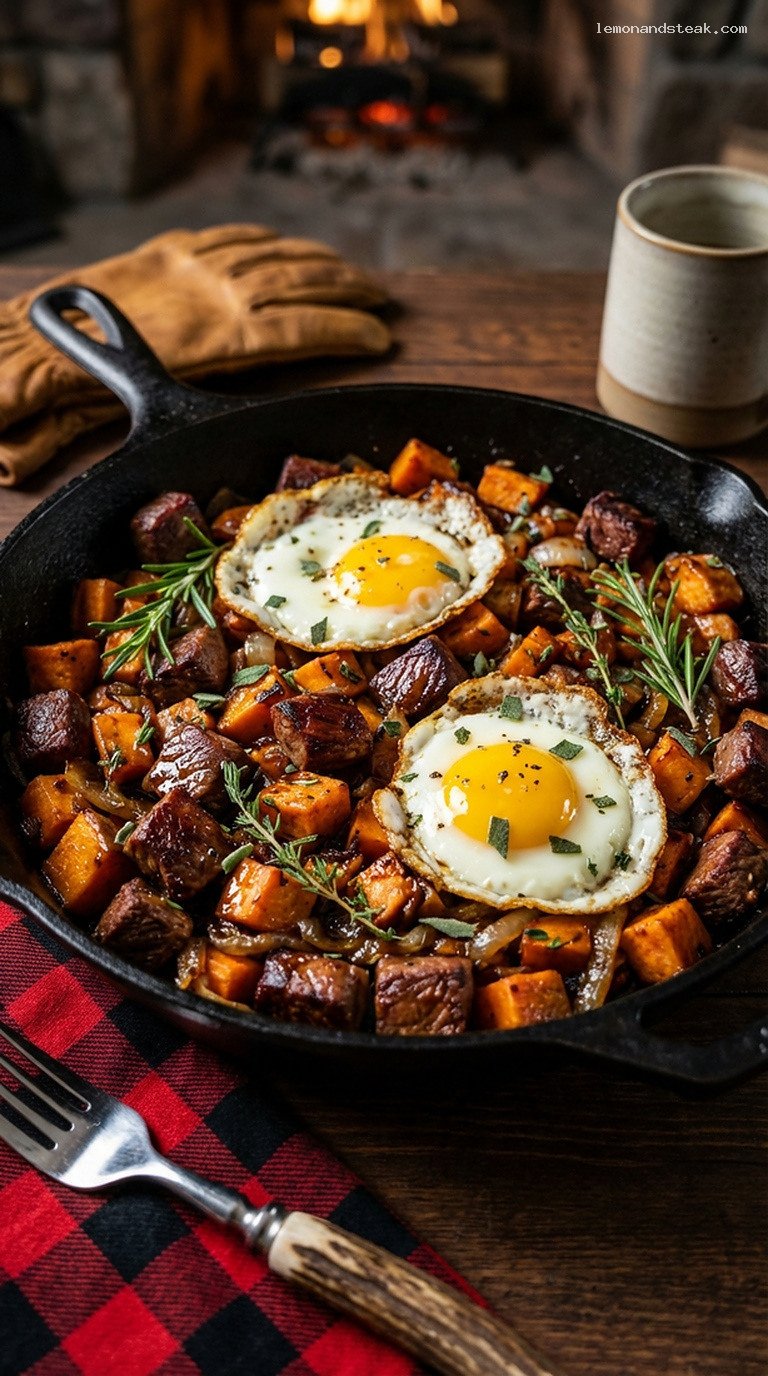
Quick Recipe Version (TL;DR)
Quick Ingredients
- 1 1/4 lb (570 g) venison steak or backstrap, 1/2-inch cubes
- 1 1/2 lb (680 g) sweet potatoes, peeled, 1/2-inch cubes
- 1 large yellow onion, diced
- 2 cloves garlic, minced
- 2 tbsp olive oil, divided
- 2 tbsp unsalted butter, divided
- 2 tbsp birch syrup or pure maple syrup
- 1 tbsp fresh rosemary, minced
- 1 tbsp fresh thyme leaves
- 4 fresh sage leaves, chopped (or 1/2 tsp dried)
- 1/4 tsp smoked paprika
- 1/8 tsp ground allspice or cinnamon (optional)
- 1/4 cup (60 ml) beef or venison broth (or water)
- 1 1/2–2 tsp kosher salt, divided
- 1 tsp freshly ground black pepper, divided
- 4 large eggs (optional, for serving)
- 2 green onions, thinly sliced, or 2 tbsp chopped parsley
Do This
- 1. Preheat oven to 400°F (200°C). Dice venison, sweet potatoes, and onion. Season venison with 1/2 tsp salt, 1/4 tsp pepper, and half the rosemary and thyme.
- 2. Heat 1 tbsp oil in a large oven-safe skillet over medium-high. Sear venison in a single layer, 2–3 minutes per side, in 2 batches. Remove to a plate (it should still be rare inside).
- 3. Lower heat to medium. Add remaining 1 tbsp oil and 1 tbsp butter, then onion and a pinch of salt. Cook 3–4 minutes. Add sweet potatoes, remaining salt and pepper, remaining herbs, smoked paprika, and allspice; cook 8–10 minutes, stirring often. Stir in garlic for the last 1–2 minutes.
- 4. Deglaze with broth, scraping brown bits. Drizzle in birch or maple syrup and toss to coat. Spread hash in an even layer, nestle venison and its juices on top.
- 5. Transfer skillet to oven. Roast 10–12 minutes, until sweet potatoes are tender and venison is medium-rare to medium (130–140°F / 54–60°C).
- 6. While hash rests 5 minutes, optionally fry 4 eggs in 1 tbsp butter. Top each serving with an egg and sprinkle green onions or parsley. Serve hot.
Why You’ll Love This Recipe
- It captures deep, woodsy flavors: earthy venison, sweet potatoes, and forest herbs with a whisper of birch or maple.
- Everything cooks in one skillet for easy cleanup, but the result feels like something from a cozy mountain lodge.
- The sweet-salty balance and crispy-tender textures make it satisfying enough for brunch, dinner, or a hearty weekend breakfast.
- It is flexible: swap syrups, adjust herbs, or add eggs on top to suit how rustic or rich you want it.
Grocery List
- Produce: Sweet potatoes, yellow onion, garlic, fresh rosemary, fresh thyme, fresh sage (optional but recommended), green onions or parsley, optional lemon (or apple cider vinegar).
- Dairy: Unsalted butter, large eggs (if serving on top).
- Pantry: Venison steak or backstrap, olive oil (or other cooking oil), birch syrup or pure maple syrup, beef or venison broth (or stock cube), kosher salt, black pepper, smoked paprika, ground allspice or cinnamon (optional).
Full Ingredients
For the Venison and Sweet Potato Hearth Hash
- 1 1/4 lb (570 g) venison steak or backstrap, trimmed and cut into 1/2-inch (1.25 cm) cubes
- 1 1/2 lb (680 g) sweet potatoes, peeled and cut into 1/2-inch (1.25 cm) cubes (about 2 medium sweet potatoes)
- 1 large yellow onion, diced (about 1 1/2 cups)
- 2 cloves garlic, minced
- 2 tbsp olive oil or other neutral cooking oil, divided
- 2 tbsp unsalted butter, divided (plus more to taste for finishing)
- 2 tbsp birch syrup or 2 tbsp pure maple syrup
- 1 tbsp fresh rosemary, finely minced (or 1 tsp dried rosemary)
- 1 tbsp fresh thyme leaves (or 1 tsp dried thyme)
- 4 fresh sage leaves, finely chopped (or 1/2 tsp dried sage; optional but very woodsy)
- 1/4 tsp smoked paprika
- 1/8 tsp ground allspice or cinnamon (optional, for a subtle warm note)
- 1/4 cup (60 ml) low-sodium beef or venison broth, or water
- 1 1/2–2 tsp kosher salt, divided (start with 1 1/2 tsp and adjust to taste)
- 1 tsp freshly ground black pepper, divided
- 1 tbsp apple cider vinegar or 2 tsp fresh lemon juice (optional, for brightness)
For Serving
- 4 large eggs (optional, 1 per serving)
- 1 tbsp butter or oil (for frying eggs, if using)
- 2 green onions, thinly sliced, or 2 tbsp chopped fresh parsley, for garnish
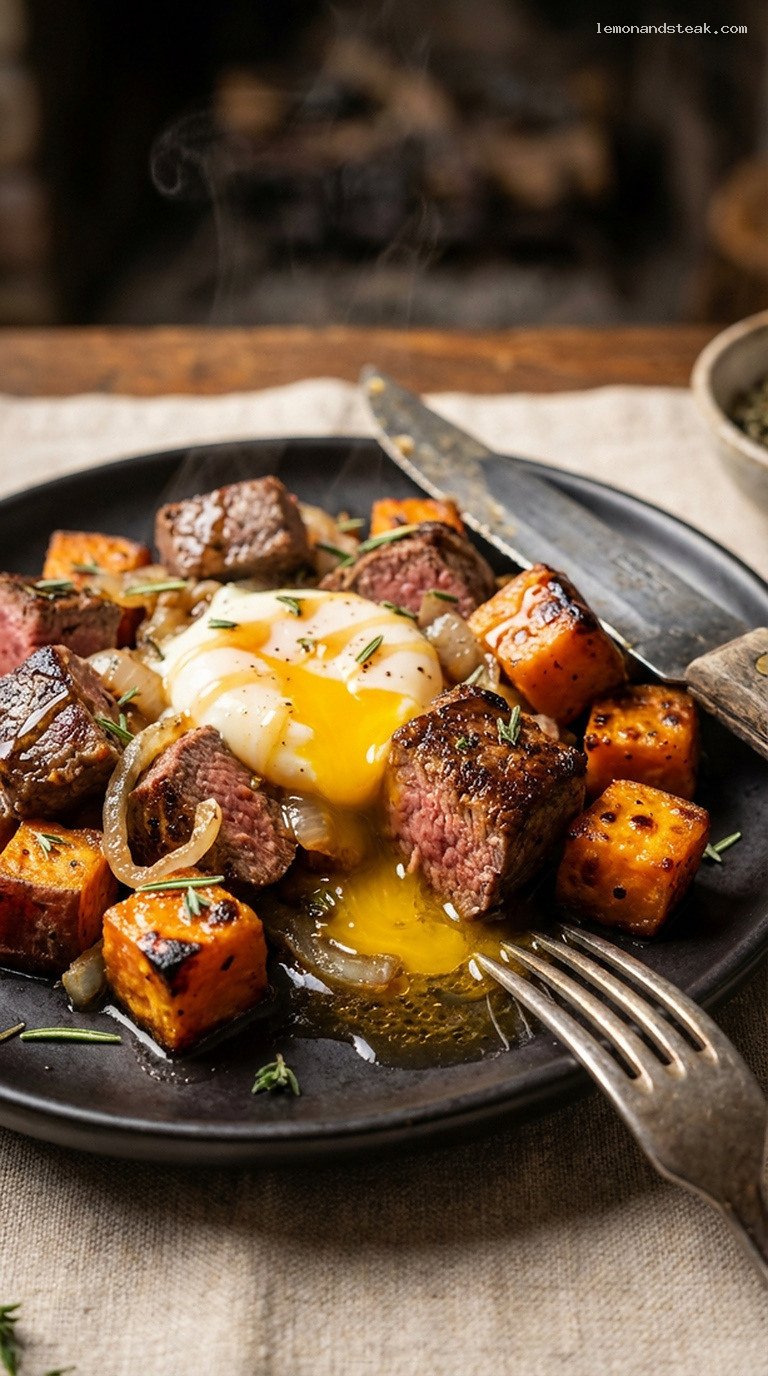
Step-by-Step Instructions
Step 1: Preheat the oven and prep the ingredients
Preheat your oven to 400°F (200°C). Place a large, heavy, oven-safe skillet (ideally a 10–12 inch cast iron pan) on the stovetop over medium-high heat so it can start heating while you prep.
Pat the venison cubes dry with paper towels. This helps them brown instead of steam. In a bowl, toss the venison with 1/2 tsp salt, 1/4 tsp black pepper, and about half of the minced rosemary and thyme. Set aside.
Peel and cube the sweet potatoes into even 1/2-inch pieces so they cook at the same rate. Dice the onion and mince the garlic. Chop the sage and any additional herbs you are using. Have the broth and syrup measured and ready; things move quickly once the pan is hot.
Step 2: Sear the venison
Add 1 tbsp olive oil to the hot skillet. When the oil is shimmering and just starting to smoke, swirl to coat the pan. Add half the venison cubes in a single layer, leaving space between pieces so they can sear. Do not stir for the first 2 minutes; let a crust form.
Sear for about 2–3 minutes per side, turning once, until nicely browned on the outside but still rare inside (about 120–125°F / 49–52°C internally, if you check with a thermometer). Transfer to a plate, then repeat with the remaining venison, adding a bit more oil if needed. Keep the plate of seared venison nearby; it will finish cooking later in the oven.
Do not wipe out the pan. All those browned bits stuck to the bottom will flavor the hash.
Step 3: Build the hash base with sweet potatoes and onions
Reduce the heat to medium. Add the remaining 1 tbsp olive oil and 1 tbsp butter to the skillet. Once the butter has melted and foamed, add the diced onion and a pinch of salt. Sauté, stirring occasionally, for 3–4 minutes until the onion is softened and starting to turn golden at the edges.
Add the cubed sweet potatoes, the remaining salt and pepper (about 1 tsp salt and 3/4 tsp pepper, depending on how much you used earlier), the remaining rosemary and thyme, the chopped sage, the 1/4 tsp smoked paprika, and the 1/8 tsp allspice or cinnamon if using. Toss everything together so the sweet potatoes are coated in the fat and seasonings.
Cook, stirring every minute or so, for 8–10 minutes. You want the sweet potatoes to start browning and developing some crispy edges while still remaining slightly firm in the center. If the pan looks very dry or anything starts to scorch, lower the heat slightly and add a small splash of broth.
In the last 1–2 minutes of this step, stir in the minced garlic and cook just until fragrant. Do not let the garlic burn.
Step 4: Add birch or maple sweetness and deglaze
Pour in the 1/4 cup (60 ml) broth and use a wooden spoon to scrape up any browned bits from the bottom of the pan. This step pulls all that flavor into the hash and prevents scorching in the oven.
Drizzle the 2 tbsp birch syrup or maple syrup evenly over the sweet potatoes and onions. Toss well so everything gets a light, glossy coating. The goal is not to make it sticky-sweet, but to add a gentle forest sweetness that highlights the venison.
Spread the sweet potato mixture into an even layer in the skillet. Nestle the seared venison cubes and any juices from the plate back into the pan, tucking them down among the vegetables but still leaving some pieces visible on top so they can brown in the oven.
Step 5: Roast until tender and woodsy
Transfer the skillet to the preheated 400°F (200°C) oven. Roast for 10–12 minutes, stirring once halfway through if you like more even browning. The sweet potatoes should be fully tender when pierced with a fork, and the venison should be medium-rare to medium (about 130–140°F / 54–60°C internally).
If you prefer a bit more crisp on top, you can switch the oven to broil for the last 1–2 minutes, watching closely so nothing burns.
Step 6: Finish with herbs and optional brightness
Carefully remove the skillet from the oven (the handle will be very hot) and place it on a heatproof surface. Dot the top with the remaining 1 tbsp butter, if desired, and let it melt into the hash. Taste and adjust seasoning with additional salt and pepper if needed.
If you enjoy a hint of acidity to balance sweet and rich flavors, sprinkle over the 1 tbsp apple cider vinegar or 2 tsp lemon juice and gently toss once or twice. This lifts the flavors without making the dish sour.
Let the hash rest for about 5 minutes while you prepare the eggs (if using). During this time, sprinkle the top with sliced green onions or chopped parsley for freshness and color.
Step 7: Fry the eggs (optional but highly recommended)
While the hash rests, heat a small nonstick or well-seasoned skillet over medium heat. Add 1 tbsp butter or oil. When hot, crack in the 4 eggs. For sunny-side-up eggs, cook without flipping for about 3–4 minutes, until the whites are set but the yolks are still runny. For over-easy or over-medium, gently flip and cook an additional 30–60 seconds.
Season the eggs lightly with salt and pepper. Turn off the heat and keep warm until ready to serve.
Step 8: Plate and serve your hearth hash
Spoon generous portions of the venison and sweet potato hash onto warm plates or shallow bowls. Top each serving with a fried egg, if using, and an extra sprinkle of green onions or parsley.
Serve immediately, ideally with crusty bread, a side of bitter greens, or simply on its own as a hearty, one-pan meal that feels like it came straight from a cabin hearth.
Pro Tips
- Do not overcook the venison. Venison is very lean and can dry out quickly. Sear it hard and fast, then let it finish gently in the oven. Aim for medium-rare to medium for the best texture.
- Keep your dice even. Try to cut venison and sweet potatoes into uniform 1/2-inch cubes so everything cooks at the same pace and you get a balanced bite every time.
- Choose your syrup thoughtfully. Birch syrup is woodsy, slightly bitter, and more complex; maple is sweeter and more familiar. If using maple, you can reduce the amount slightly if you prefer a less sweet hash.
- Use cast iron if you can. A heavy skillet holds heat well, gives a great sear on the venison, and encourages those crisp, caramelized bits on the sweet potatoes.
- Let the pan do the work. Avoid constant stirring. Giving the sweet potatoes some undisturbed time in contact with the pan is what creates that coveted browned, crusty edge.
Variations
- Smoky bacon campfire version: Before searing the venison, chop and cook 4 slices of thick-cut bacon in the skillet until crisp. Remove the bacon and use the rendered fat in place of some or all of the butter and oil. Crumble the bacon over the finished hash. Reduce added salt to account for the bacon.
- Root cellar medley: Replace up to half of the sweet potatoes with diced parsnips, carrots, or rutabaga for an even earthier, “deep woods” flavor. Keep the dice the same size and adjust cook time by a few minutes if needed.
- Beef or pork stand-in: If you do not have venison, you can substitute beef sirloin, elk, or pork tenderloin, cut into the same 1/2-inch cubes. Cook the same way; just be mindful of doneness preferences for each meat.
Storage & Make-Ahead
Let the hash cool to room temperature, then transfer it to an airtight container. Refrigerate for up to 3–4 days. Reheat in a skillet over medium heat with a little oil or butter, pressing the hash down slightly to re-crisp the edges, for about 5–7 minutes, stirring occasionally. You can also reheat it in a 350°F (175°C) oven for 10–15 minutes.
For longer storage, you can freeze the hash (without eggs) for up to 2–3 months. Thaw overnight in the refrigerator before reheating. Fried eggs are best cooked fresh, but you can poach or soft-boil eggs ahead and warm them gently in hot water just before serving.
Nutrition (per serving)
Approximate values for 1 of 4 servings, without egg (values will vary with exact ingredients and syrups used): about 420 calories, 37 g protein, 17 g fat, 33 g carbohydrates, 9 g fiber, 10 g sugars, and 720 mg sodium. Adding a fried egg increases the calories by about 70–90 and adds roughly 6 g protein and 5–7 g fat.
Leave a Reply