
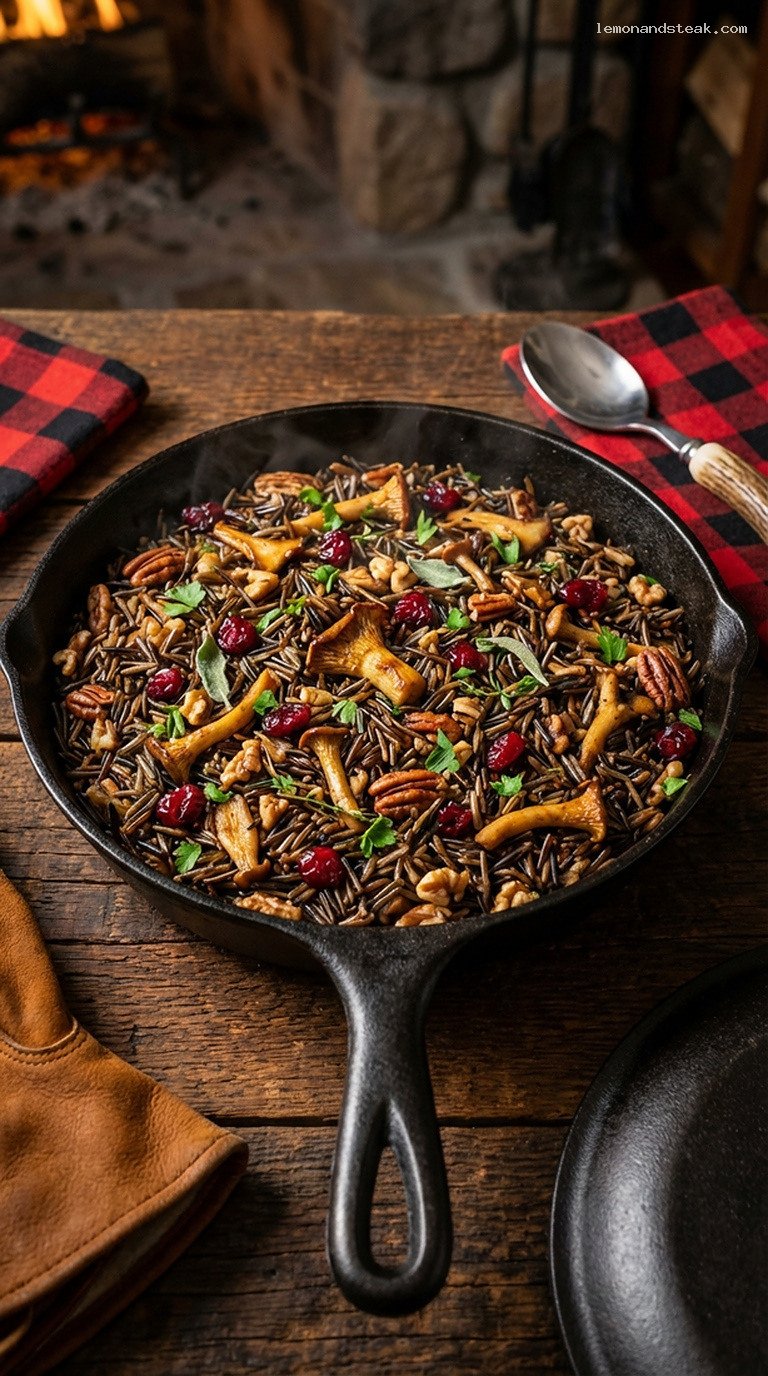
Quick Recipe Version (TL;DR)
Quick Ingredients
- 1 1/2 cups wild rice or wild rice blend, rinsed
- 4 1/2 cups low-sodium vegetable or chicken broth
- 2 tbsp olive oil
- 2 tbsp unsalted butter
- 1 lb mixed mushrooms (cremini, shiitake, oyster), sliced
- 1 medium yellow onion, finely chopped
- 3 garlic cloves, minced
- 2 tsp fresh sage, finely chopped (or 1/2 tsp dried)
- 1 tsp fresh thyme leaves (or 1/2 tsp dried)
- 1 bay leaf
- 1/2 cup dried cranberries
- 1/2 cup chopped toasted pecans or walnuts (optional)
- 1/4 cup chopped fresh parsley
- 3/4 tsp kosher salt, plus more to taste
- 1/2 tsp freshly ground black pepper
- 1 tbsp lemon juice (optional, for brightness)
Do This
- 1. Rinse wild rice under cold water and drain well. Prep mushrooms, onion, garlic, and herbs.
- 2. In a large heavy pot, heat olive oil and butter over medium-high. Add mushrooms and cook until deeply browned, about 8–10 minutes.
- 3. Add onion and cook until soft and lightly golden, then stir in garlic, sage, and thyme for 1 minute.
- 4. Stir in the rinsed wild rice, salt, and pepper; toast rice for 2 minutes, stirring.
- 5. Pour in broth and add the bay leaf. Bring to a boil, reduce to low, cover, and simmer 40–45 minutes until rice is tender and liquid is absorbed.
- 6. Turn off heat, quickly fold in dried cranberries and nuts. Cover and rest 5–10 minutes to steam and plump cranberries.
- 7. Fluff with a fork, stir in parsley and lemon juice, taste and adjust seasoning, then serve warm.
Why You’ll Love This Recipe
- Deep, woodsy flavor from caramelized mushrooms, wild rice, sage, and thyme.
- Perfect balance of savory, nutty, and gently sweet from dried cranberries.
- Impressive enough for holidays, simple enough for a cozy weeknight.
- Flexible: easily made vegetarian, dairy-free, or nut-free.
Grocery List
- Produce: Mixed mushrooms, yellow onion, garlic, fresh sage (or dried), fresh thyme (or dried), fresh parsley, lemon (optional).
- Dairy: Unsalted butter (or plant-based butter, optional).
- Pantry: Wild rice or wild rice blend, low-sodium vegetable or chicken broth, olive oil, dried cranberries, pecans or walnuts (optional), bay leaf, kosher salt, black pepper.
Full Ingredients
Pilaf Base
- 1 1/2 cups uncooked wild rice or wild rice blend, well rinsed and drained
- 4 1/2 cups low-sodium vegetable or chicken broth
- 1 bay leaf
- 3/4 teaspoon kosher salt, plus more to taste
- 1/2 teaspoon freshly ground black pepper
Mushrooms & Aromatics
- 2 tablespoons olive oil
- 2 tablespoons unsalted butter (or additional olive oil for dairy-free)
- 1 pound mixed mushrooms (such as cremini, shiitake, and oyster), cleaned and thickly sliced
- 1 medium yellow onion, finely chopped (about 1 cup)
- 3 garlic cloves, minced
- 2 teaspoons finely chopped fresh sage or 1/2 teaspoon dried rubbed sage
- 1 teaspoon fresh thyme leaves or 1/2 teaspoon dried thyme
- Optional: 1/4 cup dry white wine for deglazing
Finishing & Garnish
- 1/2 cup dried cranberries
- 1/2 cup chopped toasted pecans or walnuts (optional but recommended for a “timber” crunch)
- 1/4 cup chopped fresh parsley
- 1 tablespoon fresh lemon juice (optional, for brightness)

Step-by-Step Instructions
Step 1: Rinse the wild rice and prep the ingredients
Rinse the wild rice under cold running water in a fine-mesh strainer for about 30 seconds, using your fingers to swish the grains around. Drain well and set aside. This removes excess starch and any dust, helping the grains stay separate and fluffy.
While the rice drains, prep all your ingredients: slice the mushrooms, finely chop the onion and parsley, mince the garlic, and chop the sage and thyme if using fresh. Having everything ready before you start cooking makes the whole process relaxed and easy.
Step 2: Caramelize the mushrooms
Choose a large, heavy pot or Dutch oven with a tight-fitting lid (you will cook the whole pilaf in this one pot). Add the olive oil and butter to the pot and heat over medium-high until the butter is melted and foamy.
Add the sliced mushrooms in as close to a single layer as possible. Let them cook undisturbed for 3–4 minutes so they can start to brown. Then stir and continue cooking, stirring every couple of minutes, until they are deeply golden and caramelized and most of their moisture has evaporated, about 8–10 minutes total. A bit of browned fond on the bottom of the pot is good; it adds flavor.
Step 3: Soften the aromatics and bloom the herbs
Reduce the heat to medium. Add the chopped onion to the mushrooms along with a small pinch of salt. Cook, stirring occasionally, until the onion is soft, translucent, and lightly golden, about 5–7 minutes.
Stir in the minced garlic, chopped sage, and thyme. Cook just until fragrant, about 1 minute; do not let the garlic brown. If using white wine, pour it in now and scrape the bottom of the pot with a wooden spoon to loosen any browned bits, simmering for 1–2 minutes until most of the liquid has cooked off.
Step 4: Toast the wild rice with the mushroom mixture
Add the rinsed and drained wild rice to the pot. Sprinkle in the 3/4 teaspoon kosher salt and 1/2 teaspoon black pepper. Stir well so the rice is coated with the buttery, mushroomy mixture.
Cook, stirring frequently, for 2–3 minutes. Toasting the rice like this helps deepen its nutty flavor and keeps the grains pleasantly separate after cooking. Make sure nothing is scorching on the bottom; adjust the heat slightly if needed.
Step 5: Add broth and simmer until tender
Pour in the broth and add the bay leaf. Stir to combine, then increase the heat to high and bring the mixture up to a strong simmer.
Once simmering, reduce the heat to low, cover the pot with a tight-fitting lid, and let the pilaf cook gently for 40–45 minutes. Avoid lifting the lid too often, as this releases steam and can lengthen the cooking time. After about 40 minutes, quickly check: the rice should be tender with a pleasant chew, and most or all of the liquid should be absorbed. If it is not quite done and the pot seems dry, add a splash of hot water (2–4 tablespoons) and continue cooking, covered, for a few more minutes.
Step 6: Add cranberries and nuts to steam and plump
When the wild rice is tender and the liquid is absorbed, turn off the heat. Remove and discard the bay leaf. Immediately sprinkle the dried cranberries and chopped toasted nuts (if using) evenly over the top of the pilaf. Do not stir yet.
Cover the pot again and let it sit off the heat for 5–10 minutes. The residual steam will warm the cranberries and nuts, gently plumping the berries and softening the nuts without making them soggy.
Step 7: Fluff, finish, and serve
Uncover the pot and use a fork to gently fluff the pilaf, folding the cranberries and nuts through the rice and mushrooms. Stir in the chopped fresh parsley and lemon juice, if using. Taste and adjust the seasoning with a bit more salt or pepper as needed.
Spoon the mushroom–wild rice timber pilaf into a warm serving bowl or serve it straight from the pot for a rustic presentation. Garnish with a few extra parsley leaves or a tiny pinch of chopped sage on top. Serve hot or warm alongside roasted meats, poultry, or as a hearty vegetarian main with a green salad.
Pro Tips
- Use a mix of mushrooms. Combining cremini with shiitake or oyster mushrooms gives you a deeper, woodsy flavor and a more interesting texture than one type alone.
- Let the mushrooms really brown. Resist the urge to stir constantly. Let them sit in the hot pan so they caramelize; that browned edge is pure flavor.
- Keep the heat low for simmering. A gentle, steady simmer (not a rolling boil) helps the wild rice cook evenly without splitting or becoming mushy.
- Toast the nuts. If using pecans or walnuts, toast them in a dry skillet over medium heat for 4–5 minutes until fragrant for a richer, nuttier crunch.
- Adjust the texture with a splash of liquid. If the rice is still a bit firm when the pot looks dry, add a couple tablespoons of hot water or broth and cook a bit longer until it reaches your preferred doneness.
Variations
- Vegetarian or vegan: Use vegetable broth and swap the butter for additional olive oil or a plant-based butter. The pilaf will still be rich and satisfying.
- Apple and sage version: Add 1 small diced tart apple (such as Granny Smith) to the pot with the onion for a subtle sweet-tart note that pairs beautifully with sage and cranberries.
- Cheesy finish: For a more decadent side, gently fold in 1/2 cup finely grated Parmesan or aged Gouda just before serving for a creamy, savory layer of flavor.
Storage & Make-Ahead
This pilaf stores and reheats very well, making it a great make-ahead side. Let the cooked pilaf cool to room temperature, then transfer it to an airtight container. Refrigerate for up to 4 days. To reheat, add a splash of water or broth and warm gently on the stovetop over low heat, covered, stirring occasionally, until heated through. You can also reheat it in the microwave, covered, in 45–60 second bursts, fluffing between rounds. If you plan to make it ahead for a special meal, you can cook it fully the day before, then reheat and finish with a fresh sprinkle of parsley and an extra squeeze of lemon right before serving. The pilaf can also be frozen for up to 2 months; thaw overnight in the refrigerator and reheat as above.
Nutrition (per serving)
Approximate per serving (6 servings, including nuts): about 340 calories; 12–14 g fat; 48 g carbohydrates; 8–10 g protein; 5–6 g dietary fiber; 420 mg sodium. Values will vary based on the exact broth, nuts, and any optional ingredients you use.
Leave a Reply