
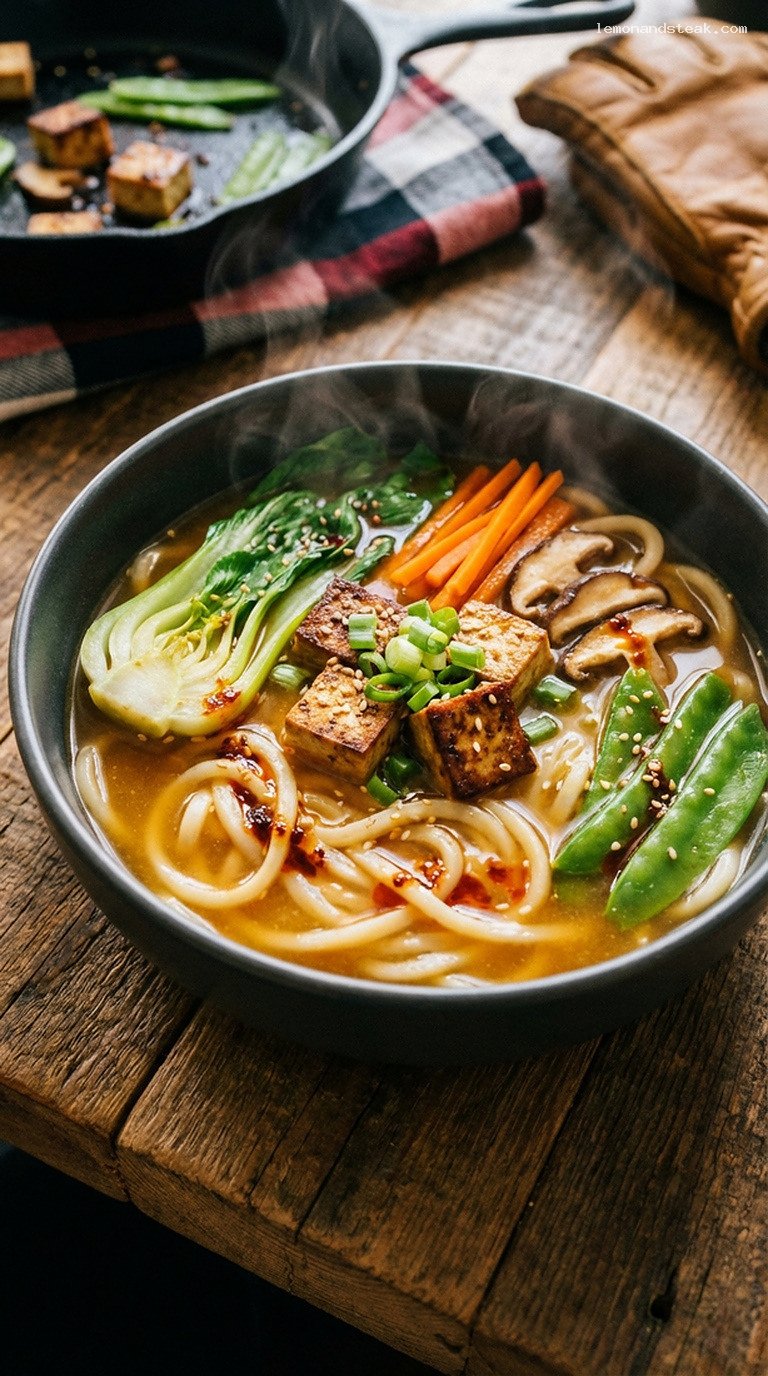
Quick Recipe Version (TL;DR)
Quick Ingredients
- 14 oz extra-firm tofu, pressed and cubed
- 8 oz dried ramen or udon noodles
- 6 cups low-sodium vegetable broth
- 3 tbsp white or yellow miso paste
- 1 1/2 tbsp low-sodium soy sauce or tamari
- 1 tbsp freshly grated ginger + 2 cloves garlic, minced
- 2 small carrots, julienned
- 1 cup sliced shiitake mushrooms
- 2 heads baby bok choy, quartered
- 1 cup snow peas or sugar snap peas
- 3 green onions, sliced (whites and greens separated)
- 1 tbsp rice vinegar + 1 tsp toasted sesame oil
- 2 tbsp neutral oil, divided (for tofu and aromatics)
- Salt, black pepper, red pepper flakes (optional), toasted sesame seeds, chili oil, lime wedges for serving
Do This
- 1. Press tofu for 10 minutes, then cut into 1/2-inch cubes. Prep and slice all vegetables and aromatics.
- 2. Heat 1 tbsp oil in a large pot over medium-high. Sear tofu with 1/4 tsp salt and pepper until golden on most sides, 8–10 minutes. Set aside.
- 3. In the same pot, add remaining 1 tbsp oil, white parts of green onions, ginger, and garlic. Sauté 1–2 minutes until fragrant.
- 4. Add broth, soy sauce, rice vinegar, sesame oil, and a pinch of red pepper flakes. Simmer gently for 10 minutes.
- 5. Meanwhile, cook noodles in a separate pot according to package directions (usually 4–6 minutes). Drain and rinse briefly.
- 6. Whisk miso with 1 cup hot broth in a bowl, then stir back into the pot (do not boil). Add carrots, mushrooms, bok choy, and peas; simmer 3–5 minutes until just tender.
- 7. Divide noodles into bowls. Ladle hot ginger miso broth and vegetables over, top with tofu, green onion tops, sesame seeds, chili oil, and lime. Serve immediately.
Why You’ll Love This Recipe
- Deep, savory miso and fresh ginger make a broth that tastes like it simmered all day, in under an hour.
- Customizable and forgiving: swap veggies, use your favorite noodles, and adjust spice and richness to taste.
- Cozy and nourishing for cold days, yet light enough to enjoy any time of year.
- Mostly pantry-friendly ingredients, with simple techniques that suit any home kitchen.
Grocery List
- Produce: Fresh ginger, garlic, 3 green onions, 2 small carrots, 2 heads baby bok choy, 1 cup shiitake mushrooms, 1 cup snow peas or sugar snap peas, 1–2 limes (for serving).
- Dairy: None required. Optional: eggs (for soft-boiled egg topping, if desired).
- Pantry: Extra-firm tofu, dried ramen or udon noodles, low-sodium vegetable broth, white or yellow miso paste, low-sodium soy sauce or tamari, rice vinegar, toasted sesame oil, neutral oil (such as avocado or canola), salt, black pepper, red pepper flakes, toasted sesame seeds, chili oil or chili crisp, nori strips (optional).
Full Ingredients
For the Ginger Miso Broth
- 6 cups low-sodium vegetable broth
- 3 tbsp white or yellow miso paste (do not boil once added)
- 1 1/2 tbsp low-sodium soy sauce or tamari
- 1 tbsp freshly grated ginger (about a 1-inch knob)
- 2 cloves garlic, minced
- 3 green onions, thinly sliced, white and green parts separated
- 1 tbsp rice vinegar
- 1 tsp toasted sesame oil
- 1 tsp maple syrup or honey (optional, for balance)
- 1/4–1/2 tsp red pepper flakes (optional, for heat)
- 1 tbsp neutral oil (such as avocado, canola, or grapeseed) for sautéing
For the Noodles and Vegetables
- 8 oz dried ramen or udon noodles (or soba, if preferred)
- 1 cup shiitake mushrooms, stems removed and caps sliced (about 3–4 oz)
- 2 small carrots, peeled and cut into thin matchsticks (about 1 cup)
- 2 small heads baby bok choy, quartered lengthwise
- 1 cup snow peas or sugar snap peas, trimmed
- Salt, to taste (you may not need much if broth is salty enough)
For the Tofu (Protein)
- 14 oz extra-firm tofu, drained and pressed for 10–15 minutes, cut into 1/2-inch cubes
- 1 tbsp neutral oil (such as avocado, canola, or grapeseed)
- 1/4 tsp fine sea salt
- 1/8 tsp freshly ground black pepper
For Serving (Toppings)
- Reserved green parts of the green onions, thinly sliced
- 1–2 tbsp toasted sesame seeds
- Chili oil or chili crisp, to taste
- Lime wedges, for squeezing over
- Nori sheets, cut into thin strips (optional)
- Soft-boiled eggs, halved (optional, 1 per bowl)
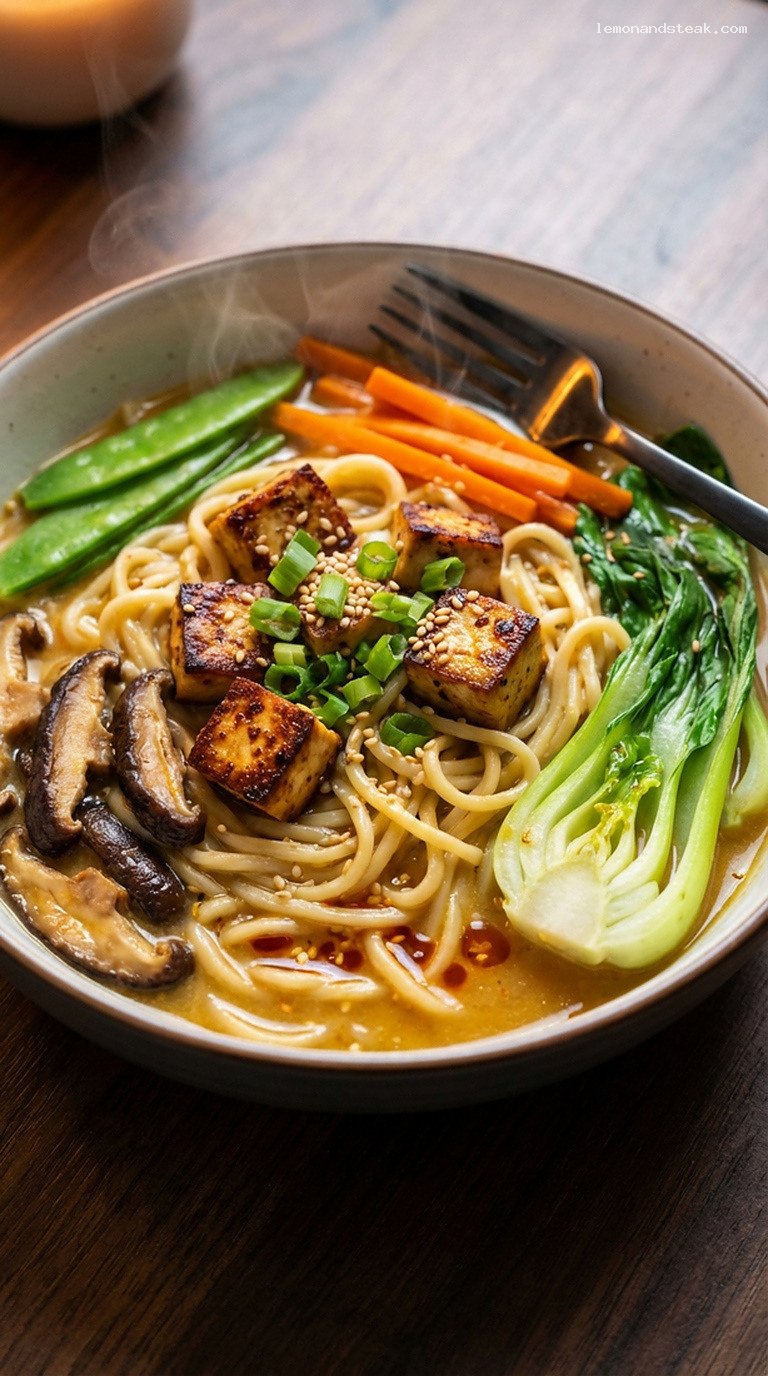
Step-by-Step Instructions
Step 1: Press the tofu and prep the vegetables
Drain the tofu and wrap it in a clean kitchen towel or several layers of paper towel. Place it on a plate, set a flat pan or cutting board on top, and weigh it down with a can or skillet. Let it press for 10–15 minutes to remove excess moisture. This helps the tofu crisp and absorb flavor.
Meanwhile, prepare your vegetables and aromatics. Peel and grate the ginger. Mince the garlic. Slice the shiitake mushrooms, julienne the carrots, quarter the baby bok choy, and trim the snow peas. Slice the green onions, keeping white and light green parts in one pile and dark green tops in another. Set everything aside in small bowls so it is ready when you start cooking.
Step 2: Brown the tofu for a savory base
Once pressed, cut the tofu into 1/2-inch cubes. In a large heavy-bottomed pot or Dutch oven, heat 1 tbsp neutral oil over medium-high heat. When the oil is hot and shimmering, add the tofu cubes in a single layer. Sprinkle with 1/4 tsp salt and a pinch of black pepper.
Let the tofu cook undisturbed for 3–4 minutes on the first side until golden. Gently turn the cubes and continue cooking, turning occasionally, for another 5–6 minutes, until most sides are lightly browned and the edges look a bit crisp. Transfer the tofu to a plate and set aside. Do not wipe out the pot; any browned bits will add flavor to the broth.
Step 3: Build the aromatic foundation
In the same pot, reduce the heat to medium. Add 1 tbsp neutral oil if the pot looks dry. Add the white and light green parts of the green onions, the grated ginger, and the minced garlic. Stir continuously and sauté for 1–2 minutes, just until very fragrant and slightly softened. Avoid browning the garlic, as it can turn bitter.
Sprinkle in the red pepper flakes, if using, and stir for 10–15 seconds to bloom their flavor. You should smell a warm, spicy aroma. This quick step creates a deeply flavorful base for your ginger miso broth.
Step 4: Simmer the ginger miso broth (without boiling the miso)
Pour in the vegetable broth, scraping up any browned bits from the bottom of the pot with a wooden spoon. Add the soy sauce or tamari, rice vinegar, toasted sesame oil, and maple syrup or honey (if using). Stir to combine.
Bring the broth to a gentle simmer over medium heat, then reduce to medium-low and let it simmer softly (small bubbles around the edges) for 10 minutes. This allows the ginger, garlic, and green onion flavors to infuse the broth.
After 10 minutes, ladle about 1 cup of the hot broth into a small bowl or measuring cup. Add the miso paste to that bowl and whisk until completely smooth. Turn the main pot down to low heat. Stir the miso mixture back into the pot. From this point on, do not let the broth boil; keep it below a simmer to preserve miso’s delicate flavor and nutrition.
Step 5: Cook the noodles separately
While the broth is simmering, bring a separate large pot of water to a boil over high heat. Add the noodles and cook according to the package directions, usually 4–6 minutes, until just tender but still slightly chewy (al dente).
Drain the noodles in a colander and rinse briefly under warm water to remove excess starch and keep them from clumping. Shake off any excess water and set aside. Cooking the noodles separately keeps your broth clear and prevents it from becoming too thick or starchy.
Step 6: Soften the vegetables in the broth
With the broth on low heat, add the sliced mushrooms and carrots. Cook for 3 minutes, until the mushrooms begin to soften and the carrots are just turning tender but still have some bite.
Add the bok choy and snow peas to the pot. Continue cooking for another 2–3 minutes, until the bok choy is bright green and just tender and the peas are crisp-tender. Taste the broth and adjust seasoning with a pinch of salt or a splash more soy sauce if needed. Remember that toppings like soy, chili oil, and lime will add more flavor later.
Step 7: Assemble the noodle bowls and serve
Divide the cooked noodles evenly among 4 deep bowls. Ladle plenty of hot ginger miso broth and vegetables over the noodles in each bowl, making sure each serving gets a mix of carrots, mushrooms, bok choy, and peas.
Top each bowl with a generous handful of the browned tofu. Add any optional toppings: sliced green onion tops, toasted sesame seeds, a drizzle of chili oil or spoonful of chili crisp, nori strips, and a soft-boiled egg half, if using.
Finish with a squeeze of fresh lime juice over each bowl just before eating. Serve immediately while piping hot, allowing the noodles to soak up the fragrant ginger miso broth as you eat.
Pro Tips
- Do not boil the miso. Always whisk miso into a small amount of hot (not boiling) broth, then stir it in at low heat. Boiling miso can dull its flavor and reduce its nutritional benefits.
- Press tofu for better texture. Even 10–15 minutes of pressing makes a big difference, helping the tofu brown well and stay pleasantly chewy in the broth.
- Cook noodles separately. Boiling noodles directly in the broth can make it cloudy and too thick. Cooking them in their own pot keeps the broth clear and flavorful.
- Stagger the vegetables. Add firmer veggies like carrots and mushrooms first, then quick-cooking greens and peas. This ensures every vegetable is perfectly tender, not mushy.
- Adjust salt at the very end. Broth, miso, and soy sauce all contribute saltiness. Taste after the miso is in and vegetables are cooked, then add only what you need.
Variations
- Protein swap: Use thinly sliced chicken breast, shrimp, or tempeh instead of tofu. Sear or poach the protein separately, then add to bowls when serving.
- Noodle options: Try soba (buckwheat), rice noodles, or whole-wheat spaghetti if that is what you have on hand. Adjust cooking times according to package directions.
- Spice it up: Add a spoonful of gochujang or a dollop of chili paste to the broth for extra heat and depth, or top each bowl more generously with chili oil.
Storage & Make-Ahead
For best texture, store the components separately. Cool leftover broth with vegetables and tofu, then refrigerate in an airtight container for up to 3 days. Store cooked noodles in a separate container, lightly tossed with a few drops of oil to prevent sticking. When ready to eat, reheat the broth gently on the stove over low to medium-low heat until steaming, but do not boil to preserve the miso. Warm the noodles briefly by rinsing under hot water or adding them to the hot broth for 1–2 minutes. Assemble bowls and add fresh toppings just before serving. Soft-boiled eggs are best cooked and added fresh, but can be stored in the fridge (unpeeled) for up to 3 days and reheated briefly in warm water.
Nutrition (per serving)
Approximate values for 1 of 4 servings, including tofu but without optional egg or chili oil: 480 calories; 20 g protein; 65 g carbohydrates; 15 g fat; 3 g saturated fat; 6 g fiber; 1,500 mg sodium (will vary based on broth and soy sauce brands); 8 g sugars. Adding a soft-boiled egg will increase protein by about 6 g and calories by about 70. To reduce sodium, use low-sodium broth and soy sauce, and slightly reduce the miso.
Leave a Reply