
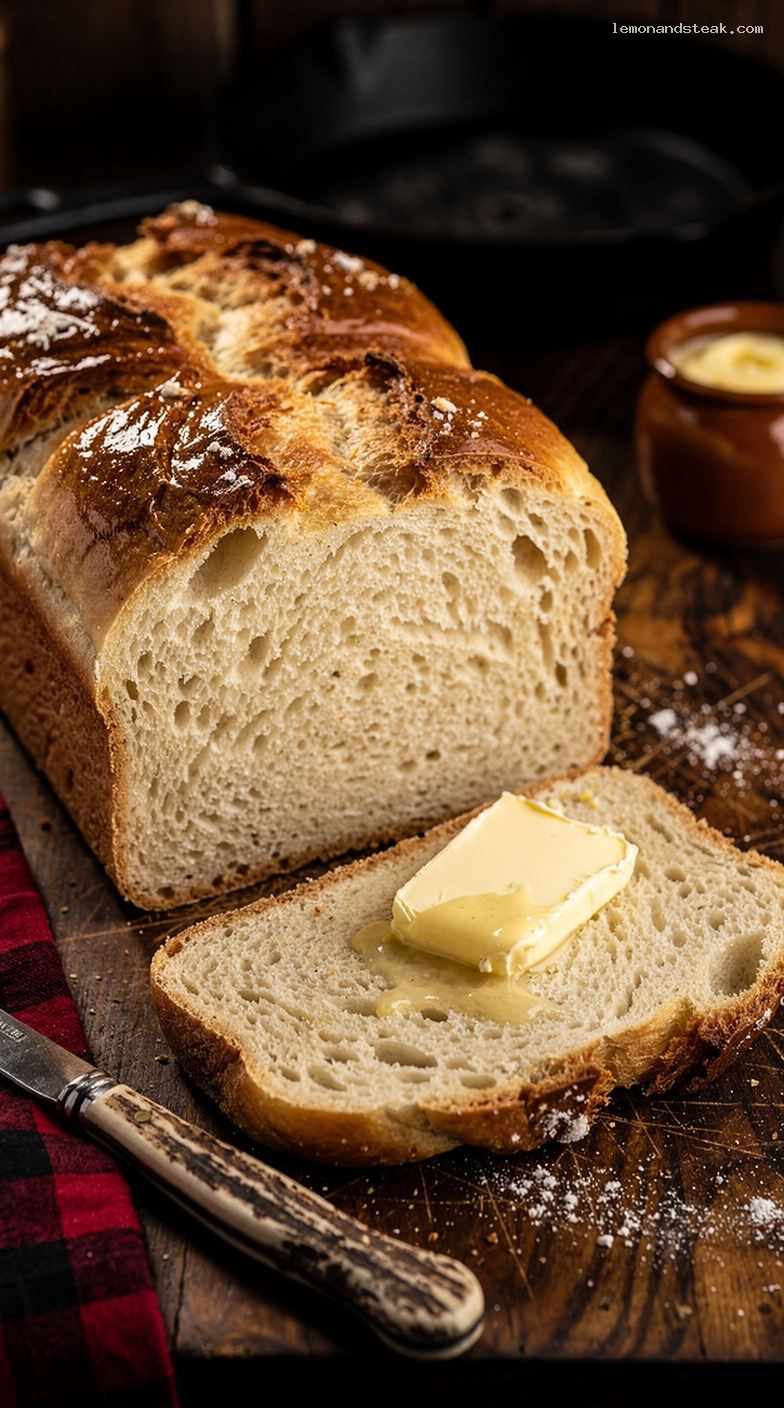
Quick Recipe Version (TL;DR)
Quick Ingredients
- 1 cup (240 g) heavy cream, warmed to 105–110°F (40–43°C)
- 1/4 cup (60 g) warm water, 105–110°F (40–43°C)
- 2 1/4 tsp (7 g) instant yeast
- 1/4 cup (50 g) granulated sugar
- 1 large egg (50 g), room temperature
- 3 cups (360 g) bread flour
- 1 1/4 tsp (7 g) fine salt
- 6 tbsp (85 g) unsalted butter, softened (plus 1 tbsp/14 g melted for brushing)
Do This
- 1. Grease a 9×5-inch loaf pan; line with parchment if you like.
- 2. Mix warm cream, warm water, yeast, and sugar; add egg.
- 3. Add flour and salt; knead until smooth, then work in softened butter.
- 4. Let dough rise until doubled, 60–90 minutes.
- 5. Shape into a loaf; proof in pan until dough crowns 1 inch above rim, 45–75 minutes.
- 6. Bake at 350°F (175°C) for 32–38 minutes to 195–200°F (90–93°C) internal.
- 7. Brush with melted butter; cool at least 1 hour before slicing.
Why You’ll Love This Recipe
- Rich, dairy-forward flavor: heavy cream and butter make the loaf taste luxuriously milky.
- Tender, fine crumb: an enriched dough bakes up soft and sliceable without being cakey.
- Everyday friendly: simple ingredients and a straightforward method (stand mixer or hand-knead).
- Versatile: perfect for toast, sandwiches, French toast, or warm slices with jam.
Grocery List
- Produce: None (optional: berries or fruit jam for serving)
- Dairy: Heavy cream, unsalted butter, 1 large egg
- Pantry: Bread flour, granulated sugar, instant yeast, fine salt
Full Ingredients
For the dough
- Heavy cream: 1 cup (240 g), warmed to 105–110°F (40–43°C)
- Warm water: 1/4 cup (60 g), 105–110°F (40–43°C)
- Instant yeast: 2 1/4 tsp (7 g)
- Granulated sugar: 1/4 cup (50 g)
- Egg: 1 large (50 g), room temperature
- Bread flour: 3 cups (360 g), plus extra for dusting
- Fine salt: 1 1/4 tsp (7 g)
- Unsalted butter: 6 tbsp (85 g), softened to cool room temperature
For finishing
- Unsalted butter: 1 tbsp (14 g), melted (for brushing after baking)
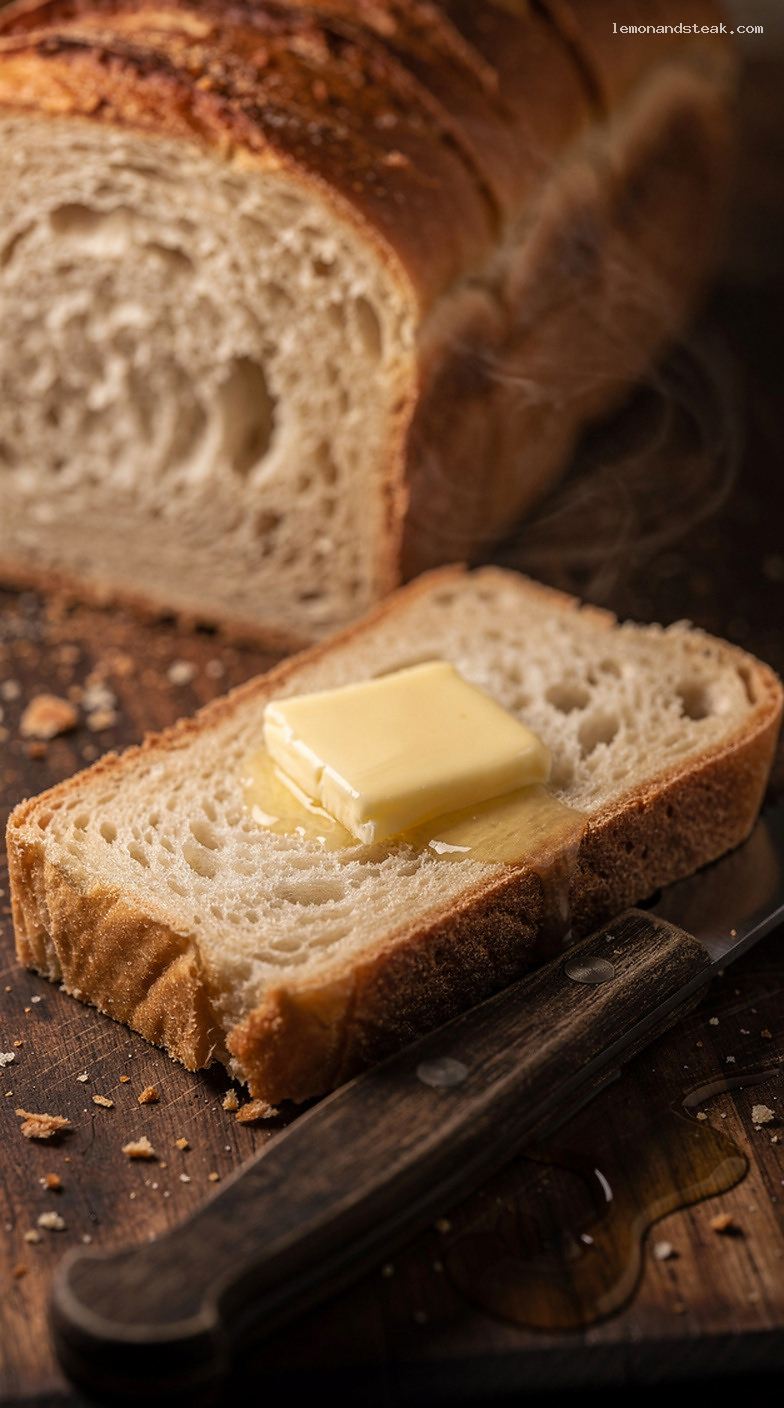
Step-by-Step Instructions
Step 1: Prep the pan and ingredients
Grease a 9×5-inch (23×13 cm) loaf pan with butter. For easy removal, line the long sides with a strip of parchment paper, leaving overhang as “handles.”
Set the egg on the counter to take the chill off. Cut the softened butter into 6 pieces so it mixes in more easily.
Step 2: Activate the yeast in warm cream
In the bowl of a stand mixer (or a large mixing bowl), whisk together the warmed heavy cream (105–110°F / 40–43°C), warm water (105–110°F / 40–43°C), instant yeast, and sugar.
Let it sit for 3 minutes. Instant yeast may not foam dramatically, but it should look hydrated and slightly creamy.
Step 3: Add the egg, then the dry ingredients
Whisk the egg into the cream mixture until smooth.
Add the bread flour and salt. Stir with a spatula until you get a shaggy dough. If using a stand mixer, fit the dough hook and mix on low speed for 2 minutes to bring the dough together.
Step 4: Knead until the dough starts to strengthen
Knead on medium-low speed (or by hand on a lightly floured surface) for 6 minutes. The dough should look smoother and pull away from the bowl more readily, though it will still feel soft.
If the dough is extremely sticky and cannot be handled, add additional flour 1 tablespoon (8–10 g) at a time, up to 3 tablespoons total. (This is a soft, enriched dough; a little tackiness is normal.)
Step 5: Work in the butter for a silky, enriched dough
With the mixer on medium-low (or while kneading by hand), add the softened butter one piece at a time, letting each piece mostly incorporate before adding the next. This takes about 3–5 minutes.
Once all butter is added, knead for 4–6 minutes more. The dough should be very smooth, supple, and elastic. It should pass a “windowpane” test: a small piece can be stretched thin enough to let light through without tearing immediately.
Step 6: First rise (bulk fermentation)
Shape the dough into a ball. Place it in a lightly buttered bowl and turn once to coat the top. Cover tightly with plastic wrap or a lid.
Let rise at warm room temperature (ideally 75–80°F / 24–27°C) until doubled in size, 60–90 minutes.
Step 7: Shape the loaf and proof in the pan
Turn the dough out onto a clean surface (use a very light dusting of flour only if needed). Gently press into a rectangle about 8×12 inches (20×30 cm).
Starting from a short end, roll the dough into a tight log, pinching the seam closed. Tuck the ends under to create a neat loaf shape.
Place seam-side down in the prepared loaf pan. Cover loosely (a lightly greased piece of plastic wrap works well).
Proof until the dough crowns about 1 inch (2.5 cm) above the rim of the pan, 45–75 minutes depending on room temperature.
Step 8: Bake until deeply golden and fully set
During the last 20 minutes of proofing, preheat the oven to 350°F (175°C). Position a rack in the lower-middle of the oven.
Bake for 32–38 minutes, until the top is a rich golden brown. For best accuracy, check doneness with an instant-read thermometer inserted into the center: target 195–200°F (90–93°C).
If the top is browning too quickly, tent loosely with foil after 20–25 minutes.
Remove from the oven and immediately brush the top with 1 tbsp (14 g) melted butter for a soft, flavorful crust.
Cool in the pan for 10 minutes, then lift out and cool on a wire rack for at least 1 hour before slicing (this keeps the crumb from turning gummy).
Pro Tips
- Use a thermometer for the liquids: keep the cream/water at 105–110°F (40–43°C). Hotter can slow or damage yeast; cooler may lengthen rising.
- Butter goes in after gluten develops: knead the dough a bit before adding butter so the loaf rises higher and slices cleaner.
- Proof by look, not the clock: the dough should crown about 1 inch (2.5 cm) above the pan before baking for the best volume.
- For ultra-neat slices: let the loaf cool completely, then slice with a serrated bread knife using gentle sawing motions.
- Want a softer crust? Brush with melted butter both right after baking and again 10 minutes later.
Variations
- Honey-cream butter bread: replace the sugar with 3 tbsp (63 g) honey and reduce warm water to 3 tbsp (45 g) to keep the dough from getting too loose.
- Cinnamon swirl: after pressing into a rectangle, brush with 1 tbsp (14 g) melted butter and sprinkle with 1/4 cup (50 g) brown sugar mixed with 2 tsp cinnamon; roll, shape, and bake as directed.
- Make it into rolls: divide dough into 12 pieces (about 70 g each), shape into balls, proof in a buttered 9×13-inch pan, and bake at 350°F (175°C) for 18–22 minutes.
Storage & Make-Ahead
Store the cooled loaf tightly wrapped at room temperature for 3 days. For longer storage, slice and freeze in a zip-top bag for up to 2 months. Toast slices straight from frozen.
Make-ahead option: after shaping and placing in the pan, cover tightly and refrigerate for 8–14 hours. The next day, let the loaf sit at room temperature until it crowns about 1 inch (2.5 cm) above the rim (usually 60–120 minutes), then bake as directed.
Nutrition (per serving)
Approximate per slice (1/12 loaf): 220 calories, 10 g fat, 27 g carbohydrates, 5 g protein, 5 g sugar, 180 mg sodium.
Leave a Reply