
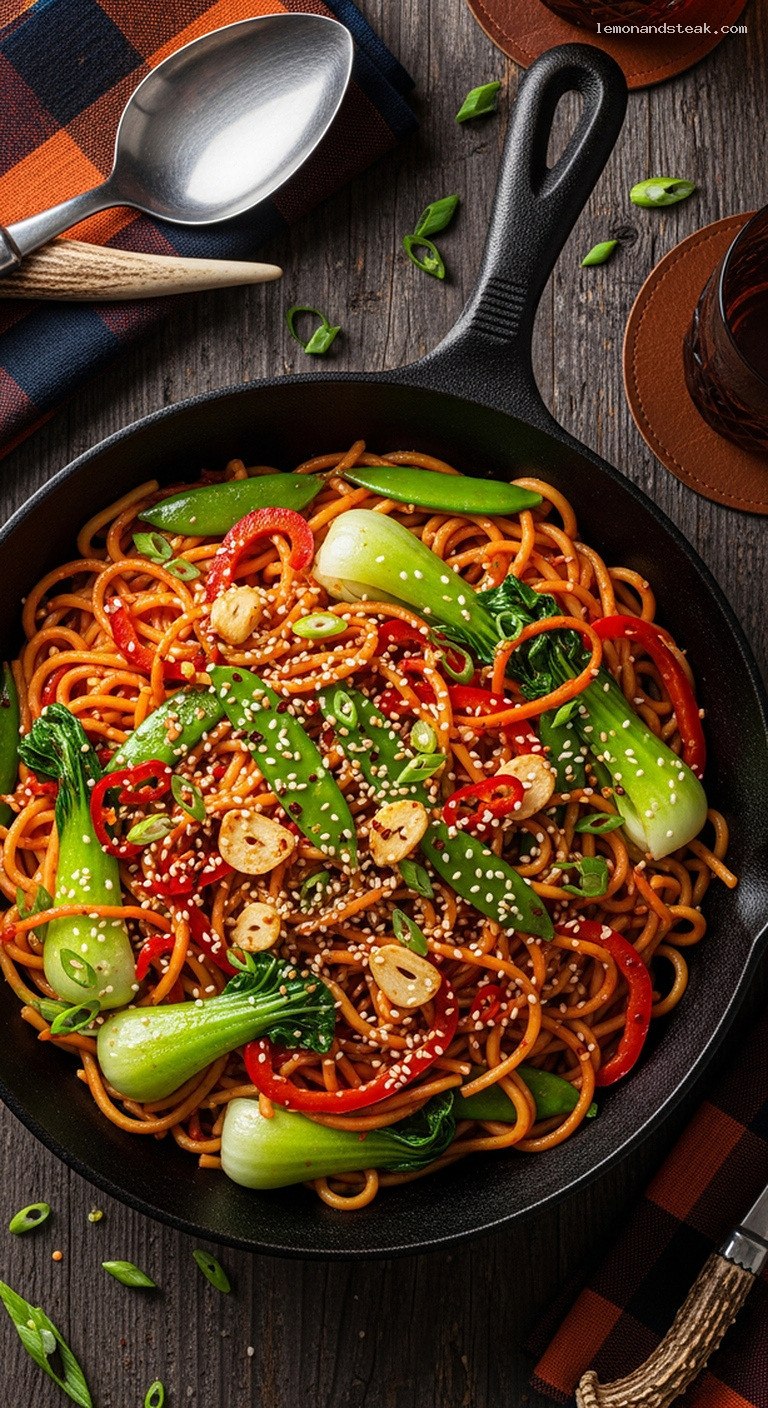
Quick Recipe Version (TL;DR)
Quick Ingredients
- 10 oz (280 g) wheat noodles (lo mein, udon, or spaghetti)
- 2 tbsp neutral oil (canola, vegetable, or peanut)
- 6 cloves garlic, finely minced
- 4 scallions, thinly sliced (whites and greens separated)
- 1 cup shredded carrots
- 1 red bell pepper, thinly sliced
- 2 cups chopped baby bok choy (or other leafy greens)
- 1 cup sugar snap peas or snow peas
- 2–3 tbsp chili oil or chili crisp (to taste)
- 3 tbsp soy sauce (regular or low-sodium)
- 1 tbsp dark soy sauce (optional, for color and depth)
- 1 tbsp rice vinegar
- 1 tbsp toasted sesame oil
- 1–2 tsp brown sugar
- Salt and black pepper, to taste
Do This
- 1. Boil noodles in salted water until just al dente; reserve 1/4 cup cooking water and drain.
- 2. In a small bowl, mix chili oil, soy sauces, rice vinegar, sesame oil, brown sugar, and 2 tbsp hot noodle water.
- 3. Heat neutral oil in a large skillet or wok over medium-high heat; sauté garlic and scallion whites for 30–60 seconds.
- 4. Add carrots, bell pepper, snap peas, and bok choy; stir-fry 3–4 minutes until crisp-tender.
- 5. Add cooked noodles and sauce to the pan; toss over medium-high heat 1–2 minutes, adding more noodle water if dry.
- 6. Season to taste, toss in scallion greens, and serve hot with extra chili oil if desired.
Why You’ll Love This Recipe
- Big flavor, minimal effort: it tastes like takeout but comes together in under 30 minutes.
- Customizable heat: easily adjust the spice level with more or less chili oil.
- Veggie-packed and colorful, with crisp-tender vegetables and springy noodles in every bite.
- Flexible base recipe: add your favorite protein or swap in whatever vegetables you have on hand.
Grocery List
- Produce: Garlic, scallions, carrots, red bell pepper, baby bok choy (or similar leafy greens), sugar snap peas or snow peas, optional fresh cilantro or sesame seeds for garnish.
- Dairy: None required.
- Pantry: Wheat noodles (lo mein, udon, or spaghetti), neutral oil, chili oil or chili crisp, soy sauce, dark soy sauce (optional), rice vinegar, toasted sesame oil, brown sugar, salt, black pepper, optional crushed red pepper flakes.
Full Ingredients
Noodles
- 10 oz (280 g) wheat noodles (lo mein, udon, or spaghetti)
- 1 tbsp kosher salt (for the pasta water)
Chili Garlic Sauce
- 2–3 tbsp chili oil or chili crisp, to taste
- 2 tbsp soy sauce
- 1 tbsp dark soy sauce (optional, for deeper color and savoriness)
- 1 tbsp rice vinegar
- 1 tbsp toasted sesame oil
- 1–2 tsp light brown sugar, packed (start with 1 tsp and adjust to taste)
- 2–4 tbsp hot noodle cooking water, as needed to thin the sauce
Stir-Fry Veggies & Aromatics
- 2 tbsp neutral oil (canola, vegetable, or peanut)
- 6 cloves garlic, finely minced
- 4 scallions, thinly sliced; whites and greens separated
- 1 cup (about 70 g) shredded carrots
- 1 medium red bell pepper, cored and thinly sliced
- 1 cup (about 80 g) sugar snap peas or snow peas, trimmed
- 2 cups (about 120 g) chopped baby bok choy (or napa cabbage, spinach, or kale)
- 1/4 tsp freshly ground black pepper
- Salt, to taste (usually 1/8–1/4 tsp, depending on your soy sauce)
To Finish & Garnish (Optional but Recommended)
- 1–2 tsp extra chili oil or chili crisp, for drizzling
- 1 tsp toasted sesame seeds
- 2 tbsp chopped fresh cilantro or extra scallion greens
- Pinch of crushed red pepper flakes, if you like extra heat
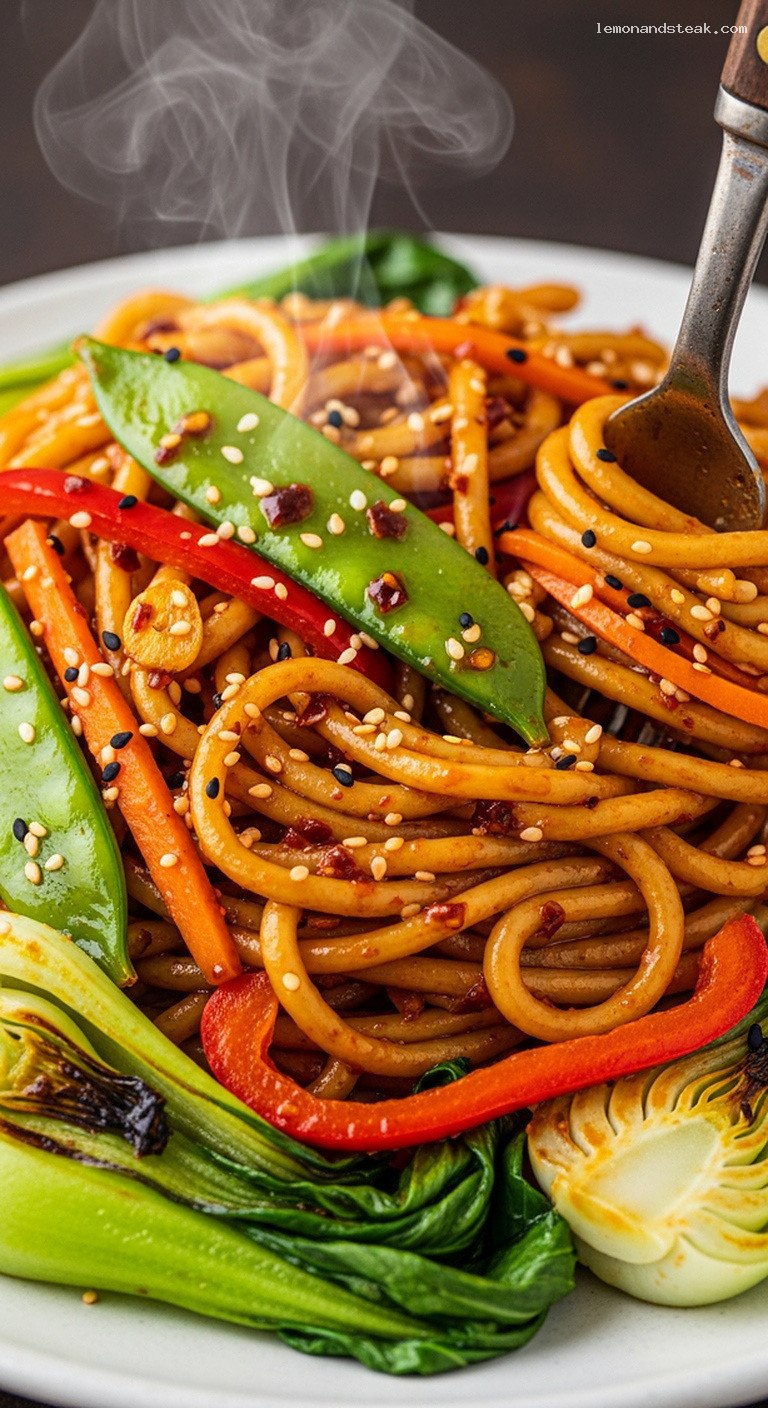
Step-by-Step Instructions
Step 1: Prep all your ingredients
Start by getting everything ready so the stir-fry comes together smoothly. Mince the garlic and slice the scallions, keeping the whites and greens in separate piles. Shred the carrots if they are not already prepared, thinly slice the red bell pepper, trim the snap peas, and roughly chop the baby bok choy into bite-sized pieces.
Because stir-fries cook quickly, having all vegetables prepped and measured before you turn on the heat makes a big difference. Keep each ingredient in small bowls or piles near the stove so you can add them easily in sequence.
Step 2: Cook the noodles until springy
Bring a large pot of water to a rolling boil over high heat. Add 1 tbsp of kosher salt, then stir in the noodles. Cook according to package directions until just al dente and pleasantly springy, usually 5–8 minutes depending on the type of noodle.
Before draining, carefully scoop out at least 1/2 cup of the hot starchy cooking water and set it aside. You will use some of this to help the sauce cling to the noodles. Drain the noodles and shake off excess water, but do not rinse; a bit of surface starch helps the sauce coat them better. Toss lightly with a teaspoon of neutral oil if they will sit for more than a few minutes, to prevent sticking.
Step 3: Whisk together the chili garlic sauce
In a small bowl, combine 2–3 tbsp chili oil or chili crisp, 2 tbsp soy sauce, 1 tbsp dark soy sauce (if using), 1 tbsp rice vinegar, 1 tbsp toasted sesame oil, and 1–2 tsp brown sugar. Add 2 tbsp of the reserved hot noodle water and whisk until the sugar dissolves and the sauce looks slightly thick but pourable.
Taste a small drop of the sauce. If you want more heat, add a little more chili oil. If it is too salty, add another teaspoon of noodle water or a tiny splash of vinegar. Set the sauce near the stove; you will add it after the vegetables and noodles are in the pan.
Step 4: Stir-fry the aromatics and vegetables
Heat a large, heavy skillet or wok over medium-high heat until hot. Add 2 tbsp neutral oil and swirl to coat the pan. Add the minced garlic and the white parts of the scallions. Stir-fry for 30–60 seconds, just until fragrant; do not let the garlic brown deeply, or it can turn bitter.
Add the shredded carrots and sliced red bell pepper. Stir-fry for about 2 minutes, keeping them moving so they blister slightly but stay crisp. Add the snap peas and chopped bok choy. Continue stir-frying for another 2–3 minutes, until the peas are bright green and the bok choy leaves are wilted but the stems remain slightly crunchy. Season with 1/4 tsp black pepper and a small pinch of salt.
Step 5: Toss in the noodles and sauce
Add the drained noodles directly to the hot pan with the vegetables. Use tongs or chopsticks to gently lift and separate the noodles, mixing them with the vegetables. Pour the prepared chili garlic sauce evenly over the noodles.
Toss and stir-fry everything over medium-high heat for 1–2 minutes, until the noodles are evenly coated and glossy. If the pan looks dry or the sauce seems too intense, splash in 1–2 more tablespoons of the reserved noodle water to loosen and lighten it. You are aiming for springy noodles that are well coated, not soupy.
Step 6: Adjust seasoning and finish with freshness
Turn off the heat and taste a noodle. Adjust seasoning: add a pinch more salt if needed, extra chili oil for more heat, or a small pinch of sugar if you want to round out the spice. Toss in the green parts of the scallions and gently fold them through the noodles so they soften slightly in the residual heat.
Transfer the noodles and vegetables to warm plates or shallow bowls. Drizzle with a bit more chili oil or chili crisp, and garnish with toasted sesame seeds and chopped cilantro or extra scallion greens. Serve immediately while the noodles are hot and glossy.
Step 7: Serve and enjoy
Bring the skillet straight to the table if using a cast-iron pan, or plate the noodles family-style on a large warm platter. Offer extra chili oil on the side so everyone can adjust the heat level to their taste. These noodles are best eaten right away, when the vegetables are still crisp-tender and the chili garlic aroma is at its peak.
Pro Tips
- Undercook the noodles slightly: Pull them from the water just before fully done. They will finish cooking in the pan and stay bouncy instead of mushy.
- Control the heat of your chili oil: Different brands vary in spice level. Start with 2 tbsp, taste, and add more only if you want a bigger kick.
- Use high heat and keep things moving: A hot pan and constant tossing give you lightly charred, smoky edges on the vegetables while keeping them crisp.
- Do not overcrowd a small pan: If your skillet is small, stir-fry the vegetables in two batches so they sear instead of steaming.
- Balance the flavors: If the dish tastes flat, add a splash of vinegar. If it is too sharp or spicy, add a pinch more sugar or a tablespoon of noodle water to mellow it.
Variations
- Protein boost: Add 8–10 oz of thinly sliced chicken, steak, shrimp, or firm tofu. Stir-fry the protein first in a little oil, set aside, then return it to the pan when you add the noodles and sauce.
- Extra-garlic version: Increase the garlic to 8–10 cloves and gently cook it over medium heat in the chili oil at the beginning for a deeply aromatic, garlic-forward noodle.
- Veggie swap: Use what you have: broccoli florets, mushrooms, baby corn, green beans, or cabbage all work well. Just add harder vegetables (like broccoli or carrots) earlier, and quick-cooking ones (like spinach) at the end.
Storage & Make-Ahead
This stir-fry is best freshly cooked, but leftovers can still be delicious. Store cooled noodles in an airtight container in the refrigerator for up to 3 days. To reheat, add a splash of water or a drizzle of soy sauce and a bit of oil to a skillet, then rewarm the noodles over medium heat, tossing frequently until hot. You can also microwave in short bursts, stirring in between, but the stovetop will keep the noodles springier.
For easier weeknight cooking, prep all the vegetables and mix the chili garlic sauce up to 2 days in advance. Store prepped veggies in sealed containers in the fridge, and keep the sauce in a small jar. When you are ready to cook, you will only need to boil noodles and stir-fry, cutting the active time way down.
Nutrition (per serving)
Approximate values for 1 of 4 servings (without added protein): about 450–500 calories, 65 g carbohydrates, 10–12 g protein, 18–22 g fat, 4–6 g saturated fat, 4–6 g fiber, 1,200–1,500 mg sodium (varies with soy sauce and chili oil), and 6–8 g sugar. Adding protein such as chicken, beef, shrimp, or tofu will increase the protein and calorie content accordingly.
Leave a Reply