
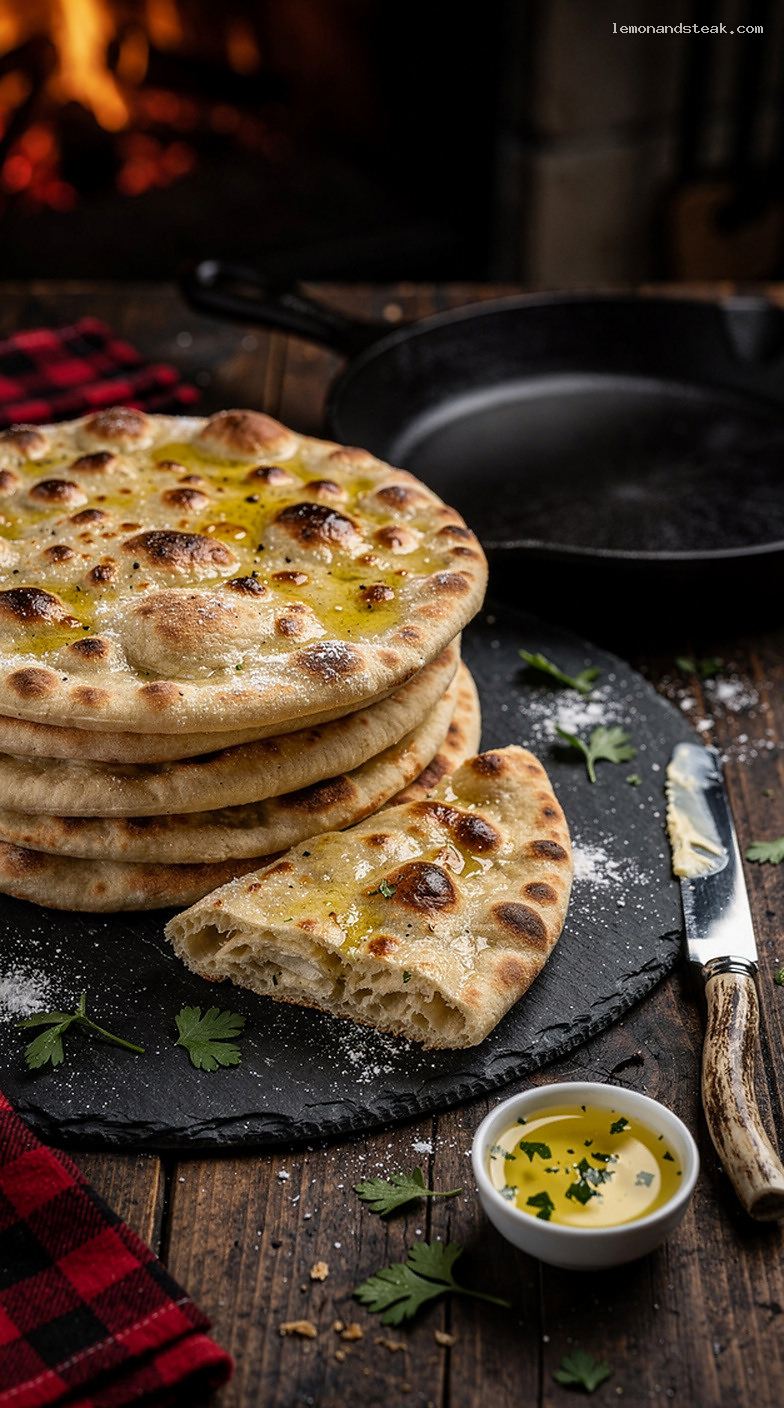
Quick Recipe Version (TL;DR)
Quick Ingredients
- Choose 1 dough:
- Yogurt dough: 2 1/2 cups (300 g) all-purpose flour, 1 tbsp (12 g) baking powder, 1 tsp kosher salt, 1 1/4 cups (300 g) plain Greek yogurt, 2 tbsp (30 g) olive oil
- Yeast dough: 2 1/2 cups (300 g) all-purpose flour, 2 1/4 tsp (7 g) instant yeast, 1 tsp sugar, 1 tsp kosher salt, 3/4 cup + 2 tbsp (210 g) water at 105°F (40°C), 2 tbsp (30 g) olive oil
- For cooking/finishing: 2 tbsp (28 g) unsalted butter (melted) or 2 tbsp olive oil, 1/2 tsp flaky salt (optional), 1 small garlic clove (optional, grated), 1 tbsp chopped parsley (optional)
Do This
- 1. Mix either yogurt dough (no rise) or yeast dough (75-minute rise) until a soft, slightly tacky dough forms.
- 2. Rest dough: 20 minutes (yogurt) or rise 75 minutes (yeast), covered.
- 3. Divide into 8 pieces, roll into balls, then roll each to a 6-inch round (about 1/8-inch thick).
- 4. Preheat a cast iron skillet to 425°F (218°C) over medium-high heat.
- 5. Cook each flatbread 90 seconds on the first side, flip, cook 60 seconds on the second side; optional extra 15 seconds per side for more char.
- 6. Brush with melted butter (or oil). Add garlic, parsley, and flaky salt if you like.
- 7. Stack under a clean towel for 5 minutes to keep them soft, then serve warm.
Why You’ll Love This Recipe
- Pan-cooked perfection: Soft, chewy centers with those classic lightly charred skillet spots.
- Two easy dough options: Make it with yogurt (no yeast) for speed or yeast for extra bounce and flavor.
- No oven needed: Just a skillet and a rolling pin (or even a bottle in a pinch).
- Super versatile: Great for wraps, dipping, pizza-style toppings, or alongside soups and stews.
Grocery List
- Produce: 1 small garlic clove (optional), fresh parsley (optional)
- Dairy: plain Greek yogurt (for yogurt dough), unsalted butter (optional for finishing)
- Pantry: all-purpose flour, baking powder (for yogurt dough), instant yeast (for yeast dough), sugar (for yeast dough), kosher salt, olive oil, flaky salt (optional)
Full Ingredients
Option A: Yogurt Flatbread Dough (No Yeast, Quick)
- 2 1/2 cups (300 g) all-purpose flour, plus 2 tbsp (15 g) more for dusting
- 1 tbsp (12 g) baking powder
- 1 tsp kosher salt
- 1 1/4 cups (300 g) plain Greek yogurt (2% or whole milk)
- 2 tbsp (30 g) olive oil
Option B: Yeasted Flatbread Dough (Chewier, Classic)
- 2 1/2 cups (300 g) all-purpose flour, plus 2 tbsp (15 g) more for dusting
- 2 1/4 tsp (7 g) instant yeast
- 1 tsp granulated sugar
- 1 tsp kosher salt
- 3/4 cup + 2 tbsp (210 g) water at 105°F (40°C)
- 2 tbsp (30 g) olive oil
For Cooking and Finishing
- 2 tbsp (28 g) unsalted butter, melted (or 2 tbsp / 30 g olive oil)
- 1/2 tsp flaky salt (optional)
- 1 small garlic clove, finely grated (optional)
- 1 tbsp chopped fresh parsley (optional)
Step-by-Step Instructions
Step 1: Choose your dough (yogurt or yeast)
Decide which style fits your schedule:
- Yogurt dough: faster, no yeast, ready in under an hour with a short rest.
- Yeast dough: a little more time, more classic bread flavor and chew.
Whichever you choose, you’re aiming for a dough that is soft and slightly tacky, not stiff or dry.
Step 2: Mix the dough
For yogurt dough: In a large bowl, whisk together the flour, baking powder, and kosher salt. Add the Greek yogurt and olive oil. Stir with a spoon until you get a shaggy dough, then use your hands to bring it together.
For yeast dough: In a large bowl, whisk together the flour, instant yeast, sugar, and kosher salt. Add the 105°F (40°C) water and olive oil. Stir until a shaggy dough forms, then use your hands to bring it together.
If the dough feels very sticky and won’t hold together, sprinkle in flour 1 tablespoon (8 g) at a time. If it feels dry, sprinkle in water 1 teaspoon at a time.
Step 3: Knead briefly, then rest or rise
Turn the dough out onto a lightly floured counter and knead until smoother:
- Yogurt dough: knead 2 minutes.
- Yeast dough: knead 4 minutes.
Place the dough in a bowl and cover:
- Yogurt dough rest: 20 minutes at room temperature.
- Yeast dough rise: 75 minutes at room temperature, or until roughly doubled.
Step 4: Divide and shape into rounds
Turn the dough out and divide into 8 equal pieces (about 75 g each if you want to weigh them). Roll each piece into a tight ball.
Lightly flour your counter and rolling pin. Roll each ball into a 6-inch (15 cm) round, about 1/8-inch (3 mm) thick. If the dough springs back, let that piece rest 5 minutes and try again.
Keep the shaped rounds covered with a clean towel while you preheat the pan and cook in batches.
Step 5: Preheat the skillet properly
Set a 10–12 inch cast iron skillet (or heavy stainless skillet) over medium-high heat for 3 minutes. If you have an infrared thermometer, aim for a surface temperature of 425°F (218°C).
Do not oil the pan heavily; a fairly dry surface helps create the signature char spots. If your pan tends to stick, wipe on a very thin film of oil and buff it off with a paper towel.
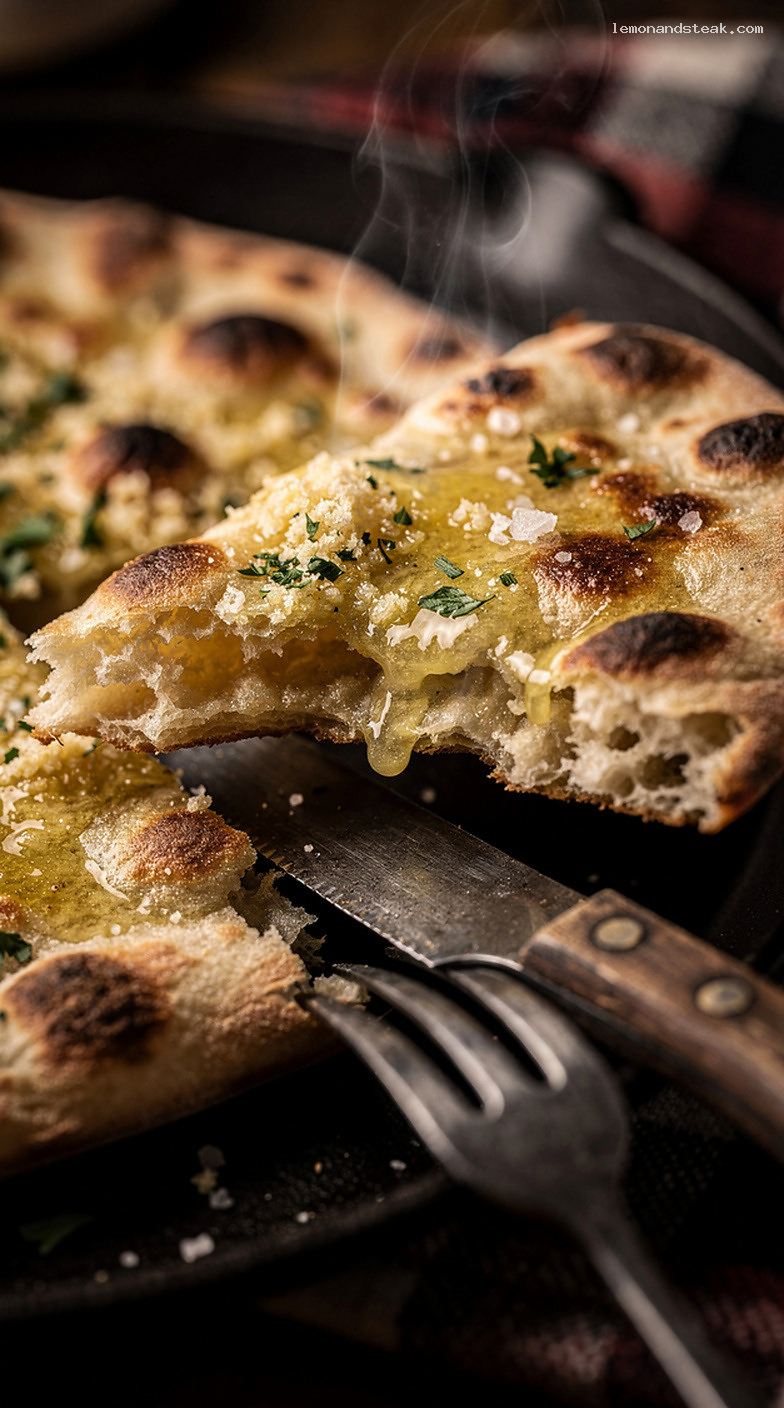
Step 6: Cook the flatbreads (charred spots, soft center)
Place one rolled round in the hot skillet. Cook:
- First side: 90 seconds, until bubbles form and you see browned spots underneath.
- Second side: flip and cook 60 seconds, pressing gently with a spatula to encourage even contact and browning.
- Optional extra char: flip once more and cook 15 seconds per side.
Transfer the cooked flatbread to a plate and cover with a clean towel. Repeat with the remaining rounds, adjusting the burner slightly if the pan smokes heavily or if the bread is browning too slowly.
Step 7: Finish, keep them tender, and serve
Stir the grated garlic (if using) into the melted butter or olive oil. Brush each warm flatbread lightly.
Optional: sprinkle with flaky salt and chopped parsley. Stack the breads under the towel for 5 minutes before serving; that trapped steam keeps them soft and chewy.
Pro Tips
- Don’t over-flour while rolling: Too much bench flour makes the flatbreads dry and can burn in the skillet. Use just enough to prevent sticking.
- High heat = spots, not dryness: The skillet should be hot (425°F / 218°C) so the bread blisters quickly before it dries out.
- Cover the cooked stack: A towel (or a tortilla warmer) keeps the bread flexible for wraps.
- Press strategically: After flipping, press gently with a spatula to create contact and encourage even browning.
- Adjust thickness to the use: Roll slightly thicker (about 3/16-inch) for dipping; slightly thinner (about 1/8-inch) for wraps.
Variations
- Garlic-herb skillet bread: Add 1 tsp dried oregano and 1/2 tsp garlic powder to the dry ingredients, then finish with garlic butter.
- Whole-wheat blend: Replace 3/4 cup (90 g) of the all-purpose flour with 3/4 cup (90 g) whole wheat flour. Add 1 tbsp (15 g) extra yogurt (yogurt dough) or 1 tbsp (15 g) extra water (yeast dough) if it feels dry.
- Cheese-stuffed: After dividing into balls, flatten one, add 2 tbsp (20 g) shredded mozzarella, pinch closed, then roll gently and cook as directed.
Storage & Make-Ahead
Cool completely, then store in an airtight bag or container.
- Room temperature: 2 days.
- Refrigerator: 5 days (reheat for best texture).
- Freezer: 2 months. Freeze with parchment between flatbreads, then seal in a freezer bag.
Reheat: Warm in a dry skillet over medium heat for 60 seconds per side, or wrap in foil and warm in a 350°F (177°C) oven for 8 minutes.
Make-ahead dough: Yeast dough can be refrigerated after kneading. Place in a lightly oiled bowl, cover tightly, and refrigerate for 12 hours. Let sit at room temperature for 30 minutes before shaping.
Nutrition (per serving)
Approximate per 1 flatbread (1/8 of recipe, without butter finish): 190 calories, 6 g protein, 33 g carbs, 4 g fat, 1 g fiber, 290 mg sodium. Values vary by yogurt brand and exact flour usage.
Leave a Reply