
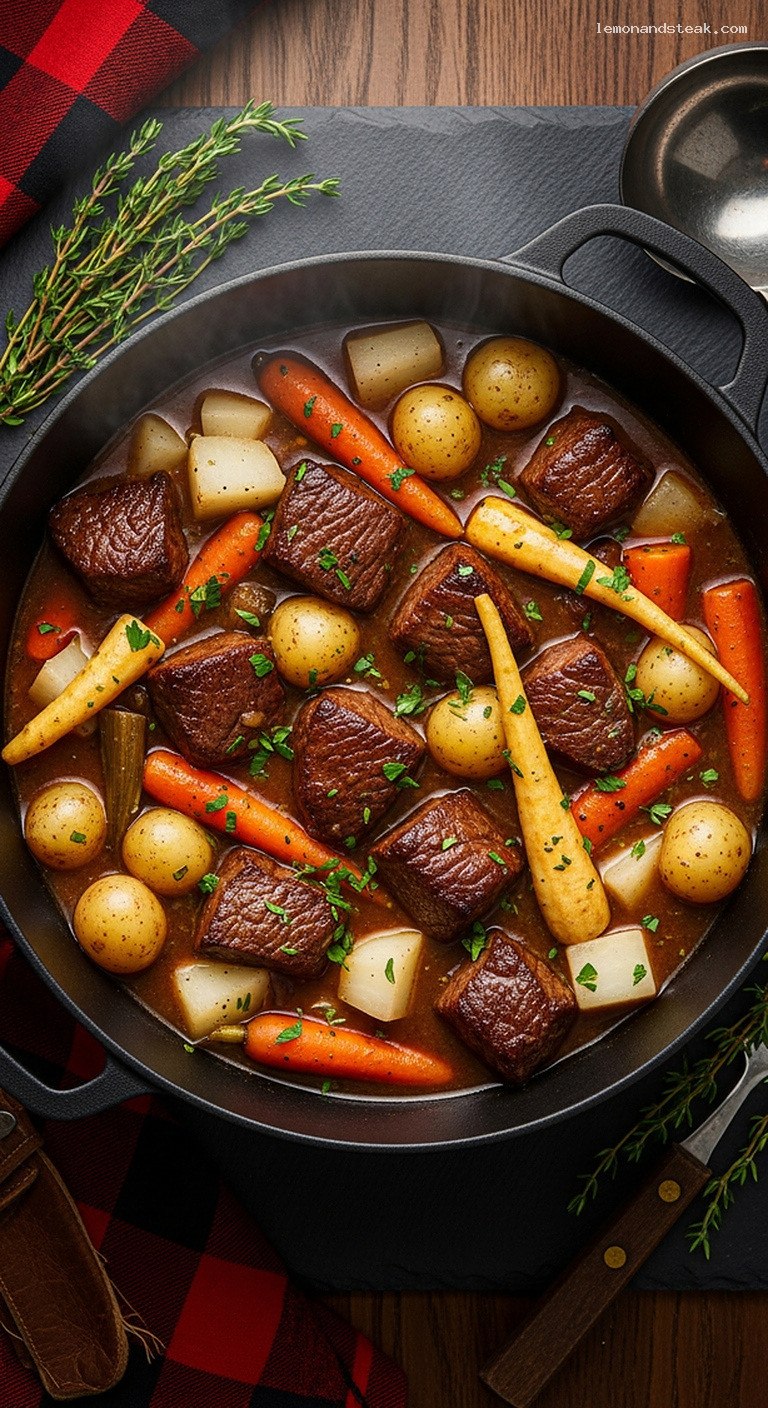
Quick Recipe Version (TL;DR)
Quick Ingredients
- 2.5 lb (1.1 kg) beef chuck, cut into 1.5-inch cubes
- 2 tsp kosher salt, 1 tsp black pepper (divided)
- 3 tbsp all-purpose flour
- 2 tbsp olive oil, 1 tbsp unsalted butter
- 1 large yellow onion, diced
- 3 carrots + 2 parsnips, cut into chunks
- 2 ribs celery, sliced
- 4 cloves garlic, minced
- 2 tbsp tomato paste
- 1 cup dry red wine (or extra beef broth)
- 4 cups low-sodium beef broth + 1 cup water
- 1 lb baby gold potatoes, halved
- 1 small turnip, peeled and cubed (about 8 oz)
- 2 bay leaves, 4 sprigs thyme (or 1.5 tsp dried)
- 1 tsp paprika, 1 tbsp Worcestershire sauce
- 2 tbsp chopped fresh parsley (for serving)
Do This
- 1. Preheat oven to 325°F (163°C). Pat beef dry, season with 1.5 tsp salt and 0.5 tsp pepper, and toss with flour.
- 2. Heat oil and butter in a heavy Dutch oven over medium-high; brown beef in batches until deeply seared. Set aside.
- 3. In the same pot, cook onion, carrots, parsnips, and celery until lightly browned; add garlic and tomato paste and cook briefly.
- 4. Deglaze with red wine, scraping up browned bits; simmer 2–3 minutes. Stir in broth, water, Worcestershire, paprika, bay leaves, thyme, and reserved beef.
- 5. Cover and braise in the oven for 1.5 hours.
- 6. Add potatoes and turnip, stir, cover again, and braise 40–45 minutes more, until beef and vegetables are very tender.
- 7. Remove herbs, adjust seasoning with remaining salt and pepper, garnish with parsley, and serve hot.
Why You’ll Love This Recipe
- Slow, gentle oven-braising builds deep, beefy flavor and a rich, silky broth.
- Hearty root vegetables turn sweet and tender, making this a complete one-pot meal.
- Everything cooks in a single Dutch oven for easier cleanup and cozy presentation.
- Easy to make ahead, and the flavor is even better the next day.
Grocery List
- Produce: Yellow onion, carrots, parsnips, celery, garlic, baby gold potatoes, turnip, fresh thyme, fresh parsley.
- Dairy: Unsalted butter (optional but flavorful).
- Pantry: Beef chuck roast, olive oil, all-purpose flour, tomato paste, low-sodium beef broth, dry red wine (or extra broth), Worcestershire sauce, bay leaves, paprika, kosher salt, black pepper.
Full Ingredients
For the Beef and Aromatics
- 2.5 lb (1.1 kg) beef chuck roast, cut into 1.5-inch cubes, excess fat trimmed
- 2 tsp kosher salt, divided (plus more to taste)
- 1 tsp freshly ground black pepper, divided (plus more to taste)
- 3 tbsp all-purpose flour
- 2 tbsp olive oil
- 1 tbsp unsalted butter
- 1 large yellow onion, diced (about 2 cups)
- 3 medium carrots, peeled and cut into 1-inch chunks
- 2 medium parsnips, peeled and cut into 1-inch chunks
- 2 ribs celery, sliced 0.5-inch thick
- 4 cloves garlic, minced
- 2 tbsp tomato paste
For the Braising Liquid
- 1 cup dry red wine (such as Cabernet Sauvignon or Merlot), or substitute 1 cup additional beef broth
- 4 cups low-sodium beef broth
- 1 cup water
- 1 tbsp Worcestershire sauce
- 2 bay leaves
- 4 fresh thyme sprigs, tied with kitchen twine (or 1.5 tsp dried thyme)
- 1 tsp paprika (smoked or sweet, to taste)
Root Vegetables and Finishing Touches
- 1 lb (450 g) baby gold or red potatoes, halved (or quartered if large)
- 1 small turnip, peeled and cut into 1-inch cubes (about 8 oz / 225 g)
- 2 tbsp chopped fresh flat-leaf parsley, for garnish
- Optional to serve: crusty bread or buttered noodles
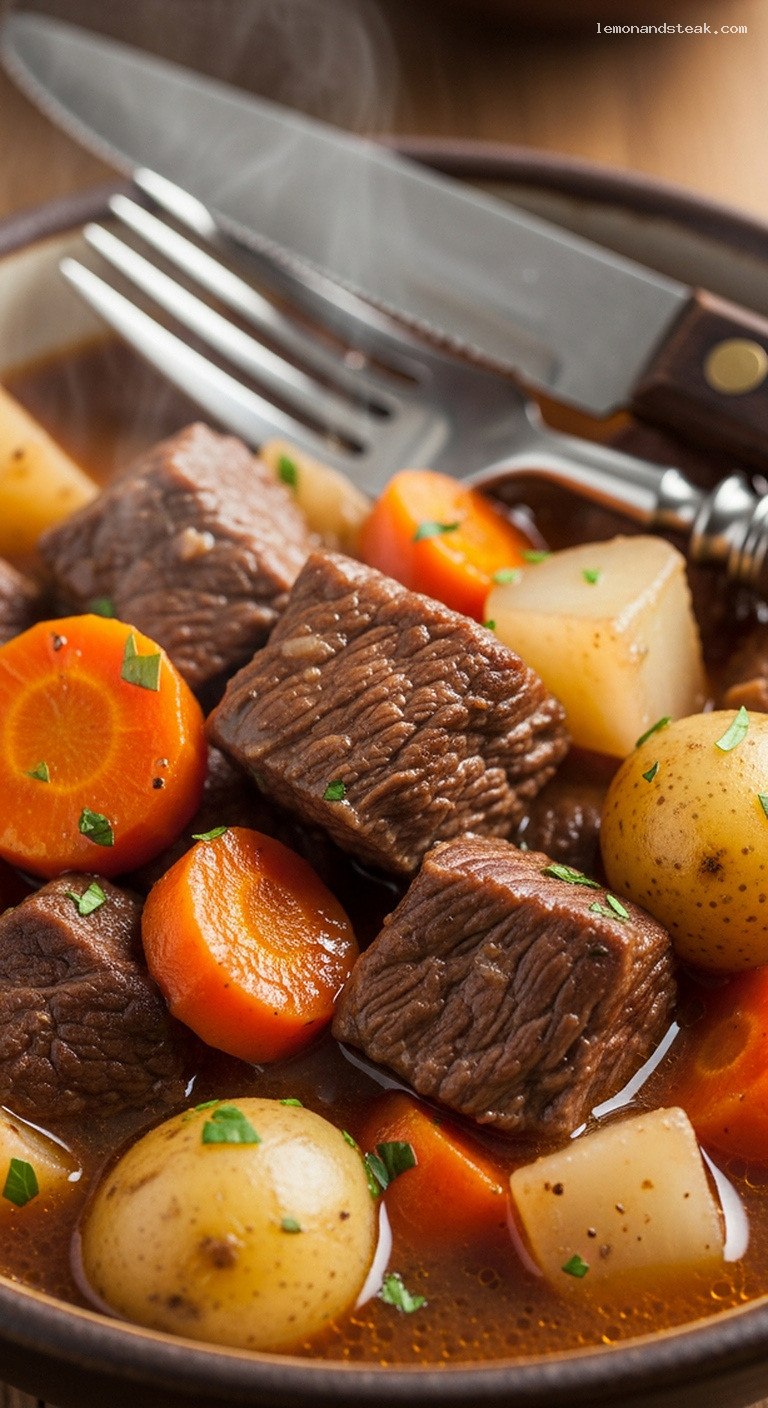
Step-by-Step Instructions
Step 1: Prep the oven and ingredients
Preheat your oven to 325°F (163°C) with a rack in the lower-middle position. Choose a heavy, oven-safe Dutch oven that holds at least 5 to 6 quarts. Pat the beef cubes very dry with paper towels; this helps them brown well instead of steaming. In a large bowl, toss the beef with 1.5 teaspoons of the kosher salt, 0.5 teaspoon of the black pepper, and the flour until the pieces are evenly coated. Shake off any excess flour back into the bowl. Prep all vegetables: dice the onion, cut the carrots and parsnips into 1-inch chunks, slice the celery, mince the garlic, halve the baby potatoes, and cube the turnip. Having everything ready makes the cooking process smooth.
Step 2: Sear the beef for deep flavor
Place the Dutch oven over medium-high heat. Add the olive oil and butter and heat until the butter is melted and the fat shimmers. Working in 2 to 3 batches to avoid crowding, add a single layer of beef cubes. Let them cook undisturbed for 3 to 4 minutes per side, turning to brown at least two sides until the meat is nicely caramelized and dark brown on the edges. Adjust the heat as needed so the fond (browned bits) on the bottom of the pot does not burn. Transfer browned beef to a plate or bowl and repeat with remaining beef, adding a touch more oil only if the pan looks completely dry. This searing step is crucial for building that deep, rustic flavor.
Step 3: Build the aromatic base
Once all the beef is browned and set aside, reduce the heat to medium. You should have a thin layer of fat left in the pot; if there is more than about 2 tablespoons, carefully spoon off the excess. Add the diced onion, carrots, parsnips, and celery. Cook, stirring occasionally, for 6 to 8 minutes, until the onions are translucent and the vegetables start to soften and pick up some color. Sprinkle in a pinch of salt to help them release moisture. Add the minced garlic and cook for 30 to 60 seconds, just until fragrant. Stir in the tomato paste and cook, stirring constantly, for 1 to 2 minutes. The paste should darken slightly and coat the vegetables; this step concentrates its flavor and adds richness to the stew.
Step 4: Deglaze the pot and build the braising liquid
Pour in the red wine (or extra beef broth, if not using wine) while the pot is still over medium heat. Immediately scrape the bottom of the Dutch oven with a wooden spoon, loosening all the browned bits into the liquid. Let the mixture simmer for 2 to 3 minutes to reduce slightly and cook off the raw alcohol taste if using wine. Add the beef broth, water, Worcestershire sauce, paprika, bay leaves, and thyme sprigs. Stir well to combine. Return the browned beef and any accumulated juices on the plate back into the pot, nestling the pieces down into the liquid. The beef should be mostly submerged; if it is not, add a bit more water or broth until it is.
Step 5: Braise the beef low and slow
Increase the heat to medium-high and bring the stew just up to a gentle simmer. Once it is simmering, cover the Dutch oven with its lid and transfer it to the preheated 325°F (163°C) oven. Let the stew braise undisturbed for about 1.5 hours. During this time, the beef will slowly tenderize and the flavors will meld. After 1.5 hours, carefully remove the Dutch oven from the oven and check a piece of beef; it should be starting to get tender but not falling apart yet. Give the stew a gentle stir, re-cover, and keep it warm while you move to the next step of adding the root vegetables.
Step 6: Add root vegetables and finish cooking
Stir the halved baby potatoes and cubed turnip into the stew, pushing them down so they are mostly submerged in the liquid. If the liquid level seems low, you can add up to 0.5 cup additional hot water or broth. Cover the Dutch oven again and return it to the oven. Continue braising at 325°F (163°C) for another 40 to 45 minutes, or until the potatoes, turnip, and carrots are very tender and the beef is fork-tender. If you prefer a slightly thicker stew, remove the lid for the last 10 to 15 minutes of cooking to allow some of the liquid to reduce and concentrate.
Step 7: Adjust seasoning and serve
Carefully remove the Dutch oven from the oven and set it on the stovetop or a trivet. Discard the bay leaves and thyme sprigs. Taste the broth and adjust the seasoning with the remaining 0.5 teaspoon salt and 0.5 teaspoon black pepper, or more as needed. If the stew tastes slightly flat, a small splash of Worcestershire or a pinch of salt often brightens the flavor. If there is excess fat on the surface, you can skim it off with a spoon. Ladle the stew into warm bowls, making sure each serving gets a generous mix of beef and vegetables. Sprinkle with chopped fresh parsley just before serving. Enjoy the stew on its own or with crusty bread, buttered noodles, or mashed potatoes alongside for soaking up the rich, beefy broth.
Pro Tips
- Dry beef equals better browning: Take the time to pat the beef cubes dry before seasoning and dredging. Moisture prevents a good sear and dulls the flavor.
- Do not rush the sear: Browning the beef in batches takes a bit of time, but it is where much of the stew’s deep flavor comes from. Let each side really caramelize.
- Use low-sodium broth: Starting with low-sodium stock lets you season to taste at the end without risking an overly salty stew as the liquid reduces.
- Cut vegetables in larger chunks: One-inch pieces hold their shape during the long braise and do not turn mushy.
- Rest before serving: If you have time, let the finished stew sit, covered, for 10 to 15 minutes off the heat. The flavors settle and the texture thickens slightly.
Variations
- No-wine version: Replace the 1 cup of red wine with an equal amount of beef broth plus 1 tsp red wine vinegar or balsamic vinegar for a touch of acidity.
- Gluten-free: Skip dredging the beef in flour. After cooking, if you want the stew thicker, stir together 2 tbsp cornstarch with 2 tbsp cold water and add it to the simmering stew on the stovetop, cooking a few minutes until thickened.
- Slow cooker adaptation: Sear the floured beef and cook the onion, carrots, parsnips, celery, garlic, and tomato paste in a skillet first. Transfer everything to a slow cooker with the liquids, herbs, potatoes, and turnip. Cook on low for 7 to 8 hours or on high for 4 to 5 hours, until the beef is very tender.
Storage & Make-Ahead
Let the stew cool to room temperature for no more than 1 hour, then transfer it to airtight containers and refrigerate for up to 4 days. The flavors deepen and improve by the next day, making this an excellent make-ahead meal. For longer storage, freeze in freezer-safe containers or heavy-duty bags for up to 3 months. Thaw overnight in the refrigerator before reheating. Reheat gently on the stovetop over medium-low heat, adding a splash of water or broth if the stew has thickened too much. Stir occasionally until piping hot all the way through.
Nutrition (per serving)
Approximate values per serving (1/6 of the recipe): about 560 calories; 38 g protein; 26 g fat; 16 g saturated fat; 32 g carbohydrates; 4 g fiber; 6 g sugars; 900 mg sodium. Actual values will vary based on the specific ingredients and brands you use, as well as any substitutions.
Leave a Reply