
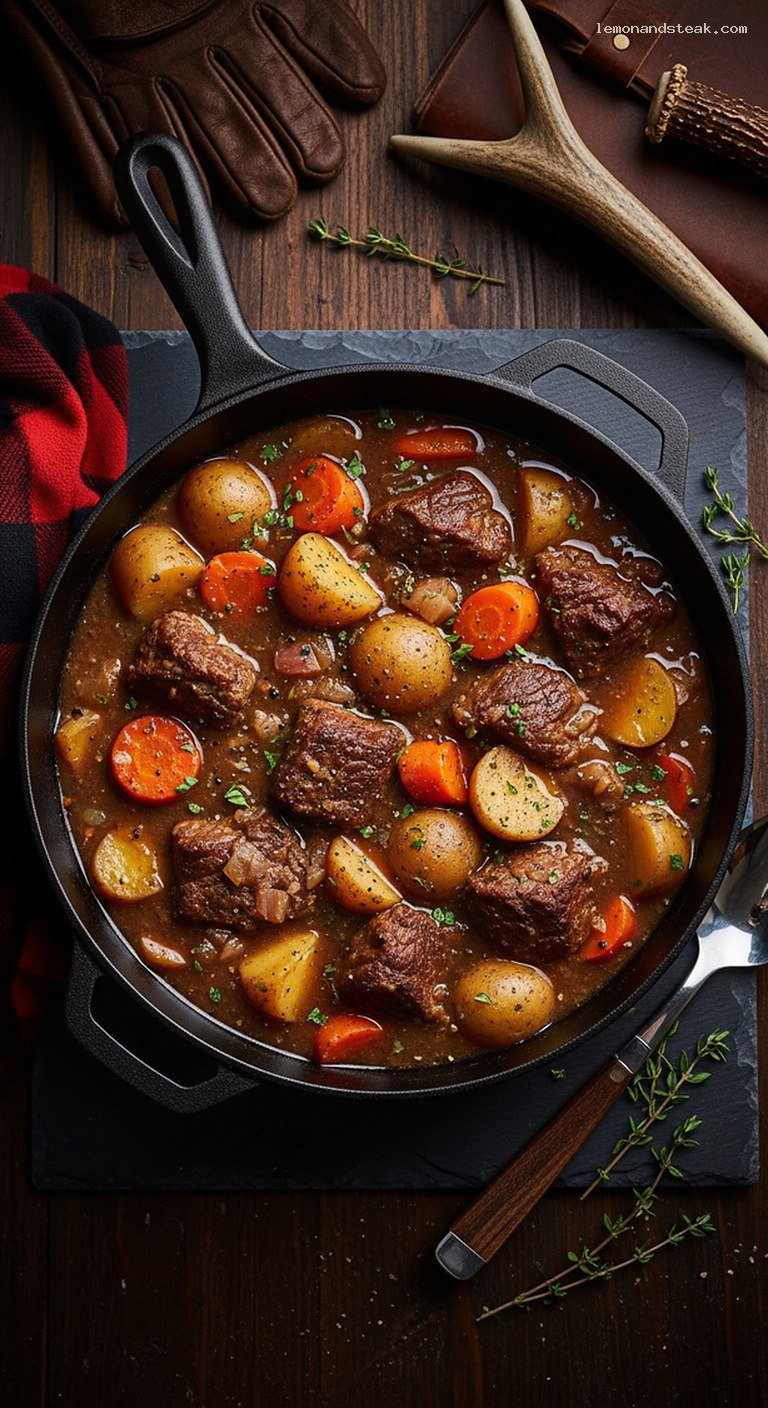
Quick Recipe Version (TL;DR)
Quick Ingredients
- 2 lb beef chuck, cut into 1½-inch cubes
- 2 lb Yukon Gold or yellow potatoes, peeled and cut into chunks
- 4 medium carrots, peeled and sliced into thick rounds
- 1 large yellow onion, diced
- 4 cloves garlic, minced
- 3 tbsp all-purpose flour
- 2 tbsp tomato paste
- 4 cups low-sodium beef broth
- 1 cup water
- 2 tbsp Worcestershire sauce
- 2 tsp kosher salt (plus more to taste)
- 1 tsp freshly ground black pepper
- 1 tsp dried thyme or 4 sprigs fresh thyme
- 1 tsp dried rosemary, crushed
- 2 bay leaves
- 3 tbsp olive oil or neutral oil
- Optional: 1 tsp smoked paprika, chopped fresh parsley for garnish
Do This
- 1. Pat beef dry, season with salt and pepper, toss with flour to lightly coat.
- 2. Brown beef in hot oil in a heavy pot in batches; set browned pieces aside.
- 3. In the same pot, cook onion and carrots briefly, then add garlic and tomato paste; cook until fragrant and darkened.
- 4. Deglaze with a splash of broth, scraping up browned bits. Add remaining broth, water, Worcestershire, herbs, and browned beef.
- 5. Simmer gently, covered, for about 1½ hours until beef is tender.
- 6. Stir in potatoes and simmer 40–50 minutes, uncovered, until potatoes are very tender and starting to break down.
- 7. Lightly mash some potatoes against the pot sides to thicken the broth, adjust seasoning, rest 5–10 minutes, then serve hot.
Why You’ll Love This Recipe
- Deep, rich flavor from slowly simmered beef, caramelized onions, and tomato paste.
- Potatoes cook until they are ultra-tender, naturally thickening the broth into a silky, hearty stew.
- Uses simple, affordable ingredients that are easy to find and easy to prep.
- Makes a generous pot that reheats beautifully for cozy meals throughout the week.
Grocery List
- Produce: Yukon Gold or yellow potatoes, carrots, yellow onion, garlic, fresh thyme (optional), fresh parsley (optional).
- Dairy: None required (a little butter for richness is optional).
- Pantry: Beef chuck roast, olive or vegetable oil, all-purpose flour, tomato paste, beef broth, Worcestershire sauce, bay leaves, dried thyme or fresh, dried rosemary, smoked paprika (optional), kosher salt, black pepper.
Full Ingredients
Main Stew
- 2 lb beef chuck roast, cut into 1½-inch cubes (trimmed of large pieces of fat)
- 2 tsp kosher salt, divided (plus more to taste)
- 1 tsp freshly ground black pepper, divided
- 3 tbsp all-purpose flour
- 3 tbsp olive oil or neutral cooking oil (such as canola or vegetable), divided
- 1 large yellow onion, diced (about 1½ cups)
- 4 medium carrots, peeled and cut into ½-inch thick rounds (about 2 cups)
- 4 cloves garlic, minced
- 2 tbsp tomato paste
- 4 cups low-sodium beef broth
- 1 cup water
- 2 tbsp Worcestershire sauce
- 2 bay leaves
- 1 tsp dried thyme or 4 sprigs fresh thyme, tied or left whole
- 1 tsp dried rosemary, lightly crushed between fingers
- 1 tsp smoked paprika (optional, for a gentle smoky depth)
Potatoes and Finishing
- 2 lb Yukon Gold or other yellow potatoes, peeled and cut into 1 to 1½-inch chunks
- 1 tbsp unsalted butter (optional, for extra richness)
- 2–3 tbsp chopped fresh parsley (optional, for garnish)
- Additional salt and pepper, to taste
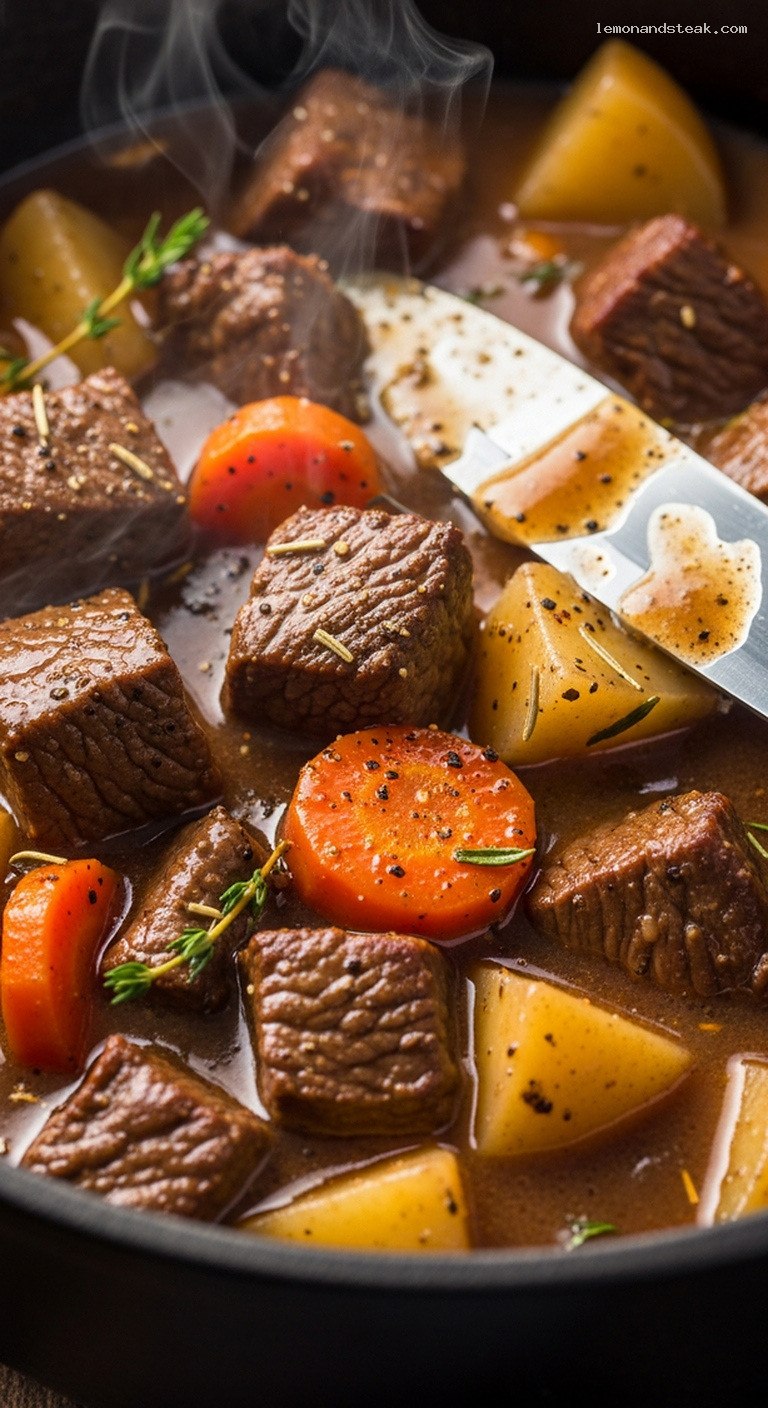
Step-by-Step Instructions
Step 1: Prep the beef and vegetables
Pat the beef cubes very dry with paper towels; this is important for good browning. Place them in a large bowl and season with 1½ teaspoons of the kosher salt and ½ teaspoon of the black pepper. Sprinkle the flour over the beef and toss until all pieces are lightly coated and no dry flour remains at the bottom of the bowl.
Prepare the vegetables: peel and chunk the potatoes into 1 to 1½-inch pieces, peel and slice the carrots into thick rounds, dice the onion, and mince the garlic. Set everything near the stove so you can work efficiently once you start cooking.
Step 2: Brown the beef for deep flavor
Heat 2 tablespoons of the oil in a large heavy-bottomed pot or Dutch oven (5–6 quarts) over medium-high heat. When the oil is shimmering and a piece of beef sizzles on contact, add about one-third of the beef in a single layer, leaving space between pieces so they sear rather than steam.
Brown the beef on at least two sides, about 6–8 minutes per batch, turning with tongs when a deep brown crust forms. Transfer browned beef to a clean bowl or plate and repeat with the remaining beef, adding the remaining 1 tablespoon oil as needed. Do not rush this step; the brown bits on the bottom of the pot will give your stew incredible flavor.
Step 3: Build the aromatic base
Once all the beef is browned and removed, reduce the heat to medium. If the pot looks very dry, add a teaspoon or two of extra oil. Add the diced onion and sliced carrots along with a small pinch of salt. Cook, stirring often, until the onion is softened and just starting to turn golden at the edges, about 5–7 minutes.
Stir in the minced garlic and cook for 30 seconds, just until fragrant. Add the tomato paste and cook, stirring constantly, for 1–2 minutes. The paste should darken slightly in color and stick a bit to the bottom; this caramelization deepens the stew’s flavor.
Sprinkle in the smoked paprika, if using, along with the remaining ½ teaspoon black pepper. Stir well to coat the vegetables and toast the spices briefly, about 30 seconds.
Step 4: Deglaze and start the slow simmer
Pour in about 1 cup of the beef broth and use a wooden spoon to scrape up all the browned bits from the bottom of the pot. These bits dissolve into the liquid and form the base of your rich broth.
Return the browned beef and any accumulated juices to the pot. Add the remaining beef broth, 1 cup water, Worcestershire sauce, bay leaves, thyme, and rosemary. Stir to combine and bring the mixture just to a gentle boil over medium-high heat.
Once it starts to bubble, immediately reduce the heat to low or medium-low so the stew is at a very gentle simmer with only a few small bubbles breaking the surface. Cover the pot with a lid, leaving it slightly ajar, and simmer for 1½ hours, stirring every 20–30 minutes to prevent sticking. The beef should be starting to turn tender but not yet falling apart.
Step 5: Add potatoes and let them melt into the broth
After about 1½ hours of simmering, stir in all of the potato chunks. If the liquid level seems low, you can add up to ½ cup more water or broth; the potatoes should be mostly submerged but not swimming in excess liquid.
Continue to simmer the stew, now uncovered, for 40–50 minutes more, stirring occasionally. The potatoes should become very tender and some will naturally start to break down. If you prefer an extra-thick, velvety broth, use the back of your spoon to gently mash some of the potatoes against the sides of the pot in the last 10–15 minutes of cooking. This releases starch that thickens and enriches the stew.
Step 6: Finish, taste, and serve
When the beef is fork-tender and the potatoes are soft and partially melting into the broth, remove the bay leaves and any woody thyme stems. Stir in the butter, if using, for a final touch of richness. Taste the broth carefully and season with additional salt and pepper as needed; the amount will depend on your broth and personal preference, but you may want another ½ teaspoon or so of salt.
Turn off the heat and let the stew rest for 5–10 minutes; this allows the flavors to settle and the broth to thicken slightly more. Ladle into warm bowls and garnish with chopped fresh parsley, if desired. Serve on its own or with crusty bread for soaking up the rich, potato-thickened broth.
Pro Tips
- Dry the beef very well: Moisture is the enemy of browning. Patting the beef dry before flouring helps you get a deep, flavorful crust.
- Keep the simmer gentle: A rolling boil can make beef tough. Aim for a soft, lazy simmer with only occasional bubbles for the most tender results.
- Use Yukon Gold potatoes: They strike the perfect balance between holding their shape and breaking down slightly to thicken the broth.
- Adjust thickness at the end: For a thicker stew, mash more potatoes into the broth; for a looser, soupier texture, add a splash of hot broth or water.
- Even better the next day: Like most stews, the flavors deepen overnight in the fridge. Make it ahead when you can.
Variations
- Red wine twist: Replace 1 cup of the beef broth with dry red wine. Add it after the tomato paste and let it simmer for 3–4 minutes to cook off the alcohol before adding the remaining liquids.
- Root vegetable medley: Swap half of the potatoes for parsnips or turnips, cut in similar-sized chunks, for a slightly sweeter, earthier flavor.
- Herb-forward version: In the last 10 minutes of cooking, stir in 2 tablespoons of chopped fresh herbs such as parsley, thyme, and chives for a brighter, fresher-tasting finish.
Storage & Make-Ahead
Let the stew cool to room temperature, then transfer to airtight containers. Refrigerate for up to 4 days. The flavors will deepen and the broth may thicken even more; thin with a little water or broth when reheating if needed. Reheat gently on the stove over low to medium-low heat, stirring occasionally, until hot all the way through. You can also reheat individual portions in the microwave, stirring once or twice.
For longer storage, freeze the stew in freezer-safe containers or heavy-duty freezer bags for up to 3 months. Thaw overnight in the refrigerator before reheating. Because the potatoes are already quite soft, they freeze and reheat well in this stew, further contributing to the thick, comforting broth.
Nutrition (per serving)
Approximate values per serving (1/6 of the recipe): about 480 calories; 32 g protein; 22 g fat; 38 g carbohydrates; 4 g fiber; 6 g sugar; 980 mg sodium. These values are estimates and will vary based on the exact ingredients and brands you use.
Leave a Reply