
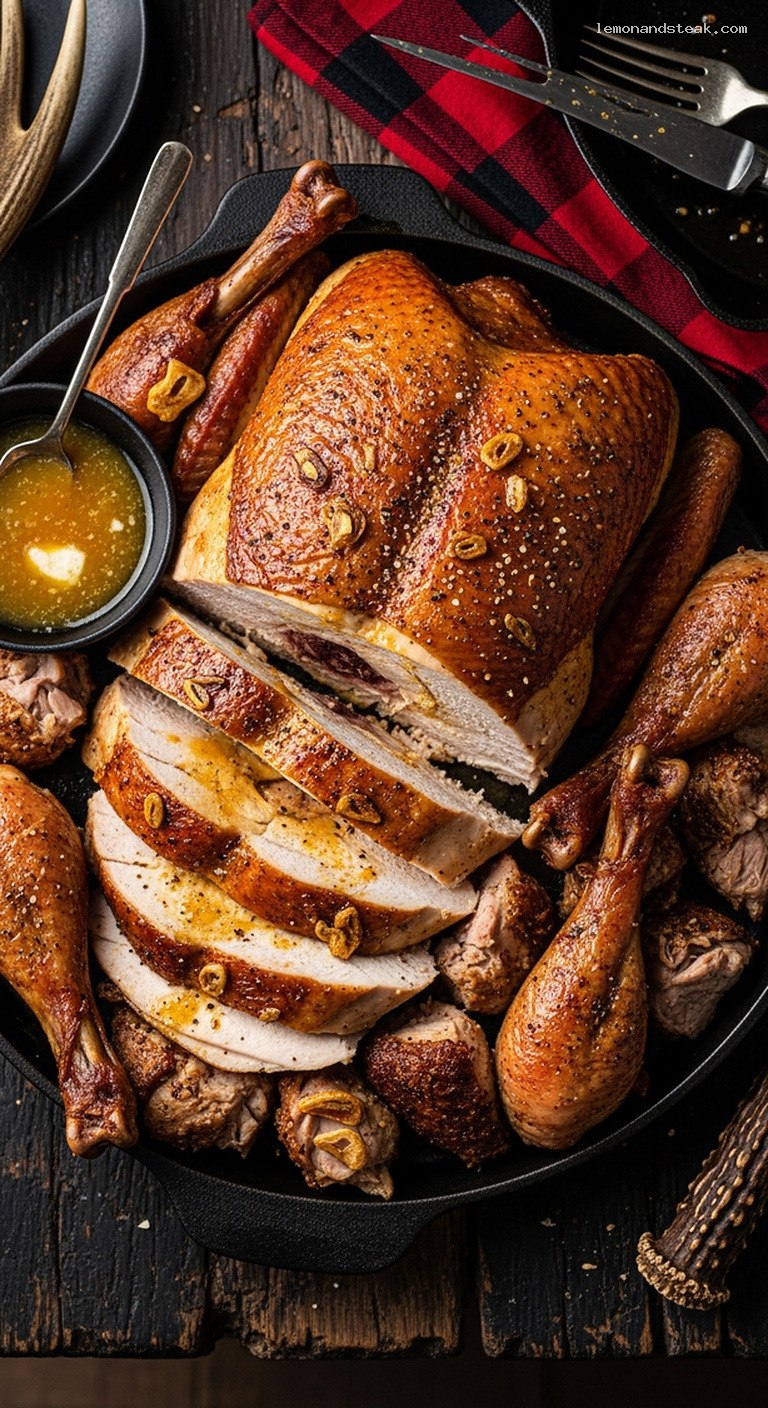
Quick Recipe Version (TL;DR)
Quick Ingredients
- 1 whole turkey (12–14 lb), fully thawed
- 8 tbsp (1 stick) unsalted butter, softened
- 4 tsp kosher salt, divided
- 2 tsp black pepper
- 2 tsp garlic powder
- 2 tsp onion powder
- 2 tsp paprika (sweet or smoked)
- 1 onion, quartered
- 1 head garlic, halved crosswise (optional but nice)
- 2 cups low-sodium chicken or turkey broth
Do This
- 1. Preheat oven to 300°F (150°C). Pat thawed turkey very dry with paper towels and remove giblets/neck.
- 2. Mix butter with salt (3 tsp), pepper, garlic powder, onion powder, and paprika. Loosen turkey skin over breasts and legs.
- 3. Rub about half the seasoned butter under the skin, and the rest all over the outside. Sprinkle remaining 1 tsp salt inside the cavity and over the skin.
- 4. Place onion and garlic in the cavity. Put turkey breast-side up on a rack in a roasting pan; pour broth into the pan.
- 5. Roast at 300°F for about 13–15 minutes per pound (around 4 hours for 12–14 lb), basting 2–3 times with pan juices.
- 6. When breast reaches 160°F and thigh 170°F, optionally increase oven to 375°F for 10–15 minutes to brown. Remove and rest, loosely tented with foil, for 30 minutes.
- 7. Carve and serve with the buttery pan juices spooned over the turkey or turned into a simple gravy.
Why You’ll Love This Recipe
- Classic, cozy, homestyle flavor from simple pantry spices and plenty of butter.
- Low-and-slow roasting keeps the meat juicy and forgiving, even for first-time turkey cooks.
- Uses basic ingredients and equipment you probably already have.
- Makes rich, flavorful drippings that turn into an easy, delicious gravy.
Grocery List
- Produce: 1 whole garlic head, 1 large yellow onion, 1–2 carrots (optional, for pan), 2–3 celery stalks (optional, for pan), fresh herbs like thyme or rosemary (optional garnish)
- Dairy: Unsalted butter (1–1½ sticks, depending on size of turkey)
- Pantry: Whole turkey (12–14 lb), kosher salt, black pepper, garlic powder, onion powder, paprika (sweet or smoked), low-sodium chicken or turkey broth, all-purpose flour (for gravy, optional)
Full Ingredients
For the Turkey
- 1 whole turkey, 12–14 lb, fully thawed (giblets and neck removed)
- 8 tbsp (1 stick / 113 g) unsalted butter, very soft
- 4 tsp kosher salt, divided (use less if using table salt)
- 2 tsp freshly ground black pepper
- 2 tsp garlic powder
- 2 tsp onion powder
- 2 tsp paprika (sweet or smoked, depending on your preference)
- 1 tsp dried thyme (optional, for a subtle herb note)
- 1 tsp dried sage (optional, for classic holiday flavor)
For Inside the Turkey & Roasting Pan
- 1 large yellow onion, peeled and quartered
- 1 whole head garlic, halved crosswise (no need to peel cloves)
- 1–2 carrots, cut into large chunks (optional, for under the turkey)
- 2–3 celery stalks, cut into large chunks (optional, for under the turkey)
- 2 cups (480 ml) low-sodium chicken or turkey broth, plus extra as needed
For Simple Pan Gravy (Optional but Recommended)
- 3 tbsp fat from pan drippings (top layer of the juices)
- 3 tbsp all-purpose flour
- 2–2½ cups combined pan juices and broth (low-sodium), warmed
- Salt and pepper to taste
Step-by-Step Instructions
Step 1: Thaw the turkey and get set up
If your turkey is frozen, thaw it safely in the refrigerator: allow about 24 hours for every 4–5 lb (a 12–14 lb turkey usually needs 3–4 days). When you are ready to cook, remove the turkey from the fridge 45–60 minutes before roasting to take the chill off; this helps it cook more evenly.
Position an oven rack in the lower third of your oven. Preheat the oven to 300°F (150°C). Set out your roasting pan with a rack (or improvise with a bed of carrots and celery if you do not have a rack), paper towels, and all your seasonings so everything is within reach.
Step 2: Mix the seasoned butter
In a small bowl, combine the softened butter, 3 tsp of the kosher salt, the black pepper, garlic powder, onion powder, paprika, and, if using, dried thyme and sage. Mix with a fork or spoon until you have a smooth, evenly colored, fragrant paste.
Soft butter is important here. It should be spreadable, not melted. If it is still firm, cut it into pieces and let it sit at room temperature for 10–15 minutes, or microwave on very low power in 5–10 second bursts just until soft.
Step 3: Prep and season the turkey
Remove the plastic and any pop-up timer from the turkey. Reach into the main cavity and neck cavity to remove the bag of giblets and the neck. (You can save these for stock or gravy if you like.) Pat the turkey very dry all over with paper towels, including inside the cavity. Dry skin browns and crisps better.
Sprinkle about 1 tsp of the remaining kosher salt inside the main cavity. Stuff the cavity loosely with the quartered onion and the halved garlic head. Do not pack it tightly; you want air to circulate for more even cooking.
Now gently loosen the skin: starting at the cavity end, slide your fingers between the skin and the breast meat, working your way up as far as you comfortably can without tearing the skin. Do the same over the tops of the drumsticks if possible. Spread about half of the seasoned butter under the skin over the breasts and legs, massaging it around from the outside to distribute it evenly. Rub the remaining butter all over the outside of the turkey, including the legs and wings. Finally, sprinkle any remaining salt lightly over the skin.
Step 4: Set up the roasting pan
Place the carrots and celery (if using) in the bottom of the roasting pan to form a bed. Set the roasting rack on top and place the turkey breast-side up on the rack. Tuck the wing tips under the body so they do not burn. If you like, you can tie the legs loosely together with kitchen twine, but it is not strictly necessary.
Pour 2 cups of broth into the bottom of the pan. The turkey should not be sitting in liquid; the broth is there to keep the drippings from burning and to create flavorful steam as the bird roasts. This liquid, mixed with the melted butter and turkey juices, will become the base for your pan sauce or gravy.
Step 5: Roast low and slow
Place the turkey in the preheated 300°F (150°C) oven. Roast uncovered, basting every 60–75 minutes with the pan juices. To baste, tilt the pan slightly and use a spoon or baster to drizzle the hot juices over the breast and legs, then return the pan to the oven. If the pan looks dry at any point, add another ½–1 cup of broth or water.
As a general guide, roast for about 13–15 minutes per pound at 300°F. For a 12–14 lb turkey, this usually takes about 3½–4 hours. Start checking the internal temperature after about 3 hours so you do not overcook it. Use an instant-read thermometer inserted into the thickest part of the breast (not touching bone) and the inner thigh.
Step 6: Finish browning and check doneness
The turkey is done when the breast meat reaches 160°F (71°C) and the thighs reach about 170°F (77°C); the temperature will rise a few degrees as it rests, carrying it to the safe 165°F (74°C). If the turkey reaches the right temperature but the skin is not as brown as you would like, increase the oven temperature to 375°F (190°C) for the last 10–15 minutes of roasting, keeping a close eye on it so it does not burn.
If at any point the breast skin is browning too quickly while the meat is still under temperature, loosely tent just the breast with foil and continue roasting until the internal temperatures are reached.
Step 7: Rest, carve, and make simple pan gravy (optional)
When the turkey is done, carefully transfer it to a large cutting board or platter. Loosely tent with foil and let it rest for at least 30 minutes. Resting allows the juices to redistribute so the meat stays moist when you carve it.
While the turkey rests, make the gravy if you like. Pour the pan juices through a fine-mesh strainer into a measuring cup. Let them sit for a few minutes, then skim 3 tbsp of the fat from the top and add to a saucepan over medium heat. Whisk in 3 tbsp flour and cook for 1–2 minutes, stirring constantly, until lightly golden. Slowly whisk in 2–2½ cups of the remaining strained juices plus extra broth as needed, whisking until smooth. Simmer for 5–8 minutes until thickened. Taste and season with salt and pepper.
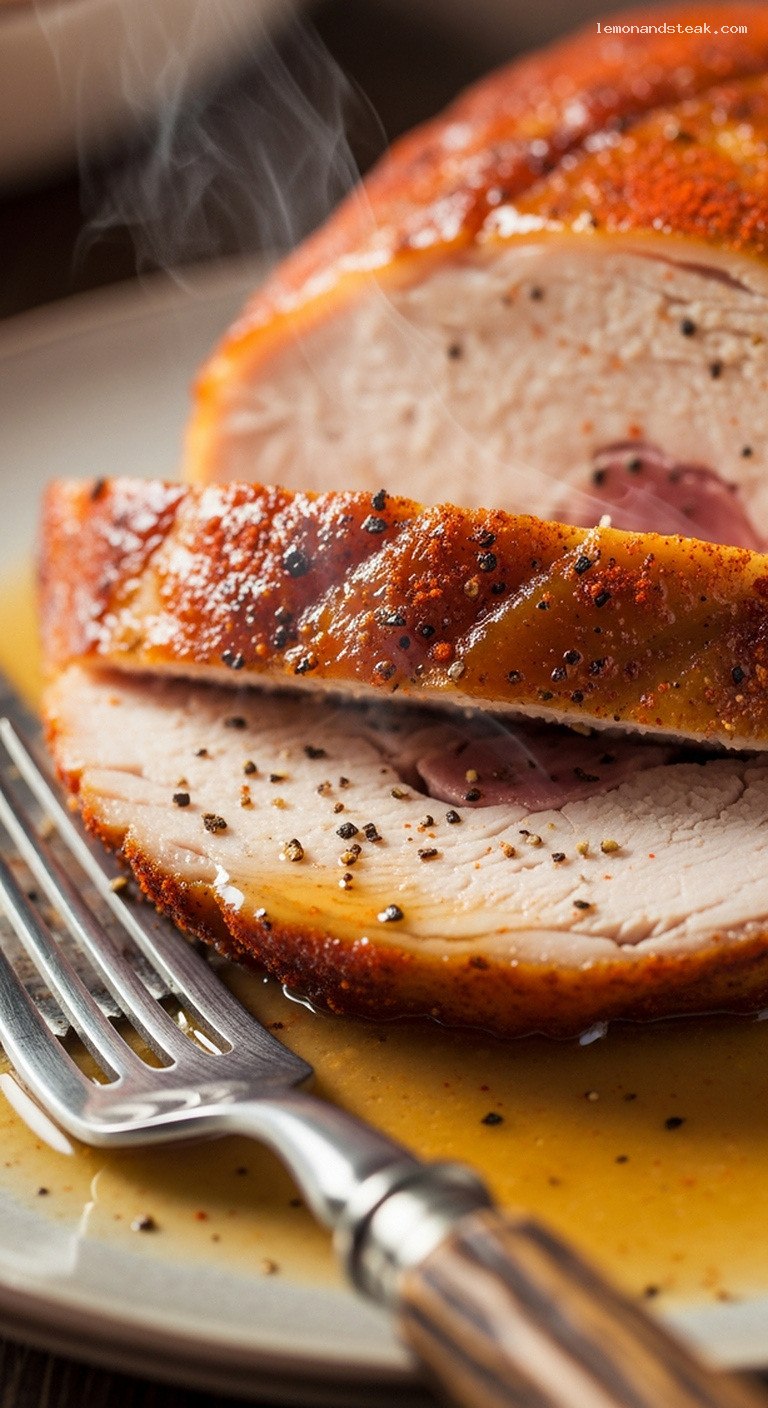
Carve the turkey: remove the legs and thighs, then the breasts, then slice the breast meat across the grain. Arrange on a warm platter, spoon some of the buttery pan juices or gravy over the top, and serve the rest on the side.
Pro Tips
- Dry the turkey very well. Extra moisture on the skin turns to steam, which prevents browning. A thorough pat-down with paper towels makes a big difference.
- Do not skip the rest. That 30-minute rest is key for juicy meat. If you carve too soon, the juices will run out onto the board instead of staying in the turkey.
- Use a thermometer, not the clock. The time per pound is a guideline; oven temperatures and turkey shapes vary. Internal temperature is the only reliable test for doneness.
- Adjust salt if your broth is salty. If using regular (not low-sodium) broth, reduce the salt in the butter mixture by ½–1 tsp and taste your gravy before adding more salt.
- Keep the seasoning simple. The combination of garlic, onion powder, paprika, salt, and butter gives a classic, dependable flavor that pairs with almost any side dish.
Variations
- Herb-forward turkey: Add 1–2 tbsp finely chopped fresh rosemary, thyme, and parsley to the butter mixture. Scatter extra fresh herbs in the pan for more aroma.
- Smoky paprika twist: Use smoked paprika instead of sweet, and add a pinch of cayenne for gentle heat. This gives a deeper color and a subtle smoky note.
- Garlic-lovers version: Add 1–2 tbsp very finely minced fresh garlic to the butter mixture in addition to the garlic powder, and tuck a few extra garlic cloves around the turkey in the pan.
Storage & Make-Ahead
Let leftover turkey cool to room temperature for no more than 2 hours, then store in airtight containers in the refrigerator for up to 4 days. For best results, slice the meat off the bone before chilling; it reheats more evenly that way. To freeze, wrap portions tightly in foil or freezer bags and freeze for up to 3 months. Thaw overnight in the refrigerator before reheating.
To reheat, add a splash of broth to the turkey slices, cover tightly with foil, and warm in a 300°F (150°C) oven until just heated through, 15–25 minutes depending on thickness. You can also make the seasoned butter a day ahead and keep it in the fridge; take it out 30–45 minutes before using so it softens enough to spread under the skin.
Nutrition (per serving)
Approximate values for 1 serving (about 6 oz cooked turkey with some skin, without gravy): 320 calories, 45 g protein, 14 g fat, 0–2 g carbohydrates, 0 g fiber, 1 g sugar, 680 mg sodium. Exact numbers will vary based on the size of your turkey, how much skin is eaten, and how much salt and butter actually stay on the meat.
Leave a Reply