
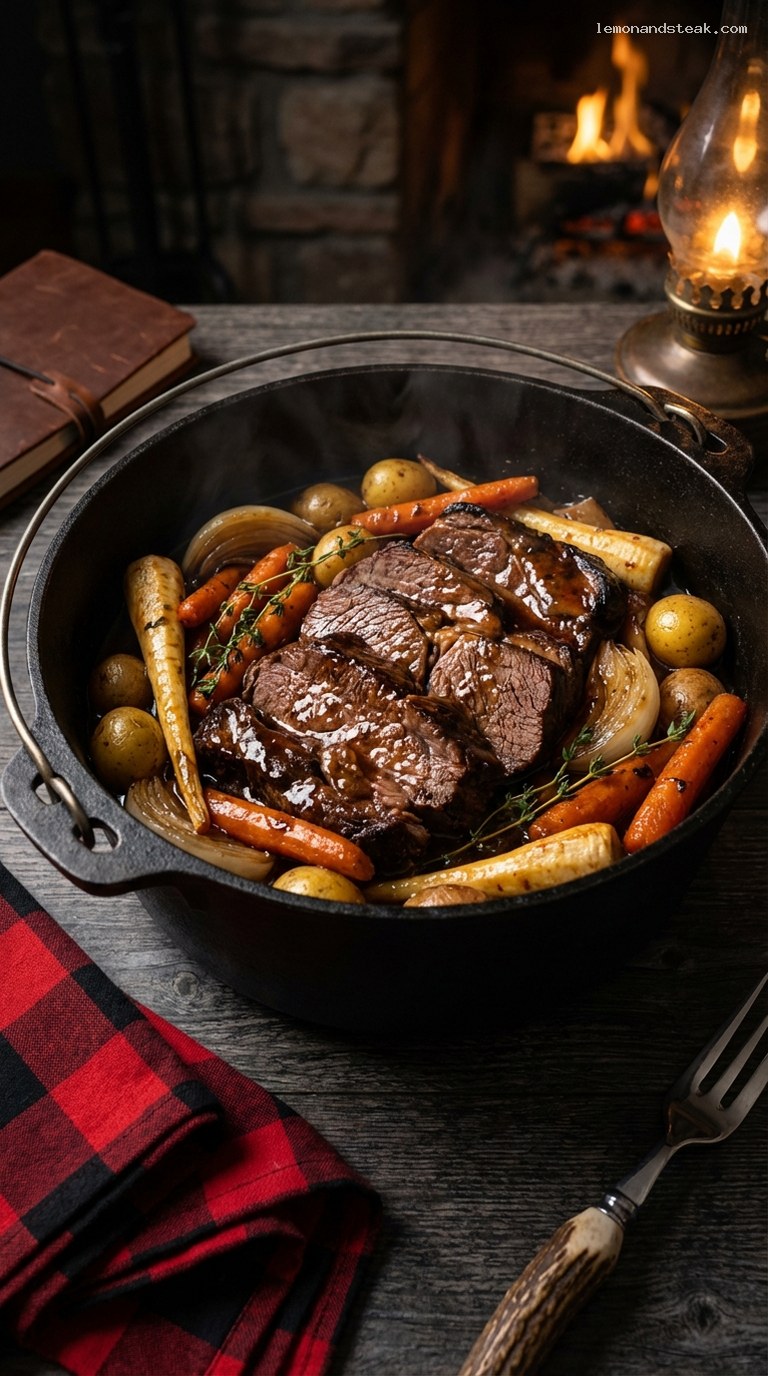
Quick Recipe Version (TL;DR)
Quick Ingredients
- 3 to 3 1/2 lb boneless beef chuck roast
- 2 tsp kosher salt, 1 tsp black pepper
- 2 tbsp all-purpose flour
- 2 tbsp neutral oil
- 1 large onion, 4 carrots, 3 parsnips, 1 lb baby potatoes, 2 ribs celery
- 4 garlic cloves, smashed
- 1 1/2 cups apple cider (not vinegar)
- 1 cup low-sodium beef broth
- 1/3 cup pure maple syrup
- 2 tbsp tomato paste
- 1 tbsp Worcestershire or soy sauce
- 2 tbsp apple cider vinegar (optional but recommended)
- 6 sprigs fresh thyme, 1 sprig rosemary, 2 bay leaves
- 2 tbsp unsalted butter (for finishing)
Do This
- 1. Preheat oven to 300°F (150°C). Pat roast dry, season with salt and pepper, and lightly coat with flour.
- 2. In a large cast-iron Dutch oven, sear roast in hot oil over medium-high heat until deeply browned on all sides; remove and set aside.
- 3. In the same pot, sauté onion, carrots, parsnips, celery, and garlic until lightly browned.
- 4. Stir in tomato paste, then deglaze with apple cider, scraping up browned bits. Add broth, maple syrup, Worcestershire, vinegar, herbs, and bay leaves; bring to a simmer.
- 5. Return roast to pot, nestle in potatoes, cover, and braise in oven 3 to 3 1/2 hours, until fork-tender.
- 6. Transfer roast and vegetables to a platter to rest. Skim fat from braising liquid, then simmer and reduce until slightly thickened; whisk in butter.
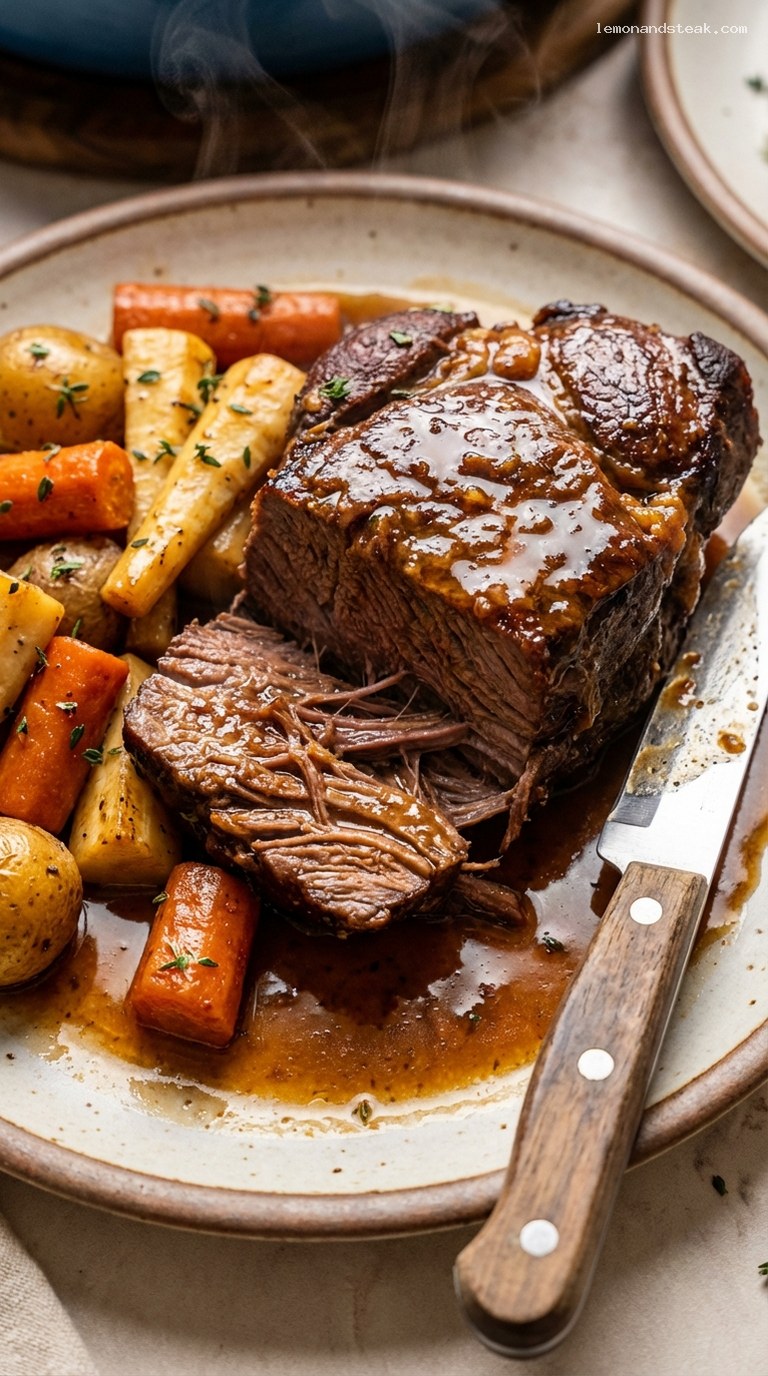
- 7. Slice or shred roast, spoon maple-cider sauce and vegetables over top, garnish with fresh thyme or parsley, and serve hot.
Why You’ll Love This Recipe
- Slow-braised chuck roast turns meltingly tender with almost no hands-on work.
- Maple syrup and apple cider create a gently sweet, woodsy glaze that tastes like a cozy cabin dinner.
- Everything cooks in one cast-iron pot for easy cleanup and big, layered flavor.
- Root vegetables soak up the maple-cider juices, so you get a full meal straight from the Dutch oven.
Grocery List
- Produce: Yellow onion, carrots, parsnips, baby or small potatoes, celery, garlic, fresh thyme, fresh rosemary (optional), fresh parsley (optional for garnish).
- Dairy: Unsalted butter.
- Pantry: Boneless beef chuck roast, kosher salt, black pepper, all-purpose flour, neutral oil (canola, vegetable, or avocado), apple cider (not vinegar), low-sodium beef broth, pure maple syrup, tomato paste, Worcestershire sauce or soy sauce, apple cider vinegar, bay leaves, cornstarch (optional for thickening).
Full Ingredients
For the Pot Roast
- 3 to 3 1/2 lb (1.4–1.6 kg) boneless beef chuck roast, trimmed of excess surface fat
- 2 tsp kosher salt
- 1 tsp freshly ground black pepper
- 2 tbsp all-purpose flour (for dredging)
- 2 tbsp neutral oil (canola, vegetable, or avocado)
For the Vegetables
- 1 large yellow onion, peeled and cut into 8 wedges
- 4 medium carrots, peeled and cut into 2-inch chunks on the bias
- 3 medium parsnips, peeled, cores removed if very thick, cut into 2-inch chunks
- 1 lb (450 g) baby gold or red potatoes, halved (or quartered if large)
- 2 ribs celery, cut into 1 1/2-inch pieces
- 4 cloves garlic, smashed
For the Maple-Cider Braising Liquid
- 1 1/2 cups (360 ml) apple cider (unfiltered if possible; do not use apple cider vinegar here)
- 1 cup (240 ml) low-sodium beef broth
- 1/3 cup (80 ml) pure maple syrup (preferably dark/robust)
- 2 tbsp tomato paste
- 1 tbsp Worcestershire sauce or low-sodium soy sauce
- 2 tbsp apple cider vinegar (for brightness; recommended)
- 6 fresh thyme sprigs
- 1 fresh rosemary sprig (optional, for extra woodsy flavor)
- 2 bay leaves
For Finishing & Serving
- 2 tbsp unsalted butter
- 1 tbsp chopped fresh parsley or extra fresh thyme leaves (for garnish)
- 1 tbsp cornstarch mixed with 1 tbsp cold water (optional, if you want a thicker gravy-style sauce)
- Additional kosher salt and black pepper to taste
Step-by-Step Instructions
Step 1: Preheat the Oven and Prep the Roast
Preheat your oven to 300°F (150°C). Position a rack in the lower-middle of the oven so your Dutch oven will sit roughly in the center.
Pat the beef chuck roast very dry on all sides with paper towels. This helps it brown deeply. Sprinkle the roast evenly with the 2 teaspoons kosher salt and 1 teaspoon black pepper, pressing the seasoning into the meat. Lightly sprinkle the all-purpose flour over all sides of the roast and pat it on so it forms a thin, even coating. Shake off any excess flour.
Step 2: Sear the Roast in Cast Iron
Place a large, heavy cast-iron Dutch oven (at least 5–6 quarts) over medium-high heat. Add the 2 tablespoons of neutral oil and heat until shimmering and just starting to smoke.
Carefully lower the roast into the pot. Sear without moving it for 4–5 minutes, until the bottom is a deep, mahogany brown. Turn the roast and repeat on all sides, including the short edges, for a total of about 10–12 minutes of searing. Adjust the heat as needed so the fond (the browned bits on the bottom) does not burn.
Transfer the seared roast to a plate or tray and set aside. Leave any fat and browned bits in the pot; they are pure flavor.
Step 3: Brown the Aromatics and Root Vegetables
Reduce the heat to medium. If the pot looks very dry, add another teaspoon of oil. Add the onion wedges, carrots, parsnips, celery, and smashed garlic to the pot. Cook, stirring occasionally, for 6–8 minutes, until the vegetables pick up some color and the onions start to soften and brown at the edges.
Clear a small space in the center, add the 2 tablespoons of tomato paste, and cook it for 1–2 minutes, stirring it around to toast slightly. This deepens its flavor and removes any raw, tinny taste.
Step 4: Deglaze with Apple Cider and Build the Maple-Cider Sauce
Pour in the 1 1/2 cups of apple cider and immediately stir, scraping up all the browned bits from the bottom of the pot with a wooden spoon. Let the cider simmer for 2–3 minutes, reducing slightly.
Add the 1 cup beef broth, 1/3 cup maple syrup, 1 tablespoon Worcestershire (or soy) sauce, and 2 tablespoons apple cider vinegar. Stir well to combine. Nestle in the thyme sprigs, rosemary sprig (if using), and bay leaves. Bring the mixture just up to a simmer. Taste the liquid carefully (it will still be fairly intense and slightly sweet at this stage) and adjust with a pinch more salt if it tastes very flat; the flavors will mellow and concentrate as it braises.
Step 5: Nestle in the Roast and Potatoes
Return the seared chuck roast and any accumulated juices on the plate to the Dutch oven, nestling it down into the vegetables and liquid. Arrange the halved baby potatoes around the roast, pushing them down so they are partially submerged in the braising liquid.
The liquid should come about halfway to two-thirds of the way up the sides of the roast. If it seems very low, you can top off with a little extra broth or water. Bring the pot back to a gentle simmer on the stovetop.
Step 6: Slow-Braise Until Fork-Tender
Once the liquid is gently simmering, cover the Dutch oven with a tight-fitting lid and transfer it to the preheated 300°F (150°C) oven. Braise for 3 to 3 1/2 hours, until the roast is very tender.
Check the roast around the 2 1/2-hour mark. Carefully remove the lid (watch for steam), and use a fork to test the meat. When done, the roast should be easy to pull apart with a fork, but not completely falling apart into shreds. If it is still firm, re-cover and continue braising, checking every 20–30 minutes.
When the roast is tender, remove the pot from the oven. Use tongs or a large spatula to gently transfer the roast to a cutting board. Scoop the vegetables and potatoes to a warm serving platter. Tent both loosely with foil and let rest while you finish the sauce.
Step 7: Reduce the Maple-Cider Sauce and Serve
Discard the bay leaves, thyme stems, and rosemary sprig from the pot. Skim off excess fat from the surface of the braising liquid with a spoon. Place the pot over medium heat and bring the liquid to a lively simmer.
Let the sauce simmer, uncovered, for 8–12 minutes, stirring occasionally, until it has reduced and thickened slightly. For a glossy, softly thickened sauce, whisk in the 2 tablespoons of butter until melted and smooth. For a thicker gravy-style sauce, whisk the cornstarch slurry (1 tablespoon cornstarch mixed with 1 tablespoon cold water) into the simmering liquid and cook 2–3 minutes more, until it coats the back of a spoon.
Taste and adjust seasoning with additional salt and pepper as needed.
Slice the roast against the grain into thick slices, or gently pull it into large chunks. Arrange on the platter with the vegetables. Spoon the warm maple-cider sauce generously over the meat and vegetables. Garnish with chopped fresh parsley or extra thyme leaves, and serve hot with crusty bread or mashed potatoes if you like.
Pro Tips
- Brown deeply for big flavor. Take your time searing the roast and lightly browning the vegetables; the dark fond on the bottom of the pan is what gives the sauce its deep, woodsy flavor.
- Use real maple syrup. Pure maple syrup (not pancake syrup) is essential for a clean, rich maple note that balances the savory broth and cider.
- Choose the right cut. Boneless beef chuck roast is ideal for braising; leaner cuts like round roast will be drier and less tender.
- Check tenderness, not the clock. Ovens vary. Start checking at 2 1/2 hours, but let the meat tell you when it is done: it should yield easily to a fork.
- Make it ahead for even better flavor. This pot roast tastes even deeper and more unified the next day after the flavors meld in the fridge.
Variations
- Slow Cooker Maple-Cider Pot Roast: Sear the roast and sauté vegetables on the stovetop as directed, then transfer everything to a slow cooker. Cook on Low for 8–9 hours or on High for 4–5 hours, until tender. Finish the sauce on the stovetop, reducing and thickening as desired.
- Smoky Maple-Chipotle Version: Add 1–2 minced chipotle peppers in adobo and 1 teaspoon smoked paprika to the braising liquid for a gentle smoky heat that plays beautifully with the maple and cider.
- Sweet Potato Swap: Replace half or all of the baby potatoes with peeled, 2-inch chunks of sweet potato for a slightly sweeter, earthy twist that still keeps the rustic feel.
Storage & Make-Ahead
Let leftovers cool to room temperature, then store the meat, vegetables, and sauce together in an airtight container in the refrigerator for up to 4 days. Reheat gently in a covered saucepan over low heat or in a 300°F (150°C) oven until warmed through, adding a splash of water or broth if the sauce thickens too much.
For longer storage, freeze in airtight containers or heavy-duty freezer bags (with as much air removed as possible) for up to 3 months. Thaw overnight in the refrigerator before reheating. This recipe is excellent made 1 day ahead; the flavors deepen, and it is easy to remove any hardened fat from the top of the chilled sauce before reheating.
Nutrition (per serving)
Approximate values for 1 of 6 servings (including sauce and vegetables): about 600 calories, 38 g protein, 26 g carbohydrate, 34 g fat, 9 g saturated fat, 3 g fiber, 15–18 g sugar (mostly from maple syrup, cider, and root vegetables), and around 900–1000 mg sodium (will vary based on broth and added salt). These numbers are estimates and will vary with the exact size of your roast and how much sauce you consume.
Leave a Reply