
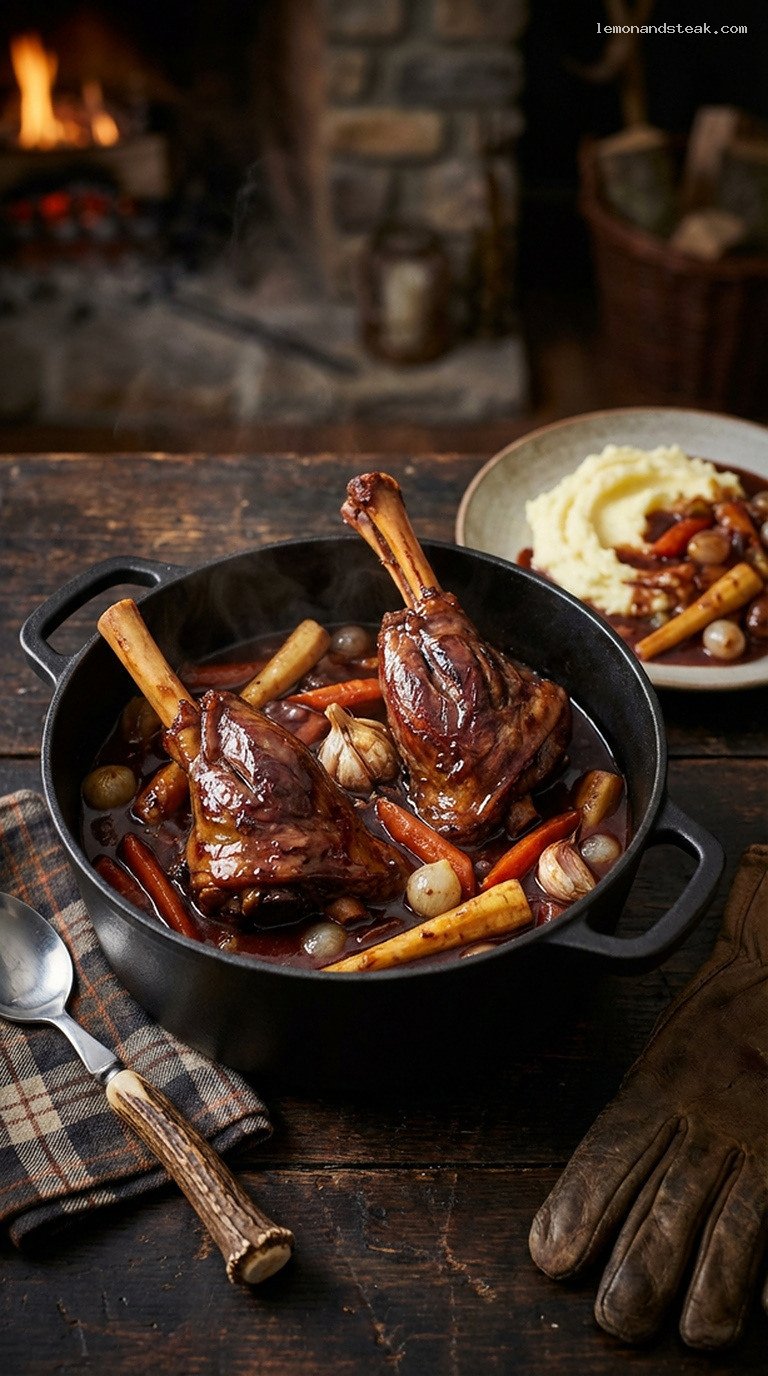
Quick Recipe Version (TL;DR)
Quick Ingredients
- 4 lamb shanks (about 10–12 oz / 280–340 g each)
- 2 tsp kosher salt + 1 tsp black pepper
- 2 tbsp olive oil
- 2 tbsp unsalted butter
- 1 large onion, diced
- 2 carrots, diced
- 2 parsnips, diced
- 1 small celery root (celeriac), diced (or 2 small turnips)
- 1 leek (white and light green), sliced (or 2 extra onions)
- 8–10 whole garlic cloves, peeled
- 2 tbsp tomato paste
- 1 1/2 cups (360 ml) dry red wine
- 2 cups (480 ml) beef or lamb stock
- 2 sprigs fresh rosemary + 4 sprigs thyme + 2 bay leaves
- 1 tbsp balsamic vinegar (optional, to finish)
- Fresh parsley, chopped (for garnish)
Do This
- 1. Preheat oven to 325°F (163°C). Pat lamb shanks dry and season all over with salt and pepper.
- 2. Heat olive oil in a large Dutch oven over medium-high. Brown shanks on all sides, 10–12 minutes total. Remove and set aside.
- 3. Lower heat to medium. Add butter, onion, leek, carrots, parsnips, celery root, and garlic. Cook until softened and lightly golden, 8–10 minutes.
- 4. Stir in tomato paste and cook 2 minutes. Pour in red wine and simmer 3–4 minutes, scraping up browned bits.
- 5. Add stock, rosemary, thyme, bay leaves, and the lamb shanks. Liquid should come about halfway up the meat; top up with a little water if needed.
- 6. Cover and braise in oven 2 1/2–3 hours, turning shanks once, until meat is very tender and vegetables are melting into the sauce.
- 7. Remove herbs and shanks. Simmer sauce on stove 5–10 minutes to thicken; adjust seasoning and stir in balsamic if using. Return shanks to coat and serve with mashed potatoes, polenta, or crusty bread.
Why You’ll Love This Recipe
- Deep, restaurant-quality flavor with simple, everyday ingredients and one pot.
- Slow braising turns tough lamb shanks into fall-off-the-bone, spoon-tender meat.
- Winter vegetables and garlic melt into the red wine braising liquid to form a rich, savory sauce.
- Perfect make-ahead centerpiece for cozy dinners, holidays, or casual entertaining.
Grocery List
- Produce: Onion, leek (or extra onions), carrots, parsnips, celery root or turnips, garlic, fresh rosemary, fresh thyme, fresh parsley (for garnish).
- Dairy: Unsalted butter (for browning and richness).
- Pantry: Lamb shanks, olive oil, kosher salt, black pepper, tomato paste, dry red wine, beef or lamb stock, bay leaves, balsamic vinegar (optional), mashed potatoes or polenta ingredients (if serving alongside).
Full Ingredients
Lamb Shanks
- 4 lamb shanks, about 10–12 oz (280–340 g) each
- 2 tsp kosher salt (plus more to taste)
- 1 tsp freshly ground black pepper
- 2 tbsp olive oil
Aromatics & Winter Vegetables
- 2 tbsp unsalted butter
- 1 large yellow onion, diced
- 1 leek, white and light green parts only, halved lengthwise and sliced (or substitute 1 medium onion, diced)
- 2 medium carrots, peeled and diced (about 1/2-inch pieces)
- 2 medium parsnips, peeled and diced (about 1/2-inch pieces)
- 1 small celery root (celeriac), peeled and diced (or 2 small turnips, peeled and diced)
- 8–10 large garlic cloves, peeled and left whole
- 2 tbsp tomato paste
Braising Liquid
- 1 1/2 cups (360 ml) dry red wine (such as Cabernet Sauvignon, Merlot, or Côtes du Rhône)
- 2 cups (480 ml) beef or lamb stock (low-sodium preferred)
- 2 fresh rosemary sprigs
- 4 fresh thyme sprigs
- 2 bay leaves (fresh or dried)
- Up to 1/2 cup (120 ml) water, as needed, to adjust liquid level
To Finish & Serve
- 1 tbsp balsamic vinegar (optional, for brightness)
- 2 tbsp chopped fresh flat-leaf parsley, for garnish
- Mashed potatoes, creamy polenta, or crusty bread, for serving
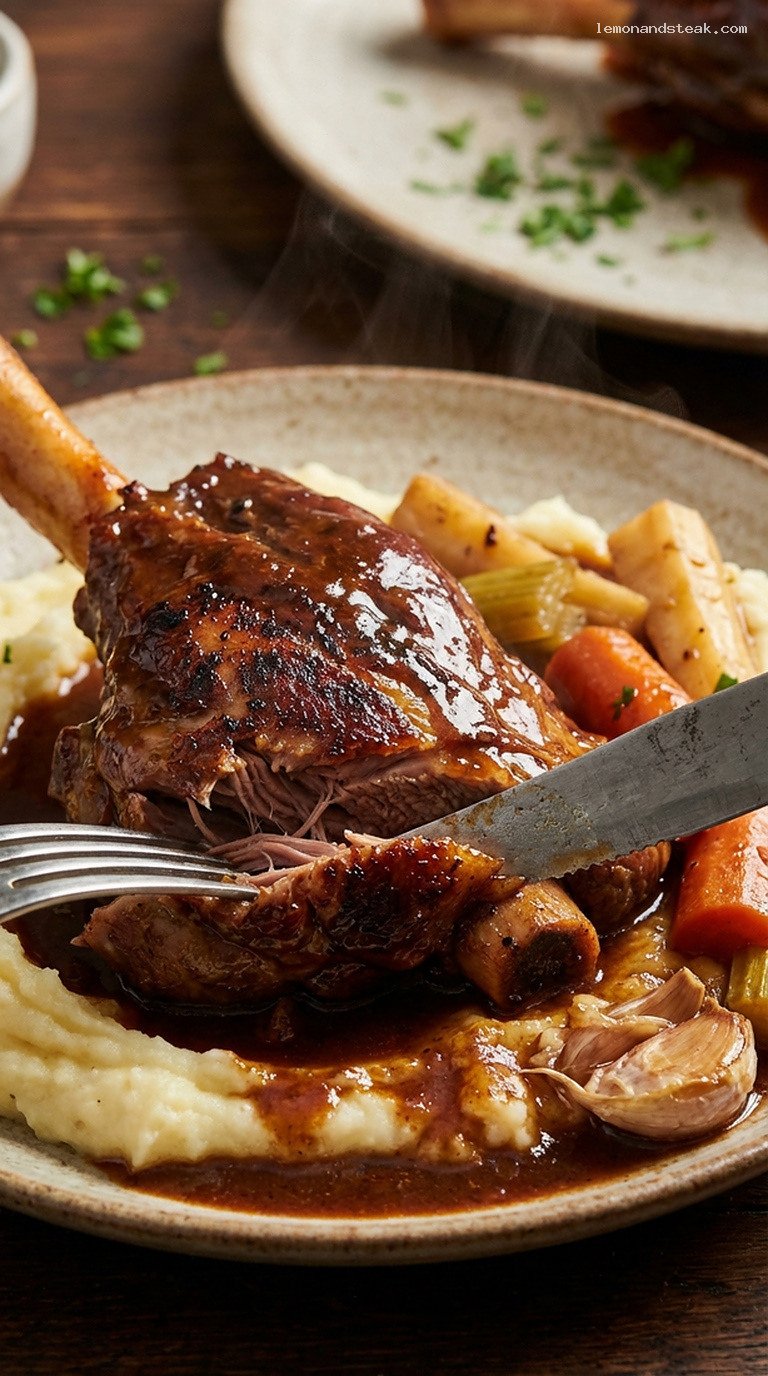
Step-by-Step Instructions
Step 1: Prep the lamb and preheat the oven
Preheat your oven to 325°F (163°C). Pat the lamb shanks very dry with paper towels; this helps them brown properly. Sprinkle them all over with the 2 tsp kosher salt and 1 tsp black pepper, massaging the seasoning into all sides. Let the seasoned shanks sit at room temperature while you gather and chop your vegetables. This slight warm-up helps them sear more evenly.
Step 2: Brown the lamb shanks
Place a large, heavy Dutch oven or oven-safe pot (at least 5–6 quarts) over medium-high heat. Add the 2 tbsp olive oil. When the oil is shimmering and just starting to smoke, add the lamb shanks in a single layer, leaving a little space between them (work in two batches if needed).
Sear the shanks on all sides until deeply browned, about 10–12 minutes total, turning every few minutes with tongs. Good browning means better flavor in the finished sauce. Transfer the browned shanks to a plate and set aside. Leave any rendered fat and browned bits in the pot; those are pure flavor.
Step 3: Soften the vegetables and build the flavor base
Reduce the heat to medium. Add the 2 tbsp unsalted butter to the pot. Once melted, stir in the diced onion, sliced leek, carrots, parsnips, celery root (or turnips), and whole garlic cloves. Sprinkle with a small pinch of salt to help them soften.
Cook, stirring occasionally, until the vegetables are lightly golden and starting to soften, about 8–10 minutes. You are not trying to fully cook them yet; just develop some sweetness and color. Add the 2 tbsp tomato paste and cook, stirring constantly, for 2 minutes to caramelize it slightly. The bottom of the pot may get a bit sticky and dark, but not burned; that is what you will deglaze next.
Step 4: Deglaze with red wine
Pour in the 1 1/2 cups (360 ml) dry red wine. It should sizzle as it hits the hot pot. Use a wooden spoon or spatula to scrape up all the browned bits from the bottom and sides of the pot; these will dissolve into the liquid and give the braise deep flavor.
Bring the wine to a simmer and let it bubble briskly for 3–4 minutes. This reduces the sharp alcohol taste and concentrates the flavor. The liquid will reduce slightly and start to smell richer and more aromatic.
Step 5: Add stock, herbs, and lamb shanks, then braise
Stir in the 2 cups (480 ml) beef or lamb stock. Add the rosemary sprigs, thyme sprigs, and bay leaves. Return the browned lamb shanks to the pot, nestling them down into the vegetables. Arrange them bone-side up if possible, so the meaty part is well submerged.
The liquid should come about halfway to two-thirds up the sides of the shanks. If it does not, add up to 1/2 cup (120 ml) water as needed. Bring the pot back to a gentle simmer on the stove.
Cover the pot with a tight-fitting lid and transfer to the preheated oven. Braise for 2 1/2–3 hours, turning the shanks once halfway through. The braise is done when the lamb is very tender and almost falling off the bone; a fork should slide in with little resistance.
Step 6: Reduce and refine the sauce
Carefully remove the pot from the oven. Using tongs, transfer the lamb shanks to a clean plate and tent them loosely with foil to keep warm. Fish out and discard the rosemary stems, thyme stems, and bay leaves from the sauce.
Place the pot back on the stove over medium heat. If there is a lot of visible fat on top, you can spoon some off. Let the sauce simmer gently for 5–10 minutes, stirring occasionally, until slightly thickened and glossy. The vegetables and garlic should be very soft; many will have broken down and “melted” into the sauce, giving it body and sweetness. Taste and season with additional salt and pepper as needed, and stir in the optional 1 tbsp balsamic vinegar if you want a little brightness to balance the richness.
Step 7: Coat the shanks and serve
Return the warm lamb shanks to the pot, turning them to coat thoroughly in the sauce. Simmer gently for another 2–3 minutes so the flavors marry and the shanks are piping hot.
To serve, spoon a generous bed of mashed potatoes, creamy polenta, or torn crusty bread onto warm plates or shallow bowls. Place a lamb shank on top of each portion. Ladle plenty of the rich red wine and vegetable sauce over and around each shank, making sure to include the soft garlic cloves and pieces of “melty” carrots, parsnips, and celery root. Finish with a sprinkle of chopped fresh parsley for color and freshness. Serve immediately while steaming hot.
Pro Tips
- Brown deeply: Take your time searing the shanks until they are a deep, even brown. This is the single biggest flavor boost for the whole dish.
- Choose the right wine: Use a dry red you would enjoy drinking (nothing sweet). Medium-bodied wines like Cabernet Sauvignon, Merlot, or Côtes du Rhône work very well.
- Check liquid level: During braising, if you peek in and the liquid seems low, add a splash of water or stock so the bottom does not scorch.
- Make ahead for even better flavor: This braise tastes even better the next day. The flavors meld and the sauce thickens nicely when reheated.
- Skim fat easily: If you chill the braise overnight, the fat will solidify on top. Lift it off before reheating for a cleaner-tasting sauce.
Variations
- Root vegetable mix-up: Swap some or all of the parsnips and celery root for turnips, rutabaga, or even chunks of sweet potato for a slightly sweeter, earthier braise.
- Tomato-rich version: Add a 14.5 oz (410 g) can of crushed tomatoes along with the stock for a more tomato-forward, saucy braise that is great over pasta.
- Herb and spice twist: Add 1 tsp smoked paprika and a strip of orange zest to the pot with the herbs for a subtle smoky-citrus note that pairs beautifully with lamb.
Storage & Make-Ahead
Cool leftovers to room temperature, then transfer lamb shanks and sauce to an airtight container. Refrigerate for up to 4 days. The flavors actually improve after a day as they meld together. Reheat gently on the stovetop over low heat, covered, until the lamb is hot all the way through, adding a splash of water or stock if the sauce has thickened too much. For longer storage, remove the meat from the bones, submerge in the sauce, and freeze in a freezer-safe container for up to 3 months. Thaw overnight in the fridge before reheating. You can also fully cook the dish a day in advance, chill in the same pot, skim off the solidified fat the next day, and reheat slowly in the oven at 300°F (150°C) until hot and bubbling.
Nutrition (per serving)
Approximate values for 1 lamb shank with a generous portion of sauce (not including mashed potatoes, polenta, or bread): about 780 calories; 47 g protein; 54 g fat (23 g saturated); 15 g carbohydrates; 3 g fiber; 5 g sugar; 970 mg sodium. Actual values will vary based on the exact size of the shanks, how much fat is skimmed, and the sides you serve.
Leave a Reply