
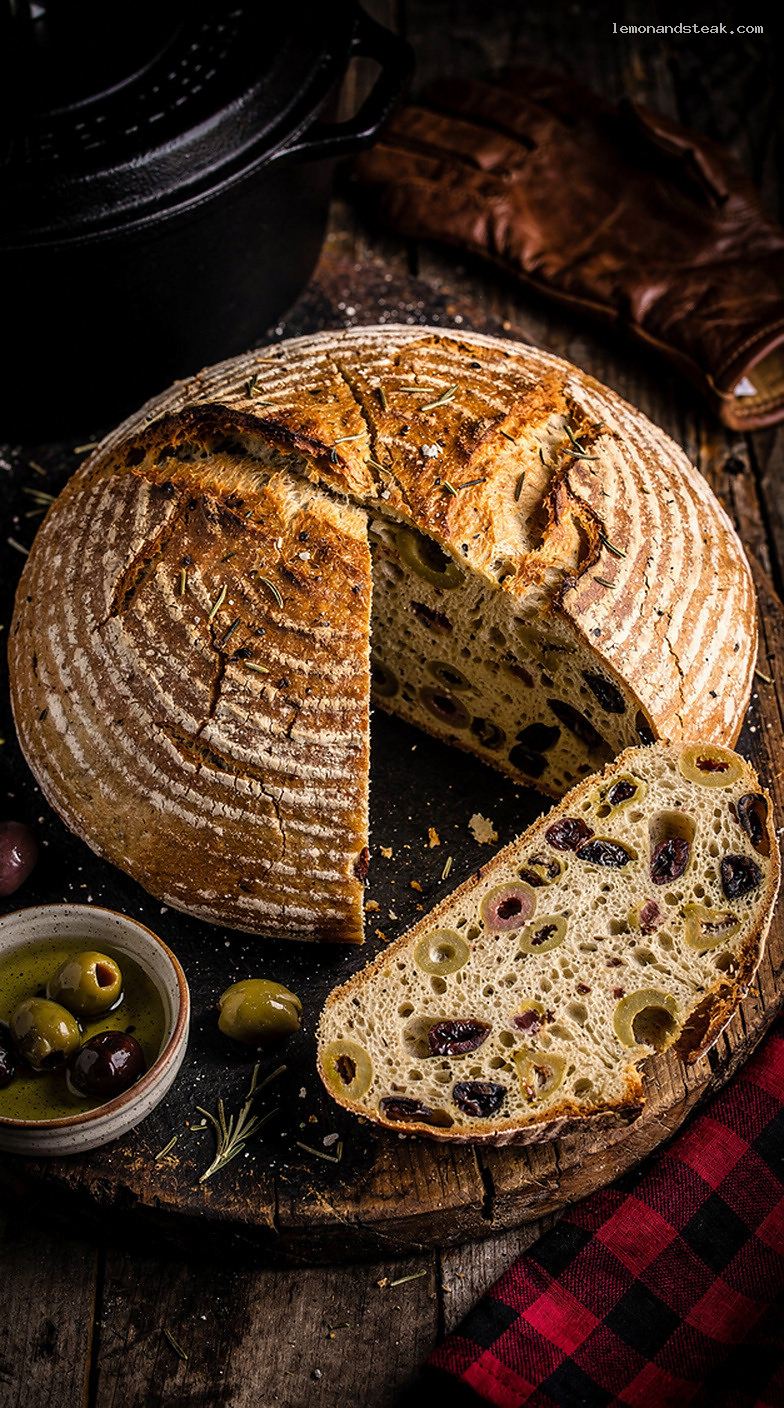
Quick Recipe Version (TL;DR)
Quick Ingredients
- 500 g bread flour
- 360 g warm water (105℉ to 110℉)
- 7 g (2 1/4 tsp) instant yeast
- 10 g (2 tsp) sugar
- 12 g (2 tsp) fine sea salt
- 45 g (3 tbsp) extra-virgin olive oil, plus 1 tsp for the bowl
- 200 g (about 1 1/3 cups) pitted olives, chopped and well-dried
- 2 tsp chopped fresh rosemary (or 1 tsp dried)
- 1/2 tsp dried oregano
Do This
- 1. Mix flour, yeast, sugar, salt, rosemary, and oregano; add warm water and olive oil and mix into a shaggy dough.
- 2. Knead 8 to 10 minutes until smooth; knead in chopped, dried olives just until evenly distributed.
- 3. Rise covered in an oiled bowl for 75 to 90 minutes at warm room temp, until doubled.
- 4. Shape into a tight round; proof on parchment 35 to 45 minutes, until puffy.
- 5. Preheat oven to 475℉ with a Dutch oven inside for 30 minutes; score and bake 25 minutes covered.
- 6. Uncover and bake 15 to 18 minutes more (internal temp 205℉ to 210℉); cool at least 20 minutes before slicing.
Why You’ll Love This Recipe
- Bold Mediterranean flavor from briny olives and fruity extra-virgin olive oil.
- Rustic artisan look with a crackly crust and tender, chewy crumb.
- Very doable at home with clear steps and simple pantry ingredients.
- Perfect alongside soups, salads, pasta, or a cheese board.
Grocery List
- Produce: Fresh rosemary (optional if using dried)
- Dairy: Unsalted butter (optional, for brushing after baking)
- Pantry: Bread flour, instant yeast, sugar, fine sea salt, extra-virgin olive oil, pitted olives (Kalamata and/or green), dried oregano, cornmeal or extra flour (for dusting)
Full Ingredients
For the Olive Bread Dough
- 500 g (about 4 cups) bread flour, plus more for shaping
- 7 g (2 1/4 tsp) instant yeast
- 10 g (2 tsp) sugar
- 12 g (2 tsp) fine sea salt
- 2 tsp fresh rosemary, finely chopped (or 1 tsp dried rosemary)
- 1/2 tsp dried oregano
- 360 g (1 1/2 cups) warm water, 105℉ to 110℉
- 45 g (3 tbsp) extra-virgin olive oil
- 200 g (about 1 1/3 cups) pitted olives, roughly chopped and very well-drained
For the Bowl, Shaping, and Baking
- 1 tsp extra-virgin olive oil (to oil the bowl)
- 1 to 2 tbsp cornmeal or flour (for dusting parchment)
- 1 to 2 tsp extra-virgin olive oil (optional, to brush the crust after baking)
- 1 tbsp unsalted butter, melted (optional, for a softer, glossy crust)
Olive Options (Choose One Mix)
- Classic: 120 g Kalamata + 80 g green olives (both pitted)
- All Kalamata: 200 g Kalamata olives (pitted)
- Milder: 200 g green Castelvetrano olives (pitted)
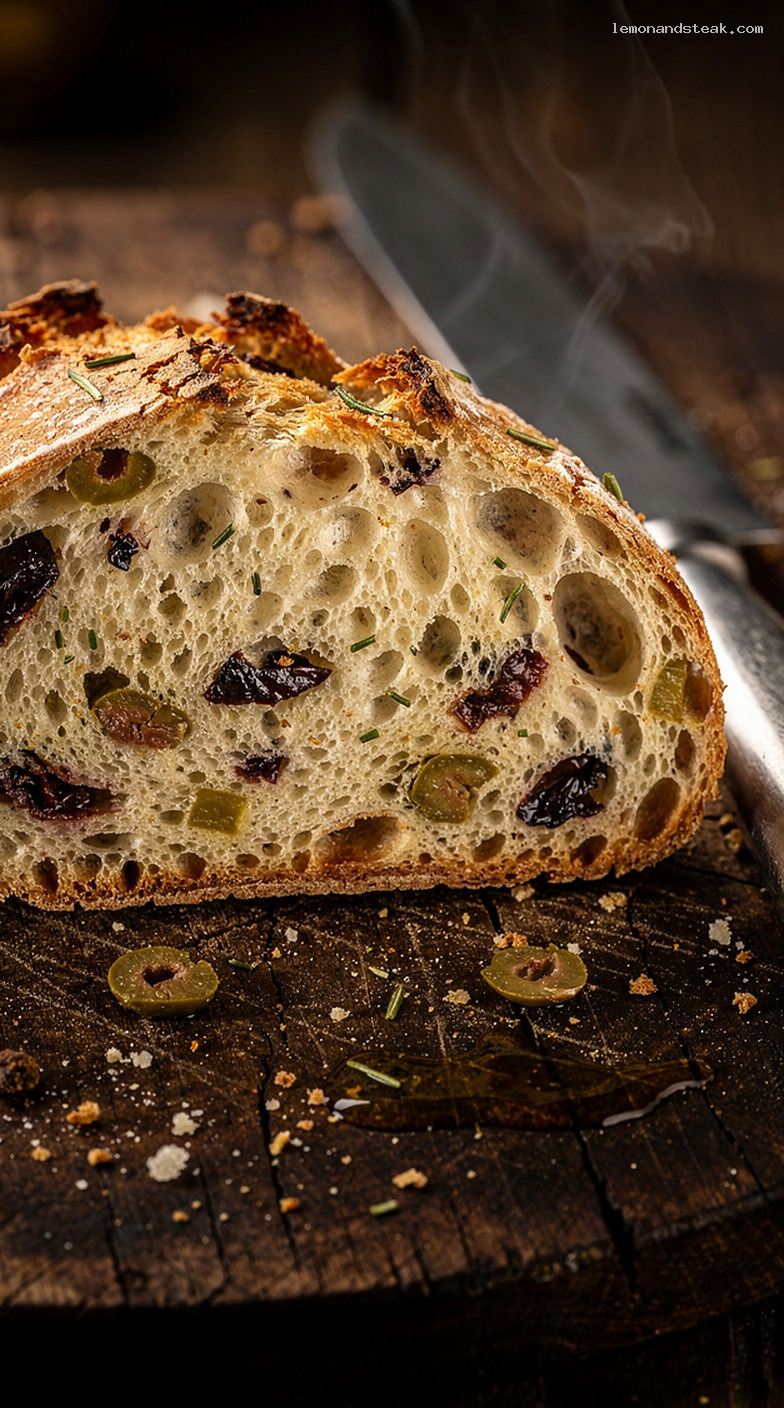
Step-by-Step Instructions
Step 1: Prep and dry the olives
Chop 200 g pitted olives into pieces about the size of a pea to a small bean. Spread them on a paper-towel-lined plate and blot very well. If the olives are especially wet, let them sit out for 10 minutes, then blot again. Dry olives help prevent gummy pockets in the crumb and keep the dough easier to handle.
Step 2: Mix the dough
In a large bowl, whisk together 500 g bread flour, 7 g instant yeast, 10 g sugar, 12 g fine sea salt, rosemary, and oregano. Pour in 360 g warm water (105℉ to 110℉) and 45 g extra-virgin olive oil. Stir with a sturdy spoon or dough whisk until you have a shaggy dough with no dry flour remaining.
Let the dough rest for 10 minutes (this short rest helps the flour hydrate and makes kneading easier).
Step 3: Knead until smooth, then add olives
Knead by hand on a lightly floured counter for 8 to 10 minutes, or in a stand mixer with a dough hook on medium-low speed for 6 to 8 minutes, until the dough looks smoother and feels elastic. It should be slightly tacky but not wet.
Add the chopped, dried olives and knead gently for 1 to 2 minutes, just until the olives are evenly distributed. If a few olives try to pop out, press them back in; that is normal.
Step 4: First rise (bulk ferment)
Lightly oil a clean bowl with 1 tsp olive oil. Place the dough in the bowl and turn once to coat. Cover tightly (lid, plastic wrap, or a damp towel) and let rise at room temperature (about 72℉ to 75℉) for 75 to 90 minutes, or until doubled in size.
If your kitchen is cool, the rise may take closer to 2 hours. The dough should look airy and puffy, not just slightly larger.
Step 5: Shape into a tight round
Turn the dough onto a lightly floured surface. Gently press it into a rectangle, then fold the top third down and the bottom third up (like a letter). Turn the dough 90 degrees, then roll or fold into a tight ball. Cup your hands around it and drag it lightly against the counter to build surface tension; this helps you get a taller loaf.
Place the shaped dough seam-side down on a piece of parchment paper lightly dusted with cornmeal or flour.
Step 6: Proof until puffy and preheat the oven
Cover the dough lightly (a large bowl turned upside down works well) and proof for 35 to 45 minutes, until puffy and slowly springing back when gently poked.
Meanwhile, place a Dutch oven (5 to 7 quarts) with its lid into the oven. Preheat to 475℉ for 30 minutes. Preheating the pot is key to a crisp crust and strong oven spring.
Step 7: Score and bake
Carefully remove the hot Dutch oven from the oven. Use the parchment to lift the dough into the pot. Score the top with a sharp knife or lame: one long slash about 1/2 inch deep, or a cross.
Cover and bake at 475℉ for 25 minutes. Then remove the lid, reduce the oven temperature to 450℉, and bake for 15 to 18 minutes more, until deep golden brown.
For doneness, the internal temperature at the center should read 205℉ to 210℉ on an instant-read thermometer.
Step 8: Cool before slicing
Transfer the bread to a wire rack and cool for at least 20 minutes (30 minutes is even better). Slicing too soon can compress the crumb and make it seem gummy. If you like, brush the warm crust lightly with 1 to 2 tsp olive oil or melted butter for extra shine and a slightly softer bite.
Pro Tips
- Dry the olives well: Excess brine can make the dough slippery and can create dense, wet pockets.
- Use bread flour for structure: The higher protein helps support the weight of the olives and keeps the loaf tall.
- Don’t rush the first rise: Doubling in size matters more than the clock for good texture and flavor.
- Go by temperature, not color alone: Aim for 205℉ to 210℉ in the center to avoid an underbaked middle.
- For an extra-crackly crust: After baking, leave the loaf directly on the oven rack for 5 minutes with the oven off and the door cracked open.
Variations
- Olive and lemon zest: Add 1 tbsp finely grated lemon zest to the dry ingredients for a bright, Mediterranean lift.
- Olive, garlic, and thyme: Add 1 small garlic clove, finely grated, plus 1 tsp dried thyme (or 1 tbsp fresh). Reduce rosemary if you want the thyme to stand out.
- Olive and feta (more indulgent): Fold in 100 g crumbled feta with the olives. Expect a slightly softer crumb and saltier flavor; consider reducing salt to 10 g (1 2/3 tsp).
Storage & Make-Ahead
Let the loaf cool completely, then store at room temperature in a paper bag or loosely wrapped in foil for up to 2 days. For longer storage, slice the loaf and freeze in an airtight bag for up to 2 months. Reheat slices in a 350℉ oven for 8 to 10 minutes, or toast until warmed through. To make ahead, you can mix and knead the dough, then refrigerate it covered for 8 to 16 hours for the first rise; bring to room temperature for 45 to 60 minutes, shape, proof, and bake as directed.
Nutrition (per serving)
Approximate per slice (1/12 loaf): 230 calories, 6 g protein, 34 g carbohydrates, 2 g fiber, 8 g fat, 1 g saturated fat, 520 mg sodium, 1 g sugar.
Leave a Reply