
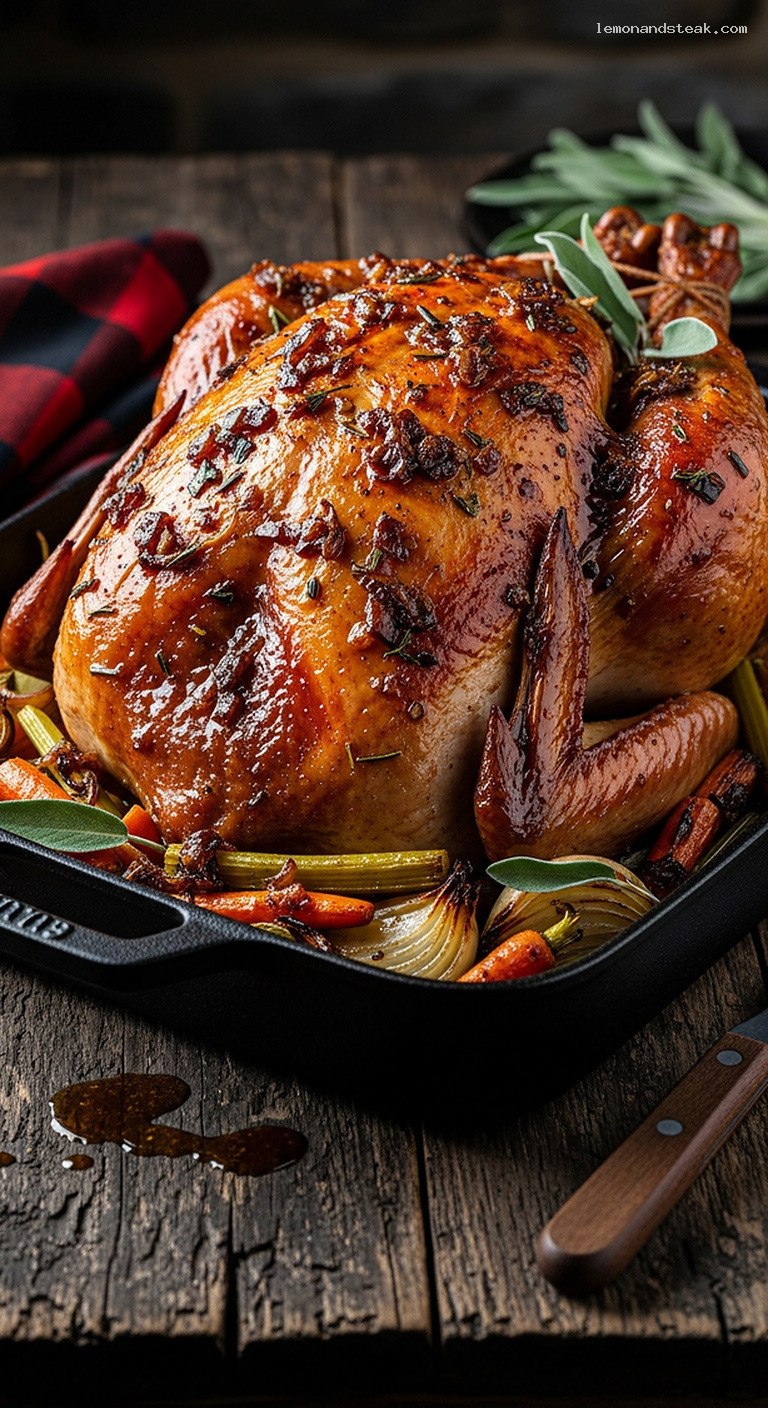
Quick Recipe Version (TL;DR)
Quick Ingredients
- 1 whole turkey (12–14 lb), thawed and giblets removed
- 2 tbsp kosher salt (for dry brine, optional)
- 1 cup (2 sticks / 225 g) unsalted butter, softened
- 1/2 cup caramelized onion jam
- 1/4 cup finely chopped fresh sage leaves
- 4 cloves garlic, minced
- 2 tsp freshly ground black pepper
- 1 tsp smoked paprika (optional, for color)
- 1 lemon, halved
- 1 onion, quartered + 1 head garlic, halved crosswise (for cavity/pan)
- 1–2 cups low-sodium chicken or turkey stock (for roasting pan)
- 2 tbsp olive oil (for pan and extra browning)
Do This
- 1. Pat turkey dry. Optional: rub with 2 tbsp kosher salt all over and inside; refrigerate uncovered 12–24 hours.
- 2. Heat oven to 325°F (165°C). Mix softened butter, onion jam, sage, garlic, pepper, and paprika into a thick paste.
- 3. Stuff cavity with lemon halves and onion quarters. Place turkey on rack in roasting pan; tuck wings under.
- 4. Gently loosen skin over breasts and thighs. Rub most of the sage–onion butter paste under the skin, then spread the rest all over the outside.
- 5. Drizzle turkey lightly with olive oil. Pour 1–2 cups stock into pan. Roast 2 hours, basting every 30–40 minutes with pan juices.
- 6. Continue roasting until thickest part of thigh reaches 165°F (74°C), about 3–3 1/2 hours total. Tent loosely with foil if browning too fast.
- 7. Rest turkey 30 minutes before carving. Strain pan drippings to make gravy if desired.
Why You’ll Love This Recipe
- Deeply savory with a gentle sweetness from caramelized onion jam that makes the whole house smell amazing.
- A rich butter and sage paste under the skin keeps the turkey juicy and tender, even for white meat.
- Classic enough for traditional holiday tables, but with a fun twist that feels special and memorable.
- Built-in pan juices and drippings give you a head start on a spectacular gravy.
Grocery List
- Produce: 1 lemon, 2 yellow onions, 1 head garlic, 1 bunch fresh sage, optional carrots and celery for roasting bed
- Dairy: 1 cup (2 sticks) unsalted butter
- Pantry: 1 whole turkey (12–14 lb), caramelized onion jam, kosher salt, black pepper, smoked paprika (optional), olive oil, low-sodium chicken or turkey stock, kitchen twine (optional)
Full Ingredients
For the Turkey
- 1 whole turkey, 12–14 lb, thawed if previously frozen
- 2 tbsp kosher salt (for optional dry brine)
- 1 tsp freshly ground black pepper (for cavity and surface, in addition to what goes in the butter paste)
- 1 lemon, halved
- 1 medium yellow onion, quartered
- 1 head garlic, halved horizontally
- 1–2 cups low-sodium chicken or turkey stock (enough to lightly cover bottom of pan)
- 2 tbsp olive oil (for drizzling and greasing pan)
For the Sage–Caramelized Onion Butter Paste
- 1 cup (2 sticks / 225 g) unsalted butter, very soft but not melted
- 1/2 cup caramelized onion jam
- 1/4 cup finely chopped fresh sage leaves (about 10–12 large leaves)
- 4 cloves garlic, minced
- 1 tsp kosher salt
- 1 tsp freshly ground black pepper
- 1 tsp smoked paprika (optional, for deeper color and a subtle smokiness)
Optional Roasting Bed (for Extra Flavorful Drippings)
- 2 medium carrots, cut into large chunks
- 2 celery stalks, cut into large chunks
- 1 additional onion, thickly sliced
Step-by-Step Instructions
Step 1: Prep and (Optionally) Dry-Brine the Turkey
Make sure your turkey is fully thawed in the refrigerator (this can take several days for a 12–14 lb bird). Remove the turkey from its packaging, pull out the neck and giblets from the cavity (save them if you want to make stock or gravy), and pat the turkey very dry inside and out with paper towels.
For the juiciest, most flavorful meat, dry-brine the turkey: sprinkle 2 tbsp kosher salt evenly over the entire surface of the turkey, including a light sprinkle inside the cavity. Place the turkey breast-side up on a rack set over a rimmed sheet pan or in the roasting pan. Refrigerate uncovered for 12–24 hours. If you do not have time, you can skip this step and season a bit more aggressively with salt before roasting.
Step 2: Bring Turkey to Room Temp and Preheat the Oven
About 1 hour before roasting, remove the turkey from the refrigerator so it can lose its chill; this helps it cook more evenly. Pat it dry again if any moisture has surfaced. Let it sit at cool room temperature while you prepare the butter paste and preheat the oven.
Adjust your oven rack to the lower third position so the turkey will sit in the center of the oven. Preheat the oven to 325°F (165°C). Lightly oil your roasting pan with 1 tbsp olive oil. If using a roasting bed, scatter the carrots, celery, and sliced onion over the bottom of the pan and place a roasting rack on top.
Step 3: Make the Sage–Caramelized Onion Butter Paste
In a medium bowl, combine the softened butter, caramelized onion jam, chopped sage, minced garlic, 1 tsp kosher salt, 1 tsp black pepper, and smoked paprika (if using). Mash together with a fork or spatula until everything is well blended into a thick, fragrant paste.
Taste a tiny bit of the paste and adjust seasoning if needed; it should taste boldly seasoned and a little sweet-savory from the onion jam. If your kitchen is very warm and the paste feels too soft, place it in the refrigerator for 10–15 minutes to firm slightly so it is easier to handle under the turkey skin.
Step 4: Season the Cavity and Loosen the Skin
Place the turkey breast-side up on the roasting rack. Sprinkle the inside of the cavity with a light pinch of kosher salt and a few grinds of black pepper. Stuff the cavity with the lemon halves, onion quarters, and the halved head of garlic (cut side facing inward). These will perfume the meat from the inside.
Now gently loosen the skin to create pockets for the butter paste. Starting at the cavity end of the turkey, slide your fingers carefully under the skin of one breast, separating it from the meat without tearing the skin. Work slowly toward the top of the breast. Repeat on the other breast, and, if you can, loosen the skin over the tops of the thighs as well. You should now have space to tuck in generous amounts of the sage–onion butter.
Step 5: Rub on the Sage–Onion Butter Paste
Using clean hands, scoop up portions of the butter paste and push it under the loosened skin, smoothing it out so it covers as much meat as possible over the breasts and thighs. Aim to use about two-thirds of the paste under the skin. This is what keeps the meat moist and flavorful.
Spread the remaining third of the butter paste all over the outside of the turkey, coating the breasts, legs, and thighs. Do your best to get an even layer. If any paste falls into the pan, scrape it back on top of the turkey. Tuck the wing tips under the bird so they do not burn. If you like, tie the legs loosely together with kitchen twine for a neater shape. Finally, drizzle the turkey lightly with the remaining 1 tbsp olive oil to encourage browning.
Step 6: Add Liquid and Roast the Turkey
Pour 1–2 cups of chicken or turkey stock into the bottom of the roasting pan, just enough to cover the surface without touching the turkey. This helps keep the drippings from burning and gives you a flavorful base for gravy.
Transfer the pan to the preheated 325°F (165°C) oven. Roast for about 2 hours, basting every 30–40 minutes by spooning the buttery pan juices over the breasts and legs. If the liquid level gets low or starts to darken too much, add a bit more stock or water. After about 1 1/2–2 hours, start checking the color; if the turkey is browning very quickly, tent it loosely with a sheet of aluminum foil to prevent over-browning while it finishes cooking.
Step 7: Finish Roasting and Check for Doneness
Continue roasting, still at 325°F (165°C), until the thickest part of the thigh (not touching the bone) registers 165°F (74°C) on an instant-read thermometer. For a 12–14 lb turkey, this usually takes 3 to 3 1/2 hours total roasting time, but start checking after about 2 3/4 hours to avoid overcooking.
As the turkey nears doneness, you can remove the foil tent for the last 15–20 minutes if you want to deepen the color. The skin should be golden brown and glossy, with a slight sheen from the butter and onion jam. Once done, carefully lift the turkey onto a cutting board or serving platter, reserving all the pan juices for gravy.
Step 8: Rest, Carve, and Serve
Let the turkey rest, uncovered or very loosely tented with foil, for at least 30 minutes. This rest is crucial: it allows the juices to redistribute so the meat stays moist when you carve it. Meanwhile, you can pour the pan drippings into a fat separator or a heatproof measuring cup, skim off the excess fat, and use the flavorful liquid to make gravy.
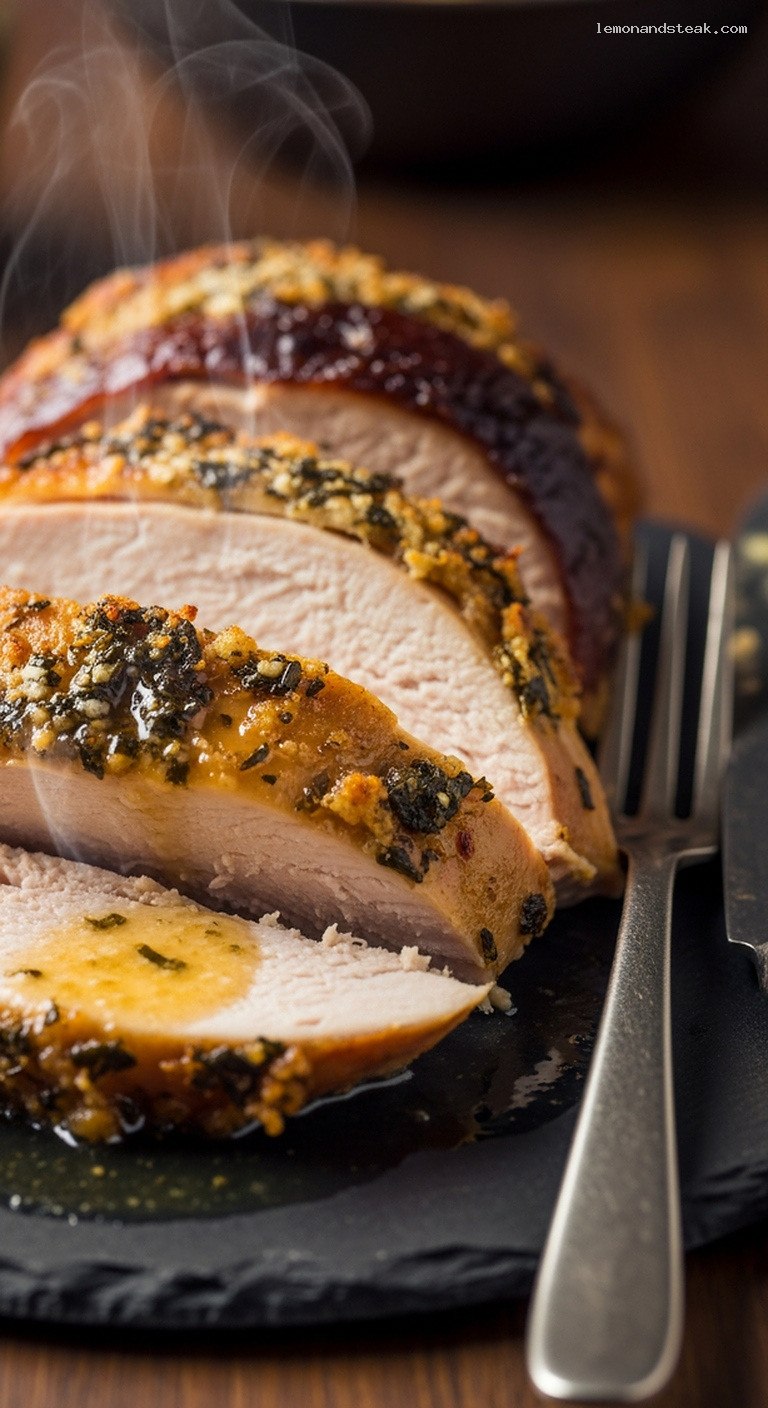
To carve, remove the legs and thighs, then the breasts, and slice across the grain into thick, juicy slices. Serve the turkey on a warmed platter, spooning a little of the glossy pan juices over the top. The sage–caramelized onion butter under the skin will have melted into the meat, giving you tender, aromatic slices with a sweet-savory finish.
Pro Tips
- Use a thermometer, not the clock. Ovens vary, and turkey size differs. An instant-read thermometer is the best way to avoid dry meat.
- Do not skip drying the skin. Patting the turkey dry before adding the butter paste helps the skin crisp and brown instead of steaming.
- Shield if browning too fast. Because of the onion jam and butter, this turkey can brown quickly. A loose foil tent will protect the skin while the meat finishes cooking.
- Control the saltiness. If your caramelized onion jam is salty or your stock is not low-sodium, reduce the added salt in the butter paste by about half.
- Let it rest generously. A full 30 minutes of resting time makes carving easier and the meat noticeably juicier.
Variations
- Herb medley version: Replace half the sage with a mix of fresh thyme and rosemary for a more traditional herb-roasted flavor, while still keeping the onion jam sweetness.
- Spiced fall version: Add 1/2 tsp ground coriander and 1/4 tsp ground cinnamon to the butter paste for a warm, subtly spiced note that pairs well with autumn side dishes.
- Roast turkey breast only: Use a 6–7 lb bone-in turkey breast, halve the butter paste, and roast at 325°F (165°C) for about 2–2 1/2 hours, or until it reaches 165°F (74°C).
Storage & Make-Ahead
Leftover turkey can be cooled, then stored in airtight containers in the refrigerator for up to 4 days. For best quality, carve all the meat off the bones before refrigerating, and store it with a little of the pan juice or gravy to keep it moist. To freeze, wrap portions tightly and freeze for up to 2 months; thaw overnight in the refrigerator before reheating. Reheat gently in a covered dish at 300°F (150°C) with a splash of stock or gravy until warmed through.
For make-ahead prep, you can dry-brine the turkey 1–2 days before roasting and mix the sage–onion butter paste up to 2 days ahead. Store the paste in the refrigerator, then bring it to room temperature until spreadable before rubbing it under the skin on the day of roasting.
Nutrition (per serving)
Approximate values per serving (about 6 oz cooked turkey with some skin and butter paste): 520 calories; 38 g protein; 38 g fat; 6 g saturated fat; 4 g carbohydrates; 1 g fiber; 3 g sugars; 720 mg sodium. Values will vary based on the exact size of the turkey, how much skin is eaten, and how much butter and drippings are consumed.
Leave a Reply