
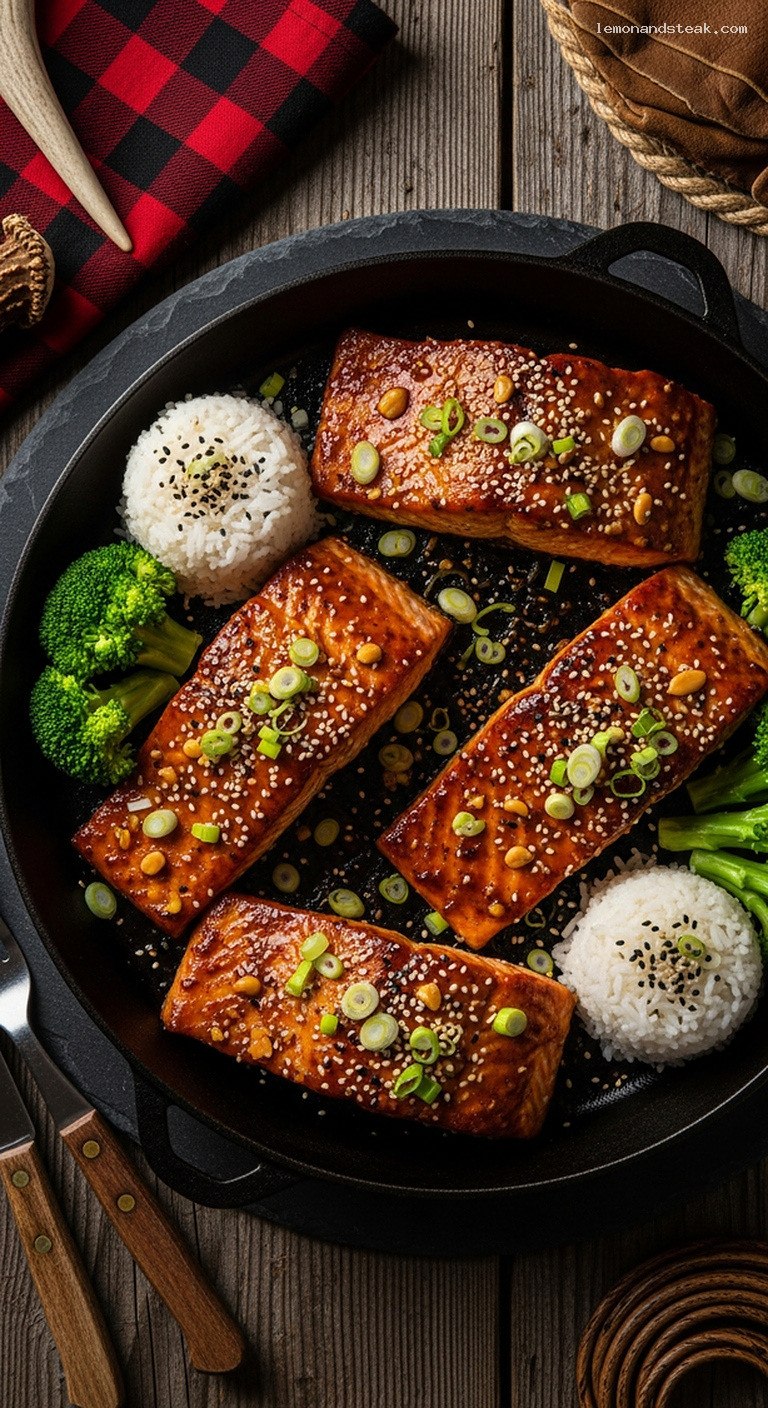
Quick Recipe Version (TL;DR)
Quick Ingredients
- 4 salmon fillets (5 to 6 oz each), skin-on
- 1 tbsp neutral oil (canola or avocado)
- Salt and black pepper
- 3 tbsp creamy peanut butter
- 2 tbsp white miso paste
- 1 tbsp low-sodium soy sauce or tamari
- 1 tbsp honey or maple syrup
- 2 tsp rice vinegar or lime juice
- 1 tsp toasted sesame oil
- 1 tsp grated fresh ginger
- 1 small garlic clove, minced
- 1 to 2 tsp water, as needed, to thin
- Optional: 1/2 to 1 tsp sriracha or chili-garlic sauce
- 2 tbsp sliced scallions and 1 tsp sesame seeds, for garnish
- Cooked rice and steamed vegetables, for serving (optional)
Do This
- 1. Heat oven to 400°F (205°C). Line a baking sheet with parchment or foil and lightly oil it.
- 2. Pat salmon dry and place skin-side down on the sheet. Rub tops with 1 tbsp oil, then lightly season with salt and pepper.
- 3. In a bowl, whisk together peanut butter, miso, soy sauce, honey, rice vinegar, sesame oil, ginger, garlic, optional sriracha, and enough water to create a thick but brushable glaze.
- 4. Brush about half the glaze generously over the tops and sides of the salmon.
- 5. Roast 8 to 10 minutes, depending on thickness, until nearly cooked through.
- 6. Brush on remaining glaze. Set oven to broil and broil 1 to 2 minutes until the glaze is bubbling, glossy, and just starting to caramelize at the edges.
- 7. Rest 3 minutes. Garnish with scallions and sesame seeds, and serve with rice and vegetables.
Why You’ll Love This Recipe
- Sweet, salty, and deeply savory peanut-miso glaze that tastes restaurant-level but is weeknight easy.
- Ready in about 30 minutes, with minimal chopping and only one pan to wash.
- Flexible enough to pair with rice, noodles, or simple steamed vegetables you already have on hand.
- Kid-friendly flavors with an optional spicy kick for adults.
Grocery List
- Produce: 1 small garlic clove, 1 small piece fresh ginger, 2 to 3 scallions, 1 lime (optional, for serving), vegetables for sides (such as broccoli, green beans, or snap peas).
- Dairy: None required.
- Pantry: 4 salmon fillets (fresh or frozen and thawed), creamy peanut butter, white miso paste, low-sodium soy sauce or tamari, honey or maple syrup, rice vinegar or lime juice, toasted sesame oil, sriracha or chili-garlic sauce (optional), neutral oil (canola or avocado), kosher salt, black pepper, sesame seeds, rice or noodles for serving (optional), parchment paper or aluminum foil.
Full Ingredients
For the Salmon
- 4 salmon fillets, skin-on, 5 to 6 oz (140 to 170 g) each, about 1 to 1 1/2 inches thick
- 1 tbsp neutral oil (canola, avocado, or grapeseed), plus more for the pan if needed
- 1/4 tsp kosher salt (or to taste; go light because the glaze is salty)
- 1/4 tsp freshly ground black pepper
For the Peanut-Butter Miso Glaze
- 3 tbsp creamy natural peanut butter (stirred well if separated)
- 2 tbsp white miso paste
- 1 tbsp low-sodium soy sauce or tamari
- 1 tbsp honey or pure maple syrup
- 2 tsp rice vinegar or freshly squeezed lime juice
- 1 tsp toasted sesame oil
- 1 tsp finely grated fresh ginger (about a 1/2-inch piece)
- 1 small garlic clove, minced or grated
- 1/2 to 1 tsp sriracha or chili-garlic sauce (optional, to taste)
- 1 to 2 tsp water, as needed, to thin glaze to a brushable consistency
For Garnish and Serving
- 2 tbsp thinly sliced scallions (green onions)
- 1 tsp toasted sesame seeds (white, black, or a mix)
- Lime wedges, for squeezing over top (optional)
- Cooked jasmine rice, brown rice, or noodles (for serving, optional)
- Steamed or roasted vegetables, such as broccoli, green beans, or snap peas (for serving, optional)
Step-by-Step Instructions
Step 1: Preheat the oven and prep the pan
Set your oven to 400°F (205°C) with a rack in the middle position. While the oven heats, line a rimmed baking sheet with parchment paper or aluminum foil for easy cleanup. Lightly brush or rub the lined sheet with a thin layer of neutral oil to help prevent sticking, especially if your salmon skin tends to stick.
Check the salmon fillets for any remaining pin bones by running your fingers lightly over the flesh. If you feel any, pull them out with tweezers or clean pliers. Pat the salmon very dry on both sides with paper towels; dry salmon browns better and helps the glaze cling.
Step 2: Season the salmon
Place the salmon fillets skin-side down on the prepared baking sheet, leaving a little space between each piece so air can circulate. Rub the tops of the fillets with the 1 tbsp neutral oil.
Lightly sprinkle the salmon with the kosher salt and black pepper. The glaze is flavorful and salty from miso and soy sauce, so keep the initial seasoning modest. Set the tray aside while you make the glaze.
Step 3: Make the peanut-butter miso glaze
In a medium bowl, add the peanut butter, white miso paste, soy sauce (or tamari), honey (or maple syrup), rice vinegar (or lime juice), toasted sesame oil, grated ginger, minced garlic, and the optional sriracha or chili-garlic sauce if using.
Whisk everything together until smooth and thick. The mixture will be quite dense at first. Add 1 teaspoon of water and whisk again. If it still seems too thick to brush easily, whisk in an additional 1 teaspoon of water. You are aiming for a consistency similar to a thick salad dressing or warm caramel sauce: spreadable, but not runny. Taste the glaze and adjust to your liking: add a few extra drops of vinegar for more brightness, a bit more honey for sweetness, or a splash of soy for extra saltiness.
Step 4: Glaze the salmon
Using a spoon or pastry brush, spread about half of the peanut-butter miso glaze over the tops and exposed sides of the salmon fillets. Aim for an even, relatively thick layer so you get a generous, flavorful crust as it roasts.
Reserve the remaining glaze in the bowl. You will use it later to finish and caramelize the salmon under the broiler, which builds deeper color and flavor without overcooking the fish.
Step 5: Roast the salmon
Transfer the baking sheet to the preheated oven. Roast for 8 to 10 minutes, depending on the thickness of your fillets. As a general guide, plan on about 4 to 6 minutes of roasting time per 1/2 inch of thickness, measured at the thickest part of the fish.
At 8 minutes, begin checking for doneness. The salmon should be mostly opaque on the sides but still slightly translucent in the very center. If you use an instant-read thermometer, the internal temperature should be around 120 to 125°F (49 to 52°C) at this stage; it will finish cooking under the broiler. Thinner fillets might be ready sooner, so keep an eye on them.
Step 6: Brush with remaining glaze and broil
Carefully remove the baking sheet from the oven (leave the oven on) and switch your oven setting to broil on high. Position an oven rack so the salmon will sit about 6 inches from the broiler element.
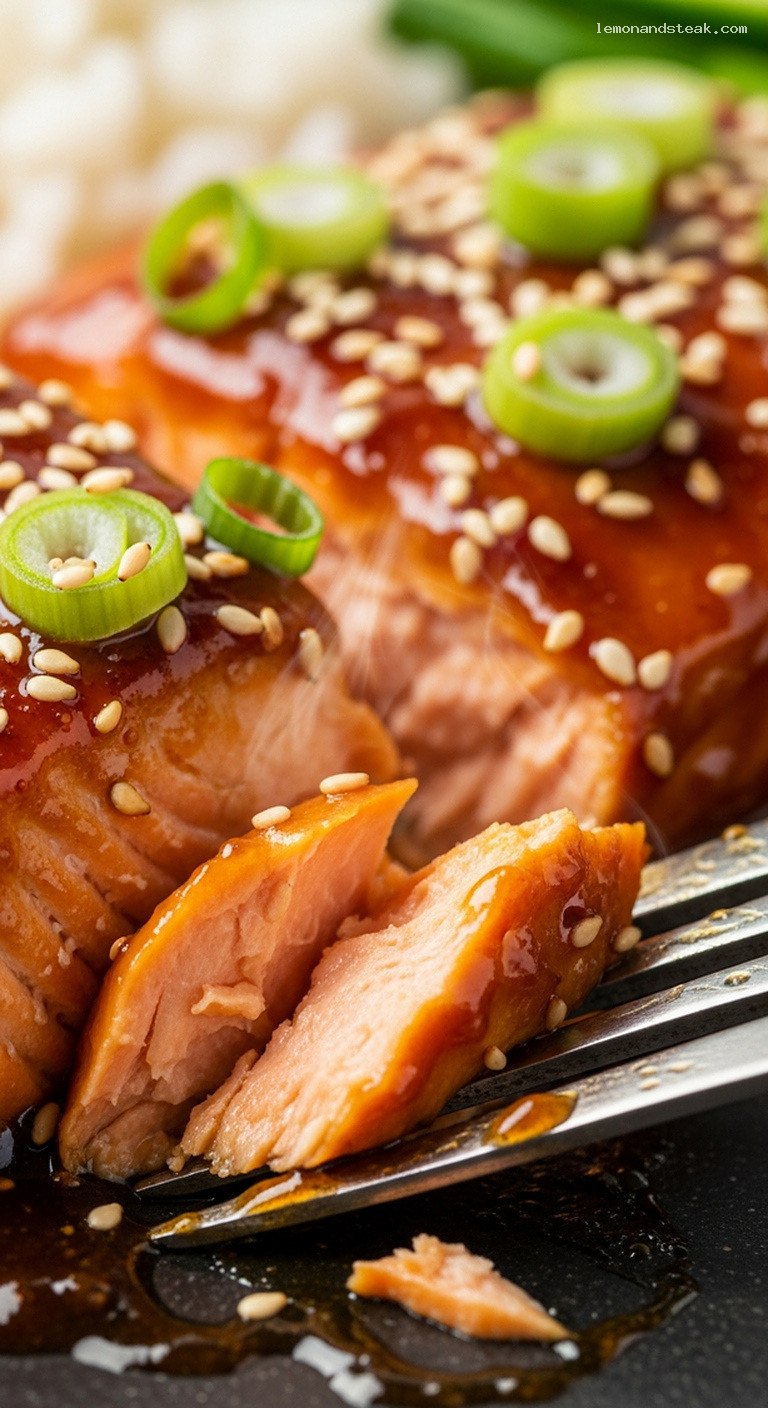
Working quickly, brush the remaining glaze evenly over the tops of the partially cooked salmon. Return the tray to the oven and broil for 1 to 2 minutes, watching closely. The glaze should bubble, turn glossy, and deepen slightly in color, with just a hint of caramelization at the edges. If spots threaten to burn, pull the tray out right away. The salmon should now be just cooked through with a flaky texture but still very moist. For medium, the center should register about 125°F (52°C); for more well-done, 130°F (54°C), though the fish will be a little less silky.
Step 7: Rest, garnish, and serve
Remove the salmon from the oven and let it rest on the baking sheet for about 3 minutes. This brief rest helps the juices settle so the fish stays moist when you serve it.
Transfer the fillets to plates or a serving platter. Spoon any glaze or juices from the pan over the top. Scatter the sliced scallions and toasted sesame seeds over the salmon. If you like, add a squeeze of fresh lime juice right before serving for a bright contrast to the rich, nutty glaze.
Serve the salmon over warm jasmine or brown rice, alongside steamed or roasted vegetables. The extra glaze on the fish is wonderful drizzled over the rice and vegetables, making the whole plate taste cohesive and deeply savory.
Pro Tips
- Do not overbake the salmon. Pull it from the oven just before it looks fully done; it will finish cooking under the broiler and during the brief rest. Slightly under is far better than over when it comes to salmon.
- Adjust glaze thickness. If the glaze is too thick to spread, add water a few drops at a time. If it is too runny, whisk in a bit more peanut butter or miso until it clings nicely to the fish.
- Use white or yellow miso. Dark red miso can be too intense and salty here. If that is all you have, use a little less and taste as you go.
- Line the pan. The glaze can bubble and stick as it caramelizes. Parchment or foil saves you from serious scrubbing later.
- Balance the flavors. Before glazing the salmon, taste the sauce. You should notice sweet, salty, nutty, and tangy notes with a gentle umami depth. Adjust with tiny additions rather than big changes.
Variations
- Spicy peanut-miso salmon. Increase the sriracha or chili-garlic sauce to 1 to 2 teaspoons and sprinkle the finished dish with a few red pepper flakes for a bolder kick.
- Nut-free version. Replace peanut butter with tahini or sunflower seed butter. The flavor will be more sesame-forward or toasty, but still rich and delicious.
- Different proteins. Use the same glaze on chicken thighs (roast longer, about 25 to 30 minutes at 400°F / 205°C), firm tofu slabs, or roasted cauliflower steaks. Adjust cooking times depending on the protein or vegetable.
Storage & Make-Ahead
The peanut-butter miso glaze can be made up to 3 days ahead. Store it in an airtight container in the refrigerator. It will thicken as it chills; thin with a teaspoon or two of water and whisk until smooth before using.
Cooked salmon keeps well in an airtight container in the refrigerator for up to 3 days. For best texture, reheat gently: place the salmon in a covered dish and warm in a 275°F (135°C) oven for 10 to 12 minutes, just until heated through, or enjoy it cold, flaked over salads or grain bowls.
This dish is not ideal for freezing once cooked because the glaze can change texture and the salmon may become dry. If you must freeze, wrap the cooled salmon very well, freeze for up to 1 month, and reheat very gently to minimize drying.
Nutrition (per serving)
Approximate values for one of four servings, including glaze but not counting rice or side dishes: about 420 calories; 35 g protein; 24 g fat; 6 g saturated fat; 14 g carbohydrates; 9 g sugar; 1 g fiber; approximately 820 mg sodium. Actual values will vary based on the exact size of your salmon fillets, the specific brands of ingredients, and how much glaze you use.
Leave a Reply