
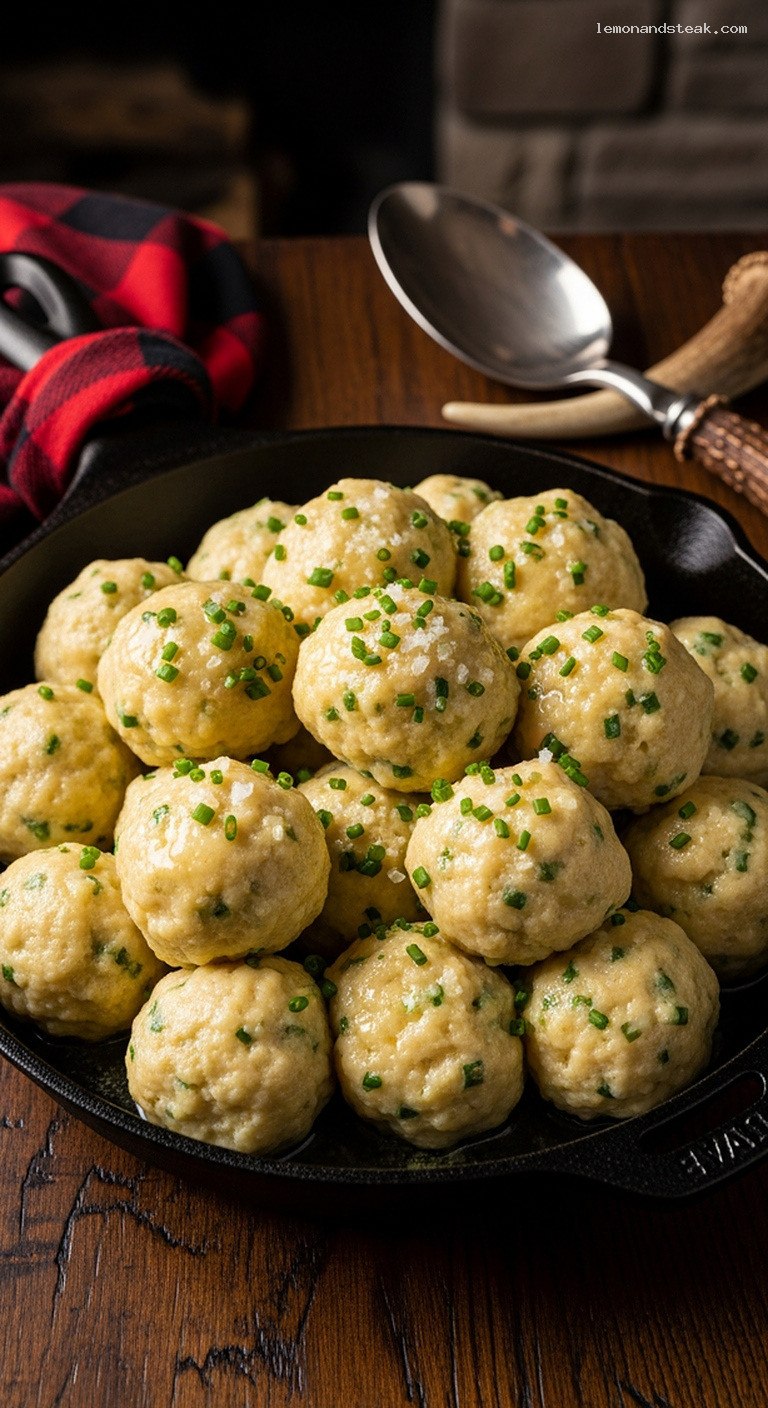
Quick Recipe Version (TL;DR)
Quick Ingredients
- 1 1/2 lb (680 g) russet or Yukon Gold potatoes, peeled and cut in chunks
- 1 large egg yolk
- 3/4–1 cup (100–130 g) all-purpose flour, plus extra for dusting
- 1/4 cup (10 g) finely snipped fresh chives
- 5 tbsp (70 g) unsalted butter, divided
- 1 1/4 tsp fine salt, plus more for boiling water
- 1/4 tsp freshly ground black pepper
- Optional: pinch of ground nutmeg, flaky salt for serving
Do This
- 1. Boil potatoes in salted water for 15–20 minutes until very tender, then drain and let steam dry 5 minutes.
- 2. Mash potatoes until smooth, then mix in 1 tbsp butter, salt, pepper, egg yolk, and chives.
- 3. Gently fold in 3/4 cup flour, adding up to 1/4 cup more as needed to form a soft, slightly sticky dough.
- 4. On a floured surface, roll dough into ropes about 3/4 inch (2 cm) thick and cut into 1-inch (2.5 cm) dumplings.
- 5. Boil dumplings in gently simmering salted water 2–3 minutes, until they float and look slightly puffed.
- 6. Melt remaining 4 tbsp butter in a wide pan; transfer drained dumplings straight into the butter, toss 1–2 minutes, and serve hot with extra chives.
Why You’ll Love This Recipe
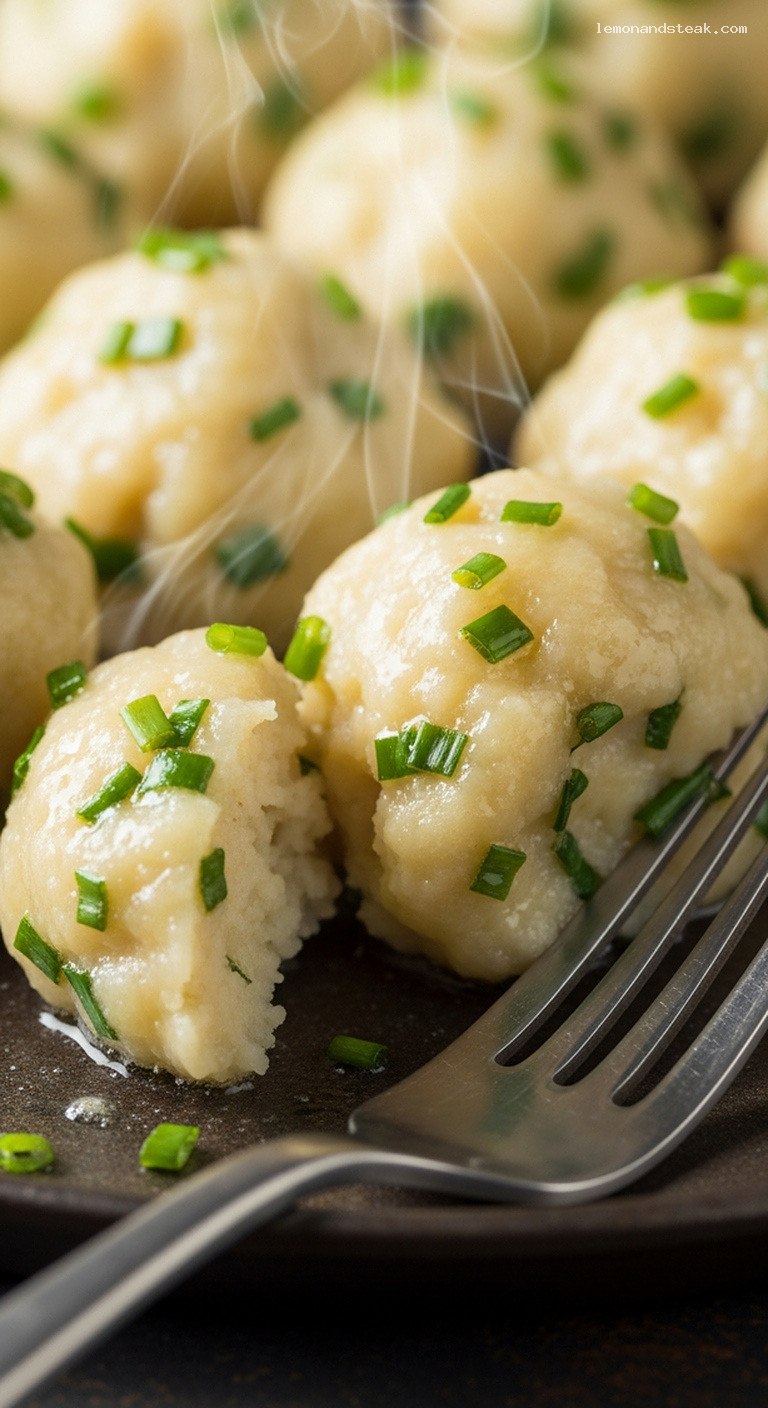
- Soft, pillowy dumplings with a delicate potato flavor and fresh pops of chive.
- Simple, affordable ingredients you probably already have on hand.
- Comforting side dish that pairs beautifully with roasted meats, stews, or a simple green salad.
- Easy to make ahead and freeze, so you can boil them straight from the freezer on busy nights.
Grocery List
- Produce: Russet or Yukon Gold potatoes, fresh chives
- Dairy: Unsalted butter, 1 large egg
- Pantry: All-purpose flour, fine salt, black pepper, ground nutmeg (optional), flaky salt (optional)
Full Ingredients
For the Potato and Chive Dumplings
- 1 1/2 lb (680 g) starchy potatoes, such as russet or Yukon Gold, peeled and cut into 1 1/2-inch (4 cm) chunks
- 1 1/4 tsp fine sea salt or table salt, divided (3/4 tsp for the dough, plus 1/2 tsp for the potato cooking water; more to taste)
- 1 large egg yolk, at room temperature
- 3/4–1 cup (100–130 g) all-purpose flour, plus more for dusting your work surface
- 1/4 cup (10 g) finely snipped fresh chives
- 1 tbsp (14 g) unsalted butter (to enrich the mashed potatoes)
- 1/4 tsp freshly ground black pepper
- Optional: pinch (about 1/16 tsp) ground nutmeg for a subtle warmth
For Boiling the Dumplings
- 3–4 quarts (3–4 liters) water
- 1 1/2 tbsp kosher salt or 2 tsp fine salt
For Tossing in Butter
- 4 tbsp (56 g) unsalted butter
- 2 tbsp finely snipped fresh chives (in addition to what is in the dough)
- Optional: flaky sea salt and extra black pepper, to finish
Step-by-Step Instructions
Step 1: Boil the potatoes until very tender
Place the peeled, chunked potatoes in a medium saucepan and cover with cool water by about 1 inch (2.5 cm). Add 1/2 teaspoon of the fine salt. Bring to a boil over medium-high heat, then reduce to a gentle boil and cook for 15–20 minutes, or until the potatoes are completely tender when pierced with a fork and starting to break apart at the edges.
Drain the potatoes thoroughly in a colander, then immediately return them to the hot, empty pot. Set the pot over very low heat for 1–2 minutes, shaking occasionally, to let excess moisture evaporate. This “steam drying” step helps keep the dumplings light and prevents you from needing too much flour.
Step 2: Mash and season the potatoes
Take the pot off the heat. Mash the potatoes while they are still warm using a potato masher, potato ricer, or pressing them through a fine sieve. Aim for a smooth, lump-free mash, but do not overbeat them into gluey paste.
Stir in 1 tablespoon butter until melted and absorbed. Add 3/4 teaspoon fine salt, 1/4 teaspoon black pepper, and the optional pinch of nutmeg. Taste and adjust the seasoning if needed; the potatoes should be pleasantly seasoned at this stage. Let the mashed potatoes cool until just warm to the touch, about 5–10 minutes, so the egg yolk will not scramble when added.
Step 3: Make the dumpling dough with chives
Once the potatoes are warm, not hot, add the egg yolk and 1/4 cup finely snipped chives. Use a spatula or wooden spoon to gently fold them into the potatoes until evenly combined.
Sprinkle 3/4 cup (100 g) of flour over the potato mixture. Using a light hand, fold and gently press the flour into the potatoes until a soft dough forms. If the dough is very sticky and will not hold together, add more flour 1 tablespoon at a time (up to a total of 1 cup / 130 g), just until the dough is barely tacky but still very soft. Avoid adding more flour than necessary to keep the dumplings tender.
Step 4: Shape the dumplings
Lightly flour your work surface and your hands. Turn the dough out onto the surface and gently gather it into a soft ball. Divide the ball into 4 equal pieces.
Working with one piece at a time, roll the dough into a rope about 3/4 inch (2 cm) thick. If it sticks, dust lightly with flour. Use a knife or bench scraper to cut the rope into pieces about 1 inch (2.5 cm) long. You can leave them as simple pillows, or gently roll each piece against the back of a fork or a gnocchi board to create ridges that catch the butter.
Transfer the shaped dumplings to a lightly floured baking sheet or tray, spacing them so they do not touch. Repeat with the remaining dough pieces.
Step 5: Boil the dumplings
Bring 3–4 quarts (3–4 liters) of water and 1 1/2 tablespoons kosher salt (or 2 teaspoons fine salt) to a gentle boil in a large pot. Reduce the heat so the water is at a steady simmer rather than a vigorous rolling boil, which can break up the dumplings.
Working in 2 batches to avoid overcrowding, gently slide the dumplings into the simmering water. Once they float to the surface, cook for an additional 1–2 minutes, until they look slightly puffed and feel softly firm when nudged with a spoon. Total cooking time is usually 2–3 minutes. Use a slotted spoon to transfer the dumplings to a clean tray or directly into the butter pan in the next step.
Step 6: Toss in butter and chives
While the first batch of dumplings cooks, melt 4 tablespoons (56 g) butter in a wide skillet over medium heat. Let it foam and turn a very light golden color for extra flavor, but do not let it burn. Reduce the heat to low.
As the dumplings finish boiling, lift them straight from the water into the skillet of melted butter. Toss gently for 1–2 minutes to coat them thoroughly and let their surfaces turn glossy and lightly golden in spots. Add 2 tablespoons chives and a pinch of flaky salt and extra black pepper, if using, and toss again.
Repeat with the second batch of dumplings if you are cooking in stages, adding a touch more butter if the pan seems dry. Serve immediately, spooning any extra butter and chives over the top.
Step 7: Serve and enjoy
Transfer the buttered dumplings to a warm serving dish or bring the skillet straight to the table for a rustic presentation. Finish with an extra sprinkle of chives and flaky salt, if desired.
These dumplings are wonderful alongside roasted chicken, pan-seared steak, braised short ribs, or a big bowl of simply cooked greens. Serve hot, while they are still soft and pillowy.
Pro Tips
- Dry the potatoes well. Letting the potatoes steam in the empty pot after draining removes excess moisture, so the dough needs less flour and stays lighter.
- Go easy on the flour. Add just enough flour for the dough to hold together. The softer the dough (without being impossible to handle), the more tender the dumplings.
- Do a test dumpling. Boil one dumpling first; if it falls apart, knead in another tablespoon or two of flour. If it is dense, you may have added too much flour or overworked the dough.
- Keep the water at a gentle simmer. A furious boil can cause the dumplings to break or toughen. Gentle bubbles are perfect.
- Serve straight away. These dumplings are at their best right after tossing in butter, when they are warm, fluffy, and glistening.
Variations
- Brown butter and garlic: Let the butter cook until deep golden and nutty, then add 1–2 minced garlic cloves in the last 30 seconds. Toss the dumplings in this fragrant brown butter and finish with chives.
- Cheesy dumplings: Stir 1/3 cup (30 g) finely grated Parmesan or aged cheddar into the warm mashed potatoes before adding the egg yolk for a richer, more indulgent flavor.
- Crisped leftovers: Pan-fry cooked, chilled dumplings in a hot skillet with a bit of butter or oil until golden and crisp on the outside, leaving the centers soft.
Storage & Make-Ahead
To refrigerate cooked dumplings: Cool completely, then store in an airtight container for up to 3 days. Reheat gently in a covered skillet with a splash of water and a bit more butter until warmed through.
To freeze uncooked dumplings: Arrange the shaped dumplings in a single layer on a floured or parchment-lined baking sheet. Freeze until solid, 1–2 hours, then transfer to a freezer bag or container for up to 2 months. Boil from frozen in gently simmering salted water, adding 1–2 extra minutes to the cooking time.
To make ahead same day: You can shape the dumplings up to 3 hours in advance. Keep them on a floured tray, lightly covered with a clean towel, in the refrigerator. Boil and toss in butter just before serving.
Nutrition (per serving)
Approximate values per serving (1/4 of the recipe): about 320–360 calories; 12–16 g fat; 48–52 g carbohydrates; 7–9 g protein; 3–4 g fiber; 650–800 mg sodium (will vary based on salting and finishing). These numbers are estimates and will change with any substitutions or additions (such as cheese or extra butter).
Leave a Reply