
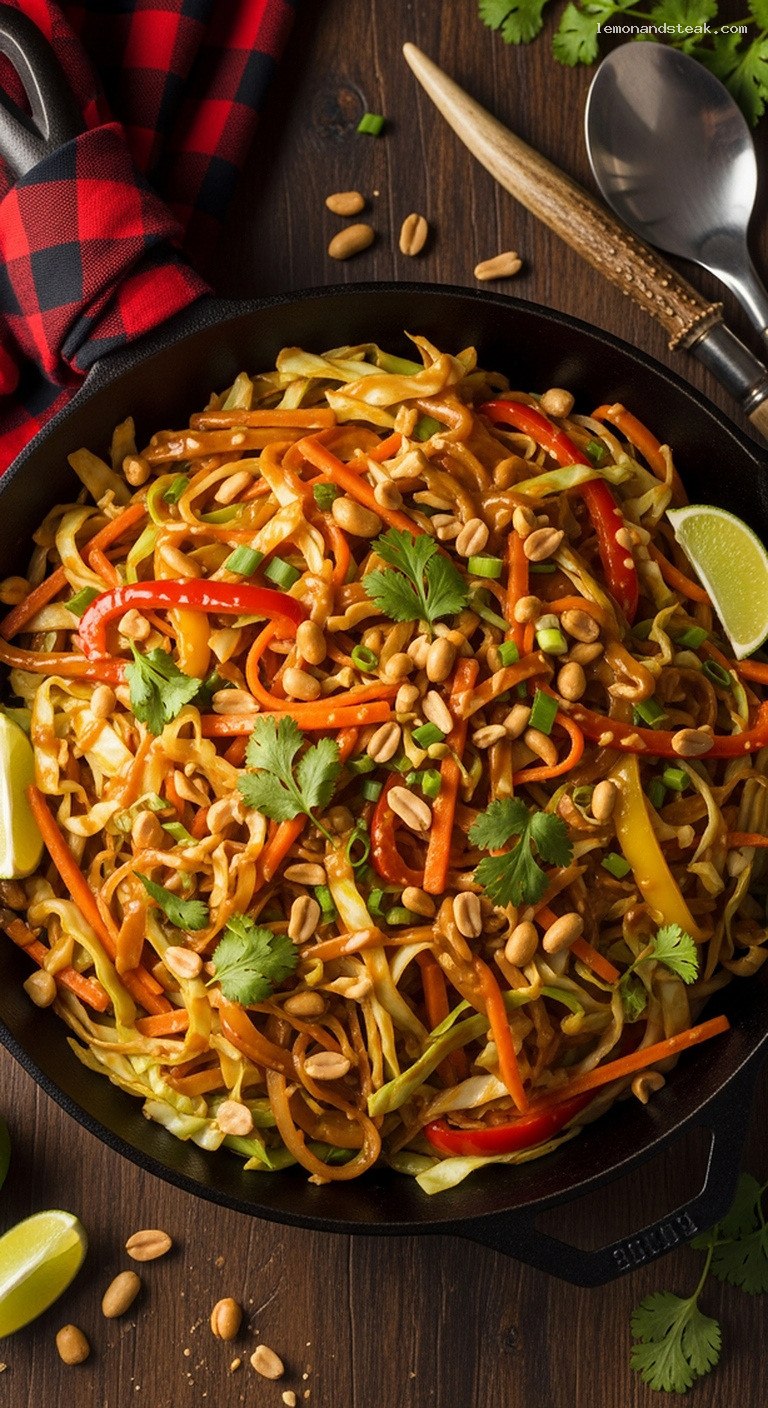
Quick Recipe Version (TL;DR)
Quick Ingredients
- 1/3 cup creamy peanut butter
- 1/4 cup water (plus more as needed)
- 3 tbsp low-sodium soy sauce
- 1 tbsp rice vinegar or lime juice
- 1 tbsp freshly grated ginger
- 1 small garlic clove, minced
- 1 tbsp honey or brown sugar
- 2 tsp toasted sesame oil
- 1–2 tsp sriracha or chili-garlic sauce (to taste)
- 2 tbsp neutral oil (canola, vegetable, or peanut)
- 3 cups shredded green cabbage (about 1/2 small head)
- 2 bell peppers, thinly sliced
- 2 medium carrots, julienned
- 4 green onions, sliced (whites and greens separated)
- 4 cups cooked rice or noodles, for serving
- 2 tbsp chopped roasted peanuts, cilantro, and lime wedges for garnish
Do This
- 1. Whisk peanut butter, water, soy sauce, rice vinegar (or lime), ginger, garlic, honey, sesame oil, and sriracha until smooth; thin with more water if needed.
- 2. Prep all vegetables: shred cabbage, slice peppers, julienne carrots, and slice green onions.
- 3. Heat 1 tbsp oil in a large skillet or wok over medium-high. Stir-fry cabbage with a pinch of salt for 3–4 minutes until slightly wilted; transfer to a bowl.
- 4. Add remaining 1 tbsp oil. Stir-fry bell peppers, carrots, and green onion whites for 3–4 minutes until crisp-tender.
- 5. Return cabbage to the pan. Pour in peanut-ginger sauce; toss over medium heat for 1–2 minutes until everything is coated and glossy, adding a splash of water if too thick.
- 6. Remove from heat; stir in green onion tops. Taste and adjust seasoning with more soy sauce, lime, or chili.
- 7. Serve hot over rice or noodles, topped with chopped peanuts, cilantro, and lime wedges.
Why You’ll Love This Recipe
- Fast, weeknight-friendly stir-fry that comes together in about 30 minutes.
- Glossy, bold peanut-ginger sauce that coats every strand of cabbage and strip of pepper.
- Packed with colorful vegetables, pantry staples, and easy to customize with your favorite add-ins.
- Naturally dairy-free and easily made vegetarian or vegan with simple swaps.
Grocery List
- Produce: Green cabbage, red bell pepper, yellow or orange bell pepper, carrots, green onions (scallions), fresh ginger, garlic, cilantro, limes
- Dairy: None
- Pantry: Creamy peanut butter, low-sodium soy sauce, rice vinegar (or extra limes), honey or brown sugar, toasted sesame oil, sriracha or chili-garlic sauce, neutral cooking oil, roasted peanuts, rice or noodles, salt, black pepper
Full Ingredients
Peanut-Ginger Sauce
- 1/3 cup (80 g) creamy peanut butter
- 1/4 cup (60 ml) water, plus 2–4 tbsp more as needed to thin
- 3 tbsp low-sodium soy sauce
- 1 tbsp rice vinegar or freshly squeezed lime juice
- 1 tbsp freshly grated ginger (about a 1-inch piece)
- 1 small garlic clove, finely minced
- 1 tbsp honey or light brown sugar, packed
- 2 tsp toasted sesame oil
- 1–2 tsp sriracha or chili-garlic sauce, to taste
Vegetable Stir-Fry
- 2 tbsp neutral oil (canola, vegetable, or peanut), divided
- 3 cups (about 300 g) shredded green cabbage (about 1/2 small head)
- 1 red bell pepper, cored and thinly sliced into strips
- 1 yellow or orange bell pepper, cored and thinly sliced into strips
- 2 medium carrots (about 150 g), peeled and julienned into matchsticks
- 4 green onions (scallions), thinly sliced; whites and greens kept separate
- 1/4 tsp fine sea salt, plus more to taste
- Freshly ground black pepper, to taste
To Serve
- 4 cups cooked rice or noodles (such as jasmine rice, brown rice, rice noodles, or soba)
- 2–3 tbsp roasted peanuts, roughly chopped
- 2–3 tbsp fresh cilantro leaves, roughly chopped (optional but recommended)
- Lime wedges, for squeezing over the top
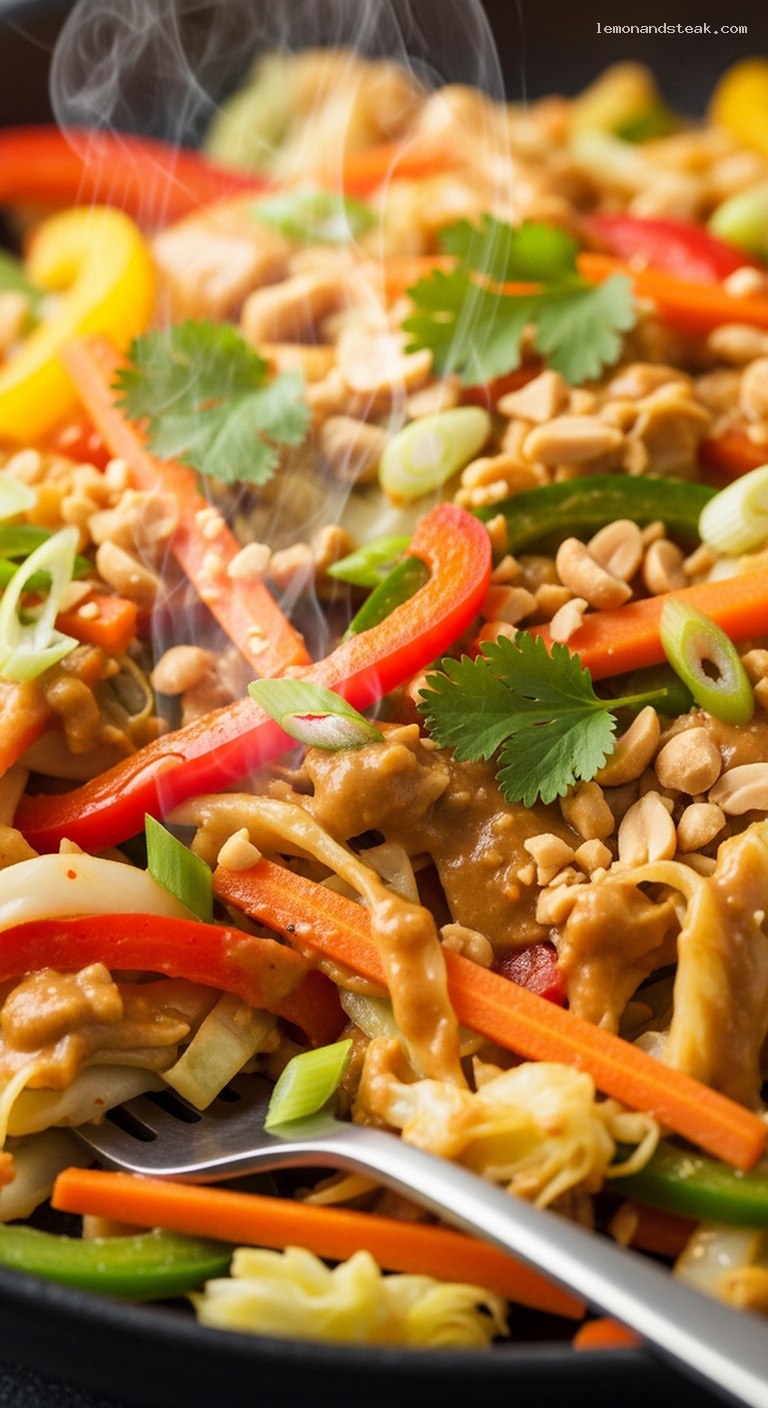
Step-by-Step Instructions
Step 1: Make the peanut-ginger sauce
In a medium bowl or large measuring jug, combine the peanut butter, 1/4 cup (60 ml) water, soy sauce, rice vinegar or lime juice, grated ginger, minced garlic, honey or brown sugar, toasted sesame oil, and sriracha or chili-garlic sauce.
Whisk until very smooth and glossy. At first it may look lumpy; keep whisking and it will come together into a creamy sauce. Add 2–4 tablespoons more water, 1 tablespoon at a time, until the sauce has the consistency of heavy cream and can be poured easily but still looks rich and thick. Taste and adjust: add more soy for salt, more lime or vinegar for brightness, or more sriracha for heat. Set aside.
Step 2: Prep the vegetables
Remove any wilted outer leaves from the cabbage. Cut the cabbage into quarters, slice out the core, then thinly shred the leaves into bite-sized strips. You should have about 3 cups (300 g) of shredded cabbage.
Core and seed the bell peppers, then slice into thin strips about 1/4 inch (0.5 cm) wide. Peel the carrots and cut them into thin matchsticks (julienne) about 2 inches (5 cm) long. Slice the green onions, keeping the white and light green parts in one pile and the dark green tops in another. Have all the vegetables ready before you start cooking; stir-frying goes quickly.
Step 3: Stir-fry the cabbage
Heat a large skillet or wok over medium-high heat for 1–2 minutes until hot. Add 1 tablespoon of the neutral oil and swirl to coat. Add the shredded cabbage and a small pinch (about 1/8 teaspoon) of salt. Stir-fry for 3–4 minutes, tossing frequently, until the cabbage is slightly wilted but still has some crunch, and a few edges are just starting to brown.
Transfer the cabbage to a large bowl and set aside. This staggered cooking keeps the cabbage from getting soggy while you cook the other vegetables.
Step 4: Stir-fry the peppers and carrots
Return the pan to medium-high heat and add the remaining 1 tablespoon oil. Add the sliced bell peppers, julienned carrots, and the white and light green parts of the green onions. Stir-fry for 3–4 minutes, stirring constantly, until the peppers are just tender and the carrots are crisp-tender. The vegetables should look bright and slightly glossy, not soft or limp.
Season with a small pinch of salt and a few grinds of black pepper. If anything starts to scorch, reduce the heat slightly.
Step 5: Combine vegetables and coat in sauce
Return the cabbage to the pan with the peppers and carrots. Toss to combine evenly. Give the peanut-ginger sauce a quick stir, then pour it over the vegetables.
Reduce the heat to medium. Using tongs or a large spatula, toss everything together for 1–2 minutes, until all the vegetables are coated and the sauce is heated through and glossy. If the sauce seems too thick or sticky, splash in 1–2 tablespoons of water at a time, tossing constantly, until it flows easily and shimmers over the vegetables.
Step 6: Finish with fresh flavors
Turn off the heat. Add the dark green onion tops and most of the chopped cilantro (if using), reserving a little for garnish. Toss gently to distribute without overcooking the onions; you want them to stay bright and fresh-tasting.
Taste and adjust one last time: add a little more soy sauce if you want it saltier, a squeeze of lime for extra tang, or a small drizzle of honey if you prefer a sweeter, rounder sauce.
Step 7: Serve and garnish
To serve, place about 1 cup of hot cooked rice or noodles in each bowl. Spoon the peanut-ginger vegetable stir-fry over the top, making sure to get plenty of sauce in each serving.
Sprinkle with chopped roasted peanuts and the remaining cilantro. Serve immediately with lime wedges on the side for squeezing over just before eating. Enjoy while hot, when the vegetables are still crisp-tender and the sauce is at its glossiest.
Pro Tips
- Prep first, cook fast: Stir-fries move quickly. Have all vegetables sliced, sauce whisked, and rice or noodles cooked before you turn on the stove.
- Control the sauce thickness: The peanut sauce should be pourable but rich. If it clings in heavy globs, add a splash of water. If it seems thin, let it bubble in the pan for 30–60 seconds to reduce and thicken.
- Do not overcrowd the pan: Use a large skillet or wok so the vegetables can sear instead of steaming. If your pan is small, cook the vegetables in two batches.
- Adjust the heat level: Start with less sriracha if you are sensitive to spice. You can always drizzle more on finished servings.
- Keep vegetables crisp-tender: For the best texture and color, stop cooking the vegetables while they still have some bite; they will soften slightly as they sit in the hot sauce.
Variations
- Protein boost: Add 8–12 oz (225–340 g) of sliced chicken breast, tofu cubes, or shrimp. Stir-fry the protein first until cooked, remove from the pan, cook the vegetables, then return the protein to the pan when you add the sauce.
- Extra veggies: Swap in or add other quick-cooking vegetables like snap peas, thinly sliced broccoli stems and florets, snow peas, or baby spinach. Add firmer vegetables first and delicate greens last.
- Vegan version: Use brown sugar or maple syrup instead of honey, and serve over your favorite plant-based noodles or grains for a completely vegan meal.
Storage & Make-Ahead
Store leftover peanut-ginger vegetable stir-fry in an airtight container in the refrigerator for up to 3 days. For best results, store the rice or noodles separately so they do not absorb all the sauce. Reheat gently in a skillet over medium heat with a splash of water to loosen the sauce, stirring frequently until hot. You can also reheat in the microwave in 30-second bursts, stirring between each, again adding a little water if needed.
For make-ahead prep, slice all vegetables and whisk the sauce up to 24 hours in advance. Keep them covered in the refrigerator. When you are ready to cook, the stir-fry itself will come together in about 10–15 minutes.
Nutrition (per serving)
Approximate values per serving (1/4 of the stir-fry plus 1 cup cooked jasmine rice): 520 calories; 19 g protein; 70 g carbohydrates; 18 g fat; 3 g saturated fat; 8 g fiber; 13 g sugar; 920 mg sodium. Values will vary based on exact ingredients, brands, and portion sizes.
Leave a Reply