
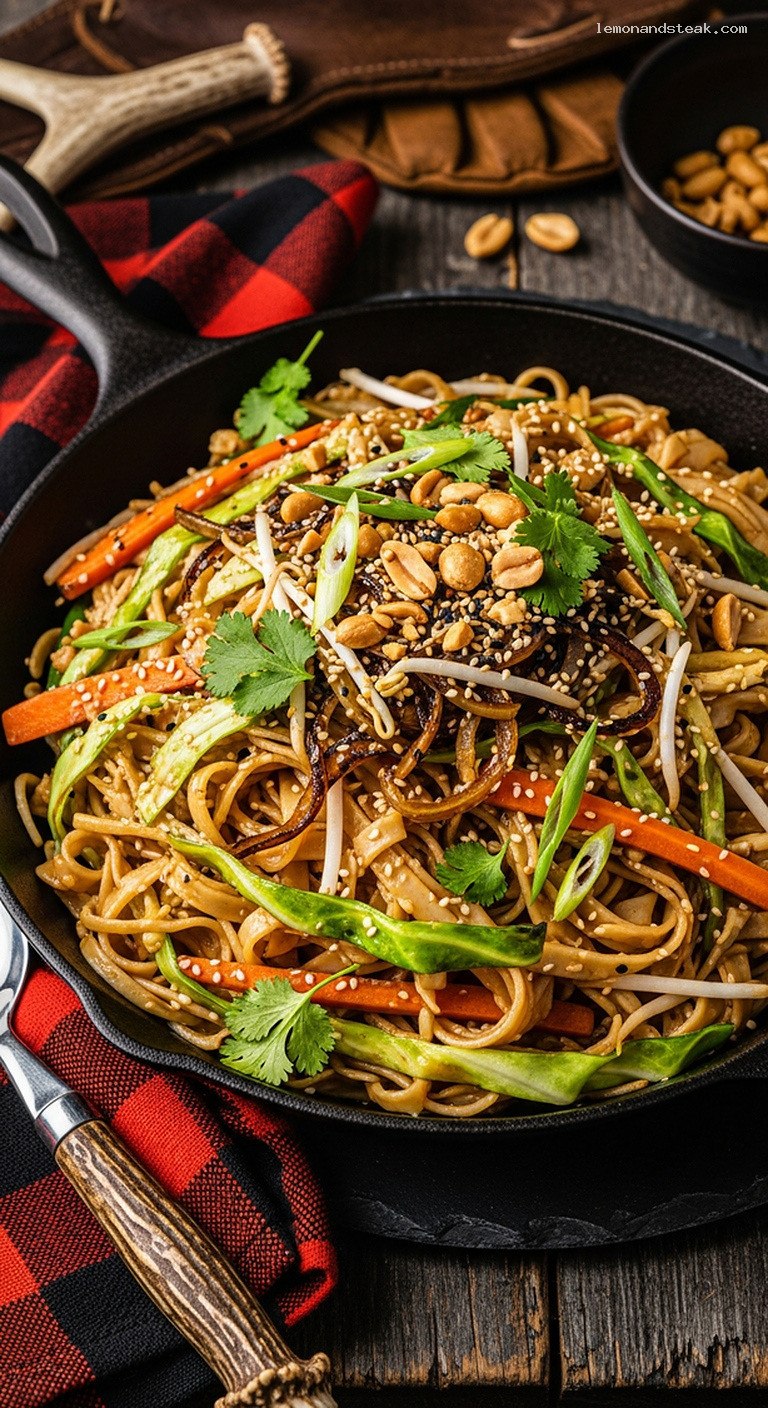
Quick Recipe Version (TL;DR)
Quick Ingredients
- 8 oz (225 g) flat rice noodles
- 3 tbsp neutral oil, divided
- 2 medium yellow onions, thinly sliced
- 3 cups (about 9 oz / 250 g) thinly sliced green cabbage
- 1 cup bean sprouts
- 1 medium carrot, cut into matchsticks
- 3 cloves garlic, minced
- 1 tbsp fresh ginger, minced or grated
- 1/3 cup creamy peanut butter
- 1/4 cup low-sodium soy sauce or tamari
- 2 tbsp rice vinegar
- 2 tbsp fresh lime juice
- 1–2 tbsp brown sugar or maple syrup
- 1–2 tsp chili-garlic sauce or sriracha
- 2 tsp toasted sesame oil
- 1/3–1/2 cup warm water (to thin sauce)
- 2 scallions, sliced; 1/4 cup roasted peanuts; lime wedges, cilantro, sesame seeds (for serving)
Do This
- 1. Soak or parboil rice noodles according to package directions until just tender; drain and rinse under cold water. Toss lightly with 1 tsp oil so they do not stick.
- 2. In a bowl, whisk peanut butter, soy sauce, rice vinegar, lime juice, brown sugar, chili-garlic sauce, sesame oil, and 1/3 cup warm water until smooth; adjust thickness with more water as needed.
- 3. In a wide pan over medium-low heat (about 300°F / 150°C), cook sliced onions in 2 tbsp oil with a pinch of salt, stirring often, until deep golden and caramelized, 15–20 minutes. Transfer out and set aside.
- 4. In the same pan over medium-high heat (about 375°F / 190°C), add remaining 1 tbsp oil. Stir-fry cabbage and carrot with a pinch of salt for 3–4 minutes until crisp-tender.
- 5. Add garlic and ginger; cook 30–60 seconds. Add noodles, caramelized onions, bean sprouts, and peanut sauce. Toss over medium heat 2–3 minutes until hot and evenly coated; splash in a little water if too thick.
- 6. Taste and adjust seasoning with more lime, soy, or chili. Serve hot topped with scallions, roasted peanuts, cilantro, sesame seeds, and lime wedges.
Why You’ll Love This Recipe
- Deep savory flavor from peanut-ginger sauce and slow-cooked caramelized onions.
- Packed with vegetables: cabbage, bean sprouts, carrots, and plenty of aromatics.
- Flexible and weeknight-friendly: uses pantry staples and cooks in one large pan.
- Naturally dairy-free and easily made gluten-free and vegan with simple swaps.
Grocery List
- Produce: Yellow onions, green cabbage, bean sprouts, carrot, garlic, fresh ginger, scallions, cilantro, limes.
- Dairy: None.
- Pantry: Flat rice noodles, neutral oil (canola, peanut, or vegetable), creamy peanut butter, low-sodium soy sauce or tamari, rice vinegar, brown sugar or maple syrup, chili-garlic sauce or sriracha, toasted sesame oil, roasted peanuts, sesame seeds, salt, black pepper.
Full Ingredients
For the Peanut-Ginger Sauce
- 1/3 cup (85 g) creamy peanut butter
- 1/4 cup (60 ml) low-sodium soy sauce or tamari (for gluten-free)
- 2 tbsp (30 ml) rice vinegar
- 2 tbsp (30 ml) fresh lime juice (about 1 medium lime)
- 1–2 tbsp (12–24 g) light brown sugar or maple syrup, to taste
- 1–2 tsp chili-garlic sauce or sriracha, to taste
- 1 tbsp finely grated fresh ginger (about a 1-inch knob)
- 1 clove garlic, finely minced or grated
- 2 tsp toasted sesame oil
- 1/3–1/2 cup (80–120 ml) warm water, as needed to thin to a pourable consistency
For the Noodles and Stir-Fry
- 8 oz (225 g) flat rice noodles (about 1/4-inch wide), pad-thai style
- 3 tbsp neutral oil (such as canola, peanut, or vegetable), divided
- 2 medium yellow onions (about 14 oz / 400 g total), thinly sliced pole-to-pole
- 3 cups thinly sliced green cabbage (about 9 oz / 250 g)
- 1 medium carrot, peeled and cut into thin matchsticks (julienne)
- 1 cup fresh bean sprouts (about 3 oz / 85 g), rinsed and drained well
- 2 cloves garlic, minced
- 1 tsp freshly grated ginger
- 1/4 tsp kosher salt, plus more to taste
- Freshly ground black pepper, to taste
For Serving and Garnish
- 2 scallions, thinly sliced
- 1/4 cup (35 g) roasted peanuts, roughly chopped
- 1–2 tsp toasted sesame seeds (white or black)
- Small handful fresh cilantro leaves (optional but recommended)
- Lime wedges, for squeezing at the table

Step-by-Step Instructions
Step 1: Soak the Rice Noodles
Check the package directions for your rice noodles. Most flat rice noodles can be soaked in very hot water instead of boiled, which helps them stay tender without falling apart. Bring a kettle or pot of water just to a boil (about 212°F / 100°C), then pour over the noodles in a large heat-safe bowl. Soak according to package time (usually 8–12 minutes), stirring gently once or twice, until just tender but still slightly firm in the center.
Drain the noodles in a colander and rinse under cold water to stop the cooking and remove excess starch. Shake off as much water as possible, then toss with about 1 teaspoon of neutral oil to prevent sticking. Set aside while you prepare the rest of the stir-fry.
Step 2: Caramelize the Onions
Place a large, wide skillet or wok over medium-low heat (around 300°F / 150°C). Add 2 tablespoons of neutral oil. When the oil is shimmering, add the sliced onions and 1/4 teaspoon kosher salt. Cook, stirring every couple of minutes, until the onions turn soft, then slowly golden, then deep amber. This will take about 15–20 minutes; adjust the heat down if they are browning too fast or up slightly if nothing seems to be happening.
If the onions start to stick, splash in 1–2 tablespoons of water and scrape up any browned bits. When the onions are evenly caramelized and sweet-smelling, transfer them to a bowl and set aside. Do not wipe out the pan; you want to keep those flavorful browned bits for the stir-fry.
Step 3: Make the Peanut-Ginger Sauce
While the onions cook, prepare the sauce. In a medium bowl, combine peanut butter, soy sauce or tamari, rice vinegar, lime juice, brown sugar or maple syrup, chili-garlic sauce or sriracha, grated ginger, grated garlic, and toasted sesame oil. Whisk together; it will be thick and pasty at first.
Gradually whisk in 1/3 cup (80 ml) warm water until the sauce becomes smooth and pourable, about the consistency of heavy cream. If it is still too thick to pour, add more warm water a tablespoon at a time. Taste and adjust: add more chili-garlic sauce for heat, sugar for sweetness, or lime for brightness. Set aside near the stove.
Step 4: Stir-Fry the Vegetables
Return the same large skillet or wok to the stove over medium-high heat (about 375°F / 190°C). Add the remaining 1 tablespoon neutral oil. When it shimmers and a piece of cabbage sizzles on contact, add the sliced cabbage and carrot matchsticks. Season with a small pinch of salt and a few grinds of black pepper.
Stir-fry for 3–4 minutes, tossing frequently, until the cabbage is slightly wilted but still has some crunch and the carrots are bright and just tender. Add the minced garlic and grated ginger and cook for 30–60 seconds, just until fragrant. Avoid browning the garlic, which can turn bitter.
Step 5: Bring Everything Together
Add the soaked and drained rice noodles to the pan along with the caramelized onions and bean sprouts. Use tongs or two spatulas to gently lift and toss the noodles with the vegetables, breaking up any clumps. Pour the peanut-ginger sauce evenly over the noodles.
Reduce the heat to medium. Toss and turn the noodles continuously for 2–3 minutes, until everything is hot, well coated, and glossy. If the sauce seems too thick or the noodles look dry, splash in 1–2 tablespoons of water and keep tossing until it is silky and clings lightly to the noodles. Taste and adjust seasoning with more soy, lime juice, or chili-garlic sauce as desired.
Step 6: Garnish and Serve
Turn off the heat. Transfer the peanut-ginger rice noodle stir-fry to a large serving platter or individual bowls. Scatter sliced scallions, chopped roasted peanuts, and sesame seeds over the top. Add a handful of fresh cilantro leaves if you enjoy the flavor.
Serve immediately while hot and steamy, with lime wedges on the side for squeezing over each serving. The extra hit of fresh lime right before eating brightens the rich peanut sauce and caramelized onions beautifully.
Pro Tips
- Do not overcook the noodles. Rice noodles turn mushy quickly. Pull them from the soaking water when they are just tender in the center; they will soften further in the pan.
- Give the onions time. True caramelization takes a good 15–20 minutes over medium-low heat. Rushing this step will give you browned, not sweet and jammy onions.
- Adjust sauce thickness at the end. If the stir-fry looks dry or clumpy, a splash or two of water and another minute of tossing will loosen the sauce and make it glossy again.
- Use high heat for the veggies. A hot pan keeps the cabbage and carrots crisp-tender and slightly charred instead of soggy.
- Prep everything before you stir-fry. Have noodles, sauce, and all vegetables ready at the stove; once the pan is hot, the dish comes together fast.
Variations
- Tofu or chicken version: Add 8–10 oz firm tofu (pressed and cubed) or thinly sliced chicken breast. Stir-fry in a bit of oil over medium-high heat until browned and cooked through, remove to a plate, then proceed with the vegetables and add the protein back in with the noodles.
- Extra-veg loaded: Toss in sliced bell peppers, snap peas, or baby spinach with the cabbage for added color and crunch. Keep total vegetable volume to about 4–5 cups so the pan does not overcrowd.
- Spicy sesame twist: Increase chili-garlic sauce to 2–3 teaspoons and add an extra teaspoon of toasted sesame oil. Garnish with more sesame seeds and a drizzle of chili oil for a bolder, spicier dish.
Storage & Make-Ahead
This stir-fry is best enjoyed fresh, when the noodles are springy and the vegetables are still crisp-tender. However, leftovers will keep in an airtight container in the refrigerator for up to 3 days. To reheat, add a splash of water and warm gently in a skillet over medium heat, tossing frequently, until heated through and the sauce loosens. You can also microwave in 45–60 second bursts, stirring and adding a bit of water as needed.
For make-ahead prep, you can slice the onions and cabbage, julienne the carrot, and mix the peanut-ginger sauce up to 2 days in advance. Store the vegetables in separate containers in the fridge and the sauce in a jar. When ready to cook, caramelize the onions, soak the noodles, stir-fry, and assemble. Avoid soaking the noodles ahead of time, as they will clump and break.
Nutrition (per serving)
Approximate values per serving (1/4 of the recipe): 540 calories; 19 g protein; 70 g carbohydrates; 22 g fat; 4 g saturated fat; 6 g fiber; 12 g sugar; 980 mg sodium. Values will vary based on exact brands, portion sizes, and optional garnishes used.
Leave a Reply