
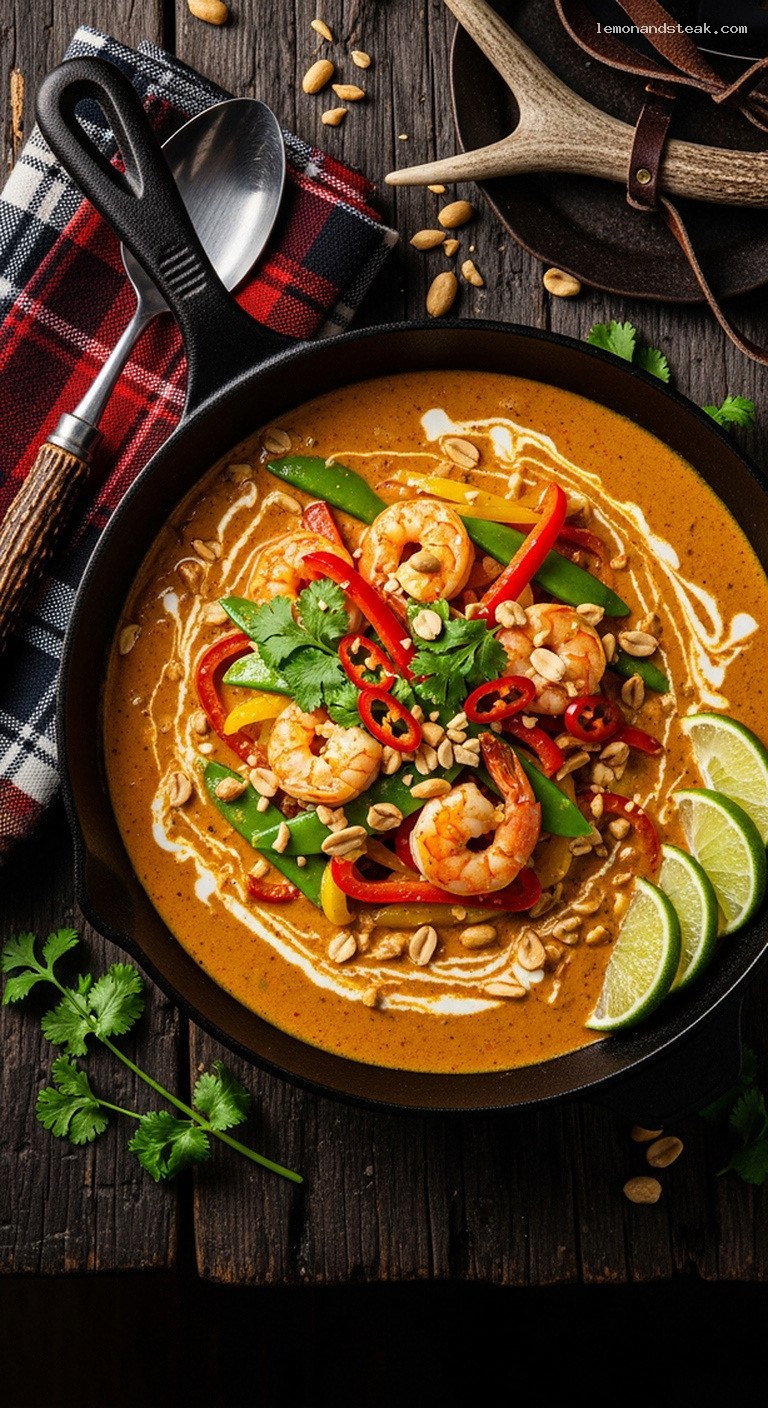
Quick Recipe Version (TL;DR)
Quick Ingredients
- 1 1/2 lb (680 g) large shrimp, peeled and deveined
- 2 tbsp neutral oil
- 1 small onion, finely chopped
- 4 garlic cloves, minced
- 1 tbsp fresh ginger, minced
- 2 stalks lemongrass, bruised (or 2 tbsp lemongrass paste)
- 2–3 tbsp red curry paste
- 1/3 cup (85 g) smooth peanut butter
- 1 can (13.5 oz / 400 ml) full-fat coconut milk
- 1 cup (240 ml) chicken or vegetable broth
- 4 kaffir lime leaves (or zest of 1 lime)
- 2 bell peppers (red and yellow), sliced
- 1 tbsp soy sauce + 2 tbsp fish sauce
- 1–2 tbsp brown sugar
- Juice of 1–2 limes
- Cooked jasmine rice, chopped peanuts, cilantro, lime wedges (for serving)
Do This
- 1. Season shrimp lightly with salt, pepper, and a pinch of turmeric; set aside.
- 2. Sauté onion in oil over medium heat 3–4 minutes, then add garlic, ginger, and lemongrass; cook 1–2 minutes.
- 3. Stir in red curry paste and peanut butter until fragrant, about 1 minute.
- 4. Whisk in coconut milk and broth; add lime leaves, soy sauce, fish sauce, and brown sugar. Simmer 8–10 minutes.
- 5. Add sliced bell peppers; simmer 3–4 minutes until just tender.
- 6. Add shrimp and cook 3–4 minutes, just until pink and opaque. Stir in lime juice and adjust seasoning.
- 7. Serve over hot jasmine rice, topped with chopped peanuts, cilantro, and extra lime wedges.
Why You’ll Love This Recipe
- Rich and creamy from coconut milk and peanut butter, with bright citrusy notes from lemongrass and lime leaves.
- Ready in under 40 minutes, but tastes like it simmered all afternoon.
- Flexible with vegetables and spice level, so you can tailor it to your taste and fridge contents.
- Feels special enough for guests, but simple enough for a weeknight dinner.
Grocery List
- Produce: Onion, garlic, fresh ginger, lemongrass stalks (or lemongrass paste), 2 bell peppers (red and yellow), kaffir lime leaves (or 1 lime for zest), fresh limes, fresh cilantro, green onions (optional), red chili or jalapeño (optional).
- Dairy: None required (coconut milk is shelf-stable and listed under pantry).
- Pantry: Neutral oil, smooth peanut butter, 1 can full-fat coconut milk, chicken or vegetable broth, red curry paste, soy sauce, fish sauce, brown sugar, salt, black pepper, ground turmeric, jasmine rice, roasted salted peanuts.
Full Ingredients
For the Shrimp
- 1 1/2 lb (680 g) large shrimp, peeled and deveined, tails on or off
- 1/2 tsp fine sea salt
- 1/4 tsp freshly ground black pepper
- 1/4 tsp ground turmeric (adds color and subtle warmth)
For the Peanut-Coconut Curry Base
- 2 tbsp neutral oil (such as canola, sunflower, or grapeseed)
- 1 small yellow onion, finely chopped (about 3/4 cup)
- 4 garlic cloves, minced
- 1 tbsp fresh ginger, minced or grated
- 2 stalks lemongrass, outer leaves removed, lower 4–5 inches bruised with the side of a knife, cut into 2-inch pieces
- Sub: 2 tbsp prepared lemongrass paste
- 2–3 tbsp red curry paste (adjust to preferred spice level)
- 1/3 cup (85 g) smooth peanut butter, well stirred
- 1 can (13.5 oz / 400 ml) full-fat coconut milk
- 1 cup (240 ml) low-sodium chicken or vegetable broth
- 4 kaffir lime leaves, torn in half to release aroma
- Sub: finely grated zest of 1 lime, added with the coconut milk
- 2 tbsp fish sauce
- 1 tbsp soy sauce (low sodium if preferred)
- 1–2 tbsp light brown sugar, packed (start with 1 tbsp and adjust)
For the Vegetables
- 1 large red bell pepper, seeded and thinly sliced
- 1 large yellow or orange bell pepper, seeded and thinly sliced
- 1 cup (about 100 g) snap peas or green beans, trimmed and cut into bite-size pieces (optional but recommended)
To Finish and Serve
- 2–3 tbsp fresh lime juice (from about 1–2 limes), plus extra lime wedges for serving
- 1/3 cup (40 g) roasted salted peanuts, roughly chopped
- 1/4 cup loosely packed fresh cilantro leaves, roughly chopped
- 2 green onions, thinly sliced (optional)
- Thinly sliced red chili or jalapeño, to taste (optional, for extra heat)
- 4 cups cooked jasmine rice (about 1 1/3 cups raw), for serving
Step-by-Step Instructions
Step 1: Prep the shrimp and vegetables
Pat the shrimp dry with paper towels so they sear nicely and do not water down the curry. In a bowl, toss the shrimp with the salt, black pepper, and ground turmeric until evenly coated. Set aside while you prepare the rest of the ingredients.
Slice the bell peppers into thin strips. If using snap peas or green beans, trim the ends and cut into bite-size pieces. Finely chop the onion, mince the garlic and ginger, and prepare the lemongrass by removing tough outer layers, then bruising the stalks with the side of a knife to help release their oils. Tear the kaffir lime leaves in half if using. Have everything measured and ready; this curry comes together quickly once you start cooking.
Step 2: Build the aromatic base
In a large, heavy-bottomed skillet, sauté pan, or wide pot, heat the neutral oil over medium heat (the surface of the pan will be hot but not smoking, roughly comparable to 350–375°F / 180–190°C). Add the chopped onion and cook, stirring occasionally, for 3–4 minutes until softened and lightly translucent.
Add the minced garlic, ginger, and the prepared lemongrass pieces. Cook for 1–2 minutes, stirring frequently, until very fragrant. Be careful not to let the garlic brown too much, as it can become bitter.
Step 3: Toast the curry paste and peanut butter
Add the red curry paste to the pan. Cook it in the aromatics for about 1 minute, stirring constantly, until it darkens slightly and smells deeply fragrant. This step helps wake up the spices and chiles in the paste.
Stir in the peanut butter. It will look a bit thick and clumpy at this stage; that is fine. Let it warm through with the curry paste for another 30–60 seconds, stirring so it does not scorch on the bottom. Toasting the peanut butter briefly deepens its flavor and gives the final sauce a richer roasted taste.
Step 4: Add liquids and simmer the curry sauce
Pour in the coconut milk, using a spoon or whisk to dissolve the peanut butter and curry mixture into the liquid. Add the broth and stir until smooth and fully combined. Drop in the torn kaffir lime leaves (or lime zest if substituting), along with the fish sauce, soy sauce, and 1 tbsp of the brown sugar.
Bring the mixture up to a gentle simmer over medium heat, then reduce the heat slightly to maintain a steady but not vigorous simmer. Let the curry cook for 8–10 minutes, uncovered, stirring occasionally. The sauce should thicken slightly and the flavors from the lemongrass and lime leaves will infuse the coconut milk. Taste and adjust the sweetness with up to 1 more tablespoon of brown sugar if needed.
Step 5: Cook the vegetables
Add the sliced red and yellow bell peppers (and snap peas or green beans, if using) to the simmering curry sauce. Stir to coat the vegetables in the peanut-coconut mixture.
Simmer for 3–4 minutes, just until the peppers are crisp-tender: they should be vibrant in color and slightly softened but not mushy. If you prefer softer vegetables, cook an additional 2–3 minutes, but keep in mind they will continue to soften slightly as the curry sits.
Step 6: Poach the shrimp gently
Increase the heat slightly to return the curry to a gentle simmer. Add the seasoned shrimp in an even layer, stirring them into the sauce so they are submerged as much as possible.
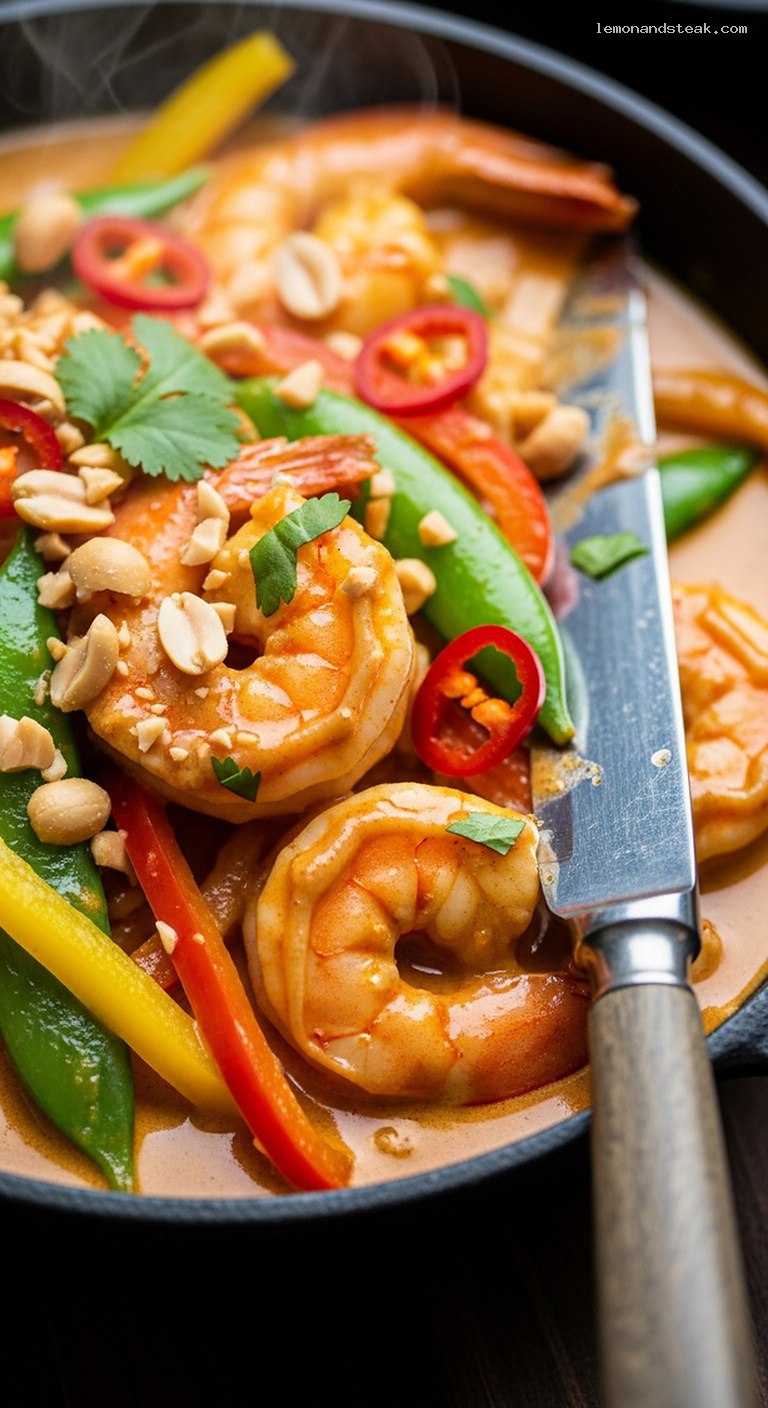
Cook the shrimp for 3–4 minutes, stirring once or twice, just until they turn opaque and pink and curl into a loose “C” shape. Avoid cooking them until they are tightly curled into an “O” shape, as that is a sign they are overcooked and can become rubbery. Remove and discard the lemongrass stalks and kaffir lime leaves at this point so they do not end up in someone’s bowl.
Step 7: Finish with lime and serve
Turn off the heat. Stir in 2 tbsp of fresh lime juice to brighten the curry. Taste the sauce and adjust to your liking: add more lime juice for acidity, fish sauce or soy sauce for saltiness, a pinch of sugar for balance, or a spoonful of hot curry paste or sliced chili for extra heat.
To serve, spoon hot jasmine rice into bowls and ladle the peanut-coconut shrimp curry over the top. Garnish each serving with chopped roasted peanuts, cilantro, and green onions. Add sliced red chili or jalapeño for heat, if desired, and tuck a lime wedge into each bowl for squeezing at the table.
Pro Tips
- Do not overcook the shrimp: Add them near the end and pull the pan off the heat as soon as they are just opaque and pink. Residual heat will finish cooking them.
- Balance the flavors: Taste after adding the lime juice. You are aiming for a balance of salty (fish/soy sauce), sweet (brown sugar), sour (lime), and richness (coconut and peanut).
- Control the thickness: If the curry seems too thick, splash in a bit more broth or water. If it is too thin, let it simmer a few extra minutes uncovered to reduce, or whisk in an extra tablespoon of peanut butter.
- Work with what you have: No kaffir lime leaves or lemongrass? Use extra lime zest and juice, and add a few torn basil leaves or cilantro stems while simmering to boost the aroma.
- Use frozen shrimp confidently: Thaw them overnight in the fridge or under cold running water, then pat very dry before seasoning so they sear instead of steam.
Variations
- Chicken or tofu version: Swap shrimp for thinly sliced boneless, skinless chicken thighs (simmer 10–12 minutes until cooked through) or firm tofu cubes (pan-sear first for extra texture, then simmer briefly in the sauce).
- Vegetable-packed curry: Add extra vegetables such as carrots, zucchini, baby corn, or mushrooms. Add harder vegetables earlier so they have time to soften, and quicker-cooking ones toward the end.
- Noodle bowl style: Serve the curry over rice noodles instead of rice. Thin the curry slightly with extra broth to create more of a soup-like consistency, and top with plenty of herbs.
Storage & Make-Ahead
For the best texture, this curry is ideal eaten fresh, but it does store well. Let leftovers cool to room temperature, then transfer to an airtight container and refrigerate for up to 3 days. Reheat gently in a saucepan over low to medium-low heat, just until the shrimp are warmed through; avoid boiling, which can toughen them. You can also reheat in the microwave at 50–60% power, stirring periodically.
If you want to plan ahead, make the curry sauce and vegetables up to 2 days in advance and refrigerate. When ready to serve, reheat the sauce to a gentle simmer, then add the raw shrimp and cook as directed so they are perfectly tender. The curry base (without shrimp) also freezes well for up to 2 months. Thaw overnight in the refrigerator before reheating and adding fresh shrimp.
Nutrition (per serving)
Approximate values for 1 of 4 servings, including about 1 cup cooked jasmine rice: 650 calories; 35 g protein; 35 g fat; 45 g carbohydrates; 4 g fiber; 10 g sugar; 1,150 mg sodium. Values will vary based on exact ingredients, brands, and portion sizes used.
Leave a Reply