
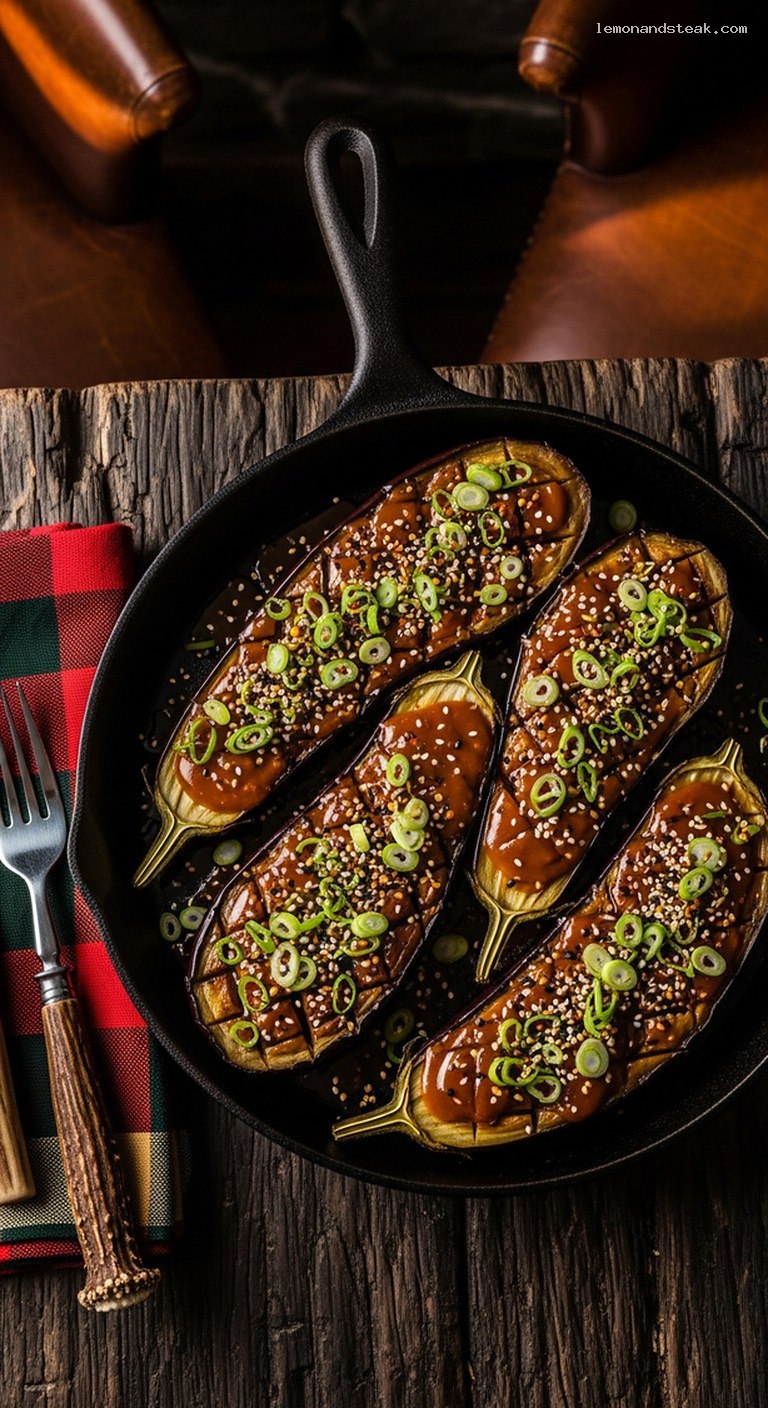
Quick Recipe Version (TL;DR)
Quick Ingredients
- 2 medium eggplants (about 450 g each)
- 2 tbsp neutral oil (e.g., avocado, canola)
- 1/2 tsp fine salt, plus more to taste
- 1/4 tsp black pepper
- 1/3 cup creamy peanut butter
- 2 tbsp white miso paste
- 1 tbsp soy sauce or tamari
- 1 1/2 tbsp maple syrup or honey
- 1 tbsp rice vinegar or lime juice
- 1 tsp toasted sesame oil
- 1 small garlic clove, finely grated
- 1 tsp finely grated fresh ginger (optional)
- 3–4 tbsp warm water (to thin sauce)
- 2–3 scallions, thinly sliced
- 1 tbsp toasted sesame seeds (white, black, or mixed)
- Pinch red pepper flakes (optional)
Do This
- 1. Preheat oven to 425°F (220°C). Line a baking sheet with parchment.
- 2. Halve eggplants lengthwise, score the flesh in a crosshatch pattern, brush with oil, and season with salt and pepper.
- 3. Place eggplants cut-side down on the sheet and roast 20–25 minutes until very tender.
- 4. Meanwhile, whisk peanut butter, miso, soy sauce, maple syrup, rice vinegar, sesame oil, garlic, ginger, and warm water into a thick, pourable glaze.
- 5. Flip eggplants cut-side up, spoon and spread the glaze into the scored flesh.
- 6. Roast another 10–12 minutes, then broil 1–2 minutes until the glaze bubbles and lightly caramelizes.
- 7. Transfer to a platter, sprinkle with scallions, sesame seeds, and red pepper flakes, then serve hot with rice or greens.
Why You’ll Love This Recipe
- Deep, savory flavor from umami-rich miso and nutty peanut butter that turns simple eggplant into a centerpiece.
- Roasting and broiling make the eggplant silky-soft inside with gorgeous caramelized edges on top.
- Mostly pantry ingredients, all baked on one sheet pan, with only one small bowl for the glaze.
- Easily made vegan and naturally dairy-free, yet hearty enough to satisfy as a main course.
Grocery List
- Produce: 2 medium eggplants, 2–3 scallions, 1 small garlic clove, small knob fresh ginger, optional lime for serving.
- Dairy: None required (optional: plain Greek yogurt or coconut yogurt to serve alongside).
- Pantry: Neutral oil, fine salt, black pepper, creamy peanut butter, white miso paste, soy sauce or tamari, maple syrup or honey, rice vinegar, toasted sesame oil, sesame seeds, red pepper flakes (optional).
Full Ingredients
For the Roasted Eggplant
- 2 medium eggplants (about 450 g / 1 lb each)
- 2 tbsp neutral oil (such as avocado, canola, or grapeseed)
- 1/2 tsp fine sea salt, plus more to taste
- 1/4 tsp freshly ground black pepper
For the Peanut-Butter Miso Glaze
- 1/3 cup creamy peanut butter (well-stirred, unsweetened if possible)
- 2 tbsp white miso paste
- 1 tbsp soy sauce or tamari (use gluten-free if needed)
- 1 1/2 tbsp maple syrup or honey
- 1 tbsp rice vinegar (or fresh lime juice)
- 1 tsp toasted sesame oil
- 1 small garlic clove, finely grated or minced
- 1 tsp finely grated fresh ginger (optional but recommended)
- 3–4 tbsp warm water, as needed to thin to a thick, spoonable consistency
For Garnish & Serving
- 2–3 scallions, thinly sliced on the diagonal
- 1 tbsp toasted sesame seeds (white, black, or a mix)
- Pinch red pepper flakes or a drizzle of chili oil (optional, for heat)
- Lime wedges, for squeezing over (optional)
- Cooked rice, noodles, or a simple green salad, for serving (optional but delicious)

Step-by-Step Instructions
Step 1: Prep the oven and pan
Preheat your oven to 425°F (220°C). Line a large baking sheet with parchment paper or lightly oil it to prevent sticking. This higher roasting temperature helps the eggplant become very tender and slightly caramelized rather than soggy.
While the oven heats, make sure the oven rack is in the middle position. If your oven has a separate broiler setting, note where you will move the rack later for a quick broil to finish the glaze.
Step 2: Prepare and score the eggplant
Rinse the eggplants and pat them completely dry. Trim just the stem end, leaving the green cap mostly intact if you like the look. Slice each eggplant lengthwise through the stem so you have 4 long halves.
Place the halves cut-side up on a cutting board. Using a sharp knife, score the flesh in a deep crosshatch pattern: make parallel cuts about 1 cm (3/8 inch) apart, then turn the eggplant and make perpendicular cuts to form diamonds. Cut deeply but without piercing the skin; this lets the eggplant cook evenly and gives the glaze places to seep in.
Brush or rub the scored surface of each half with 2 tbsp neutral oil, making sure it seeps into the cuts. Sprinkle evenly with 1/2 tsp salt and 1/4 tsp black pepper.
Step 3: Roast the eggplant until silky
Arrange the eggplant halves on the prepared baking sheet, cut-side down. This technique traps steam and helps the flesh become very tender.
Roast in the preheated oven for 20–25 minutes, until the skins look slightly wrinkled and the eggplant feels very soft when poked with tongs or a fork. If your eggplants are large, you may need up to 30 minutes. While they roast, prepare the peanut-butter miso glaze.
Step 4: Make the peanut-butter miso glaze
In a medium bowl, combine 1/3 cup peanut butter, 2 tbsp white miso, 1 tbsp soy sauce or tamari, 1 1/2 tbsp maple syrup, 1 tbsp rice vinegar, and 1 tsp toasted sesame oil. Add the grated garlic and, if using, the grated ginger.
Whisk together; the mixture will be thick at first. Gradually add 3–4 tbsp warm water, 1 tablespoon at a time, whisking until you have a glossy, smooth glaze that is thick but spoonable and spreadable, similar to a loose frosting. Taste and adjust: add a pinch of salt if needed, more maple syrup for sweetness, or a few drops of vinegar for brightness.
Step 5: Glaze and finish roasting the eggplant
Remove the roasted eggplant from the oven and carefully flip the halves so they are now cut-side up. The flesh should be very soft and easily yield to a spoon.
Divide the peanut-butter miso glaze evenly over the 4 halves. Use the back of a spoon or a small spatula to spread the glaze, gently pressing it into the scored cuts so it sinks into the eggplant. Return the tray to the oven and roast for another 10–12 minutes, until the glaze is bubbling and slightly darkened at the edges.
For extra caramelization, switch to the broiler on high for the last 1–2 minutes. Watch closely to avoid burning; you want some deeper golden spots but not blackened miso.
Step 6: Garnish generously
Once the eggplant boats are deeply glossy and fragrant, remove them from the oven and let them sit for 3–5 minutes. This helps the glaze thicken slightly and makes them easier to handle.
Transfer the halves to a serving platter or individual plates. Scatter 2–3 sliced scallions over the top, followed by 1 tbsp toasted sesame seeds. If you like heat, add a pinch of red pepper flakes or a drizzle of chili oil. Serve with lime wedges</strong) on the side for squeezing over just before eating; the acidity brightens the rich, savory glaze.
Step 7: Serve as a main or side
Serve the peanut-butter miso roasted eggplant boats hot or warm. For a complete meal, place each eggplant half over a bed of steamed rice, quinoa, or noodles, letting the extra glaze drip down. A crisp cucumber salad or simply dressed greens on the side balance the richness.
If serving as a side dish, cut the eggplant boats into thick slices and arrange them on a platter so the creamy interior and glossy glaze are visible. Spoon any juices from the pan over the top. Offer extra sesame seeds and scallions at the table for people who like a little more crunch and freshness.
Pro Tips
- Score deeply, but not through the skin. This maximizes tenderness and flavor absorption without the eggplant falling apart.
- Use warm water for the glaze. Warm (not hot) water loosens the peanut butter and miso much more easily, giving you a silky sauce.
- Roast cut-side down first. Starting cut-side down lets the eggplant steam in its own juices, turning it custardy inside before you add the glaze.
- Watch the broiler. Miso and maple can burn quickly; stay nearby and pull the tray as soon as you see deep golden spots.
- Season at the end if needed. Miso and soy are salty; taste the finished dish before adding extra salt.
Variations
- Spicy version: Add 1–2 tsp chili-garlic sauce, sriracha, or gochujang to the peanut-butter miso glaze for a punchy, spicy kick.
- Tahini twist: Swap half of the peanut butter for tahini for a slightly lighter, more sesame-forward flavor that pairs beautifully with the miso.
- Loaded grain bowls: Serve the eggplant boats over warm brown rice or farro with shredded carrots, cucumber, and edamame, and drizzle any extra glaze over the top for an easy bowl dinner.
Storage & Make-Ahead
Leftover roasted eggplant boats keep well in an airtight container in the refrigerator for up to 3 days. Let them cool completely before storing. To reheat, place on a baking sheet and warm in a 350°F (175°C) oven for 10–12 minutes, or microwave gently until heated through. The texture will be softer but still very flavorful.
You can also make the peanut-butter miso glaze up to 3 days ahead. Store it in a jar in the refrigerator, then let it sit at room temperature and whisk in a splash of warm water before using if it has thickened. The eggplants are best roasted fresh, but you can score and oil them several hours ahead and keep them covered in the fridge until ready to roast.
Nutrition (per serving)
Approximate values for one eggplant boat (1/4 of the recipe), without rice or sides: about 320 calories, 9 g protein, 20 g fat, 28 g carbohydrates, 7 g fiber, and 7 g sugar. Sodium will vary depending on the saltiness of your miso and soy sauce, but expect roughly 650–750 mg sodium per serving. These numbers are estimates and will change with ingredient brands and portion sizes.
Leave a Reply