
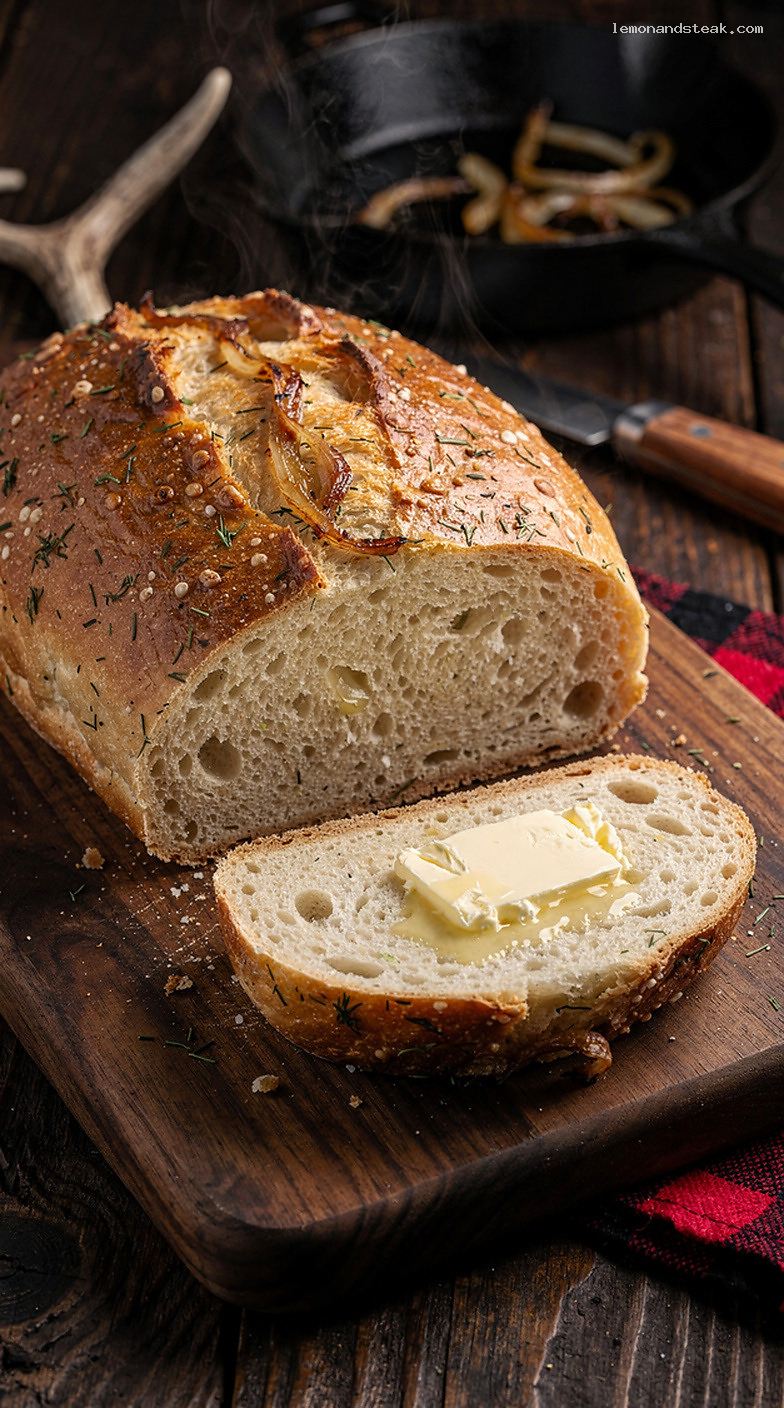
Quick Recipe Version (TL;DR)
Quick Ingredients
- 2 tbsp (28 g) unsalted butter
- 1 large yellow onion, finely chopped (about 1 1/2 cups / 225 g)
- 1/2 tsp kosher salt (for onions)
- 3/4 cup (180 g) buttermilk, warmed to 105–110°F (40–43°C)
- 1/4 cup (60 g) warm water, 105–110°F (40–43°C)
- 2 1/4 tsp (7 g) active dry yeast
- 1 tbsp (12 g) granulated sugar
- 3 1/2 cups (420 g) bread flour
- 1 1/2 tsp (9 g) kosher salt (for dough)
- 2 tbsp (8 g) chopped fresh dill (or 2 tsp dried dill)
- 1 tbsp (14 g) unsalted butter, softened (for the pan)
- 1 tbsp (15 g) melted butter (optional, for brushing)
Do This
- 1) Sauté onion in 2 tbsp butter with 1/2 tsp salt for 8–10 minutes; cool 10 minutes.
- 2) Stir warm buttermilk + warm water + sugar + yeast; rest 5–8 minutes until foamy.
- 3) Mix flour + 1 1/2 tsp salt + dill; add yeast mixture and onions; knead 8–10 minutes.
- 4) Rise covered in a warm spot until doubled, 60–75 minutes.
- 5) Shape into a log; place in buttered 9 x 5-inch loaf pan; rise 35–45 minutes.
- 6) Bake at 375°F (190°C) for 35–40 minutes (200°F / 93°C inside).
- 7) Cool 1 hour before slicing; brush with melted butter if you like.
Why You’ll Love This Recipe
- Savory, fragrant flavor from buttery sautéed onions and bright dill in every slice.
- Slight tang from buttermilk that makes this loaf extra sandwich-friendly.
- Soft, sliceable crumb with a nicely browned crust—great for toast, soup, or grilled sandwiches.
- Simple, reliable method using a standard 9 x 5-inch loaf pan.
Grocery List
- Produce: 1 large yellow onion, fresh dill
- Dairy: unsalted butter, buttermilk
- Pantry: bread flour, active dry yeast, granulated sugar, kosher salt
Full Ingredients
Onion & Dill Flavor Base
- 2 tbsp (28 g) unsalted butter
- 1 large yellow onion, finely chopped (about 1 1/2 cups / 225 g)
- 1/2 tsp (3 g) kosher salt
- 2 tbsp (8 g) chopped fresh dill (or 2 tsp dried dill)
Dough
- 3/4 cup (180 g) buttermilk, warmed to 105–110°F (40–43°C)
- 1/4 cup (60 g) warm water, 105–110°F (40–43°C)
- 1 tbsp (12 g) granulated sugar
- 2 1/4 tsp (7 g) active dry yeast
- 3 1/2 cups (420 g) bread flour, plus up to 2 tbsp (15 g) more if needed
- 1 1/2 tsp (9 g) kosher salt
Pan & Finish
- 1 tbsp (14 g) unsalted butter, softened (for greasing the pan)
- 1 tbsp (15 g) unsalted butter, melted (optional, for brushing after baking)
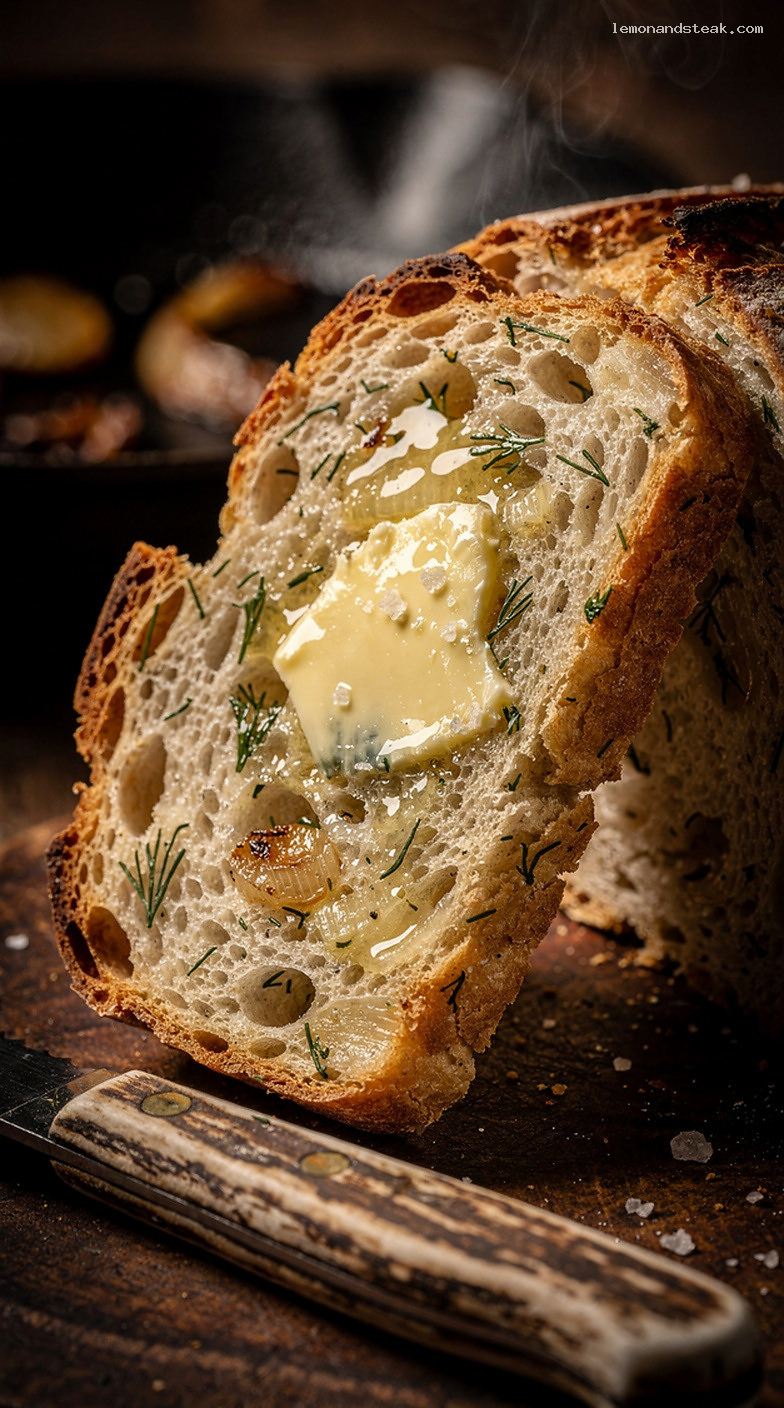
Step-by-Step Instructions
Step 1: Sauté the onions until sweet and fragrant
In a medium skillet over medium heat, melt 2 tbsp (28 g) butter. Add the finely chopped onion and 1/2 tsp kosher salt. Cook, stirring often, for 8–10 minutes, until the onion is soft and turning lightly golden. You are aiming for sweet, tender onions (not deeply caramelized).
Scrape the onions onto a plate and spread them out so they cool faster. Let cool for 10 minutes. (Hot onions can slow yeast activity and make the dough greasy.)
Step 2: Activate the yeast
In a large mixing bowl, combine the warm buttermilk, warm water, and sugar. Sprinkle the active dry yeast over the top and stir to combine.
Let stand for 5–8 minutes, until the surface looks foamy and the mixture smells pleasantly yeasty. If nothing happens, your yeast may be old or the liquid may have been too hot or too cool.
Step 3: Mix the dough
Add the bread flour, 1 1/2 tsp kosher salt, and the dill to the bowl. Add the cooled sautéed onions (including any buttery juices on the plate).
Stir with a sturdy spoon until a shaggy dough forms and there are no dry flour pockets left. If the dough looks extremely wet and puddly after mixing for a full minute, add extra flour 1 tbsp (8 g) at a time (up to 2 tbsp / 15 g).
Step 4: Knead until smooth and elastic
Turn the dough onto a lightly floured counter and knead for 8–10 minutes, until it becomes smooth, stretchy, and slightly tacky (but not sticky). The onion pieces will make the surface look a little bumpy, which is normal.
If you prefer, knead in a stand mixer with a dough hook on speed 2 for 7–8 minutes. The dough should pull away from the sides of the bowl and form a soft ball.
Step 5: First rise (bulk ferment)
Lightly oil or butter a clean bowl and place the dough inside, turning once to coat. Cover tightly (lid, plastic wrap, or a damp towel).
Let rise in a warm spot (about 75–80°F / 24–27°C) until doubled in size, 60–75 minutes.
Step 6: Shape and second rise in the loaf pan
Grease a 9 x 5-inch (23 x 13 cm) loaf pan with 1 tbsp (14 g) softened butter.
Gently punch down the dough to release excess gas. On a lightly floured counter, pat the dough into a rectangle about 8 x 12 inches (20 x 30 cm). Roll it up tightly from the short end to form a log, pinch the seam closed, and tuck the ends under.
Place the log seam-side down in the prepared pan. Cover and let rise until the dough crowns about 1 inch (2.5 cm) above the rim of the pan, 35–45 minutes.
Step 7: Bake, then cool for clean slices
While the dough rises, preheat the oven to 375°F (190°C) with a rack in the center.
Bake for 35–40 minutes, until deeply golden brown. For accuracy, check the center with an instant-read thermometer: the loaf is done at 200°F (93°C).
Remove from the pan after 5 minutes and cool on a rack for at least 1 hour before slicing (this finishes setting the crumb). If you like a softer crust, brush the top with 1 tbsp (15 g) melted butter while the loaf is still warm.
Pro Tips
- Cool the onions: Warm is fine, hot is not. If the onions are steaming, give them a few extra minutes so they do not weaken the gluten or overheat the yeast.
- Use a thermometer for doneness: A loaf can look browned before it is baked through. Pull it at 200°F (93°C) in the center for the best texture.
- Flour by weight if possible: 420 g bread flour gives consistent results. If scooping by cups, fluff the flour, spoon it in, and level.
- Want more onion flavor? Sauté until lightly golden, not pale. That little bit of color adds a lot of savory depth.
- For neat sandwich slices: Cool fully, then slice with a serrated bread knife using gentle sawing motions.
Variations
- Onion Dill Rye: Replace 1 cup (120 g) of the bread flour with 1 cup (100 g) rye flour. Keep the rest the same; the crumb will be slightly denser and extra hearty.
- Cheddar Onion Dill: Add 1 cup (113 g) shredded sharp cheddar during mixing (Step 3). Bake as directed; expect a richer loaf that is great for toasting.
- Crusty Free-Form Boule: Skip the loaf pan. Shape into a round, place on parchment, and bake at 400°F (205°C) for 30–35 minutes (still target 200°F / 93°C inside).
Storage & Make-Ahead
Let the loaf cool completely before storing. Keep at room temperature, tightly wrapped or in a bread bag, for 2 days. For longer storage, slice the loaf and freeze in a freezer bag for up to 2 months. Toast slices straight from frozen. If making ahead for guests, bake the day before and refresh slices in a 300°F (150°C) oven for 6–8 minutes to bring back that just-baked aroma.
Nutrition (per serving)
Approximate per slice (1/12 loaf): 190 calories, 6 g protein, 34 g carbohydrates, 4 g fat, 1 g saturated fat, 2 g fiber, 4 g sugars, 340 mg sodium.
Leave a Reply