
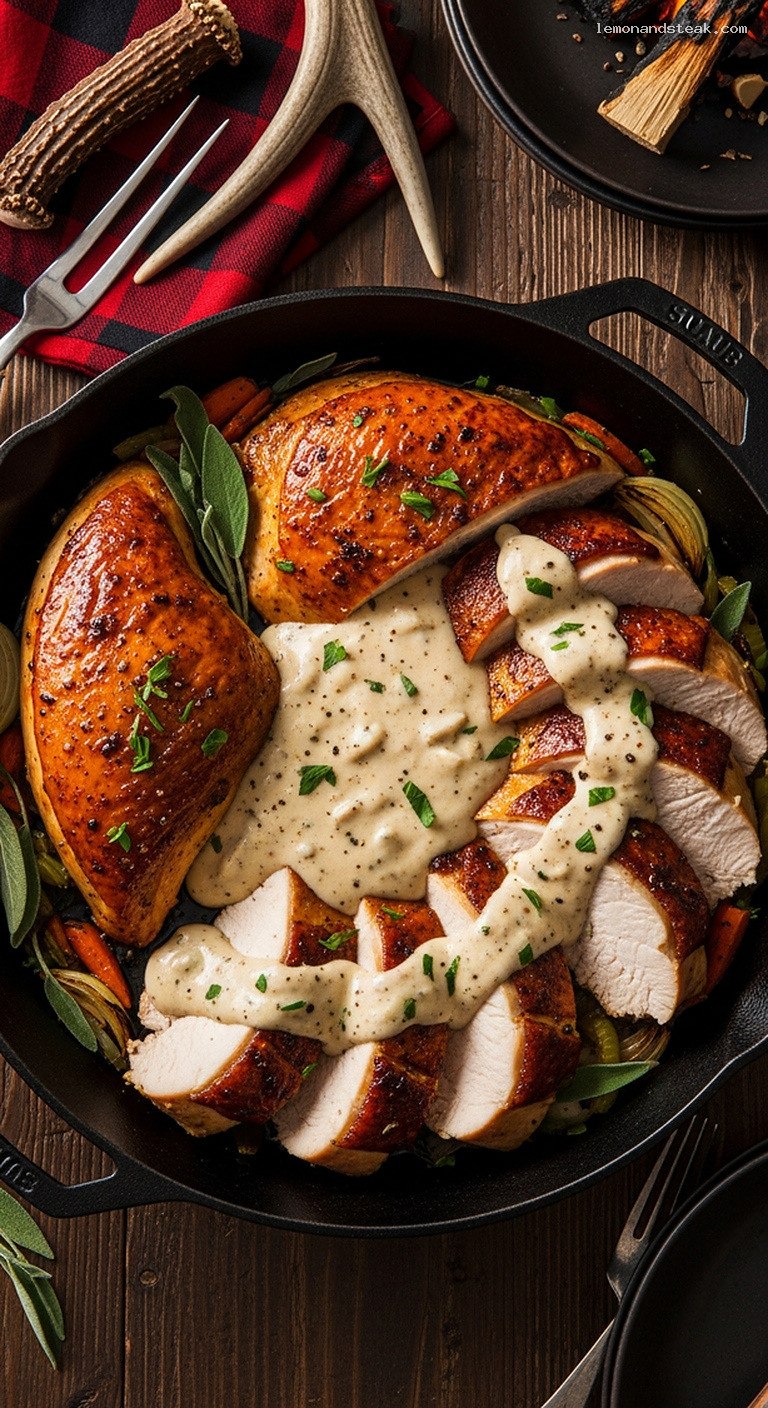
Quick Recipe Version (TL;DR)
Quick Ingredients
- 1 (4.5–5 lb) bone-in, skin-on turkey breast, thawed
- 2 1/2 tsp kosher salt, divided
- 1 tsp black pepper, plus more to taste
- 4 tbsp unsalted butter, softened
- 3 tbsp olive oil
- 6 garlic cloves, minced
- 2 tbsp fresh sage, finely chopped
- 1 tsp fresh thyme leaves (or 1/2 tsp dried)
- 1 tsp lemon zest (optional)
- 1 small yellow onion, chopped
- 1 carrot and 1 celery stalk, chopped
- 2 tbsp butter (for gravy, or use pan fat)
- 3 tbsp all-purpose flour
- 1 3/4 cups low-sodium chicken or turkey broth
- 1/2 cup evaporated milk (unsweetened)
Do This
- 1. Pat turkey dry. Loosen skin. Mix softened butter with garlic, sage, thyme, lemon zest, 1 1/2 tsp salt, and 1/2 tsp pepper. Rub under and over the skin.
- 2. Heat 2 tbsp olive oil in a large oven-safe skillet over medium-high. Sear turkey breast skin-side down 6–8 minutes until deeply golden. Flip skin-side up.
- 3. Scatter onion, carrot, and celery around turkey, drizzle with remaining 1 tbsp oil, and season with a pinch of salt.
- 4. Roast at 400°F (200°C) for 40–50 minutes, until the thickest part of the breast reaches 160–165°F (71–74°C). Rest turkey on a board, loosely tented, 15–20 minutes.
- 5. For gravy, spoon off excess fat, leaving about 3 tbsp in the pan. Add butter if needed. Sprinkle in flour and cook 2 minutes, stirring and scraping up browned bits.
- 6. Slowly whisk in broth, then evaporated milk. Simmer 4–6 minutes until thick and creamy. Season to taste. Slice turkey and serve with hot creamy garlic-sage gravy.
Why You’ll Love This Recipe
- Classic roast turkey flavor in a manageable pan-roasted format that fits a busy weeknight or small gathering.
- Garlic and fresh sage tucked under the skin keep the meat juicy, fragrant, and deeply savory.
- The drippings turn into an old-school creamy gravy with evaporated milk for a nostalgic, velvety finish.
- Everything happens in one pan, so you get maximum flavor with minimal cleanup.
Grocery List
- Produce: Garlic, fresh sage, fresh thyme (or dried), lemon, yellow onion, carrot, celery, fresh parsley (optional garnish).
- Dairy: Unsalted butter, evaporated milk (unsweetened, canned).
- Pantry: Bone-in, skin-on turkey breast; olive oil; kosher salt; black pepper; all-purpose flour; low-sodium chicken or turkey broth; optional Worcestershire sauce and Dijon mustard.
Full Ingredients
For the Garlic-Sage Pan-Roasted Turkey
- 1 bone-in, skin-on turkey breast (4.5–5 lb), fully thawed
- 2 1/2 tsp kosher salt, divided
- 1 tsp freshly ground black pepper, plus more to taste
- 4 tbsp unsalted butter, softened to room temperature
- 3 tbsp olive oil, divided
- 6 large garlic cloves, finely minced or grated
- 2 tbsp fresh sage leaves, finely chopped (about 8–10 leaves)
- 1 tsp fresh thyme leaves (or 1/2 tsp dried thyme)
- 1 tsp lemon zest (optional, for brightness)
- 1 small yellow onion, roughly chopped
- 1 medium carrot, roughly chopped
- 1 celery stalk, roughly chopped
For the Old-School Creamy Gravy
- Pan drippings and browned bits from roasting the turkey
- 2 tbsp unsalted butter (add only if drippings do not provide about 3 tbsp fat total)
- 3 tbsp all-purpose flour
- 1 3/4 cups low-sodium chicken or turkey broth, plus extra as needed to thin
- 1/2 cup evaporated milk (unsweetened, well shaken)
- 1/4–1/2 tsp kosher salt, to taste
- 1/4–1/2 tsp freshly ground black pepper, to taste
- Optional flavor boosters:
- 1–2 tsp Worcestershire sauce
- 1 tsp Dijon mustard
- 1–2 tsp lemon juice or apple cider vinegar for brightness
- 1–2 tbsp chopped fresh parsley or sage for garnish
Step-by-Step Instructions
Step 1: Prep the turkey and aromatics
Remove the turkey breast from the fridge 30 minutes before cooking, if possible, so it can take the chill off. Pat it very dry with paper towels, especially the skin; dry skin browns and crisps better. Check the cavity side and remove any excess skin or stray bone fragments.
Preheat your oven to 400°F (200°C) with a rack in the center. Chop the onion, carrot, and celery into rough 1-inch pieces. They will serve as aromatic flavor boosters for the drippings and gravy rather than as a side dish, so neatness is not crucial here.
Step 2: Make the garlic-sage butter and season the turkey
In a small bowl, combine the softened 4 tbsp butter, minced garlic, chopped sage, thyme, lemon zest (if using), 1 1/2 tsp kosher salt, and 1/2 tsp black pepper. Mash everything together with a spoon or fork until it forms a fragrant, evenly mixed paste.
Gently loosen the skin on the turkey breast by sliding your fingers between the skin and the meat, being careful not to tear the skin. Spoon or smear about two-thirds of the garlic-sage butter under the skin, spreading it as evenly as you can over both sides of the breast. Rub the remaining butter over the outside of the skin and on the underside of the breast. Sprinkle the outside with the remaining 1 tsp salt and 1/2 tsp black pepper.
Step 3: Sear the turkey in a hot skillet
Set a large, heavy, oven-safe skillet (12-inch cast iron works beautifully) over medium-high heat. Add 2 tbsp olive oil and heat until the oil shimmers and a tiny bit of butter mixture sizzles on contact.
Carefully place the turkey breast in the pan, skin-side down. It should sizzle firmly. Let it sear undisturbed for 6–8 minutes, until the skin is deeply golden brown and some fat has rendered. If any spots are browning too quickly, lower the heat slightly. Using sturdy tongs, carefully flip the turkey so it is skin-side up.
Step 4: Add vegetables and roast in the oven
Scatter the chopped onion, carrot, and celery around the turkey in the skillet. Drizzle the vegetables with the remaining 1 tbsp olive oil and toss gently to coat them in the pan fat. Season the vegetables with a small pinch of salt.
Transfer the skillet to the preheated 400°F (200°C) oven, skin-side up. Roast for 40–50 minutes, or until an instant-read thermometer inserted into the thickest part of the breast (not touching bone) reads 160–165°F (71–74°C). Start checking at 35–40 minutes; every oven is a bit different. If the skin is getting too dark before the turkey is done, lightly tent the top with a piece of foil.
Step 5: Rest the turkey and manage the pan drippings
When the turkey reaches temperature, carefully lift the skillet out of the oven and set it on a heatproof surface. Transfer the turkey breast to a cutting board, skin-side up, and loosely tent it with foil. Let it rest for 15–20 minutes; this allows the juices to redistribute so the meat stays moist when sliced.
Use a slotted spoon to scoop out the roasted vegetables and set them aside (you can serve them, snack on them, or discard them after they have flavored the drippings). Tilt the skillet and spoon off excess fat, leaving about 3 tbsp of fat in the pan. If you do not have enough fat, add enough butter to make up roughly 3 tbsp total fat.
Step 6: Build the roux with the drippings
Place the skillet with the remaining fat and browned bits over medium heat on the stovetop. When the fat is hot and shimmering, sprinkle the 3 tbsp flour evenly over the surface. Whisk or stir with a wooden spoon to form a paste, scraping up as many browned bits from the bottom of the pan as you can. These browned bits are packed with flavor.
Cook this mixture (the roux) for 2–3 minutes, stirring constantly, until it smells toasty and turns a light golden-brown color. This step cooks off the raw flour taste and deepens the flavor of the gravy.
Step 7: Whisk in broth and evaporated milk, then serve
Slowly pour in about half of the 1 3/4 cups broth while whisking, smoothing out any lumps as you go. Once mostly smooth, add the remaining broth and continue to whisk. Bring the mixture to a gentle simmer; it will begin to thicken.
Lower the heat to medium-low and slowly stir in the 1/2 cup evaporated milk. Simmer the gravy for 4–6 minutes, stirring often, until it is silky, glossy, and thick enough to coat the back of a spoon. If it gets too thick, whisk in a little more broth. Taste and season with 1/4–1/2 tsp salt and 1/4–1/2 tsp black pepper, plus Worcestershire or Dijon if using. For a bit of brightness, finish with a splash of lemon juice and some chopped fresh herbs.
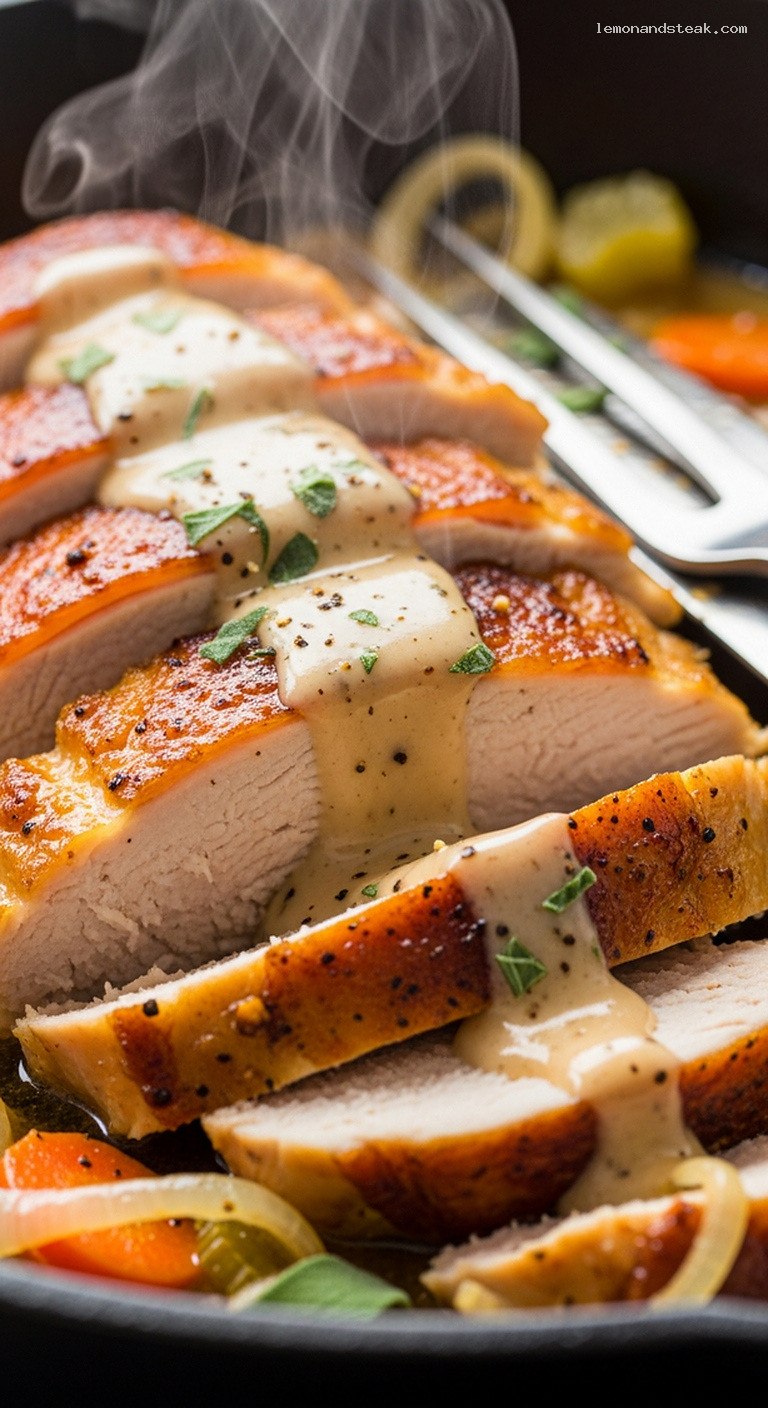
Carve the rested turkey breast into thick slices. Arrange on a warm platter, spoon some of the creamy garlic-sage gravy over the top, and serve the rest of the gravy on the side.
Pro Tips
- Dry the skin thoroughly: Any surface moisture turns to steam instead of crisping, so take your time patting the turkey dry before adding the garlic-sage butter.
- Do not rush the sear: That deep, golden crust you develop on the stovetop is the foundation for both flavor and texture; let it get nicely browned before flipping.
- Use a thermometer: Turkey breast can dry out quickly if overcooked. Pull it from the oven at 160–165°F and rely on carryover cooking during the rest.
- Scrape the pan well for gravy: As you make the roux, really work the bottom of the pan with your whisk or spoon. All the roasted garlic-sage flavor lives in those browned bits.
- Adjust gravy thickness: If your gravy is too thin, simmer it a few extra minutes. If it is too thick, whisk in warm broth a splash at a time until it is just right.
Variations
- Dark meat version: Substitute 4–5 bone-in, skin-on turkey thighs (about 4 lb total). Sear as directed, then roast 45–55 minutes until the thighs reach 175–180°F for very tender dark meat.
- Herb swap: Use a mix of sage, rosemary, and thyme for a more traditional holiday flavor profile. Keep total chopped herbs at about 2–3 tbsp so the garlic is still noticeable.
- Mushroom cream gravy: After removing the turkey, sauté 1 cup sliced mushrooms in the pan fat until browned, then proceed with the roux and evaporated milk for a deeper, earthier gravy.
Storage & Make-Ahead
Leftover turkey and gravy keep well and reheat beautifully. Store sliced turkey in an airtight container in the refrigerator for up to 3–4 days. Cool the gravy completely, then refrigerate in a separate container for up to 3 days. The gravy will thicken as it chills; reheat gently over low heat, whisking in a splash of broth or water to loosen it back to a pourable consistency. For longer storage, freeze turkey and gravy (separately) for up to 2 months. Thaw overnight in the refrigerator before reheating. If you want to get ahead, you can prepare the garlic-sage butter up to 3 days in advance and refrigerate it, or season the turkey with the butter under the skin up to 24 hours ahead and keep it covered in the fridge for extra flavor.
Nutrition (per serving)
Approximate values per serving (1/8 of the turkey breast plus gravy): 430 calories; 34 g protein; 27 g fat; 8 g saturated fat; 8 g carbohydrates; 0.5 g fiber; 3 g sugar; 780 mg sodium. Actual values will vary based on the exact size of the turkey breast, how much skin is eaten, and how much gravy is consumed.
Leave a Reply