
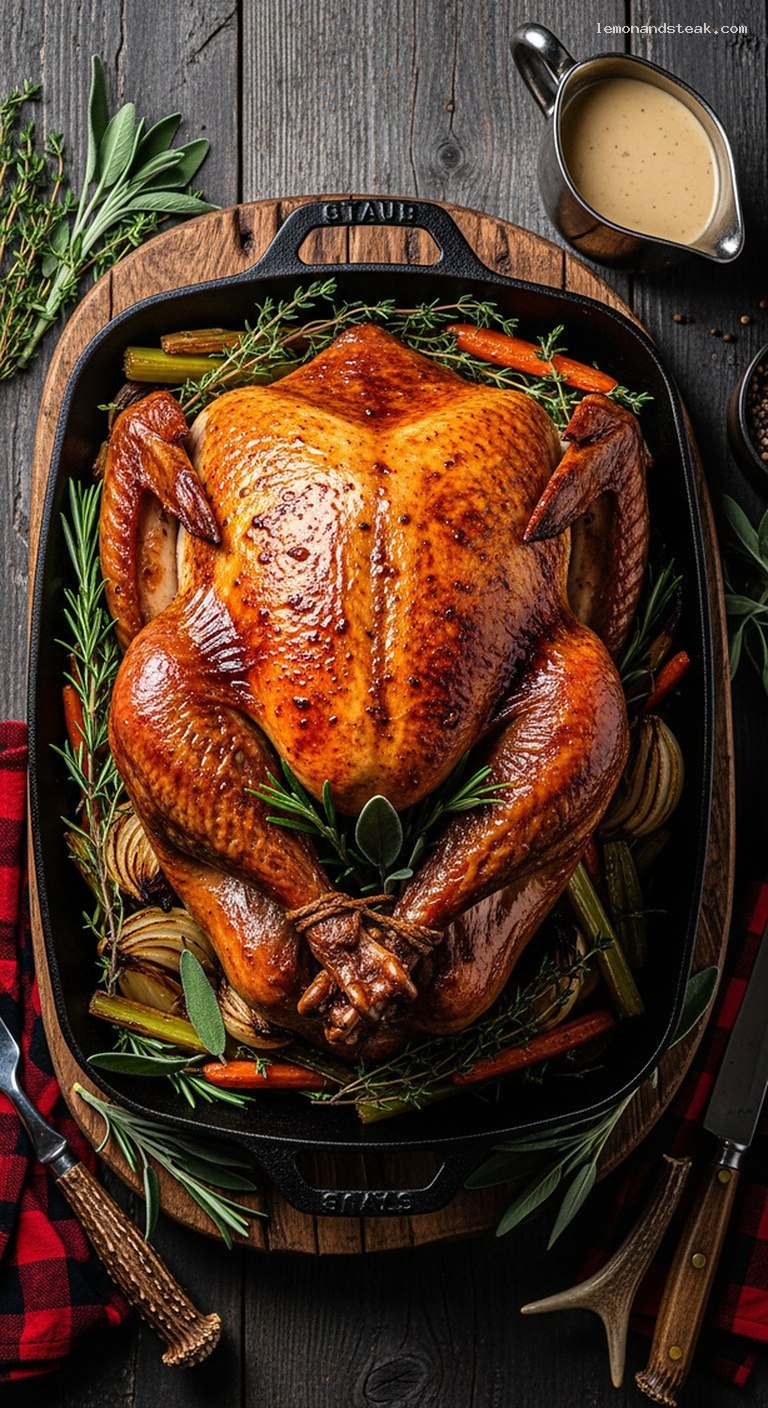
Quick Recipe Version (TL;DR)
Quick Ingredients
- 1 whole turkey, 12–14 lb (5.5–6.5 kg), thawed
- 3 tbsp kosher salt (or 2 tbsp fine sea salt)
- 2 tsp freshly ground black pepper
- 8 tbsp (1 stick / 115 g) unsalted butter, softened
- 2 tbsp olive oil
- 2 large yellow onions, quartered
- 2 large carrots, cut into chunks
- 3 celery stalks, cut into chunks
- 6 garlic cloves, smashed
- 6–8 fresh thyme sprigs, 4 rosemary sprigs, 6 sage leaves, 2 bay leaves
- 1 lemon, halved
- 3 cups (720 ml) low-sodium turkey or chicken broth, divided
- 1/2 cup (120 ml) cream sherry, divided
- 1/4 cup (30 g) all-purpose flour (for gravy)
Do This
- 1) Pat turkey very dry, remove giblets, and generously season inside and out with salt and pepper (dry-brine uncovered in the fridge 12–24 hours if you have time).
- 2) Heat oven to 325°F (165°C). Scatter onions, carrots, celery, garlic, and herbs in a large roasting pan; pour in 2 cups broth and 1/4 cup cream sherry.
- 3) Rub turkey with softened butter and olive oil, including under the breast skin. Stuff cavity with some onion, lemon, and herbs; tuck wings and tie legs.
- 4) Place turkey breast-side up on a rack over the vegetables. Roast at 325°F (165°C) until golden and nearly cooked through, basting with pan drippings and a splash of cream sherry every 30 minutes after the first 45 minutes.
- 5) Roast until a thermometer in the thickest thigh reads 165°F (74°C), 3 1/2–4 hours total for a 12–14 lb bird. Tent loosely with foil if browning too quickly.
- 6) Transfer turkey to a board, rest 30–45 minutes. Meanwhile, skim fat from pan drippings and use it with flour, remaining broth, and remaining cream sherry to make gravy.
- 7) Carve turkey, arrange on a warm platter, and serve with the cream sherry pan gravy and some of the roasted vegetables if desired.
Why You’ll Love This Recipe
- Classic roasted turkey with an old-school twist: cream sherry in the pan drippings adds a gentle, warmly sweet depth without tasting boozy.
- Slow roasting and frequent basting keep the meat juicy while building a gorgeously burnished, crisp skin.
- The vegetables and herbs under the bird flavor both the turkey and the drippings, turning into an easy, deeply savory gravy base.
- Clear, step-by-step instructions make this holiday-worthy centerpiece totally manageable for home cooks.
Grocery List
- Produce: 2 large yellow onions, 2 large carrots, 3 celery stalks, 6 garlic cloves, 1 lemon, fresh thyme, fresh rosemary, fresh sage, fresh parsley (optional, for garnish)
- Dairy: Unsalted butter
- Pantry: Whole turkey (12–14 lb), kosher or sea salt, black pepper, olive oil, cream sherry, low-sodium turkey or chicken broth, all-purpose flour, bay leaves
Full Ingredients
For the Turkey
- 1 whole turkey, 12–14 lb (5.5–6.5 kg), completely thawed if previously frozen
- 3 tbsp kosher salt (or 2 tbsp fine sea salt), divided
- 2 tsp freshly ground black pepper, divided
- 8 tbsp (1 stick / 115 g) unsalted butter, softened to room temperature
- 2 tbsp olive oil
- 1 lemon, halved
For the Aromatics, Pan, and Basting Liquid
- 2 large yellow onions, peeled and quartered (reserve 2 quarters for stuffing the cavity)
- 2 large carrots, cut into 2-inch (5 cm) chunks
- 3 celery stalks, cut into 2-inch (5 cm) chunks
- 6 garlic cloves, smashed
- 6–8 fresh thyme sprigs
- 4 fresh rosemary sprigs
- 6 fresh sage leaves
- 2 bay leaves
- 3 cups (720 ml) low-sodium turkey or chicken broth, divided
- 1/2 cup (120 ml) cream sherry, divided (1/4 cup for the roasting pan, 1/4 cup for gravy and final bastes)
For the Cream Sherry Pan Gravy
- 1/4 cup (30 g) all-purpose flour
- 3–4 tbsp fat skimmed from the pan drippings (add butter if you are short)
- Remaining 1–2 cups (240–480 ml) low-sodium broth (use whatever is left from the 3-cup measure, plus extra as needed to reach your desired gravy volume)
- Remaining pan drippings (defatted, after skimming off fat)
- 1/4 cup (60 ml) cream sherry
- Salt and freshly ground black pepper, to taste
Step-by-Step Instructions
Step 1: Thaw and (Optionally) Dry-Brine the Turkey
If your turkey is frozen, thaw it in the refrigerator for 3–4 days for a 12–14 lb bird (about 24 hours per 4–5 lb / 2 kg). Once thawed, remove the turkey from its packaging, remove the neck and giblet packet from the cavities, and pat the bird very dry with paper towels.
For the juiciest, most flavorful meat, dry-brine: sprinkle about 2 1/2 tbsp of the kosher salt and 1 1/2 tsp pepper evenly over the entire surface of the turkey, including lightly inside the cavity. Place the turkey on a wire rack set over a rimmed baking sheet and refrigerate uncovered for 12–24 hours. If you do not have time, you can still season just before roasting; the flavor will still be excellent.
Step 2: Bring the Turkey Toward Room Temperature and Preheat the Oven
About 1 hour before you want to start roasting, remove the turkey from the refrigerator to take off some of the chill. This helps it cook more evenly. If you dry-brined, you do not need to rinse the turkey; simply pat it dry again to remove any surface moisture.
Adjust an oven rack to the lower third of the oven so the center of the turkey will sit in roughly the middle of the oven cavity. Preheat the oven to 325°F (165°C). Lightly grease a large roasting pan and a roasting rack with a little oil or butter.
Step 3: Prepare the Aromatics and Roasting Pan
Scatter the carrot chunks, celery chunks, onion quarters (reserving 2 quarters for the cavity), smashed garlic cloves, thyme, rosemary, sage leaves, and bay leaves evenly in the bottom of the roasting pan.
Pour 2 cups (480 ml) of the broth and 1/4 cup (60 ml) of the cream sherry into the pan over the vegetables. This liquid will keep the pan from burning, begin building flavor for the drippings, and give you flavorful steam to help keep the turkey moist.
Step 4: Season, Stuff, and Truss the Turkey
In a small bowl, mix the softened butter with the remaining 1/2 tbsp salt and 1/2 tsp pepper. Carefully loosen the skin over the turkey breasts by gently sliding your fingers between the skin and the meat, being careful not to tear the skin. Rub a few tablespoons of the butter directly onto the breast meat under the skin. Rub the remaining butter all over the outside of the turkey.
Drizzle the turkey with the olive oil and rub to coat; this helps the skin crisp and brown deeply. Stuff the main cavity loosely with the reserved onion quarters, the lemon halves (lightly squeezed first), and a couple of thyme or sage sprigs if you have extras. Do not overpack; air needs to circulate for even cooking. Tuck the wing tips under the body so they do not burn, and tie the legs together with kitchen twine to help the bird hold its shape.
Step 5: Roast the Turkey and Baste with Cream Sherry Pan Drippings
Place the prepared turkey breast-side up on the roasting rack, set the rack into the pan over the vegetables and liquid, and transfer to the preheated 325°F (165°C) oven. Roast uncovered.
Do not open the oven for the first 45 minutes so the oven temperature stays steady. After 45 minutes, begin basting: tilt the pan slightly and use a baster or large spoon to collect the pan juices. Spoon them generously over the breast, legs, and wings. If the pan looks dry, add 1/2 cup (120 ml) additional broth.
Continue roasting, basting every 30 minutes. Once you have a good amount of golden drippings (usually after about 1 1/2 hours of roasting), stir in 1–2 tbsp of the remaining cream sherry into the pan juices and baste with this mixture for extra depth and a gentle sweetness. If the breast skin is browning too quickly before the thighs are cooked, tent a piece of foil loosely over the breast.
Roast until an instant-read thermometer inserted into the thickest part of the thigh (without touching the bone) registers 165°F (74°C). For a 12–14 lb turkey, this typically takes 3 1/2 to 4 hours total, but always go by temperature rather than time.
Step 6: Rest and Collect the Pan Drippings
Carefully transfer the turkey to a large cutting board or serving platter. Tilt the bird over the pan as you lift it so that any juices from the cavity run back into the roasting pan. Loosely tent the turkey with foil and let it rest for 30–45 minutes. This rest time is crucial; it allows the juices to redistribute, keeping the meat moist and making carving easier.
Meanwhile, pour the contents of the roasting pan through a fine-mesh strainer into a large heatproof bowl or fat separator. Press down on the vegetables to extract as much flavorful liquid as possible, then discard the solids (or save some of the roasted vegetables to serve alongside the turkey if desired). Let the liquid sit for a few minutes so the fat rises to the top. Skim off 3–4 tbsp of fat for the gravy and reserve; skim off and discard any remaining excess fat. Measure the remaining defatted drippings; you will combine them with broth to make your gravy base.
Step 7: Make the Cream Sherry Pan Gravy and Serve
Set a medium saucepan over medium heat and add the 3–4 tbsp reserved fat (add a little butter if you need more to reach that amount). Sprinkle in the 1/4 cup (30 g) flour and whisk continuously, cooking the roux for 2–3 minutes until it turns a light golden color and smells toasty, but not burnt.
In a large measuring cup, combine the defatted pan drippings with enough broth to total about 3 cups (720 ml). Gradually whisk this liquid into the roux, a little at a time, whisking vigorously to prevent lumps. Add the remaining 1/4 cup (60 ml) cream sherry. Bring the gravy to a gentle simmer, stirring frequently, until thickened to your liking, 5–10 minutes. If it becomes too thick, thin with more broth or water; if too thin, simmer a few minutes longer.
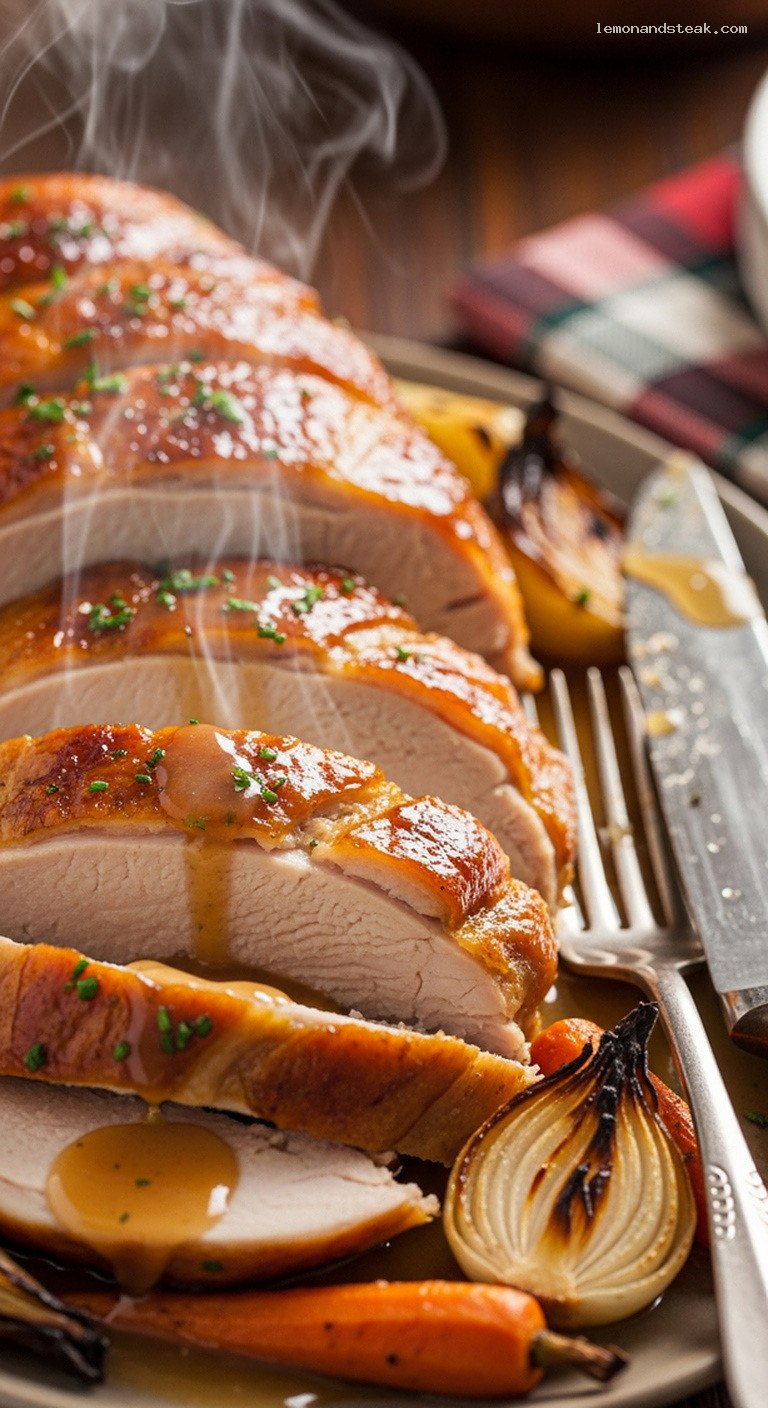
Taste and season with salt and pepper as needed. Transfer the gravy to a warm gravy boat or small pitcher. Carve the rested turkey into breast slices, thighs, drumsticks, and wings, arranging on a warm platter. Garnish with fresh herb sprigs or lemon slices if you like, and serve with the warm cream sherry pan gravy.
Pro Tips
- Use a thermometer, not just time: Every turkey cooks a little differently. Start checking the internal temperature about 30–40 minutes before the estimated time is up.
- Dry-brine if you can: Salting the turkey 12–24 hours in advance dramatically boosts flavor and juiciness, and also helps the skin crisp.
- Keep the oven door closed: Only open the oven when you need to baste or check temperature. Frequent opening drops the heat and lengthens cooking time.
- Control browning with foil: If the breast browns too quickly, loosely tent it with foil while the legs and thighs finish cooking.
- Adjust the sherry to taste: Cream sherry is naturally sweet. If you prefer a more subtle note, use a bit less in the gravy or balance with an extra pinch of salt and pepper.
Variations
- Herb and citrus turkey: Add orange halves and extra lemon slices to the cavity and pan, and mix finely chopped rosemary, thyme, and sage into the butter for a brighter, more aromatic profile.
- Smoky garlic turkey: Add 2 tsp smoked paprika and 4 finely minced garlic cloves to the butter rub, and sprinkle an extra 1/2 tsp smoked paprika over the skin before roasting.
- Alcohol-free version: Replace cream sherry with equal amounts of apple cider or unsweetened apple juice plus 1 tsp cider vinegar in the gravy to mimic the gentle sweetness and acidity.
Storage & Make-Ahead
Leftover turkey can be carved, cooled completely, and stored in airtight containers in the refrigerator for 3–4 days. For longer storage, freeze sliced turkey in well-sealed bags or containers for up to 3 months; add a little leftover gravy or broth to keep it moist. Reheat gently, covered, with a splash of broth.
The gravy will keep in the refrigerator for up to 3 days or in the freezer for 2–3 months. Reheat gently over low heat, whisking and adding a bit of broth or water to loosen if needed.
To get ahead, you can chop the vegetables and herbs a day in advance and store them in the refrigerator. You can also dry-brine the turkey up to 48 hours in advance. On the day of serving, simply assemble in the roasting pan, roast, and make the gravy.
Nutrition (per serving)
Approximate values for 1 serving (about 6 oz / 170 g roasted turkey with skin and 1/4 cup gravy), based on 12 servings: about 430 calories; 55 g protein; 19 g fat; 6 g saturated fat; 6 g carbohydrates; 0.5 g fiber; 2 g sugars; 1,050 mg sodium. Actual values will vary depending on the specific turkey, how much skin you eat, and how much gravy is used.
Leave a Reply