

Quick Recipe Version (TL;DR)
Quick Ingredients
- 1 whole turkey (12 to 14 lb), thawed
- 3 tbsp kosher salt + 2 tbsp light brown sugar (for dry brine)
- 6 tbsp unsalted butter, softened (divided)
- 2 tbsp olive oil (divided)
- 1/2 cup pure maple syrup
- 3 tbsp Dijon mustard
- 2 tbsp whole grain mustard
- 2 tbsp apple cider vinegar
- 1 tsp fresh thyme, chopped (plus extra sprigs)
- 1 tsp fresh rosemary, chopped (plus extra sprigs)
- 1 head garlic, halved; 1 to 2 onions, quartered
- 2 carrots, 2 celery stalks, chopped
- 3 to 4 cups low-sodium chicken or turkey stock (for roasting and gravy)
- Salt, black pepper, optional smoked paprika
Do This
- 1. Pat turkey dry. Rub all over (including under skin where possible) with 3 tbsp kosher salt, 2 tbsp brown sugar, and herbs. Chill uncovered 12 to 24 hours.
- 2. Remove turkey from fridge 45 to 60 minutes before roasting. Preheat oven to 425°F (220°C). Arrange onions, garlic, carrots, and celery in a roasting pan with 1 cup stock and herb sprigs.
- 3. Mix 4 tbsp softened butter, 1 tbsp olive oil, herbs, and a little pepper. Rub under and over skin. Tuck wings, tie legs.
- 4. Roast turkey at 425°F for 20 minutes, then reduce to 325°F (165°C) and roast about 1 1/2 hours.
- 5. Meanwhile, simmer maple syrup, Dijon, whole grain mustard, vinegar, 2 tbsp butter, 1 tbsp oil, and seasonings into a glossy glaze.
- 6. When turkey reaches about 120 to 130°F in the breast, brush with glaze every 15 to 20 minutes until skin is deep golden and internal temp is 160°F in breast (about 1 to 1 1/2 hours more).
- 7. Rest turkey 30 to 45 minutes before carving. Use pan drippings and stock to make simple gravy if desired.
Why You’ll Love This Recipe
- Balanced flavor: the maple-dijon glaze is sweet, tangy, and gently herby without masking that classic roasted turkey taste.
- Shiny, caramelized crust: layered glazing creates a deep golden, lacquered skin that looks special-occasion worthy.
- Homey, familiar aromatics: onions, garlic, carrots, celery, and herbs perfume the bird and make rich pan juices for gravy.
- Step-by-step friendly: clear timing, exact temperatures, and practical tips so even first-time turkey roasters can succeed.
Grocery List
- Produce: 1 whole garlic head, 2 medium yellow onions, 2 large carrots, 2 celery stalks, (optional) 1 apple, fresh thyme, fresh rosemary, (optional) fresh sage, lemon (optional for serving)
- Dairy: 1 cup (2 sticks) unsalted butter
- Pantry: 1 whole turkey (12 to 14 lb), kosher salt, light brown sugar, pure maple syrup, Dijon mustard, whole grain mustard, apple cider vinegar, olive oil, black pepper, smoked paprika (optional), low-sodium chicken or turkey stock, all-purpose flour (for gravy)
Full Ingredients
Turkey & Dry Brine
- 1 whole turkey (12 to 14 lb), fully thawed, neck and giblets removed
- 3 tbsp kosher salt (Diamond Crystal; use 2 tbsp if using a denser brand like Morton)
- 2 tbsp light brown sugar, packed
- 1 tsp freshly ground black pepper
- 1 tsp paprika or smoked paprika (optional, for color and mild flavor)
- 1 tsp fresh thyme leaves, finely chopped (or 1/2 tsp dried thyme)
- 1 tsp fresh rosemary leaves, finely chopped (or 1/2 tsp dried rosemary, crushed)
Butter Rub
- 4 tbsp (1/2 stick) unsalted butter, very soft
- 1 tbsp olive oil
- 1 tsp Dijon mustard
- 1 tsp fresh thyme leaves, chopped (or 1/2 tsp dried)
- 1/2 tsp fine sea salt or kosher salt
- 1/2 tsp freshly ground black pepper
Aromatics for Roasting
- 1 large yellow onion, peeled and quartered
- 1 head garlic, halved crosswise (no need to peel)
- 2 large carrots, cut into 2-inch chunks
- 2 celery stalks, cut into 2-inch pieces
- (Optional) 1 firm apple, cored and quartered
- 4 to 6 fresh thyme sprigs
- 2 to 3 fresh rosemary sprigs
- (Optional) 3 to 4 fresh sage leaves
- 1 to 2 cups low-sodium chicken or turkey stock for the pan (start with 1 cup; add more as needed)
Maple-Dijon Glaze
- 1/2 cup pure maple syrup (do not use pancake syrup)
- 3 tbsp Dijon mustard
- 2 tbsp whole grain mustard (for tang and visible seeds)
- 2 tbsp apple cider vinegar
- 2 tbsp unsalted butter
- 1 tbsp olive oil
- 1 tsp fresh thyme leaves, finely chopped
- 1/2 tsp kosher salt
- 1/4 tsp freshly ground black pepper
- 1/4 tsp smoked paprika (optional, for a hint of smokiness and deeper color)
Optional Simple Pan Gravy
- 3 tbsp fat from the roasting pan (or unsalted butter)
- 3 tbsp all-purpose flour
- 2 to 3 cups low-sodium chicken or turkey stock, warmed
- 1 tsp Dijon mustard (optional, for subtle depth)
- Salt and freshly ground black pepper, to taste
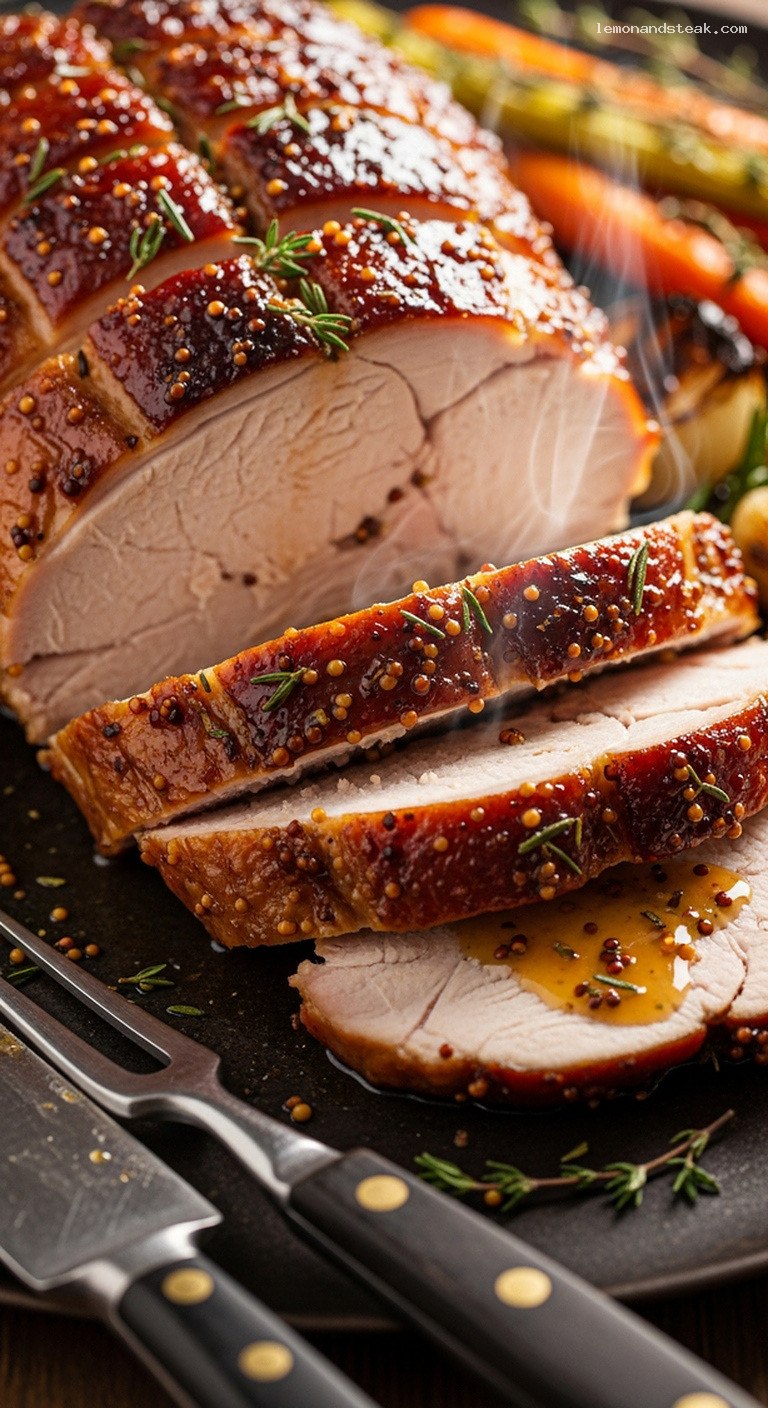
Step-by-Step Instructions
Step 1: Dry-brine the turkey for juicy, seasoned meat
If your turkey is frozen, thaw it completely in the refrigerator (about 3 days for a 12 to 14 lb bird). Pat it very dry with paper towels, inside and out. In a small bowl, combine the kosher salt, brown sugar, black pepper, paprika (if using), thyme, and rosemary.
Loosen the skin gently over the breast and thighs using your fingers, being careful not to tear it. Sprinkle and rub the salt mixture evenly all over the turkey: over the skin, under the skin where you can reach, and lightly inside the cavity. Place the turkey breast-side up on a rimmed tray or in the roasting pan fitted with a rack. Leave it uncovered in the refrigerator for 12 to 24 hours (up to 48 hours is fine). This dry brine seasons the meat deeply and helps the skin roast up crisp.
Step 2: Bring turkey to room temperature and prep the pan
About 45 to 60 minutes before you plan to roast, remove the turkey from the refrigerator so it can take the chill off. This helps it cook more evenly. Preheat your oven to 425°F (220°C) with a rack positioned in the lower third of the oven.
Scatter the onion wedges, halved garlic head, carrot chunks, celery pieces, and optional apple quarters in the bottom of a large roasting pan. Add the thyme, rosemary, and sage sprigs. Pour 1 cup of stock into the pan. Set a roasting rack over the vegetables if you have one; if not, rest the turkey directly on the bed of aromatics.
Step 3: Make the butter rub and season the turkey
In a small bowl, mix together the softened butter, olive oil, Dijon mustard, chopped thyme, salt, and black pepper until smooth. Pat the turkey dry one more time if any moisture has collected on the surface.
Gently loosen the skin over the breast and thighs again and slip some of the butter mixture underneath the skin, spreading it as evenly as you can. Rub the remaining butter mixture all over the outside of the turkey. Tuck the wing tips behind the bird so they do not burn. Tie the legs loosely together with kitchen twine so the bird cooks evenly. Place the turkey breast-side up on the rack (or directly on the aromatics).
Step 4: Start roasting at high heat to set the skin
Transfer the turkey to the preheated 425°F (220°C) oven. Roast for 20 minutes to begin browning and to set the skin. This short blast of higher heat helps you achieve that beautifully crisp, shiny exterior later.
After 20 minutes, reduce the oven temperature to 325°F (165°C). Without opening the oven too often, continue roasting for about 1 1/2 hours. If the pan looks dry at any point, add another 1/2 to 1 cup of stock or water to prevent the juices from scorching. You can gently baste the turkey with the pan juices once or twice, but do not overdo it, as too much basting can soften the skin.
Step 5: Make the maple-dijon glaze
While the turkey roasts, prepare the glaze. In a small saucepan, combine the maple syrup, Dijon mustard, whole grain mustard, apple cider vinegar, butter, olive oil, thyme, salt, black pepper, and smoked paprika (if using). Set over medium heat and bring to a gentle simmer, stirring frequently.
Simmer for 5 to 8 minutes, until the mixture thickens slightly and becomes glossy. It should be pourable but coat the back of a spoon. Remove from heat and let it cool for 5 to 10 minutes; it will thicken a bit more as it stands. This slightly thick, shiny glaze will cling to the turkey and caramelize without running off or burning too quickly.
Step 6: Glaze in layers and finish roasting
After the turkey has been at 325°F for about 1 1/2 hours, start checking the internal temperature with an instant-read thermometer. Insert it into the thickest part of the breast (without touching bone). When the breast reaches around 120 to 130°F, begin glazing.
Brush a thin, even layer of the maple-dijon glaze all over the turkey, focusing on the breast, thighs, and drumsticks. Return the turkey to the oven and continue roasting at 325°F. Every 15 to 20 minutes, brush on another thin layer of glaze, building up a rich, lacquered coating. Rotate the pan if one side is browning faster. If any part of the turkey (usually the breast or tips of the drumsticks) is getting too dark, tent that area loosely with foil.
Continue roasting and glazing until the breast registers 160°F and the thickest part of the thigh reaches 170°F. For a 12 to 14 lb turkey, this usually takes about 1 to 1 1/2 hours after you start glazing, for a total cook time of roughly 3 to 3 1/2 hours. The skin should be a deep golden mahogany with a shiny, caramelized finish.
Step 7: Rest, carve, and serve
Once the turkey reaches temperature, carefully transfer it to a cutting board or serving platter. Tent it loosely with foil and let it rest for 30 to 45 minutes. Resting allows the juices to redistribute so the meat stays moist and tender when you carve.
While the turkey rests, you can strain the pan juices and prepare gravy (see the next step). When ready to carve, remove the legs and thighs, separate the drumsticks, then slice the breast meat against the grain into thick slices. Arrange on a warm platter and, if you like, brush lightly with any remaining glaze for extra shine. Serve with the pan gravy and classic sides.
Step 8: Make a simple pan gravy (optional but recommended)
Pour the contents of the roasting pan through a fine mesh strainer into a fat separator or heatproof measuring cup, pressing on the solids to extract all the flavorful juices. Let the fat rise to the top and skim off 3 tbsp of the fat (or use butter if you prefer).
In a medium saucepan over medium heat, combine the 3 tbsp fat with 3 tbsp flour. Whisk constantly for 2 to 3 minutes to form a smooth, light brown roux. Slowly pour in 2 cups of warm stock while whisking to avoid lumps. Add the defatted pan juices and bring to a gentle simmer. Cook, whisking often, for 5 to 10 minutes until thickened to your liking. If it is too thick, whisk in a bit more stock. Stir in the Dijon mustard (if using), then season to taste with salt and black pepper. Keep warm until serving.
Pro Tips
- Do not skip the dry brine. Even 12 hours makes a big difference in flavor and juiciness. It also helps develop crisp, evenly browned skin.
- Glaze in thin layers. Multiple light coats build a shiny, caramelized crust without making the turkey taste overly sweet or burning the sugars.
- Watch the color, not just the clock. If the turkey looks perfect but is not to temperature, tent with foil. If it is pale but nearly done, you can briefly increase the heat to 350°F at the end.
- Use a thermometer. It is the most reliable way to avoid overcooking. Aim for 160°F in the breast; it will rise to 165°F as it rests.
- Keep the pan moist. A bit of stock in the roasting pan prevents scorching and gives you deeply flavored drippings for gravy.
Variations
- Spiced maple-dijon turkey: Add 1/4 to 1/2 tsp cayenne pepper or red pepper flakes and 1/2 tsp ground coriander to the glaze for gentle heat that balances the sweetness.
- Herb and citrus twist: Add the zest of 1 orange and 1 lemon to the glaze, and tuck orange wedges and lemon halves into the pan with the aromatics for a brighter, more aromatic bird.
- Spatchcocked (butterflied) turkey: Have the backbone removed and the turkey flattened. Roast at 400°F, start glazing earlier, and expect a shorter cook time (about 2 to 2 1/2 hours total) with even crispier skin.
Storage & Make-Ahead
You can dry-brine the turkey up to 48 hours in advance; leave it uncovered in the refrigerator for the last 12 to 24 hours for the best skin. The maple-dijon glaze can be prepared up to 3 days ahead and chilled in an airtight container; gently warm it on the stove before brushing it onto the turkey. Leftover turkey should be carved off the bone, cooled, and stored in airtight containers in the refrigerator for up to 4 days. For longer storage, freeze portions (wrapped well) for up to 2 to 3 months. Reheat gently in a covered dish with a splash of stock to keep the meat moist. Leftover carcass and bones are excellent for making homemade stock or soup.
Nutrition (per serving)
Approximate values for 1 serving (about 6 oz roasted turkey with skin plus a spoonful of glaze and a small amount of gravy): 430 calories; 23 g fat; 9 g saturated fat; 12 g carbohydrates; 0 g fiber; 10 g sugar; 46 g protein; 880 mg sodium. Actual values will vary based on the exact size of your turkey, how much skin is eaten, and how much glaze and gravy each person uses.
Leave a Reply