
Quick Recipe Version (TL;DR)
Quick Ingredients
- 1 whole turkey, about 12 lb (5.4 kg), thawed
- 3 tbsp kosher salt, 2 tsp black pepper
- 2 tsp garlic powder, 2 tsp onion powder, 2 tsp paprika
- 6 tbsp unsalted butter, melted, plus 2 tbsp for glaze
- 1/4 cup olive oil
- 1/2 cup honey, divided
- 10 cloves garlic, minced, plus 1 whole head garlic, halved
- 3 tbsp soy sauce
- 2 tbsp apple cider vinegar
- 2 cups low-sodium chicken stock (or broth)
- 1 large onion and 1 lemon, both sliced
- 4 sprigs fresh thyme, 2 sprigs fresh rosemary
- 1 tbsp cornstarch (optional, for thicker glaze)
Do This
- 1. Pat dry turkey, remove giblets, season all over (and lightly under skin) with kosher salt, pepper, garlic powder, onion powder, and paprika. Chill uncovered 12–24 hours if possible.
- 2. Preheat oven to 425°F (220°C). Toss onion, lemon, halved garlic head, thyme, and rosemary in roasting pan with a drizzle of oil. Place turkey on rack over aromatics.
- 3. Stir together melted butter, olive oil, 1/4 cup honey, minced garlic, and soy sauce. Brush turkey generously with mixture.
- 4. Roast 30 minutes at 425°F, then reduce to 325°F (165°C). Tent with foil if browning too fast. Roast 2–2 1/2 hours more, basting every 30 minutes, until thickest thigh reaches 165°F (74°C).
- 5. Transfer turkey to a board to rest 30 minutes. Meanwhile, skim most fat from pan; add remaining 1/4 cup honey, cider vinegar, stock, and 2 tbsp butter. Simmer and reduce to a glossy glaze, thickening with cornstarch slurry if desired.
- 6. Brush turkey generously with hot honey-garlic pan glaze. Carve and drizzle with extra glaze to serve.
Why You’ll Love This Recipe
- Honey and garlic create a sticky, lacquered skin that tastes like comfort food but looks restaurant-level impressive.
- Simple, pantry-friendly ingredients build deep, savory flavor in both the turkey and the pan glaze.
- Step-by-step directions walk you through roasting, basting, and glazing without stress.
- The leftovers are incredibly versatile for sandwiches, rice bowls, and soups.
Grocery List
- Produce: 1 whole garlic head, plus extra cloves (about 10); 1 large onion; 1 lemon; fresh thyme; fresh rosemary
- Dairy: Unsalted butter
- Pantry: Whole turkey (~12 lb); kosher salt; black pepper; garlic powder; onion powder; paprika; olive oil; honey; soy sauce; apple cider vinegar; low-sodium chicken stock/broth; cornstarch (optional)
Full Ingredients
For the Turkey
- 1 whole turkey, about 12 lb (5.4 kg), thawed if frozen
- 3 tbsp kosher salt (use less if using table salt)
- 2 tsp freshly ground black pepper
- 2 tsp garlic powder
- 2 tsp onion powder
- 2 tsp sweet paprika (regular or smoked)
For the Honey-Garlic Butter Rub
- 6 tbsp unsalted butter, melted
- 1/4 cup olive oil
- 1/4 cup honey
- 8 cloves garlic, finely minced
- 3 tbsp soy sauce (regular or low-sodium)
For the Roasting Pan & Aromatics
- 1 large onion, sliced into thick rings
- 1 lemon, sliced into rounds
- 1 whole head garlic, halved horizontally
- 4 sprigs fresh thyme
- 2 sprigs fresh rosemary
- 1–2 tbsp olive oil (for drizzling)
- 2 cups low-sodium chicken stock or broth
For the Sticky Honey-Garlic Pan Glaze
- Pan drippings from roasting pan (skimmed of excess fat)
- 1/4 cup honey
- 2 cloves garlic, finely minced (optional, for extra punch)
- 2 tbsp apple cider vinegar
- 2 tbsp unsalted butter
- 1 tbsp cornstarch mixed with 2 tbsp cold water (optional, for thicker glaze)
- Salt and black pepper, to taste
Step-by-Step Instructions
Step 1: Thaw, dry, and season the turkey
If your turkey is frozen, thaw it in the refrigerator for several days (a good rule is about 24 hours per 4–5 lb / 1.8–2.3 kg). Once thawed, remove the turkey from its packaging. Take out the neck and giblet packet from the cavity and reserve for stock or gravy if you like.
Pat the turkey very dry inside and out with paper towels. Dry skin is key for crisp, golden results.
In a small bowl, mix together the kosher salt, black pepper, garlic powder, onion powder, and paprika. Sprinkle this mixture all over the turkey: the breast, legs, thighs, back, and a light sprinkle inside the cavity. If the skin is loose over the breasts, gently lift it and lightly season directly on the meat as well.
For the best flavor, place the seasoned turkey uncovered on a rimmed tray in the refrigerator for 12–24 hours. This dry-brining step helps the seasoning penetrate and the skin crisp. If you do not have time, you can proceed to the next step immediately.
Step 2: Preheat the oven and set up the roasting pan
When you are ready to roast, take the turkey out of the refrigerator and let it sit at room temperature for about 30 minutes while you prepare the oven and aromatics. This helps it cook more evenly.
Preheat the oven to 425°F (220°C). Place a sturdy rack inside a large roasting pan. Scatter the onion slices, lemon slices, and the halved head of garlic in the bottom of the pan. Add the thyme and rosemary sprigs. Drizzle the aromatics with 1–2 tablespoons of olive oil and a pinch of salt.
Set the turkey breast-side up on the rack, directly over the aromatics. Tuck the wing tips under the body so they do not burn. If you like, loosely tie the legs together with kitchen twine for a neater shape.
Step 3: Make the honey-garlic butter rub and coat the turkey
In a medium bowl, whisk together the melted butter, olive oil, 1/4 cup honey, minced garlic (8 cloves), and soy sauce until well combined. This mixture will look glossy and slightly thick.
Using a brush or spoon, coat the entire surface of the turkey with the honey-garlic butter rub, including the legs and wings. If the skin over the breasts is loose, gently slide some of the mixture under the skin for extra flavor, being careful not to tear it.
Pour 2 cups of chicken stock into the bottom of the roasting pan, around the aromatics (not directly over the turkey, so you do not wash off the rub). This liquid will keep the pan from burning, create steam for a juicy turkey, and become the base of your sticky glaze later.
Step 4: Roast and baste the turkey
Place the turkey in the preheated 425°F (220°C) oven and roast for 30 minutes. This high heat jump-starts browning and helps the skin crisp.
After 30 minutes, reduce the oven temperature to 325°F (165°C). If any areas are browning too quickly, loosely tent that part of the turkey with a piece of aluminum foil.
Continue roasting for about 2 hours 45 minutes more, basting every 30 minutes with the juices in the bottom of the pan. Use a baster or spoon to pour the juices over the breast and legs. Rotate the pan halfway through if your oven has hot spots.
Begin checking the internal temperature after 2 hours at 325°F. Insert an instant-read thermometer into the thickest part of the thigh without touching bone. The turkey is done when the thigh and the thickest part of the breast both reach 165°F (74°C). For a 12 lb (5.4 kg) bird, this usually takes a total of about 3 hours 15 minutes, but always trust your thermometer over the clock.
Step 5: Rest the turkey and make the sticky pan glaze
When the turkey reaches 165°F (74°C), carefully transfer it to a large cutting board or serving platter. Loosely tent with foil and let it rest for at least 30 minutes. Resting allows the juices to redistribute so the meat stays moist when you carve it.
While the turkey rests, make the glaze. Place the roasting pan (with all the juices and aromatics) on the stovetop over medium heat. If your pan is not stovetop-safe, pour everything into a wide saucepan or sauté pan. Skim off most of the fat from the surface with a spoon, leaving the flavorful juices behind.
Add the remaining 1/4 cup honey, the apple cider vinegar, minced garlic (2 cloves, if using), and 2 tablespoons butter to the pan. Stir, scraping up any browned bits from the bottom. Bring to a simmer and cook for 8–10 minutes, stirring occasionally, until the liquid reduces and looks glossy and slightly syrupy.
For a thicker, more “sticky” glaze, stir the cornstarch with 2 tablespoons cold water to make a smooth slurry. Whisk this into the simmering sauce and cook for another 1–2 minutes, until the glaze lightly coats the back of a spoon. Taste and season with additional salt and pepper if needed. Strain out the solids if you prefer a smooth glaze.
Step 6: Glaze, carve, and serve
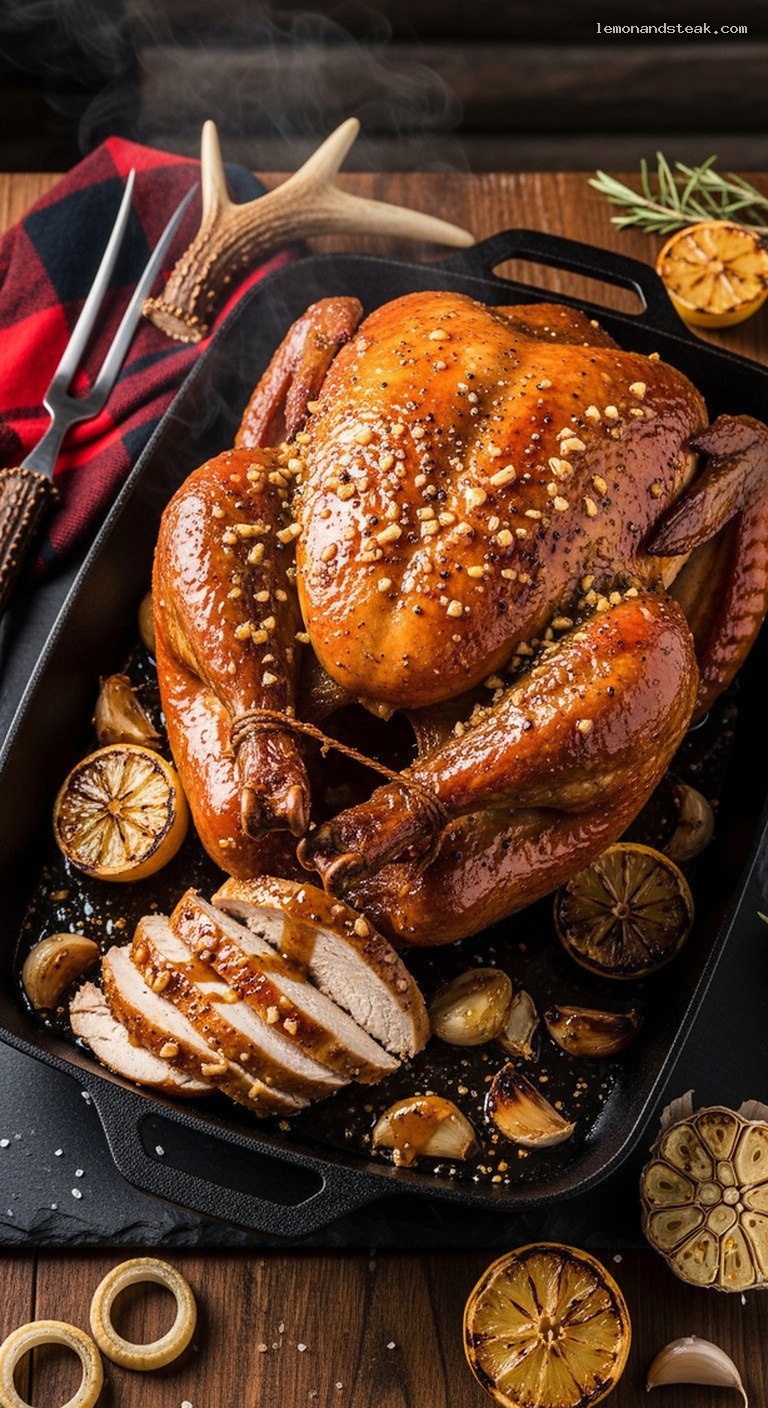
Once the turkey has rested, remove the foil. Rewarm the glaze briefly if it has cooled and thickened too much. Using a clean brush or spoon, generously coat the turkey with the hot honey-garlic pan glaze, letting it drip into all the nooks and crannies. The skin should look shiny and slightly sticky, with a deep golden color.
For an extra-caramelized finish, you can place the glazed turkey back in a 450°F (230°C) oven for 3–5 minutes, watching very closely to avoid burning. This step is optional but adds beautiful color and a subtle charred edge to the glaze.
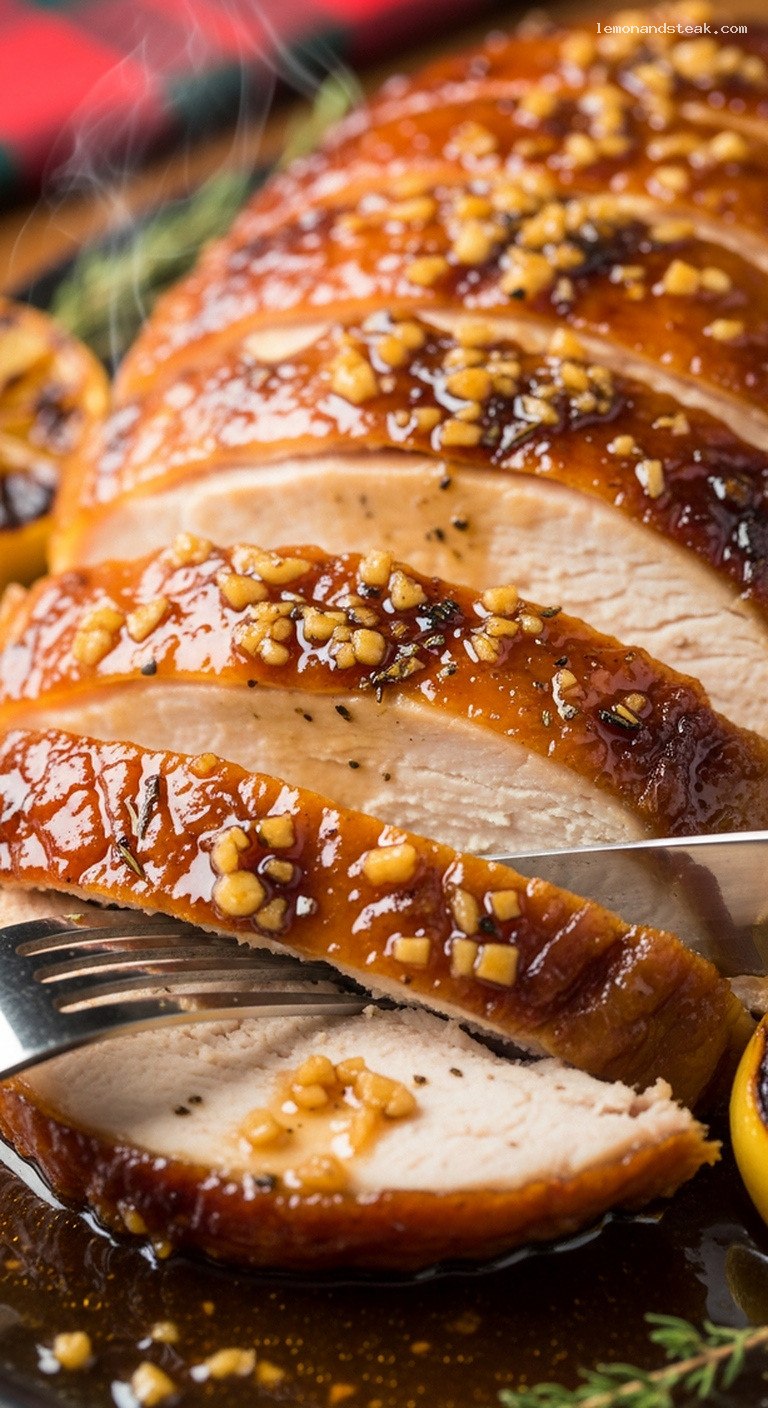
Carve the turkey by removing the legs and thighs, then the wings, then slicing the breast meat against the grain. Arrange the sliced meat and larger pieces on a warm platter. Drizzle some of the remaining glaze over the top and serve the rest on the side for spooning over each portion.
Serve with mashed potatoes, roasted vegetables, or crusty bread to soak up all the extra honey-garlic goodness.
Pro Tips
- Dry the turkey well: Really take your time with paper towels. Drier skin equals crisper, more golden results and better adhesion of the honey-garlic rub.
- Brine if you can: Even a shorter 8–12 hour dry-brine in the fridge improves seasoning and juiciness. Just do not add extra salt to the rub if the turkey is already pre-brined or “enhanced.”
- Use a thermometer, not just time: Ovens vary. The internal temp of 165°F (74°C) in both thigh and breast is your reliable signal that the turkey is safely cooked but still moist.
- Adjust glaze thickness: If your glaze is too thin, simmer longer or add the cornstarch slurry. If it becomes too thick, whisk in a splash of stock or water to loosen.
- Protect the breast: If the breast is browning too quickly, tent it loosely with foil. Remove the foil during the last 20–30 minutes so the skin can finish crisping.
Variations
- Spicy honey-garlic turkey: Add 1–2 teaspoons of crushed red pepper flakes or a tablespoon of your favorite hot sauce to the honey-garlic butter rub and another pinch to the glaze for a sweet-heat finish.
- Citrus-herb twist: Zest the lemon before slicing and add the zest plus 1 orange’s zest to the honey-garlic rub. Use extra thyme and rosemary in the cavity and pan for a brighter, more aromatic profile.
- Smoky maple version: Replace half of the honey with pure maple syrup and use smoked paprika instead of regular paprika for a deeper, campfire-style flavor.
Storage & Make-Ahead
To store leftovers, allow the turkey to cool to room temperature (no more than 2 hours out), then carve and place the meat into airtight containers. Spoon some extra glaze or pan juices over the slices to keep them moist. Refrigerate for up to 4 days.
For longer storage, freeze carved turkey in freezer-safe bags or containers for up to 3 months. Press out excess air and label with the date. Thaw overnight in the refrigerator before reheating.
You can also make parts of this recipe ahead: dry-brine the turkey up to 24 hours in advance, and chop aromatics (onion, lemon) the day before. The glaze is best made just after roasting, but you can gently rewarm leftover glaze on the stove with a splash of stock or water until pourable.
Nutrition (per serving)
Approximate values per serving (about 6 oz / 170 g cooked turkey with some skin and glaze): 450 calories; 36 g protein; 25 g fat; 11 g saturated fat; 14 g carbohydrates; 12 g sugars; 1 g fiber; 980 mg sodium. These numbers are estimates and will vary based on the exact size of your turkey, how much skin is eaten, and how much glaze and pan drippings you use.
Leave a Reply