
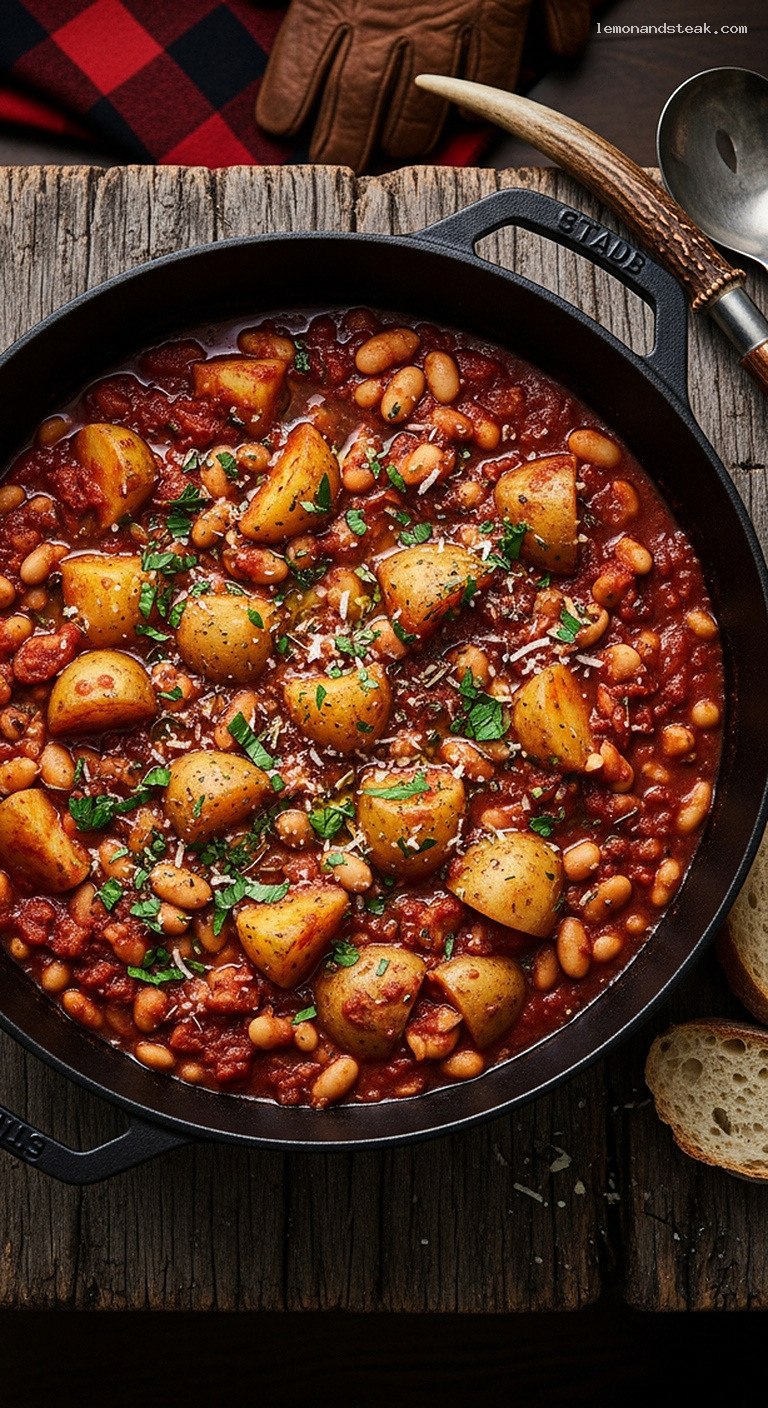
Quick Recipe Version (TL;DR)
Quick Ingredients
- 2 tbsp olive oil
- 1 large yellow onion, finely diced
- 2 medium carrots, finely diced
- 2 celery stalks, finely diced
- 4 cloves garlic, minced
- 2 tbsp tomato paste
- 1 can (28 oz / 800 g) crushed tomatoes
- 1 1/2 lb (680 g) waxy potatoes, cut into 3/4-inch chunks
- 2 cans (15 oz / 425 g each) white beans (cannellini or great northern), drained and rinsed
- 2 cups (480 ml) vegetable broth
- 1/2 cup (120 ml) dry white wine or extra broth
- 1 1/2 tsp dried oregano
- 1 tsp dried thyme
- 1 tsp smoked paprika (optional but recommended)
- 1 bay leaf
- 1/2 tsp red pepper flakes (optional)
- 2 tbsp butter or olive oil
- 1/4 cup grated Parmesan (or vegan hard cheese), plus more to serve
- 2 tbsp chopped fresh parsley
- Salt and black pepper, to taste
Do This
- 1. Warm olive oil in a large heavy pot over medium heat. Sauté onion, carrot, and celery with a pinch of salt for 8–10 minutes, until very soft and lightly golden.
- 2. Stir in garlic and tomato paste; cook 1–2 minutes until fragrant and slightly darkened.
- 3. Add wine (or extra broth), scraping up any browned bits. Simmer 2 minutes to reduce slightly.
- 4. Add crushed tomatoes, potatoes, vegetable broth, herbs, smoked paprika, bay leaf, red pepper flakes, 1 tsp salt, and several grinds of pepper. Bring to a simmer.
- 5. Cover and simmer gently for 20–25 minutes, stirring occasionally, until potatoes are tender and the ragù is thickening.
- 6. Stir in white beans and butter. Simmer uncovered 5–10 minutes more until thick and glossy. Off heat, stir in Parmesan and parsley, adjust seasoning, and serve hot with extra cheese and crusty bread.
Why You’ll Love This Recipe
- Deep, slow-cooked flavor in about an hour thanks to a rich tomato base, garlic, and herbs.
- Hearty enough to be a main course: tender potatoes and creamy white beans make it truly satisfying.
- Uses simple pantry staples and affordable ingredients that are easy to find year-round.
- Meal-prep friendly: tastes even better the next day and freezes well for busy nights.
Grocery List
- Produce: Yellow onion, carrots, celery, garlic, waxy potatoes (such as Yukon Gold), fresh parsley
- Dairy: Butter (or plant-based butter), Parmesan cheese (or vegan hard cheese)
- Pantry: Olive oil, tomato paste, crushed tomatoes (28 oz can), white beans (2 x 15 oz cans), vegetable broth, dry white wine (optional), dried oregano, dried thyme, smoked paprika, bay leaf, red pepper flakes, salt, black pepper, crusty bread (for serving, optional)
Full Ingredients
For the Potato and White Bean Ragù
- 2 tbsp olive oil
- 1 large yellow onion, finely diced (about 1 1/2 cups)
- 2 medium carrots, finely diced (about 1 cup)
- 2 celery stalks, finely diced (about 3/4 cup)
- 4 cloves garlic, minced
- 2 tbsp tomato paste
- 1 can (28 oz / 800 g) crushed tomatoes
- 1 1/2 lb (680 g) waxy potatoes such as Yukon Gold, scrubbed and cut into 3/4-inch chunks
- 2 cans (15 oz / 425 g each) white beans (cannellini or great northern), drained and rinsed
- 2 cups (480 ml) vegetable broth
- 1/2 cup (120 ml) dry white wine, or additional vegetable broth
- 1 1/2 tsp dried oregano
- 1 tsp dried thyme
- 1 tsp smoked paprika (optional but adds wonderful depth)
- 1 bay leaf
- 1/2 tsp red pepper flakes (optional, for gentle heat)
- 1 1/4 to 1 1/2 tsp fine sea salt, plus more to taste
- 1/2 tsp freshly ground black pepper, plus more to taste
To Finish and Serve
- 2 tbsp unsalted butter or plant-based butter
- 1/4 cup finely grated Parmesan cheese, plus extra for serving (use a vegan hard cheese to keep it fully plant-based)
- 2 tbsp chopped fresh flat-leaf parsley
- Crusty bread, garlic bread, or cooked polenta, for serving (optional)
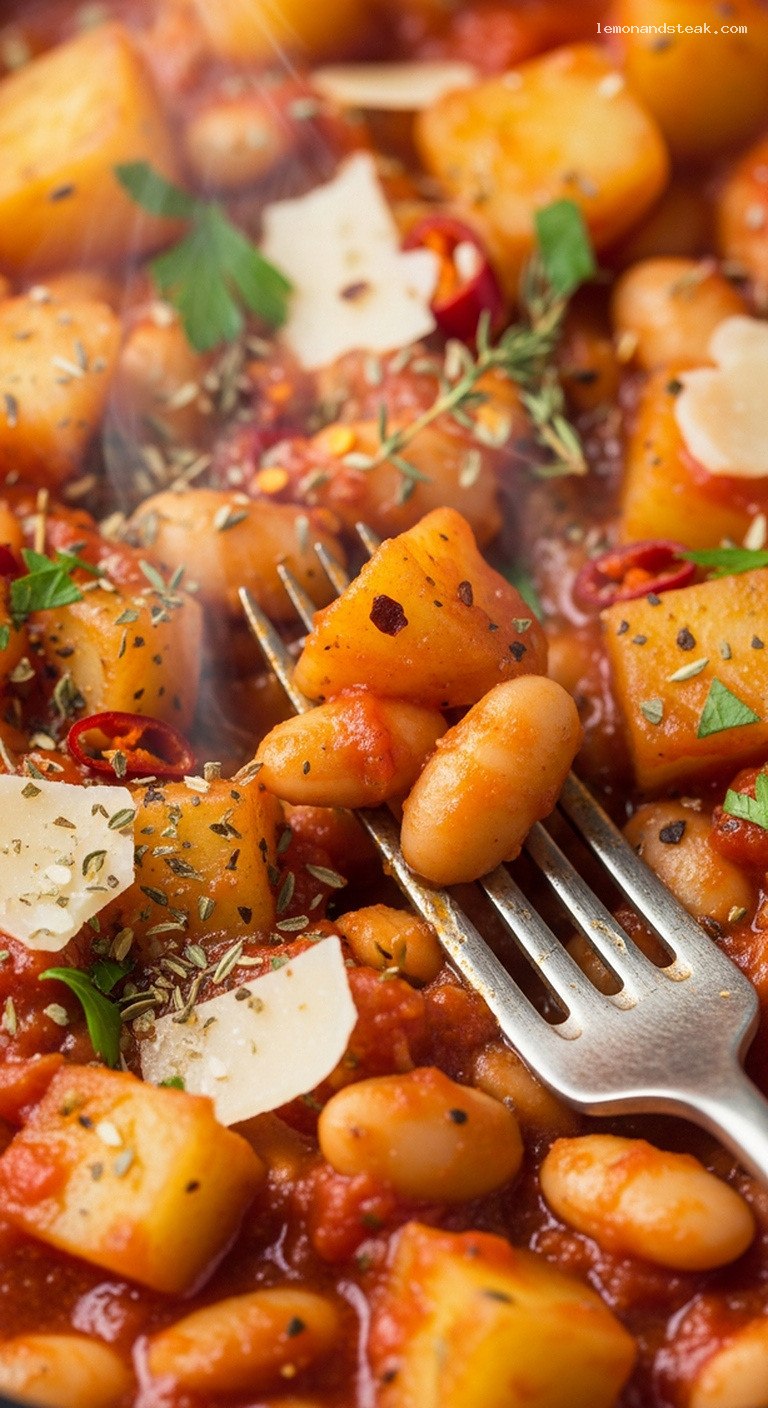
Step-by-Step Instructions
Step 1: Prep your vegetables and aromatics
Start by getting all your chopping done so the cooking flows smoothly. Finely dice the onion, carrots, and celery into small, even pieces; this classic trio builds flavor and helps the sauce become thick and rich. Mince the garlic. Scrub the potatoes well, then cut them into 3/4-inch chunks so they cook evenly and hold their shape without falling apart.
Drain and rinse the canned white beans under cool running water until the water runs clear. This removes excess starch and any metallic taste from the can. Set the beans aside to add near the end of cooking so they stay creamy and intact.
Step 2: Build a flavorful base with a slow sauté
Place a large, heavy-bottomed pot or Dutch oven on the stove over medium heat. Add the olive oil and let it warm for about 30 seconds. Add the onion, carrots, celery, and 1/2 teaspoon of salt. Cook, stirring occasionally, for 8–10 minutes, until the vegetables are very soft and the edges are turning lightly golden. Lower the heat slightly if they start to brown too quickly.
Stir in the minced garlic and cook for 1 minute until fragrant. Add the tomato paste and cook, stirring constantly, for 1–2 minutes more. The paste should darken slightly in color and stick a bit to the bottom of the pan; this caramelization is what gives the ragù its deep, slow-cooked flavor.
Step 3: Deglaze and add tomatoes, potatoes, and seasonings
Pour in the white wine (or vegetable broth, if not using wine). Stir well, scraping up any browned bits from the bottom of the pot with a wooden spoon. Let it simmer for about 2 minutes to reduce slightly.
Add the crushed tomatoes, potatoes, vegetable broth, dried oregano, dried thyme, smoked paprika (if using), bay leaf, red pepper flakes, 3/4 teaspoon of salt, and the black pepper. Stir everything together, making sure the potatoes are mostly submerged in the liquid. Increase the heat to medium-high and bring the mixture just to a gentle boil.
Step 4: Simmer until the potatoes are tender and the sauce thickens
Once the ragù reaches a gentle boil, reduce the heat to low or medium-low so it settles into a steady simmer with small bubbles. Cover the pot with a lid slightly ajar to allow some steam to escape. Simmer for 20–25 minutes, stirring every 5–7 minutes to prevent sticking on the bottom.
After about 20 minutes, check a piece of potato by piercing it with a fork. It should be tender to the center but still hold its shape. The sauce should have thickened noticeably and look rich and slightly glossy. If it seems too thin, remove the lid completely for the last 5–10 minutes to let more liquid evaporate.
Step 5: Add the white beans and finish cooking
When the potatoes are tender, stir in the drained white beans and the butter. Continue to simmer, now uncovered, for 5–10 minutes. During this time the beans will warm through, the butter will melt into the sauce, and the ragù will become even thicker and creamier.
Taste and adjust seasoning, adding more salt or pepper as needed. If the ragù is thicker than you like, stir in a splash or two of vegetable broth or water until it reaches your preferred consistency. If it is still a bit loose, keep simmering gently for a few more minutes, stirring occasionally.
Step 6: Add cheese and herbs, then rest and serve
Turn off the heat and remove the bay leaf. Stir in the grated Parmesan (or vegan cheese) and chopped parsley until evenly distributed. The cheese will melt into the sauce, enriching it and adding a savory, nutty note.
Let the ragù sit for 5 minutes before serving; this brief rest allows the flavors to meld and the sauce to thicken slightly more. Ladle generous portions into warm bowls. Serve as-is, or spoon it over creamy polenta, pasta, or alongside thick slices of crusty bread. Finish with an extra sprinkle of Parmesan, a few parsley leaves, and a drizzle of good olive oil if you like.
Pro Tips
- Choose the right potatoes: Waxy varieties like Yukon Gold or red potatoes hold their shape best and give a creamy texture without disintegrating.
- Go low and slow: A gentle simmer (not a rolling boil) keeps the potatoes intact and prevents the beans from splitting while the sauce thickens naturally.
- Control the thickness: For a thicker ragù, simmer uncovered at the end and mash a few potato pieces against the side of the pot. For a looser, soupier bowl, add an extra 1/2 cup of broth.
- Layer the salt: Season lightly at each stage (vegetables, simmering, final taste) instead of dumping it all in at once; this builds deeper, more balanced flavor.
- Next-day magic: This ragù tastes even better after resting in the fridge overnight as the potatoes, beans, and tomatoes mingle. It is perfect for making ahead.
Variations
- Smoky greens version: Stir in 3–4 cups chopped kale or Swiss chard along with the beans in Step 5. Let the greens wilt and become tender. Keep the smoked paprika for a cozy, campfire-like flavor.
- Creamy finish: For extra richness, stir in 1/4 cup heavy cream or full-fat coconut milk at the very end instead of (or in addition to) the butter and cheese.
- Spicy arrabbiata style: Double the red pepper flakes and add a pinch of chili powder with the herbs. Finish with a squeeze of lemon juice for brightness.
Storage & Make-Ahead
Let the ragù cool to room temperature before storing. Transfer to airtight containers and refrigerate for up to 4 days. The potatoes will continue to absorb some liquid, so expect it to thicken slightly; you can always loosen it with a splash of water or broth when reheating.
For longer storage, freeze in portions for up to 3 months. Thaw overnight in the refrigerator, then reheat gently on the stovetop over low to medium-low heat, adding broth or water as needed. Stir occasionally to prevent sticking and to keep the potatoes from breaking up too much. This dish is ideal for meal prep and busy weeknights, as the flavors deepen over time.
Nutrition (per serving)
Approximate values for 1 of 4 servings (without bread or extra cheese): about 410 calories; 13 g protein; 60 g carbohydrates; 11 g fiber; 11 g fat; 3.5 g saturated fat; 0 mg cholesterol (if using olive oil instead of butter and vegan cheese); approximately 980 mg sodium (will vary depending on broth, salt additions, and cheese).
Leave a Reply