
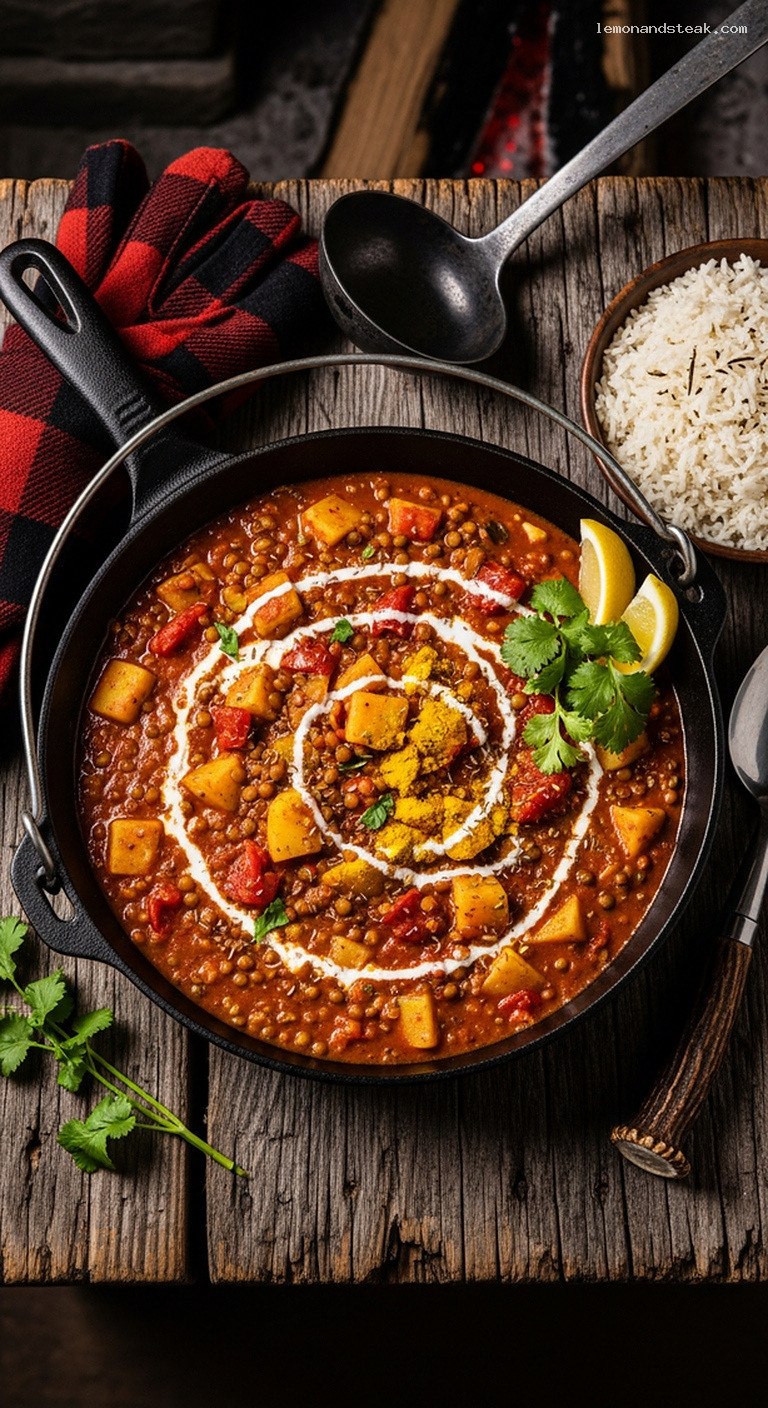
Hearty Potato and Lentil Tomato Curry with Cumin and Ginger
This comforting plant-based curry is loaded with tender potatoes, protein-rich lentils, and tomatoes gently simmered with cumin, ginger, and warm spices. It is cozy, deeply flavorful, and easy enough for a weeknight, yet special enough for company.
Quick Recipe Version (TL;DR)
Quick Ingredients
- 2 tbsp oil
- 1 large onion, finely chopped
- 3 cloves garlic, minced
- 1 ½ tbsp fresh ginger, grated
- 2 tsp ground cumin
- 1 ½ tsp ground coriander
- 1 tsp ground turmeric
- ½ tsp smoked paprika or mild chili powder
- 1 cup (200 g) dried brown or green lentils, rinsed
- 4 medium potatoes (about 600 g), 1.5 cm cubes
- 1 medium carrot, diced (optional)
- 1 can (400 g) diced tomatoes
- 3 cups (720 ml) vegetable broth
- 1 cup (240 ml) canned coconut milk
- 1 ½ tsp fine sea salt, plus to taste
- ¼ tsp black pepper
- 1 tsp garam masala
- 2 tbsp lemon juice
- Fresh cilantro, for serving
Do This
- 1. Prep onion, garlic, ginger, potatoes, carrot (if using), and rinse lentils until water runs clear.
- 2. Heat oil in a large pot over medium heat (about 180–190°C pan surface), sauté onion 5–7 minutes until soft and golden.
- 3. Stir in garlic, ginger, cumin, coriander, turmeric, smoked paprika; cook 1–2 minutes until fragrant.
- 4. Add potatoes, carrot, lentils, diced tomatoes, vegetable broth, salt, and pepper; bring to a boil, then reduce to a gentle simmer (about 90–95°C).
- 5. Cover and simmer 25–30 minutes, stirring occasionally, until lentils and potatoes are tender and curry is thick.
- 6. Stir in coconut milk and garam masala; simmer 3–5 minutes. Finish with lemon juice, adjust seasoning, garnish with cilantro, and serve hot.
Why You’ll Love This Recipe
- Deep, layered flavor from cumin, ginger, and warm spices, with simple pantry ingredients.
- Hearty and filling thanks to lentils and potatoes, yet completely plant-based.
- One-pot recipe with easy cleanup and very little hands-on cooking time.
- Perfect for meal prep: reheats beautifully and tastes even better the next day.
Grocery List
- Produce: Onion, garlic, fresh ginger, potatoes, carrot (optional), lemon, fresh cilantro (for serving), optional baby spinach.
- Dairy: None (recipe is fully plant-based).
- Pantry: Vegetable oil, dried brown or green lentils, canned diced tomatoes, canned coconut milk, vegetable broth, ground cumin, ground coriander, ground turmeric, smoked paprika or chili powder, garam masala, fine sea salt, black pepper, optional red pepper flakes or cayenne, optional rice or flatbread for serving.
Full Ingredients
For the Curry
- 2 tbsp neutral oil (such as canola, sunflower, or avocado oil)
- 1 large yellow onion, finely chopped (about 250 g)
- 3 cloves garlic, minced
- 1 ½ tbsp fresh ginger, peeled and finely grated
- 2 tsp ground cumin
- 1 ½ tsp ground coriander
- 1 tsp ground turmeric
- ½ tsp smoked paprika or mild chili powder
- ⅛–¼ tsp cayenne pepper or red pepper flakes (optional, for heat)
- 1 medium carrot, diced (about 100 g, optional for extra sweetness and texture)
- 4 medium waxy or all-purpose potatoes, peeled and cut into 1.5 cm cubes (about 600 g)
- 1 cup (200 g) dried brown or green lentils, rinsed well
- 1 can (14–15 oz / 400 g) diced tomatoes with their juices
- 3 cups (720 ml) low-sodium vegetable broth
- 1 cup (240 ml) canned full-fat coconut milk, shaken
- 1 ½ tsp fine sea salt, plus more to taste
- ¼ tsp freshly ground black pepper, plus more to taste
- 1 tsp garam masala (added near the end for aroma)
- 2 tbsp freshly squeezed lemon juice (about ½ large lemon), or to taste
Optional Add-Ins and Garnishes
- 2 cups (about 60 g) baby spinach or chopped kale, stirred in at the end
- ¼ cup (4 g) chopped fresh cilantro leaves and tender stems
- Cooked basmati rice or warm flatbread, for serving
- Extra lemon wedges, for serving
Step-by-Step Instructions
Step 1: Prep your vegetables and lentils
Peel and finely chop the onion. Mince the garlic and grate the ginger. Peel the potatoes and cut them into roughly 1.5 cm cubes so they cook evenly. Dice the carrot if using. Rinse the dried lentils in a fine-mesh sieve under cold running water for 30–60 seconds, rubbing them lightly with your fingers until the water runs mostly clear. Drain well and set aside. Having everything prepped before you start cooking makes the whole process smoother.
Step 2: Build a flavorful aromatic base
Set a large, heavy-bottomed pot or Dutch oven over medium heat. Add the oil and let it heat for 1–2 minutes, until it shimmers (the surface of the oil should look wavy; the pan surface will be about 180–190°C / 355–375°F). Add the chopped onion and a pinch of salt. Cook, stirring occasionally, for 5–7 minutes, until the onion is soft and turning golden around the edges.
Stir in the garlic and grated ginger. Cook for 1 minute, stirring constantly, until very fragrant but not browned. Sprinkle in the ground cumin, ground coriander, turmeric, smoked paprika or chili powder, and cayenne or red pepper flakes if using. Stir for 1–2 minutes to toast the spices gently. They should smell warm and nutty; if they start to stick, lower the heat slightly and add a tablespoon of water to loosen.
Step 3: Add potatoes, lentils, and liquids
Add the diced carrot (if using) and the cubed potatoes to the pot, stirring well to coat them in the aromatic spice mixture. Cook for 2 minutes, letting the edges of the potatoes warm and pick up the spices.
Add the rinsed lentils, canned diced tomatoes with their juices, and vegetable broth. Stir to combine, scraping up any browned bits from the bottom of the pot. Season with 1 ½ teaspoons of fine sea salt and ¼ teaspoon of black pepper. Increase the heat to medium-high and bring the mixture up to a steady boil.
Step 4: Simmer gently until everything is tender
Once the curry reaches a boil, reduce the heat to low or medium-low to maintain a gentle simmer. You want small, steady bubbles around the edges of the pot (approximately 90–95°C / just below a full boil). Cover the pot with a lid, leaving it slightly ajar to allow some steam to escape.
Simmer for 25–30 minutes, stirring every 5–7 minutes to prevent sticking. The lentils and potatoes are done when they are completely tender but still hold their shape; you should be able to easily mash a potato cube with the back of a spoon. If the curry looks too thick and is sticking, add a splash (2–4 tbsp) of hot water or broth. If it is too loose, remove the lid and simmer for a few extra minutes to reduce.
Step 5: Enrich with coconut milk and spices
Once the lentils and potatoes are tender, stir in the coconut milk and the garam masala. The curry will take on a richer color and a silky texture. Return the pot to a gentle simmer over low heat and cook, uncovered, for 3–5 minutes to let the flavors meld. Taste and adjust seasoning, adding more salt and pepper as needed.
If you are adding leafy greens such as baby spinach or chopped kale, stir them in now. Simmer for 1–2 minutes, just until the greens are wilted and bright.
Step 6: Brighten and finish
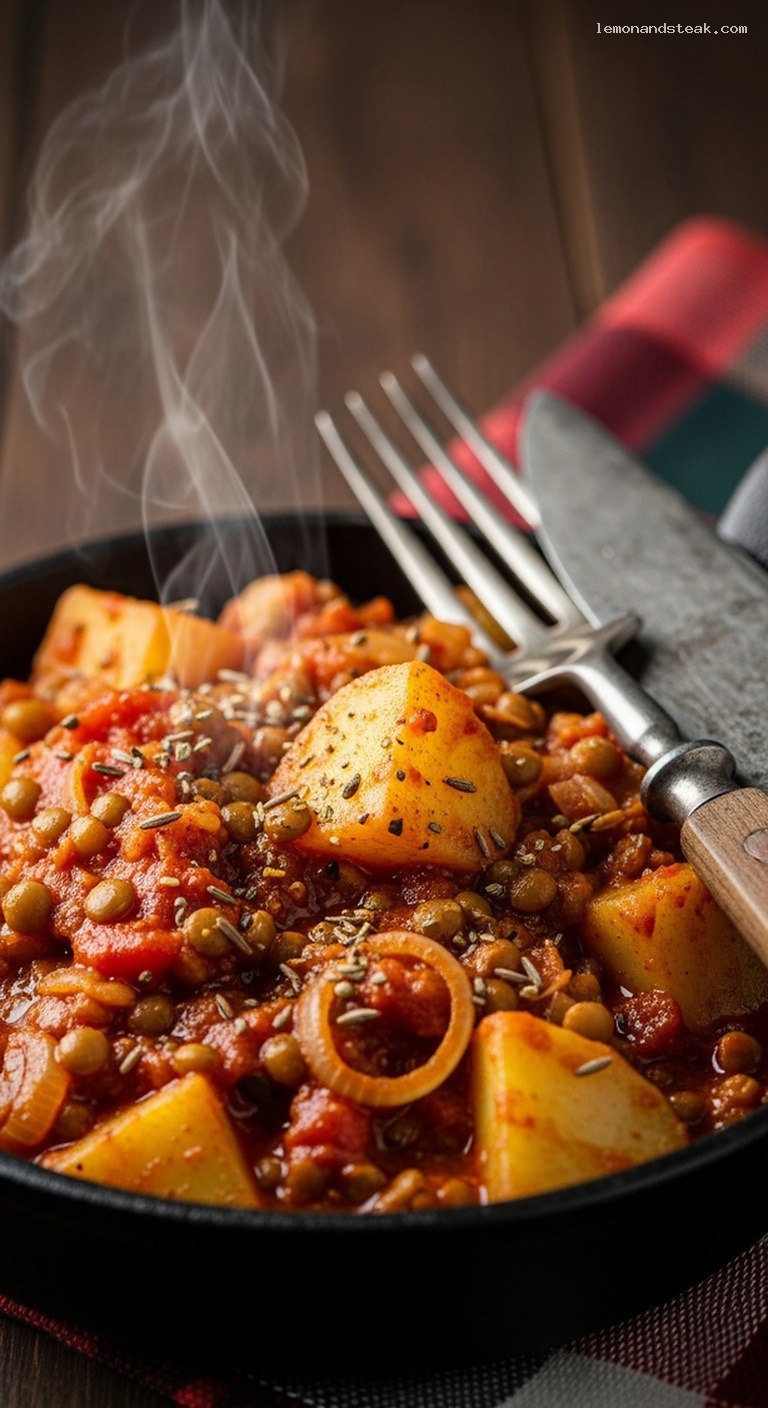
Turn off the heat. Stir in the lemon juice, starting with 2 tablespoons. The acidity will lift and brighten the curry, balancing the richness of the coconut milk and the earthiness of the lentils and potatoes. Taste and add more lemon juice or salt if desired. The final curry should be thick, spoonable, and glossy, with tender vegetables and lentils suspended in a warmly spiced tomato-coconut sauce.
Let the curry sit for 5 minutes before serving; it will thicken slightly as it stands.
Step 7: Serve warm and enjoy
Serve the potato and lentil curry hot over cooked basmati rice, alongside warm flatbread, or simply in a bowl with a spoon. Garnish with chopped fresh cilantro and an extra squeeze of lemon at the table if you like. For food safety, aim to serve the curry while it is piping hot, around 65–70°C (150–160°F). If reheating later, warm gently on the stovetop over medium-low heat, stirring, until it is steaming and at least 74°C (165°F) throughout before serving.
Pro Tips
- Rinse lentils thoroughly: Rinsing removes dust and excess starch, helping the curry stay smooth instead of starchy or cloudy.
- Cut potatoes evenly: Keeping the potato cubes around 1.5 cm ensures they cook at the same rate as the lentils, so everything becomes tender together.
- Toast your spices: Cooking the spices in oil for 1–2 minutes before adding liquid is key to deep, complex flavor. Just keep the heat moderate to avoid burning.
- Adjust thickness at the end: If the curry is too thick, stir in a little hot water or broth. If it is too thin, simmer uncovered for a few extra minutes until it reaches your preferred consistency.
- Make it ahead: Like many curries and stews, this tastes even better the next day as the flavors continue to develop in the fridge.
Variations
- Extra-vegetable curry: Add 1 cup of frozen peas in the last 5 minutes of cooking, or stir in chopped green beans, cauliflower florets, or bell peppers with the potatoes for more texture and color.
- Coconut-light version: Replace half or all of the coconut milk with additional vegetable broth, then stir in 2–3 tablespoons of plain, unsweetened plant-based yogurt off the heat for creaminess.
- Spicier version: Increase the cayenne pepper to ½ teaspoon, and add ½–1 teaspoon of crushed red pepper flakes or a fresh chopped chili along with the garlic and ginger.
Storage & Make-Ahead
Allow the curry to cool to room temperature for no more than 1 hour before storing. Transfer to airtight containers and refrigerate for up to 4 days. The flavors actually improve after a night in the fridge. For longer storage, freeze in portions for up to 3 months; leave a little headspace in containers for expansion.
To reheat from the fridge, place the curry in a saucepan with a splash of water or broth. Warm over medium-low heat, stirring occasionally, until it is gently bubbling and reaches at least 74°C (165°F). From frozen, thaw overnight in the refrigerator before reheating, or reheat gently from frozen over low heat, adding liquid as needed and stirring often so it heats evenly.
Nutrition (per serving)
Approximate values for one of 4 servings (without rice or flatbread): about 470 calories; 14 g protein; 20 g fat (11 g saturated fat); 62 g carbohydrates; 18 g fiber; 620 mg sodium. Exact values will vary based on specific brands of broth, coconut milk, and added salt.
Leave a Reply