
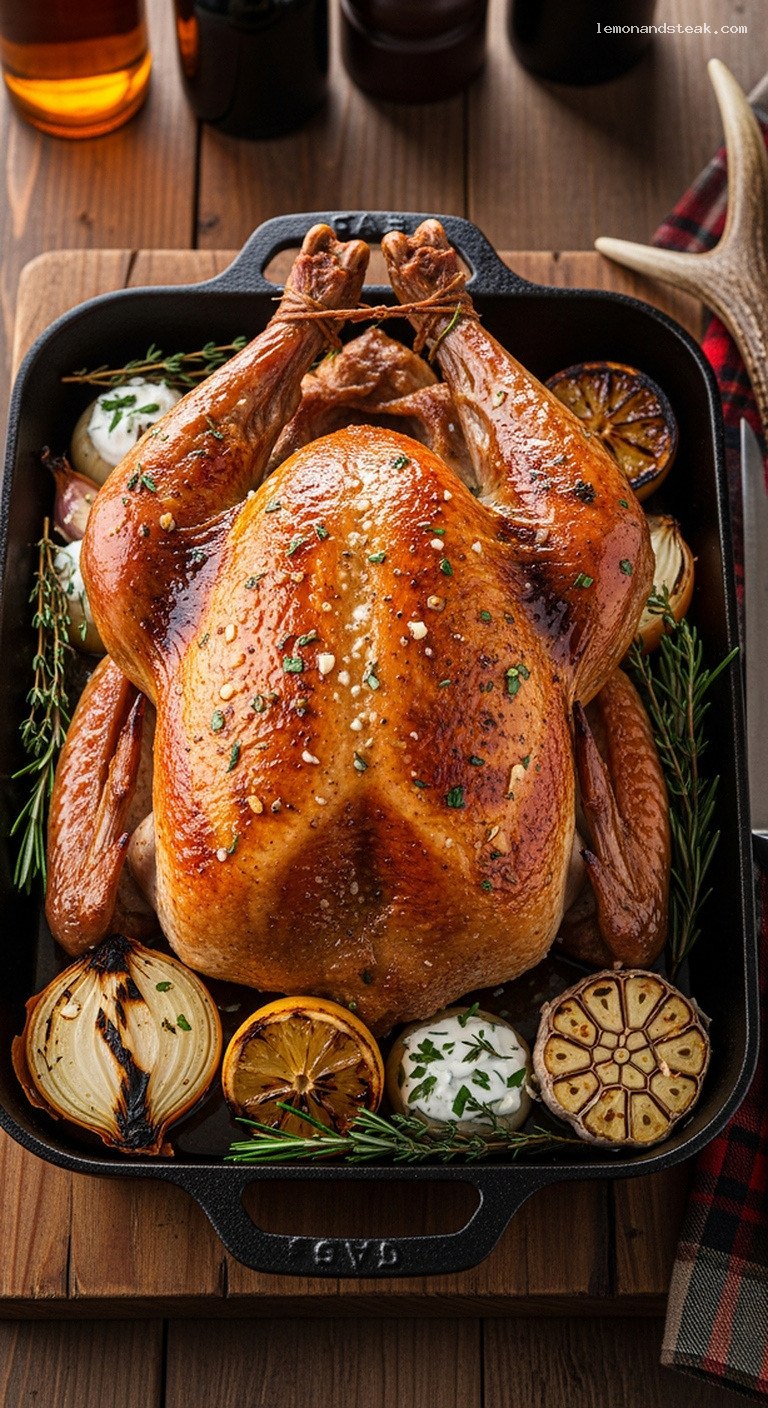
Quick Recipe Version (TL;DR)
Quick Ingredients
- 1 whole turkey (12–14 lb), thawed, giblets removed
- 2 cups whole-milk Greek yogurt
- 6 garlic cloves, minced or grated
- 2 tbsp chopped fresh rosemary
- 2 tbsp chopped fresh thyme
- 2 tbsp chopped fresh parsley, plus more for garnish
- 2 tbsp fresh lemon juice + 2 tsp lemon zest
- 2 tbsp extra-virgin olive oil
- 3 tbsp kosher salt (Diamond Crystal), divided
- 2 1/2 tsp freshly ground black pepper, divided
- 1 tsp smoked paprika
- 1 large onion, 1 head garlic, 1 lemon, fresh herb sprigs
- 2 tbsp melted butter or olive oil; 1–1 1/2 cups low-sodium chicken or turkey broth
Do This
- 1. Pat thawed turkey very dry, remove giblets, and trim excess fat.
- 2. Stir together yogurt, garlic, chopped herbs, lemon juice and zest, olive oil, 2 tbsp salt, 2 tsp pepper, and smoked paprika.
- 3. Gently loosen skin over breasts and thighs; rub most of the yogurt mixture directly onto the meat under the skin. Rub a little inside the cavity. Season outside with remaining salt and pepper.
- 4. Place turkey uncovered on a rack in a roasting pan and refrigerate 12–24 hours to marinate and let the skin dry slightly.
- 5. When ready to cook, preheat oven to 325°F (165°C). Add onion, garlic head, lemon wedges, herb sprigs, and broth to the pan. Wipe off any thick clumps of yogurt on the skin and brush skin with melted butter or oil.
- 6. Roast 3–3 1/2 hours, basting once or twice, until an instant-read thermometer in the thickest part of the breast reads 160–165°F (71–74°C). Tent with foil if browning too quickly.
- 7. Rest turkey 30–45 minutes before carving. Strain pan juices and skim fat for a simple, tangy-herbed gravy or jus. Garnish with fresh parsley and serve.
Why You’ll Love This Recipe
- The garlic-herb yogurt tucked under the skin keeps the turkey incredibly moist and tender.
- Plain Greek yogurt adds an old-fashioned, buttermilk-style tang and richness without feeling heavy.
- All the flavor is built in: garlic, fresh herbs, lemon, and smoky paprika make every bite taste seasoned all the way through.
- Most of the work is done ahead of time, so roasting day is calm and low-stress.
Grocery List
- Produce: 1 whole head garlic, 6 extra garlic cloves, 1 large yellow onion, 2 lemons, fresh rosemary, fresh thyme, fresh flat-leaf parsley
- Dairy: Whole-milk Greek yogurt, unsalted butter (or use olive oil instead)
- Pantry: 1 whole turkey (12–14 lb), extra-virgin olive oil, kosher salt, black pepper, smoked paprika, crushed red pepper flakes (optional), low-sodium chicken or turkey broth
Full Ingredients
Turkey & Basic Seasoning
- 1 whole turkey (12–14 lb), thawed if frozen, neck and giblets removed
- 1 tbsp kosher salt (Diamond Crystal; use about 2 tsp if using Morton’s)
- 1/2 tsp freshly ground black pepper
- 2 tbsp unsalted butter, melted (or 2 tbsp olive oil), for brushing the skin before roasting
Garlic-Herb Yogurt Rub
- 2 cups (about 480 g) plain whole-milk Greek yogurt
- 6 large garlic cloves, very finely minced or grated
- 2 tbsp finely chopped fresh rosemary leaves
- 2 tbsp finely chopped fresh thyme leaves
- 2 tbsp finely chopped fresh flat-leaf parsley (plus more for garnish, optional)
- 2 tbsp fresh lemon juice (from about 1 lemon)
- 2 tsp finely grated lemon zest
- 2 tbsp extra-virgin olive oil
- 2 tbsp kosher salt (Diamond Crystal; use 1 tbsp + 2 tsp if using Morton’s)
- 2 tsp freshly ground black pepper
- 1 tsp smoked paprika
- 1/4–1/2 tsp crushed red pepper flakes (optional, for a gentle heat)
For the Roasting Pan (Aromatics & Juices)
- 1 large yellow onion, peeled and quartered
- 1 whole head garlic, halved crosswise (no need to peel completely)
- 1 medium lemon, quartered
- 3 sprigs fresh rosemary
- 6 sprigs fresh thyme (or a mix of thyme and parsley stems)
- 1 to 1 1/2 cups low-sodium chicken or turkey broth, plus more as needed to keep the pan from drying out
Step-by-Step Instructions
Step 1: Thaw and dry the turkey
If your turkey is frozen, thaw it safely in the refrigerator (about 24 hours for every 4–5 lb of turkey). When fully thawed, remove the turkey from any packaging. Reach into the cavity and remove the neck and giblet packet, setting them aside for stock or gravy if you like.
Pat the turkey completely dry with paper towels, inside and out. Dry skin is key to browning nicely in the oven. Trim away any large extra flaps of fat or skin near the cavity opening so air can circulate well.
Step 2: Mix the garlic-herb yogurt rub
In a medium bowl, combine the Greek yogurt, minced or grated garlic, chopped rosemary, chopped thyme, chopped parsley, lemon juice, lemon zest, olive oil, 2 tbsp kosher salt, 2 tsp black pepper, smoked paprika, and crushed red pepper flakes (if using).
Stir until the mixture is completely smooth and the herbs and seasonings are evenly distributed. Taste a tiny bit (it will be salty and tangy on its own, but that is what you want for seasoning a big turkey). Adjust with an extra squeeze of lemon or a pinch more salt if needed.
Step 3: Loosen the skin and apply the yogurt
Place the turkey breast-side up on a cutting board. Starting at the cavity end of the bird, gently slide your fingers between the skin and the meat over the breast, working slowly to separate the skin without tearing it. Continue loosening the skin as far up over the breasts and down toward the thighs and drumsticks as you can comfortably reach. You can also use a small spoon to get started if your fingers feel too large or if the skin is snug.
Once the skin is loosened, use your hand or a small spoon to push the yogurt mixture directly onto the meat under the skin. Massage it around so the breasts and as much of the legs as you can reach are coated in a fairly generous, even layer. Use about 2/3 to 3/4 of the yogurt mixture under the skin. Rub a few spoonfuls inside the cavity as well.
Leave only a very thin veil (if any) of yogurt on the outside of the skin; heavy clumps on the exterior can inhibit browning. Sprinkle the outside of the turkey all over with the remaining 1 tbsp kosher salt and 1/2 tsp black pepper, pressing it gently into the skin.
Step 4: Chill to marinate and dry the skin
Set a roasting rack inside a large roasting pan and place the turkey on the rack, breast-side up. If you do not have a rack, you can rest the turkey on a bed of thickly sliced onions or crumpled foil coils so it is elevated slightly.
Refrigerate the turkey uncovered for at least 8 hours, and ideally 12–24 hours. This time allows the garlicky, herby yogurt to season the meat deeply and gently tenderize it, while the uncovered skin dries slightly so it can crisp in the oven. If you need to cover the turkey for space reasons, leave it loosely tented rather than tightly wrapped.
Step 5: Prepare the roasting pan and preheat the oven
About 1 hour before you plan to roast, take the turkey out of the refrigerator so it can lose some of its chill. This helps it cook more evenly. Move one oven rack to the lower-middle position and preheat the oven to 325°F (165°C).
Scatter the onion quarters, halved garlic head, and lemon wedges in the bottom of the roasting pan around (not on top of) the turkey. Tuck the fresh rosemary and thyme sprigs among the vegetables. Pour 1 to 1 1/2 cups of broth into the pan; you want a shallow layer of liquid to catch drippings without submerging the aromatics.
Inspect the turkey’s exterior: with a paper towel, gently blot away any visible thick clumps of yogurt that may still be on the skin, leaving the yogurt that is tucked under the skin in place. Brush the entire outside of the turkey lightly with the melted butter or olive oil for extra browning and flavor. Tuck the wing tips under the bird to prevent scorching, and if you like, tie the legs loosely together with kitchen twine for a tidy shape.
Step 6: Roast the turkey until deeply golden
Transfer the roasting pan to the oven. Roast at 325°F (165°C) for about 3 to 3 1/2 hours for a 12–14 lb turkey, or roughly 13–15 minutes per pound. Cooking time will vary depending on your oven and the exact size of the bird, so start checking earlier rather than later.
After the first 45–60 minutes, baste the turkey with some of the pan juices, then repeat once or twice more during roasting. If the breast or tips of the legs are browning faster than you would like, tent loosely with foil and continue cooking.
The turkey is done when an instant-read thermometer inserted into the thickest part of the breast (without touching bone) registers 160–165°F (71–74°C), and the thickest part of the thigh is around 170°F (77°C). Juices should run mostly clear when you pierce the meat. Remember that the temperature will rise a few degrees as it rests.
Step 7: Rest, carve, and serve
Carefully transfer the turkey to a cutting board or platter, tent it loosely with foil, and let it rest for at least 30 minutes and up to 45 minutes. Resting allows the juices to redistribute so the meat stays succulent when carved.
While the turkey rests, pour the pan juices through a fine-mesh strainer into a fat separator or a bowl. Skim off excess fat from the top, then taste the remaining juices. They should be rich, savory, and slightly tangy from the yogurt and lemon. Serve them as-is as a light jus, or use them as the base for a more traditional gravy by thickening with a flour or cornstarch slurry over medium heat.
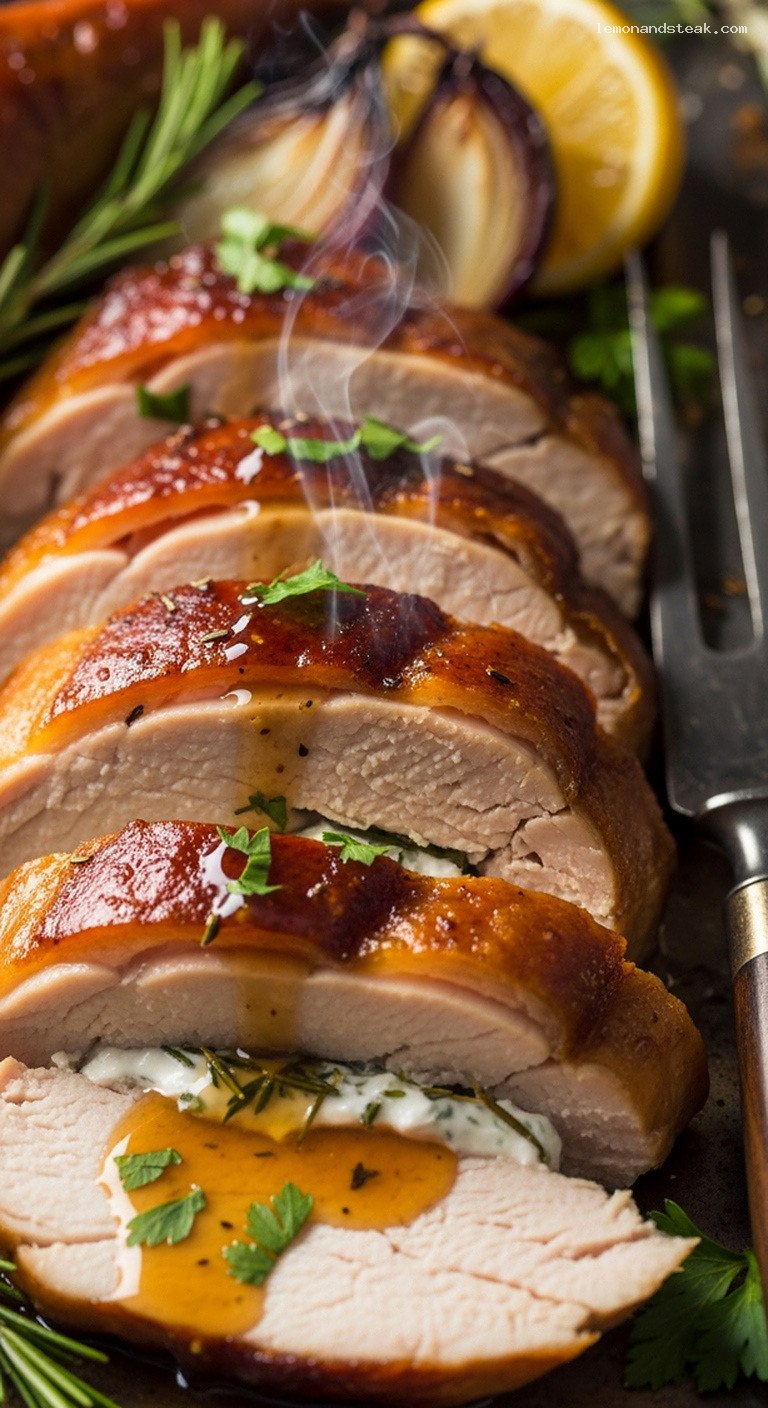
Carve the turkey: remove the legs and thighs, then the breasts, and slice the meat across the grain. Arrange on a warm platter, drizzle with a little of the warm pan juices, and garnish with extra chopped parsley or herb sprigs if you like. Serve with the remaining juices or gravy on the side.
Pro Tips
- Be gentle with the skin. Use your fingers or a small spoon to loosen the skin slowly so it does not tear. If you do get a small tear, simply avoid rubbing yogurt near that spot so it still crisps.
- Salt depends on brand. Kosher salt grains vary in size; Diamond Crystal is less salty by volume than Morton’s. If you use Morton’s, reduce the amounts slightly as noted or season to taste.
- Leave yogurt under the skin, not on top. The magic is the yogurt in direct contact with the meat, where it tenderizes and flavors. The outside skin should be mostly free of thick yogurt so it can brown and crisp beautifully.
- Use a thermometer, not the clock. Ovens run differently. An instant-read thermometer is the most reliable way to avoid dry turkey or undercooked spots.
- Give it time to rest. That 30–45 minute rest feels long, but it is one of the biggest keys to ultra-moist meat and easier carving.
Variations
- Warm-spiced yogurt turkey: Add 1 tsp ground cumin, 1 tsp ground coriander, and 1/2 tsp ground cinnamon to the yogurt rub in place of the smoked paprika. The result is a warmly spiced, aromatic bird with the same tangy richness.
- Extra-lemon herb turkey: Increase lemon zest to 1 tbsp and add the zest of 1 small orange to the yogurt mixture. Tuck extra citrus wedges and herb sprigs into the cavity for a brighter, more citrus-forward flavor.
- Spatchcocked (butterflied) turkey: Have your butcher remove the backbone or do it yourself, flatten the turkey, and rub the yogurt mixture under the skin as directed. Roast on a rimmed sheet pan at 375°F (190°C) for faster, more even cooking and lots of crispy skin.
Storage & Make-Ahead
Make-ahead: The turkey can be coated with the garlic-herb yogurt and refrigerated, uncovered, for up to 24 hours before roasting. You can also chop the herbs and mix the yogurt rub 1–2 days in advance; keep it covered in the refrigerator, then apply it under the skin when you are ready.
Leftovers: Store carved turkey in an airtight container in the refrigerator for up to 4 days. For best results, spoon a little leftover pan juice or broth over the meat before chilling to keep it moist. Reheat gently, covered, in a 300°F (150°C) oven or in a covered skillet with a splash of broth until just warmed through.
Freezing: Turkey meat freezes well. Wrap slices tightly or pack into freezer bags with as much air removed as possible. Freeze for up to 2–3 months. Thaw overnight in the refrigerator and reheat gently with a bit of broth or gravy.
Nutrition (per serving)
Approximate values per serving (about 6 oz cooked turkey with some yogurt-herb rub and a little pan juice): 380 calories; 52 g protein; 18 g fat; 5 g saturated fat; 2 g carbohydrates; 0–1 g fiber; 1 g sugar; 880 mg sodium. Actual values will vary based on the exact size of the turkey, how much skin you eat, and how much salt and pan juices you use.
Leave a Reply