
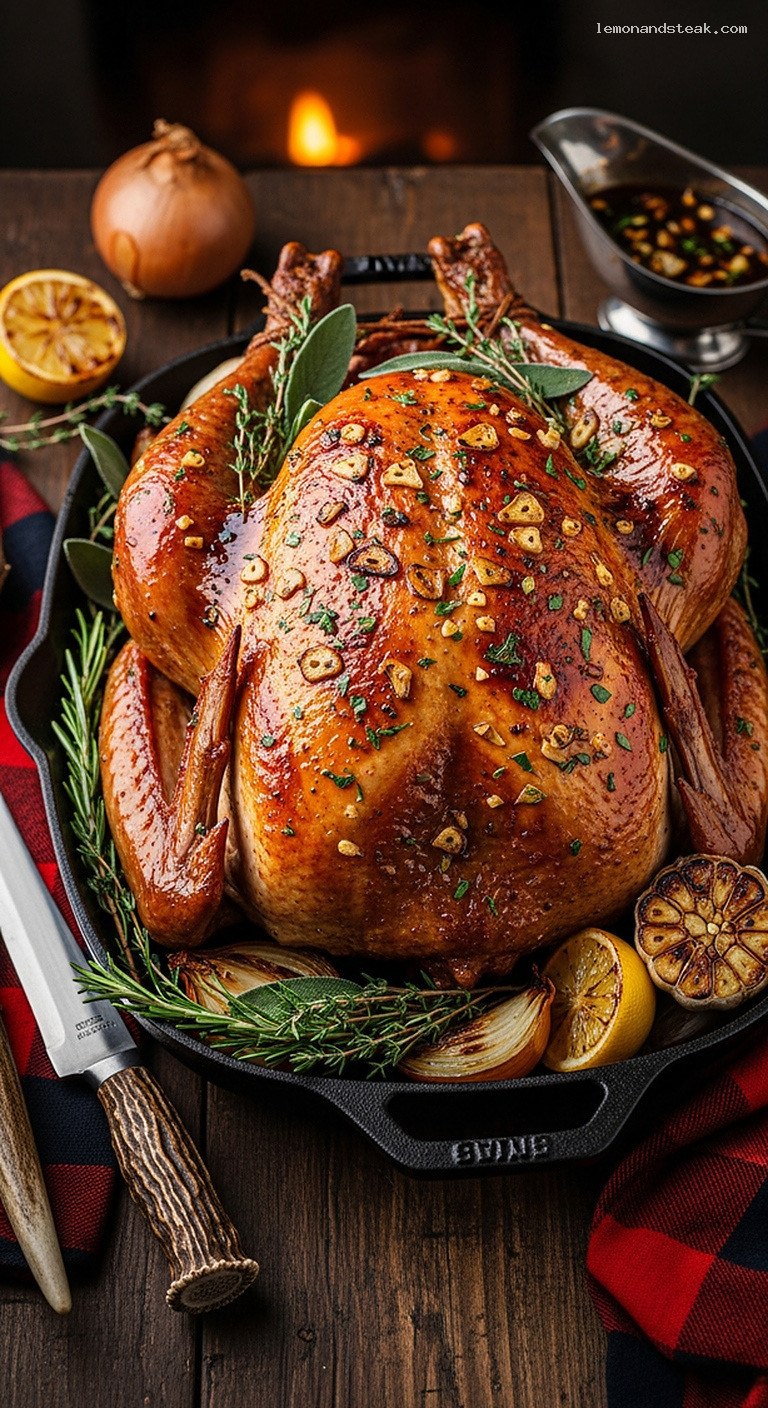
Quick Recipe Version (TL;DR)
Quick Ingredients
- 1 whole turkey, 12–14 lb (thawed if frozen)
- 3 tbsp kosher salt, 2 tsp black pepper
- 1 large yellow onion, quartered
- 1 lemon, halved
- 1 head garlic, halved crosswise
- 6–8 sprigs mixed fresh herbs (thyme, rosemary, sage, parsley)
- 1/4 cup olive oil
- 1 cup dry white wine
- 2 cups low-sodium chicken or turkey stock, plus extra if needed
- 1 cup (2 sticks) unsalted butter
- 1 tsp dried thyme (optional, for extra flavor)
Do This
- 1) Pat turkey dry, remove giblets, and generously season inside and out with salt and pepper (ideally 12–24 hours ahead, uncovered in the fridge).
- 2) Preheat oven to 325°F (165°C). Stuff cavity with onion, lemon, garlic, and herb sprigs; tie legs loosely and tuck wing tips under.
- 3) In a saucepan, simmer wine and 1 cup stock until reduced by about half. Whisk in butter, garlic, and herbs to make a glossy garlic–herb wine reduction.
- 4) Place turkey on rack in roasting pan. Brush generously with the warm reduction. Roast at 325°F, uncovered.
- 5) Every 30 minutes, baste turkey with more garlic–herb wine reduction and pan juices. Add a splash of stock to pan if it dries out.
- 6) Roast until thickest part of breast and thigh reach 165°F (about 3–3¼ hours for 12–14 lb). Tent with foil if browning too quickly.
- 7) Transfer turkey to a board, tent loosely with foil, and rest 30–45 minutes. Meanwhile, deglaze pan with stock for gravy, carve, and serve with extra sauce.
Why You’ll Love This Recipe
- The buttery garlic–herb wine reduction keeps the turkey exceptionally juicy and deeply flavorful.
- Classic, crowd-pleasing flavors using simple, familiar ingredients you can find anywhere.
- Hands-off roasting with just occasional basting, plus an easy pan gravy from the same roasting juices.
- Perfect centerpiece for holidays or special dinners, with instructions that work for first-timers and seasoned cooks alike.
Grocery List
- Produce: 1 large yellow onion, 1 lemon, 1 head garlic, fresh thyme, fresh rosemary, fresh sage, fresh flat-leaf parsley
- Dairy: 1 cup (2 sticks) unsalted butter
- Pantry: 1 whole turkey (12–14 lb), kosher salt, black pepper, olive oil, dry white wine, low-sodium chicken or turkey stock, bay leaf (optional), all-purpose flour (for gravy, optional)
Full Ingredients
For the Roasted Turkey
- 1 whole turkey, 12–14 lb, thawed if frozen (see notes if larger)
- 3 tbsp kosher salt (use less if turkey is pre-brined or “self-basting”)
- 2 tsp freshly ground black pepper
- 1/4 cup olive oil
- 1 large yellow onion, peeled and quartered
- 1 lemon, halved
- 1 head garlic, halved horizontally
- 4 sprigs fresh thyme
- 3 sprigs fresh rosemary
- 3–4 large fresh sage leaves
- Small bunch fresh flat-leaf parsley (about 6–8 stems)
- 1–2 cups low-sodium chicken or turkey stock, for the roasting pan (in addition to what is used in the reduction and gravy)
For the Buttery Garlic–Herb Wine Reduction
- 1 cup dry white wine (such as Sauvignon Blanc, Pinot Grigio, or Chardonnay)
- 2 cups low-sodium chicken or turkey stock
- 1 cup (2 sticks) unsalted butter, cut into chunks
- 6 cloves garlic, minced very finely
- 2 tbsp fresh thyme leaves, chopped
- 1 tbsp fresh rosemary leaves, very finely chopped
- 1 tbsp fresh sage leaves, finely chopped
- 2 tbsp fresh parsley, finely chopped
- 1 tsp kosher salt (or to taste)
- 1/2 tsp freshly ground black pepper
- 1 bay leaf (optional)
- 1 tsp dried thyme (optional, for deeper flavor to stand up to long roasting)
For a Simple Pan Gravy (Optional but Recommended)
- 3 tbsp fat from the roasting pan (skimmed drippings or butter)
- 3 tbsp all-purpose flour
- 2–3 cups combined pan juices and extra stock (as needed to reach desired consistency)
- Salt and pepper to taste
- Extra chopped fresh herbs (thyme, parsley, or sage), optional
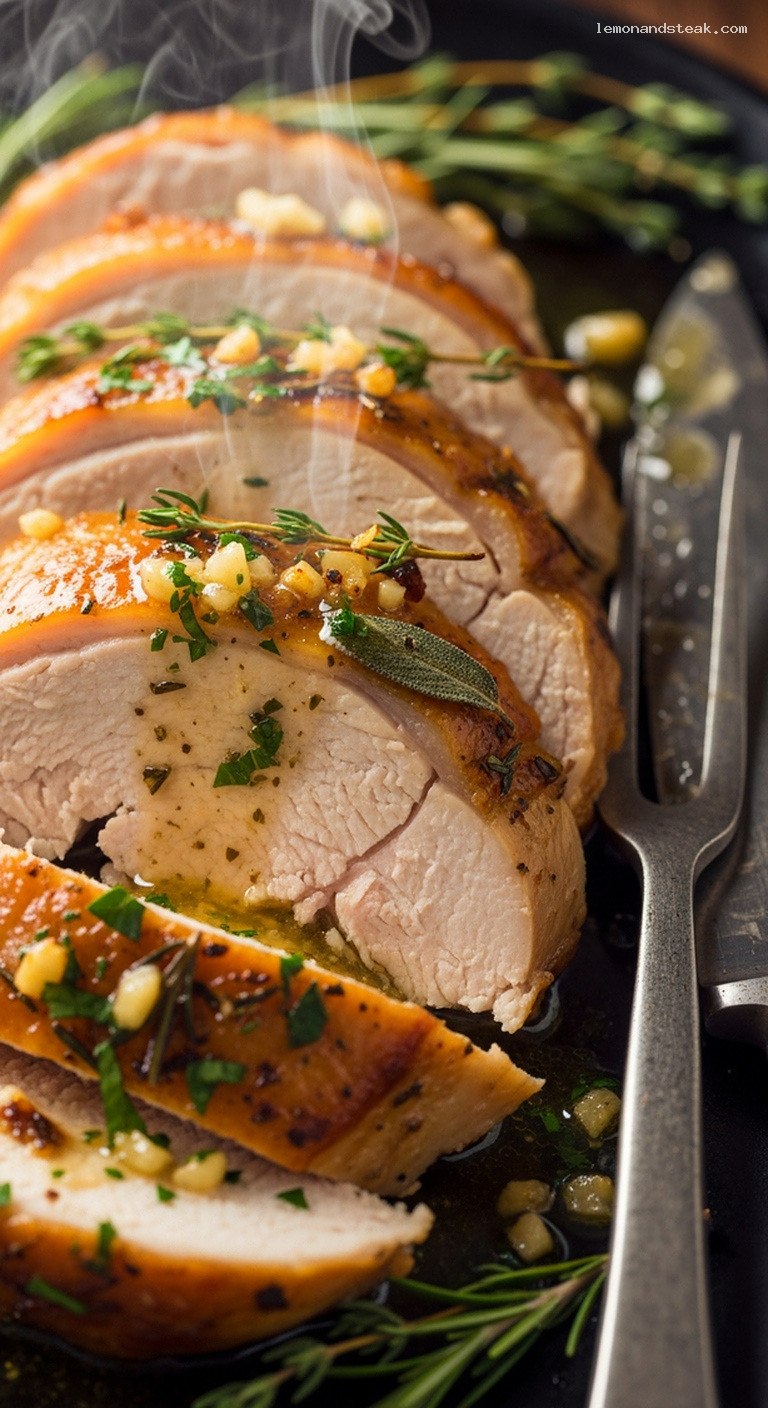
Step-by-Step Instructions
Step 1: Thaw and Dry the Turkey
If your turkey is frozen, thaw it in the refrigerator, allowing about 24 hours for every 4–5 lb. A 12–14 lb turkey usually needs 3–4 days in the fridge. Once thawed, remove all packaging, take out the neck and giblet packet from inside the cavities (check both ends), and pat the turkey completely dry with paper towels, inside and out. Dry skin is key to crisp, golden-brown roasting.
Place the turkey on a rimmed tray or in a roasting pan. If you have time, loosely tent with paper towels and refrigerate uncovered for several hours or overnight to dry the skin further. This step is optional but really improves the texture of the skin.
Step 2: Season the Turkey and Add Aromatics
In a small bowl, combine the 3 tbsp kosher salt and 2 tsp black pepper. Sprinkle this mixture generously inside the cavity, then over the entire surface of the turkey, pressing gently so it adheres. If you can, season 12–24 hours before roasting and keep the turkey uncovered in the refrigerator; this “dry brine” helps the meat stay juicy and flavorful.
When you are ready to roast, preheat your oven to 325°F (165°C) with a rack in the lower third. Toss the onion quarters, lemon halves, halved garlic head, thyme, rosemary, sage, and parsley together. Stuff these aromatics loosely into the main cavity of the turkey; do not pack tightly so hot air can circulate. Drizzle the bird with 1/4 cup olive oil and rub it all over the skin.
Tuck the wing tips under the body to prevent burning. Tie the legs loosely with kitchen twine to hold the aromatics in place and help the turkey cook evenly. Place the turkey breast-side up on a rack set in a large roasting pan. Pour 1–2 cups of stock into the bottom of the pan (enough to cover the surface about 1/4 inch deep). This prevents burning and contributes flavorful drippings.
Step 3: Make the Buttery Garlic–Herb Wine Reduction
In a medium saucepan, combine 1 cup dry white wine, 2 cups stock, and the bay leaf (if using). Bring to a boil over medium-high heat, then reduce the heat and let it simmer briskly until reduced by about half, 10–15 minutes. You should have roughly 1½–2 cups of liquid remaining.
Lower the heat to medium-low. Whisk in the butter, a few chunks at a time, allowing each addition to melt and emulsify into the liquid before adding more. You are aiming for a glossy, slightly thickened sauce. Stir in the minced garlic, chopped thyme, rosemary, sage, parsley, dried thyme (if using), salt, and pepper. Let this mixture bubble gently for 2–3 minutes to soften the garlic and blend the flavors without browning it.
Turn off the heat but keep the reduction warm on the lowest setting or transfer it to a small heat-safe pitcher or bowl set near the stove. This will be your basting sauce for the turkey and the key to its rich, garlicky, herb-packed flavor.
Step 4: Start Roasting the Turkey
With the oven preheated to 325°F (165°C), slide the roasting pan with the prepared turkey onto the lower-third rack. Roast uncovered for 30 minutes without opening the oven. This initial period helps set the skin.
After 30 minutes, carefully pull the oven rack out enough to access the turkey. Use a heatproof brush or spoon to generously baste the bird with the warm garlic–herb wine reduction, focusing on the breast, thighs, and drumsticks. Try not to let too much sauce pool in the pan; you want most of it on the turkey itself. Gently push the rack back in and close the oven door.
Continue roasting, basting every 30 minutes with more reduction and a little of the pan juices. If the bottom of the pan starts to look dry or the drippings are burning, add another 1/2–1 cup of stock or water to the pan. Rotate the pan halfway through roasting if your oven has hot spots so the turkey browns evenly.
Step 5: Baste, Brown, and Cook to Temperature
Plan on a total roasting time of about 13–15 minutes per pound at 325°F. For a 12–14 lb turkey, this is typically 3–3¼ hours, but always rely on temperature, not just time. About 2 hours into roasting, start checking the color of the skin. If the breast or tips are browning faster than you like, tent those areas loosely with foil while allowing the rest to brown.
Keep basting with the garlic–herb wine reduction every 30 minutes until it is mostly used, then switch to pan drippings. The butter and wine will help create a deep, golden, lacquered skin. Begin checking the internal temperature after about 2½ hours by inserting an instant-read thermometer into the thickest part of the breast and the inner thigh, avoiding bone.
The turkey is done when both the thickest part of the breast and the innermost part of the thigh reach at least 165°F (74°C). If some parts are done earlier (often the breast) you can tent those areas with foil while letting the thighs finish.
Step 6: Rest the Turkey for Juicy Slices
Once the turkey reaches 165°F, carefully lift it from the roasting pan and transfer it to a large cutting board or serving platter. Loosely tent the entire turkey with foil (do not wrap tightly, or the skin will steam and soften). Let it rest for 30–45 minutes.
This resting time is crucial. The hot juices inside the meat will redistribute and settle, which means they will stay in the turkey when you slice it instead of running all over the board. Use this window to make a simple pan gravy, warm side dishes, and set the table.
Step 7: Make Simple Pan Gravy (Optional) and Serve
While the turkey rests, place the roasting pan over medium heat on the stovetop (use two burners if needed). Carefully spoon off excess fat, leaving about 3 tbsp of fat plus the browned bits and juices. If there are not enough drippings, add a tablespoon or two of butter or olive oil.
Sprinkle 3 tbsp flour evenly over the fat in the pan. Cook, whisking constantly, for 2–3 minutes to form a golden roux, scraping up any browned bits. Slowly pour in 2–3 cups combined pan juices and additional stock, whisking as you go to prevent lumps. Bring to a simmer and cook until thickened to your liking, about 5–8 minutes. If it gets too thick, thin with a bit more stock; if too thin, simmer longer. Taste and season with salt, pepper, and extra chopped herbs if you like.
To serve, remove the aromatics from the turkey cavity (they did their job; discard them). Carve the turkey by removing the legs, thighs, wings, and breast meat, then slice the breast across the grain into thick, juicy slices. Arrange on a warm platter, spoon some of the buttery garlic–herb pan juices or a bit of gravy over the top, and pass the remaining gravy at the table.
Pro Tips
- Salt ahead for best flavor: Seasoning the turkey 12–24 hours in advance (dry brining) dramatically improves juiciness and depth of flavor.
- Keep the reduction warm, not boiling: Once the butter is in, avoid rapid boiling so the sauce stays smooth and emulsified for easier basting.
- Use a thermometer: An instant-read thermometer is the most reliable way to avoid undercooked or overcooked turkey.
- Tent strategically: If areas of the turkey get too dark, loosely cover just those parts with foil instead of covering the entire bird.
- Save the bones: The carcass and leftover bones make an excellent turkey stock, perfect for soups and future gravies.
Variations
- Citrus–Herb Turkey: Add the zest of 1 lemon and 1 orange to the garlic–herb wine reduction, and tuck a few orange slices into the cavity for a brighter, more citrusy profile.
- Smoky Garlic–Herb Turkey: Stir 1–2 tsp smoked paprika and 1 tsp Dijon mustard into the reduction for a slightly smoky, deeper savoriness that pairs well with roasted vegetables.
- Butterflied (Spatchcock) Turkey: Ask your butcher to remove the backbone so the turkey can lay flat. Roast at 375°F (190°C) for faster, more even cooking, brushing with the same garlic–herb wine reduction. Cooking time will drop to roughly 1½–2 hours for a 12–14 lb bird.
Storage & Make-Ahead
You can season the turkey with salt and pepper up to 24 hours in advance and let it rest uncovered in the refrigerator. The garlic–herb wine reduction can be made up to 2 days ahead: refrigerate it, then gently rewarm over low heat before roasting and basting. Leftover cooked turkey keeps well in an airtight container in the refrigerator for 3–4 days or frozen for up to 2–3 months. Store gravy separately in the fridge for up to 3 days; reheat gently on the stovetop, thinning with a splash of stock or water if needed. For best texture when reheating turkey, warm slices in a covered baking dish with a few spoonfuls of stock or gravy at 300°F (150°C) until just heated through.
Nutrition (per serving)
Approximate values per serving (about 6 oz roasted turkey with some skin and a small amount of gravy): 520 calories; 38 g protein; 34 g fat; 4 g carbohydrates; 1 g fiber; 1 g sugar; 980 mg sodium. Actual values will vary based on portion size, how much skin and gravy are eaten, and the exact size of your turkey.
Leave a Reply