
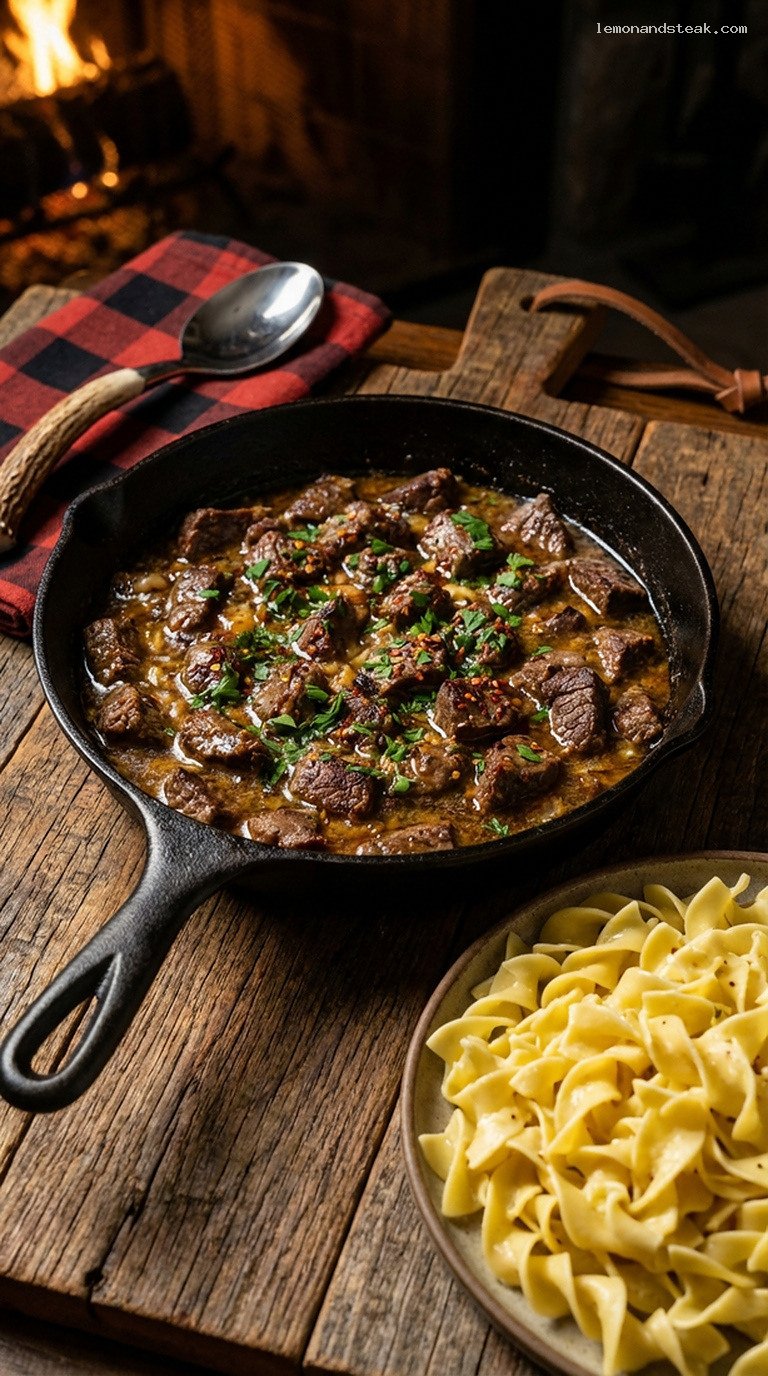
Quick Recipe Version (TL;DR)
Quick Ingredients
- 1 1/2 lb beef sirloin or stew meat, cut into 1-inch cubes
- 1 tsp kosher salt, 3/4 tsp black pepper
- 1 tsp onion powder, 1 tsp smoked paprika
- 2 tbsp all-purpose flour (optional, for light dredge)
- 2 tbsp neutral oil (canola, vegetable, or avocado)
- 12 oz wide egg noodles
- 6 tbsp unsalted butter, divided
- 4 garlic cloves, minced
- 1 cup low-sodium beef broth
- 1 tbsp Worcestershire sauce
- 1 tsp Dijon mustard (optional)
- 1 tsp cornstarch + 1 tbsp water (optional, to thicken)
- 2 tbsp chopped fresh parsley (plus more to serve)
- Salt and red pepper flakes to taste
Do This
- 1) Pat beef dry. Toss with salt, pepper, onion powder, smoked paprika, and flour (if using).
- 2) Bring a large pot of salted water to a boil for the noodles.
- 3) Heat oil in a hot cast-iron skillet over medium-high. Sear beef in 2–3 batches until well browned but still tender inside. Set aside.
- 4) Lower heat to medium. Add 4 tbsp butter and garlic; cook briefly, then deglaze with broth, Worcestershire, and Dijon. Simmer 3–5 minutes. Thicken with cornstarch slurry if desired.
- 5) Cook noodles until al dente. Drain and toss with remaining 2 tbsp butter, parsley, and a pinch of salt.
- 6) Return beef and juices to the skillet, toss in the garlic-butter sauce, and simmer 1–2 minutes. Serve beef tips and sauce over the buttered noodles.
Why You’ll Love This Recipe
- Big steakhouse flavors in a simple, one-skillet stovetop meal.
- Garlic-butter pan sauce coats every bite of seared beef and rustic noodles.
- Cast-iron searing gives you deep, caramelized crust and rich fond for an incredible sauce.
- Flexible: use your favorite cut of beef and adjust the sauce thickness to your liking.
Grocery List
- Produce: Garlic, fresh parsley
- Dairy: Unsalted butter, (optional) grated Parmesan cheese
- Pantry: Beef sirloin or stew meat, wide egg noodles, kosher salt, black pepper, onion powder, smoked paprika, all-purpose flour, neutral oil, low-sodium beef broth, Worcestershire sauce, Dijon mustard, cornstarch, red pepper flakes
Full Ingredients
For the Garlic-Butter Beef Tips
- 1 1/2 lb beef sirloin, top sirloin, or well-marbled stew meat, cut into 1-inch cubes
- 1 tsp kosher salt
- 3/4 tsp freshly ground black pepper
- 1 tsp onion powder
- 1 tsp smoked paprika (or sweet paprika)
- 2 tbsp all-purpose flour (optional, helps browning and slightly thickens the sauce)
- 2 tbsp neutral oil (canola, vegetable, or avocado)
For the Garlic-Butter Pan Sauce
- 4 tbsp unsalted butter
- 4 large garlic cloves, minced (about 1 1/2 tbsp)
- 1 cup low-sodium beef broth
- 1 tbsp Worcestershire sauce
- 1 tsp Dijon mustard (optional, for a subtle tang and depth)
- 1/4 tsp red pepper flakes (optional, for gentle heat)
- 1 tsp cornstarch mixed with 1 tbsp cold water (optional, for a thicker, glossy sauce)
- Additional kosher salt and black pepper, to taste
For the Rustic Buttered Noodles
- 12 oz wide egg noodles
- 1 tbsp kosher salt (for pasta water)
- 2 tbsp unsalted butter
- 2 tbsp chopped fresh parsley (plus more for garnish)
- 2–4 tbsp grated Parmesan cheese (optional, for serving)
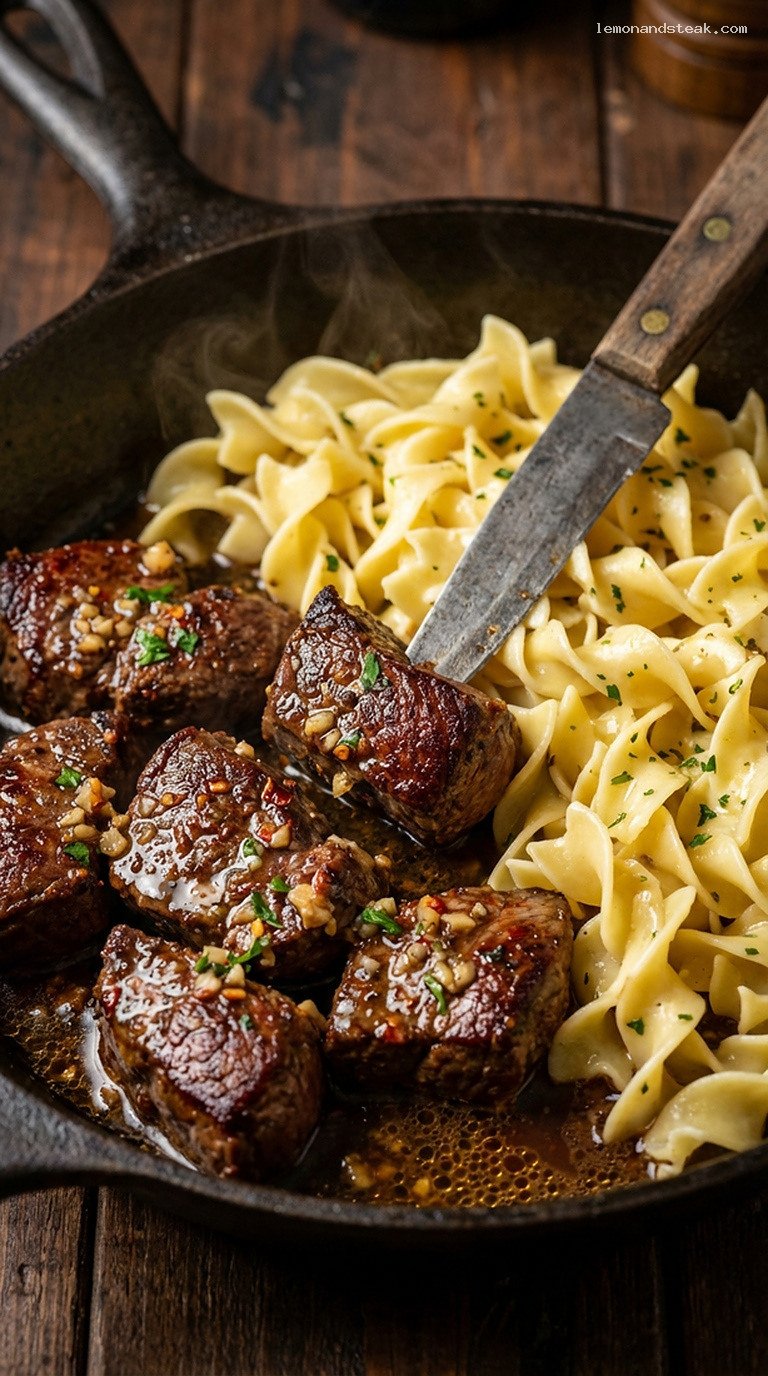
Step-by-Step Instructions
Step 1: Prep the Beef and Aromatics
Trim any excess fat or silverskin from the beef and cut into 1-inch cubes. The more uniform the pieces, the more evenly they will cook. Pat the beef very dry with paper towels; removing surface moisture is key to getting a deep, flavorful sear in your cast-iron skillet.
In a medium bowl, combine the beef cubes with 1 tsp kosher salt, 3/4 tsp black pepper, 1 tsp onion powder, and 1 tsp smoked paprika. Toss to coat evenly. Sprinkle over the 2 tbsp flour, if using, and toss again until every piece is lightly dusted. Set aside at room temperature while you prep the rest (about 10–15 minutes). Meanwhile, mince the garlic and chop the parsley so they are ready to go.
Step 2: Get the Noodle Water Ready
Fill a large pot with about 4–5 quarts of water and bring it to a rolling boil over high heat. Once boiling, add 1 tbsp kosher salt. Keep the pot covered and simmering gently while you work on the beef; you will cook the noodles while the sauce simmers, so everything is hot and ready at the same time.
Step 3: Sear the Beef Tips in Cast Iron
Place a large cast-iron skillet over medium-high heat (you want the surface around 375–400°F if using an infrared thermometer). Add 2 tbsp neutral oil and heat until it shimmers and just begins to smoke.
Working in 2–3 batches to avoid crowding, add a single layer of beef cubes to the hot skillet. Let them sear undisturbed for 2–3 minutes, until the bottoms develop a deep brown crust. Flip and cook another 1–2 minutes, until browned on at least two sides and just cooked through to medium or medium-well, depending on your preference. Transfer seared beef to a plate and repeat with remaining pieces, adding a drizzle more oil only if needed.
Do not wipe out the skillet; the browned bits (fond) stuck to the bottom are pure flavor and will form the base of your garlic-butter sauce.
Step 4: Build the Garlic-Butter Pan Sauce
Reduce the heat under the cast-iron skillet to medium. Add 4 tbsp unsalted butter to the pan. As it melts and foams, use a wooden spoon or spatula to gently scrape up the browned bits from the bottom.
Stir in the minced garlic and cook for 30–45 seconds, just until fragrant and lightly sizzling. Do not let the garlic brown deeply or it can become bitter. Pour in 1 cup beef broth and 1 tbsp Worcestershire sauce, then add 1 tsp Dijon mustard and 1/4 tsp red pepper flakes if using. Stir well, scraping up any remaining fond.
Bring the sauce to a simmer and let it bubble gently for 3–5 minutes. If you prefer a thicker, more coating sauce, stir the cornstarch and water together in a small bowl, then drizzle it into the simmering sauce while stirring constantly. Cook 1–2 more minutes, just until glossy and slightly thickened. Taste and adjust seasoning with salt and pepper as needed.
Step 5: Cook and Butter the Noodles
While the sauce simmers, add the 12 oz wide egg noodles to the boiling salted water. Cook according to package directions until just al dente, usually 7–9 minutes.
Reserve about 1/4 cup of the starchy cooking water, then drain the noodles well. Return them to the hot pot (off the heat), and add 2 tbsp butter and 2 tbsp chopped parsley. Toss until the butter melts and coats the noodles, loosening with a splash of the reserved cooking water if needed. Taste and add a pinch of salt if desired. Keep covered and warm.
Step 6: Finish the Beef Tips in the Sauce
Return the seared beef tips and any accumulated juices on the plate back into the skillet with the garlic-butter sauce. Toss gently to coat all the pieces in the sauce. Let the mixture simmer together over low to medium-low heat for 1–2 minutes, just long enough to rewarm the beef and help the flavors meld. Avoid prolonged simmering, which can make the beef tougher.
Taste the sauce one last time and adjust with extra Worcestershire, black pepper, or red pepper flakes if you want more punch. If the sauce feels too intense, you can mellow it with an extra tablespoon of butter stirred in off the heat.
Step 7: Plate and Serve
To serve, divide the buttered noodles among four warm bowls or shallow plates. Spoon the garlic-butter beef tips generously over the noodles, making sure to get plenty of glossy pan sauce over each portion.
Sprinkle with additional chopped parsley for freshness and color. Add a light dusting of grated Parmesan if you enjoy a cheesy finish. Serve immediately while everything is piping hot, with extra sauce from the skillet passed at the table.
Pro Tips
- Dry beef = better crust. Pat the beef very dry before seasoning and dredging. Moisture is the enemy of browning.
- Do not crowd the skillet. Sear in batches so the beef actually browns instead of steaming. Cast iron holds heat well, but crowding still drops the temperature.
- Watch the garlic closely. Add garlic after the butter melts, and cook it only until fragrant. If it darkens too much, start the sauce over for the best flavor.
- Control sauce thickness. Skip the cornstarch for a looser, more au jus–style sauce, or use the slurry and simmer a minute for a glossy, spoon-coating consistency.
- Finish cooking in the sauce, not in the sear. Stop searing the beef when it is just shy of your ideal doneness; the final simmer in the sauce will bring it the rest of the way.
Variations
- Creamy garlic-beef tips: After thickening the sauce, stir in 1/4 to 1/3 cup heavy cream and a small handful of grated Parmesan for an ultra-rich, velvety version.
- Mushroom garlic-beef tips: After searing the beef, sauté 8 oz sliced cremini or button mushrooms in the skillet with a little extra butter until browned, then proceed with the garlic and broth. The mushrooms soak up the garlic-butter flavor beautifully.
- Herb-forward twist: Swap half the parsley for fresh thyme or chives, and add a tiny squeeze of lemon at the end to brighten the rich sauce.
Storage & Make-Ahead
Store leftovers in an airtight container in the refrigerator for up to 3 days. For the best texture, store the beef tips with their sauce in one container and the noodles in another; this prevents the noodles from absorbing all the liquid. Reheat the beef and sauce gently in a skillet over low heat, adding a splash of beef broth or water if the sauce has thickened too much. Warm the noodles separately in the microwave with a small pat of butter, or briefly toss them in the skillet with the sauce right before serving. This dish is best made and eaten fresh, but you can cut and season the beef and prep the garlic and parsley up to 24 hours in advance; keep them covered in the refrigerator until you are ready to cook.
Nutrition (per serving)
Approximate values for 1 of 4 servings: about 880 calories; 48 g protein; 68 g carbohydrates; 43 g fat; 17 g saturated fat; 3 g fiber; 4 g sugar; 900–1000 mg sodium (will vary based on broth, salt, and optional additions). These numbers are estimates and will change with ingredient brands and any variations you use.
Leave a Reply