
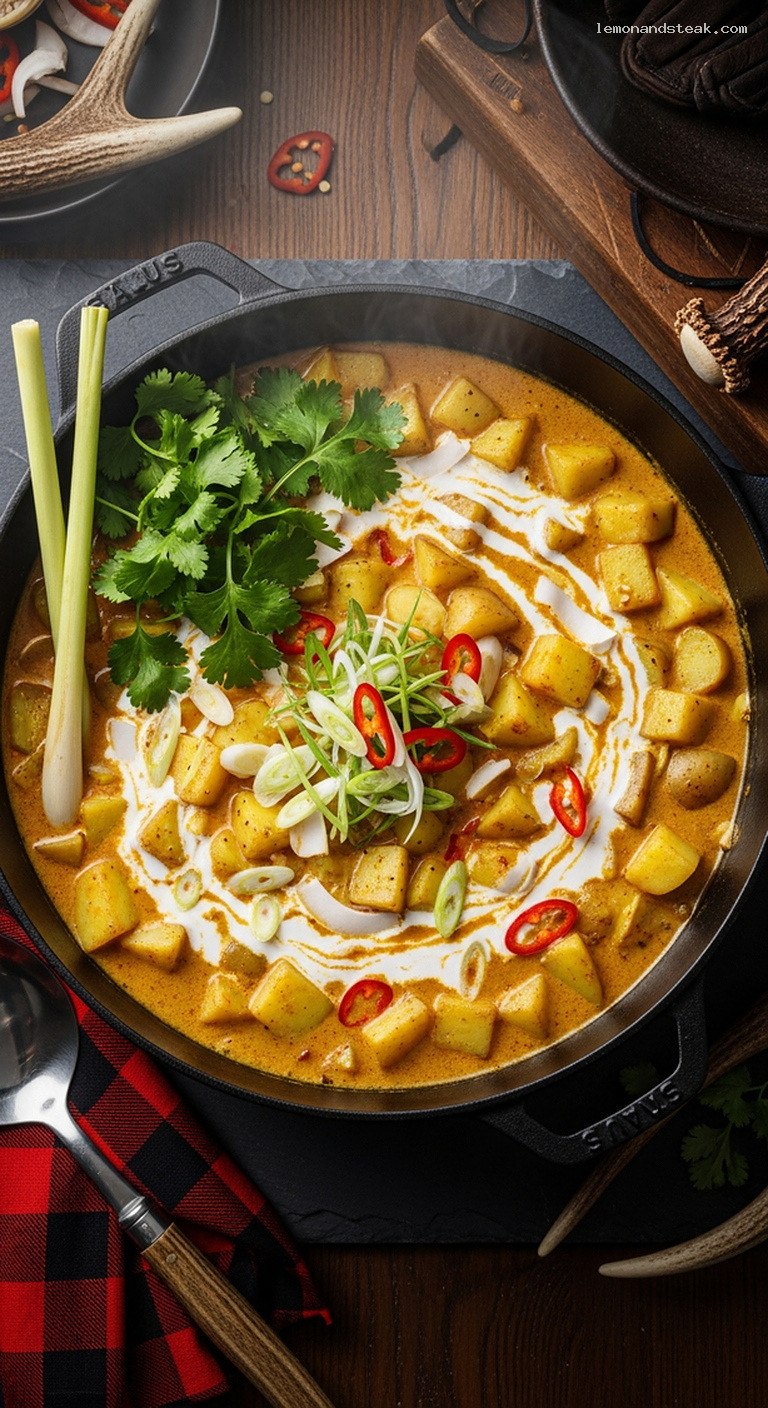
Quick Recipe Version (TL;DR)
Quick Ingredients
- 1 1/2 lb (680 g) Yukon Gold potatoes, peeled and cut into 1/2-inch pieces
- 2 tbsp neutral oil (canola, sunflower, or vegetable)
- 1 medium yellow onion, finely chopped
- 3 cloves garlic, minced
- 1 tbsp freshly grated ginger
- 2 stalks lemongrass, trimmed, bruised, and cut into 3-inch pieces (or 2 tsp lemongrass paste)
- 1 1/2 tbsp mild yellow curry powder
- 1/2 tsp ground turmeric
- 1/2 tsp ground cumin
- 4 cups (960 ml) low-sodium vegetable broth
- 1 (14 oz / 400 ml) can full-fat coconut milk
- 1 tbsp soy sauce or tamari (optional, for depth)
- 1 to 1 1/2 tsp fine sea salt, plus more to taste
- 1 tsp light brown sugar or coconut sugar (optional)
- 2 tbsp fresh lime juice
- Cilantro, scallions, lime wedges, and sliced red chili for serving (optional)
Do This
- 1. Prep potatoes, onion, garlic, ginger, and lemongrass; measure all spices and liquids.
- 2. Heat oil in a pot over medium heat; sauté onion until soft and lightly golden, about 5–7 minutes.
- 3. Add garlic, ginger, and lemongrass; cook 1 minute, then stir in curry powder, turmeric, and cumin for 30–60 seconds until fragrant.
- 4. Add potatoes, broth, coconut milk, soy sauce, salt, and sugar; bring to a gentle boil, then simmer 15–20 minutes until potatoes are tender.
- 5. Remove lemongrass; lightly mash some potatoes or blend briefly with an immersion blender to thicken while keeping some chunks.
- 6. Stir in lime juice; taste and adjust salt, lime, or sweetness. Thin with a splash of water or broth if needed.
- 7. Ladle into bowls; garnish with cilantro, scallions, chili, and a drizzle of coconut milk. Serve hot.
Why You’ll Love This Recipe
- Gentle, comforting flavors: creamy coconut, soft potatoes, and lemongrass without intense heat.
- One-pot and weeknight-friendly, ready in about 45 minutes with simple supermarket ingredients.
- Dairy-free and naturally vegetarian (easily made vegan and gluten-free).
- Flexible base: add extra vegetables or protein to turn it into a complete, hearty meal.
Grocery List
- Produce: Yukon Gold potatoes, yellow onion, garlic, fresh ginger, lemongrass stalks (or lemongrass paste), fresh cilantro, scallions, lime, red chili (optional)
- Dairy: None needed (optionally plain yogurt for serving, if you like a tangy swirl)
- Pantry: Neutral oil, mild yellow curry powder, ground turmeric, ground cumin, vegetable broth, full-fat coconut milk, soy sauce or tamari, fine sea salt, light brown sugar or coconut sugar, black or white pepper (optional)
Full Ingredients
For the Potato & Coconut Curry Soup
- 1 1/2 lb (680 g) Yukon Gold or other waxy potatoes, peeled and cut into 1/2-inch (1.25 cm) cubes
- 2 tbsp neutral oil (canola, vegetable, or sunflower)
- 1 medium yellow onion, finely chopped (about 1 cup)
- 3 cloves garlic, minced
- 1 tbsp freshly grated ginger (from about a 1-inch piece)
- 2 stalks fresh lemongrass, outer leaves removed, trimmed, lightly bruised with the back of a knife, and cut into 3-inch (7–8 cm) pieces
– or 2 tsp lemongrass paste, added with the garlic and ginger - 1 1/2 tbsp mild yellow curry powder
- 1/2 tsp ground turmeric
- 1/2 tsp ground cumin
- 1/4 tsp freshly ground black pepper or white pepper (optional)
- 4 cups (960 ml) low-sodium vegetable broth
- 1 (14 oz / 400 ml) can full-fat coconut milk, well shaken
- 1 tbsp soy sauce or tamari (optional, for deeper flavor)
- 1 tsp light brown sugar or coconut sugar (add up to 1 1/2 tsp if you like a slightly sweeter, rounder flavor)
- 1 to 1 1/2 tsp fine sea salt, plus more to taste
- 2 tbsp fresh lime juice (from about 1 large lime), plus extra wedges for serving
For Serving (Optional, but Recommended)
- Fresh cilantro leaves, roughly chopped
- 2 scallions (green onions), thinly sliced
- 1 small red chili (such as red jalapeño or Fresno), very thinly sliced, or a pinch of red pepper flakes
- A drizzle of extra coconut milk or coconut cream for swirling
- Toasted shredded coconut or chopped roasted peanuts for crunch
- Crusty bread or steamed jasmine rice on the side
Step-by-Step Instructions
Step 1: Prep all your ingredients
Peel the potatoes and cut them into roughly 1/2-inch (1.25 cm) cubes so they cook evenly. Rinse briefly in cool water and set aside.
Finely chop the onion. Mince the garlic and grate the ginger. If you are using fresh lemongrass, remove the tough outer leaves, trim the root-end, then lightly smash the stalks with the side of a knife or a rolling pin to bruise them. Cut into 3-inch (7–8 cm) pieces. If using lemongrass paste, simply measure it out and keep it nearby.
Measure out the curry powder, turmeric, cumin, and pepper so you can add them quickly once the pan is hot; spices can burn easily if you are scrambling to find them. Shake the coconut milk can so it is well combined.
Step 2: Soften the onion base
Place a medium to large heavy-bottomed pot or Dutch oven over medium heat. Add the 2 tablespoons of neutral oil and heat until it shimmers.
Add the chopped onion and a small pinch of salt. Cook, stirring occasionally, until the onion is soft, translucent, and just starting to turn golden at the edges, about 5–7 minutes. If the onion begins to brown too quickly, lower the heat slightly; you want a gentle sizzle, not a hard fry.
Step 3: Build fragrance with garlic, ginger, lemongrass, and spices
Add the minced garlic and grated ginger to the pot. Stir constantly and cook for about 1 minute, just until very fragrant. If you are using lemongrass paste instead of stalks, add it now as well.
Next, add the mild curry powder, ground turmeric, ground cumin, and pepper (if using). Stir well to coat the onion mixture in the spices. Let them toast gently for 30–60 seconds, stirring almost constantly. This step helps release their aroma and gives the soup a deeper flavor, but do not let them burn. If the pan looks dry, you can splash in 1–2 tablespoons of broth to keep things moving.
If you are using whole lemongrass stalks, add the bruised pieces now and stir them into the aromatic mixture so they start releasing their citrusy fragrance.
Step 4: Add potatoes, liquids, and simmer
Add the cubed potatoes to the pot and stir so they are coated in the fragrant spice mixture. Pour in the vegetable broth and the can of coconut milk. Add the soy sauce or tamari (if using), 1 teaspoon of fine sea salt, and the sugar.
Stir well, scraping up any browned bits from the bottom of the pot. Increase the heat to medium-high and bring the mixture just up to a gentle boil. As soon as it reaches a boil, reduce the heat to low or medium-low to maintain a steady simmer.
Simmer, uncovered, for 15–20 minutes, or until the potatoes are completely tender when pierced with a fork. Stir occasionally to make sure nothing sticks to the bottom, and adjust the heat as needed to keep the simmer gentle. The broth will start to thicken slightly from the starch of the potatoes and the richness of the coconut milk.
Step 5: Adjust the texture (mash or blend)
Once the potatoes are tender, remove the pot from the heat. Use tongs or a slotted spoon to find and remove the lemongrass stalk pieces; they are too fibrous to eat.
For a rustic, hearty soup, use a potato masher to gently mash some of the potatoes right in the pot, leaving plenty of chunks for texture. For a creamier, slightly smoother soup, partially blend it with an immersion blender, pulsing just a few times so that about half of the potatoes are pureed and the rest remain in soft pieces.
If you prefer an ultra-smooth, velvety soup, you can transfer the mixture in batches to a countertop blender and blend until silky. If you do this, be careful with the hot liquid: only fill the blender halfway, vent the lid slightly, and cover with a clean towel, then blend on low, increasing speed gradually.
Step 6: Brighten and season
Return the soup to low heat if you blended it. Stir in the fresh lime juice. Taste the soup and adjust the seasoning: add more salt, 1/4 teaspoon at a time, if it tastes flat; a splash more lime juice if you want extra brightness; or a small pinch more sugar if you would like the flavors slightly rounder and softer.
If the soup is thicker than you like, stir in a little hot water or extra broth, a few tablespoons at a time, until it reaches your ideal consistency. If it is too thin, let it gently simmer uncovered for a few more minutes to reduce slightly.
Step 7: Serve and garnish
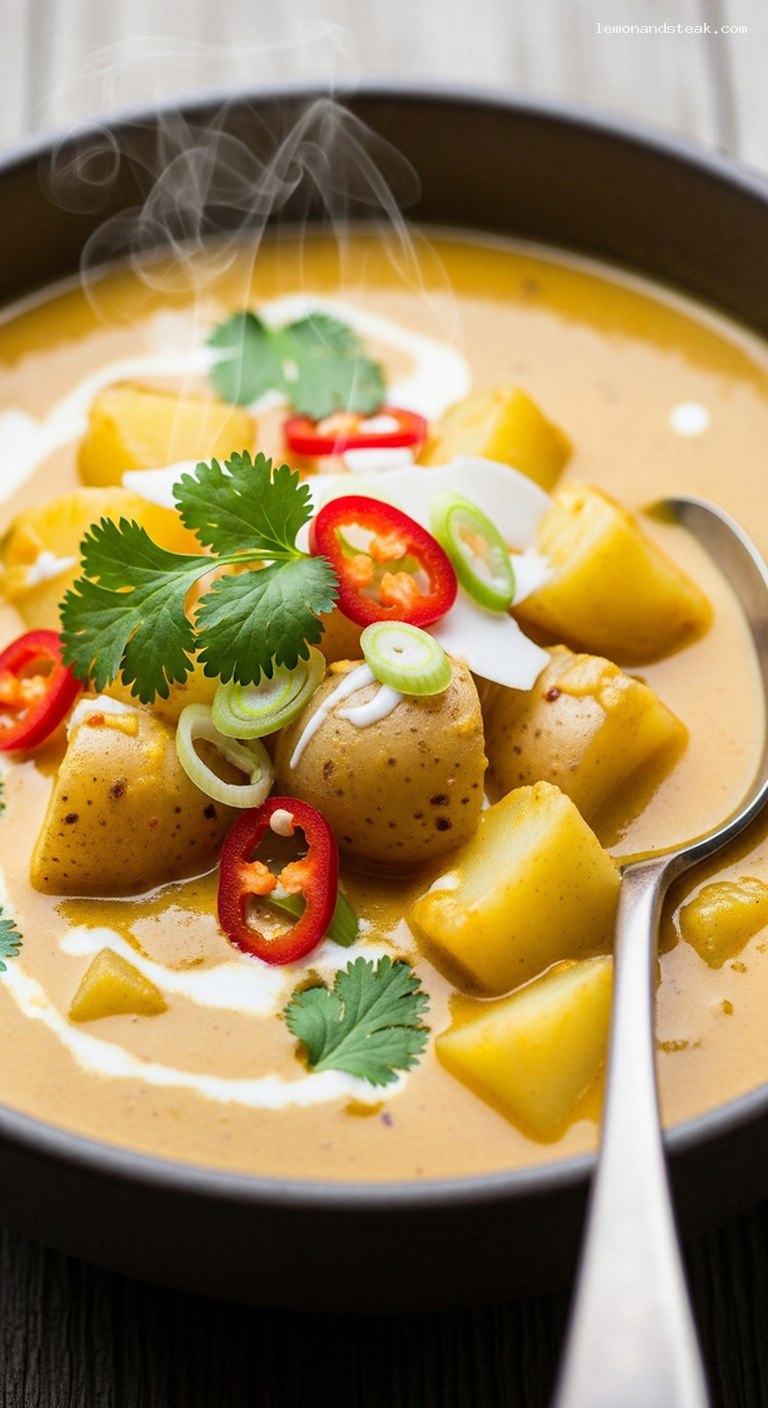
Ladle the hot potato and coconut curry soup into warmed bowls. Swirl a spoonful of extra coconut milk or coconut cream on top if you like, dragging a toothpick or the tip of a knife through it for a simple pattern.
Scatter chopped cilantro and sliced scallions over each bowl. Add a few thin slices of red chili or a pinch of red pepper flakes for a mild kick, if desired. Finish with a squeeze of lime juice at the table and a sprinkle of toasted shredded coconut or chopped roasted peanuts for a bit of crunch.
Serve immediately, with crusty bread or steamed jasmine rice alongside for a more filling meal.
Pro Tips
- Choose the right potatoes: Waxy or all-purpose varieties like Yukon Gold hold their shape yet become wonderfully tender and creamy. Floury potatoes (like Russets) can work but will break down more quickly and make the soup thicker, faster.
- Handle lemongrass correctly: Bruising the stalks is essential; it opens up the fibers so the citrusy aroma infuses the soup. Always remove the stalks before serving, as they stay tough and stringy.
- Bloom the spices gently: Cooking the curry powder and other spices in oil for just 30–60 seconds wakes up their flavor. Watch closely and stir constantly to avoid burning, which can make the soup taste bitter.
- Control the creaminess: Lightly mashing or partially blending gives you a soup that is both creamy and chunky. Blend more for a velvety, restaurant-style texture, or less if you prefer visible potato pieces.
- Season in layers: Start with a modest amount of salt and sugar, then taste after adding lime juice. Citrus can change how salty and sweet a dish feels, so final adjustments should come at the very end.
Variations
- Veggie-loaded version: Add 1 cup of sliced carrots and/or cauliflower florets along with the potatoes. You can also stir in a few handfuls of baby spinach or kale during the last 2–3 minutes of cooking until just wilted.
- Protein boost: For extra heartiness, add 1 can (15 oz) of drained and rinsed chickpeas with the potatoes, or stir in 1–2 cups of cooked shredded chicken during the final 5 minutes of simmering.
- Spicier curry: If you enjoy more heat, add 1–2 teaspoons of red curry paste or a finely chopped fresh chili along with the garlic and ginger, or finish the soup with chili oil at the table.
Storage & Make-Ahead
Allow the soup to cool to room temperature, then transfer it to airtight containers. Store in the refrigerator for up to 4 days. The flavors often deepen and become even more comforting by the next day. Reheat gently on the stovetop over low to medium-low heat, adding a splash of water or broth if it has thickened too much in the fridge. Stir well as coconut milk can separate slightly when chilled, but it will smooth out as it warms.
For longer storage, freeze the soup (without fresh garnishes) for up to 2–3 months. Thaw overnight in the refrigerator before reheating. Potatoes can become a bit softer after freezing but work very well in a blended or partially blended soup like this. Always add fresh herbs, lime juice, and crunchy toppings just before serving for the best texture and brightness.
Nutrition (per serving)
Approximate values for 1 of 4 servings (without optional toppings or bread): about 420 calories; 7 g protein; 50 g carbohydrates; 21 g fat; 13 g saturated fat; 7 g fiber; 800 mg sodium. Exact values will vary based on your specific brands of coconut milk, broth, and seasonings, as well as how much salt you add and which garnishes you choose.
Leave a Reply