
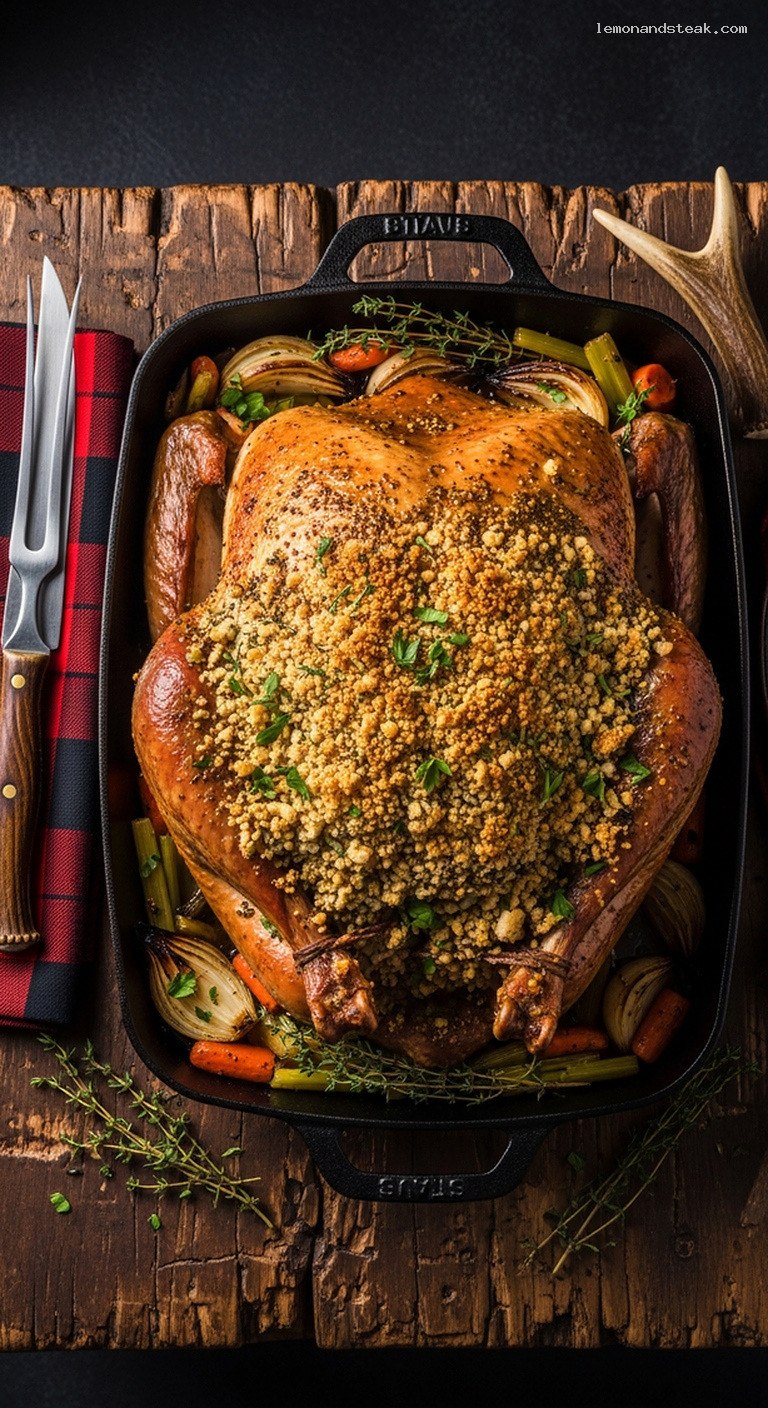
Quick Recipe Version (TL;DR)
Quick Ingredients
- 1 whole turkey (12–14 lb), thawed, giblets removed
- 2 1/2 tbsp kosher salt, 2 tsp black pepper
- 3 tbsp olive oil or melted butter
- 1 large onion, 2 carrots, 2 celery stalks, chopped
- 1/2 cup dry white wine or low-sodium chicken broth (for the pan)
- 1/2 cup Dijon mustard
- 3 tbsp mayonnaise
- 3 garlic cloves, finely minced
- 1 tsp lemon zest
- 1 cup fresh breadcrumbs
- 1/3 cup finely chopped fresh flat-leaf parsley
- 1 tbsp finely chopped fresh thyme leaves (or 1 tsp dried)
- 2 tbsp olive oil
- 3 tbsp pan fat, 3 tbsp flour, 2–3 cups broth (for optional gravy)
Do This
- 1. Preheat oven to 425°F (220°C). Pat turkey very dry. Season all over and inside with kosher salt and black pepper. Rub skin with olive oil or melted butter.
- 2. Scatter onion, carrots, and celery in a roasting pan. Set turkey breast-side up on a rack over the vegetables. Pour wine or broth into the pan.
- 3. Roast at 425°F for 30 minutes to brown the skin.
- 4. While it roasts, stir together Dijon, mayonnaise, garlic, and lemon zest. In another bowl, mix breadcrumbs, parsley, thyme, olive oil, salt, and pepper.
- 5. Reduce oven to 325°F (165°C). Remove turkey briefly, brush it with a thin, even coat of the Dijon mixture, then firmly press the herbed breadcrumbs all over the breast and upper legs.
- 6. Return turkey to oven and roast 2–2 1/2 hours more, until a thermometer in the thickest part of the thigh reads 165°F (74°C). Tent loosely with foil if crust darkens too quickly.
- 7. Rest 20–30 minutes before carving. For gravy, make a simple pan roux with drippings and flour, then whisk in broth and a touch of Dijon.
Why You’ll Love This Recipe
- A thin Dijon coat locks in moisture while adding gentle tang and depth to the turkey.
- The parsley- and thyme-studded breadcrumb crust turns gloriously golden and crisp.
- Everything roasts in one pan, with simple vegetables pulling double duty as flavor boosters.
- The method is relaxed and forgiving, perfect for home cooks hosting a holiday or Sunday dinner.
Grocery List
- Produce: 1 large yellow onion, 2 medium carrots, 2 celery stalks, 3 garlic cloves, 1 lemon, 1 small bunch flat-leaf parsley, 1 small bunch fresh thyme
- Dairy: Mayonnaise (if not already on hand), butter (if using instead of oil)
- Pantry: Whole turkey (12–14 lb), Dijon mustard, olive oil, kosher salt, black pepper, fresh bread for breadcrumbs, dry white wine or low-sodium chicken/turkey broth, all-purpose flour
Full Ingredients
For the Turkey
- 1 whole turkey, 12–14 lb, thawed if previously frozen, giblets and neck removed
- 2 1/2 tbsp kosher salt (use 2 tbsp if turkey is pre-brined or enhanced)
- 2 tsp freshly ground black pepper
- 3 tbsp olive oil or melted unsalted butter
- 1 large yellow onion, peeled and cut into thick wedges
- 2 medium carrots, cut into large chunks
- 2 celery stalks, cut into large chunks
- 1/2 cup dry white wine or low-sodium chicken/turkey broth (for the roasting pan)
For the Dijon-Herb Mustard Coat
- 1/2 cup Dijon mustard
- 3 tbsp mayonnaise
- 3 garlic cloves, finely minced or grated
- 1 tsp finely grated lemon zest
For the Herb-Breadcrumb Crust
- 1 cup fresh breadcrumbs (from about 3–4 oz crusty bread, pulsed or torn into fine crumbs)
- 1/3 cup finely chopped fresh flat-leaf parsley
- 1 tbsp finely chopped fresh thyme leaves (or 1 tsp dried thyme)
- 2 tbsp olive oil
- 1/2 tsp kosher salt
- 1/4 tsp freshly ground black pepper
For the Optional Dijon-Herb Pan Gravy
- 3 tbsp fat from the turkey drippings (or butter, if needed)
- 3 tbsp all-purpose flour
- 2–3 cups low-sodium chicken or turkey broth (plus any defatted pan juices)
- 1 tsp Dijon mustard
- Salt and black pepper, to taste
Step-by-Step Instructions
Step 1: Prep the Turkey and Oven
Place your oven rack in the lower third of the oven and preheat to 425°F (220°C). This initial higher heat will help the skin start to brown and tighten.
Make sure your turkey is fully thawed (this can take several days in the refrigerator for a large bird). Remove the turkey from its packaging, pull out the neck and giblets from the cavity (save them for stock or discard), and check both the main cavity and the neck cavity.
Pat the turkey very dry inside and out with plenty of paper towels. Dry skin is key for browning and for helping the thin mustard coat and breadcrumb crust adhere later. Let the turkey sit at room temperature for about 30 minutes while you prep everything else; this helps it cook more evenly.
Step 2: Season and Set Up the Roasting Pan
In a large roasting pan, scatter the onion wedges, carrot chunks, and celery pieces to form a flavorful vegetable bed. Place a roasting rack over the vegetables and set the turkey on the rack, breast-side up. Tuck the wing tips under the body to prevent them from burning.
Drizzle the turkey all over with the olive oil or melted butter, then sprinkle evenly with the kosher salt and black pepper, including a light seasoning inside the cavity. Gently massage the seasoning into the skin so it sticks well.
Pour the white wine or 1/2 cup of broth into the bottom of the pan, being careful not to pour directly over the turkey (you do not want to wash off the seasoning). This liquid will keep the vegetables from scorching and add flavor to the drippings for gravy later.
Step 3: Start Roasting to Brown the Skin
Transfer the turkey to the preheated 425°F (220°C) oven. Roast for 30 minutes. This higher temperature jump-starts browning and gives the skin a head start before the delicate breadcrumb crust goes on.
While the turkey is roasting, keep an eye on the pan. If the bottom looks dry or the vegetables are starting to scorch, add a splash more broth or water. You want some liquid in the pan, but the turkey itself should roast dry on the rack.
Step 4: Mix the Dijon Coat and Herb-Breadcrumb Crust
While the turkey begins to brown, prepare the Dijon mixture and the breadcrumb topping. In a small bowl, stir together the Dijon mustard, mayonnaise, minced garlic, and lemon zest until smooth. This will be your thin mustard coat that helps keep the meat moist and infuses gentle tangy flavor.
In a separate medium bowl, combine the fresh breadcrumbs, chopped parsley, chopped thyme, olive oil, kosher salt, and black pepper. Toss until the crumbs are evenly coated with the oil and the herbs are well distributed. The mixture should feel slightly moist and clump lightly when pressed between your fingers; if it seems dry, add another teaspoon of olive oil.
Set both bowls aside at room temperature so they are ready to go as soon as you pull the turkey out for crusting.
Step 5: Add the Thin Mustard Coat and Press on the Herb Crust
After the turkey has roasted for about 30 minutes, reduce the oven temperature to 325°F (165°C). Carefully slide the oven rack out and place the roasting pan on the open oven door or pull it fully out and set it on a sturdy heatproof surface.
Using a pastry brush or spoon, spread a thin, even layer of the Dijon mixture over the top of the turkey: first the breast, then the drumsticks and upper thighs. You do not need a thick layer; you should still be able to see the browned skin through the mustard in places. A thin coat gives flavor and moisture without overwhelming the turkey.
Working with clean, slightly cupped hands, take small handfuls of the herb-breadcrumb mixture and gently press it onto the mustard-coated areas. Cover the breast first in an even layer, then the tops and sides of the legs and thighs. Press firmly so the crumbs adhere, but do not press so hard that you tear the skin. It is fine if a few crumbs fall into the pan.
Return the turkey to the oven at 325°F (165°C) to continue roasting.
Step 6: Finish Roasting and Rest the Turkey
Roast the turkey at 325°F (165°C) until the thickest part of the thigh (without touching the bone) registers 165°F (74°C) on an instant-read thermometer and the juices run clear. For a 12–14 lb unstuffed turkey, this will usually take an additional 2–2 1/2 hours after the initial 30-minute high-heat roast (about 2 1/2–3 total hours in the oven), but start checking around the 2-hour mark.
If at any point the breadcrumb crust is browning too quickly, tent the turkey loosely with a sheet of aluminum foil. You want the crust deeply golden brown and crisp, but not burned.
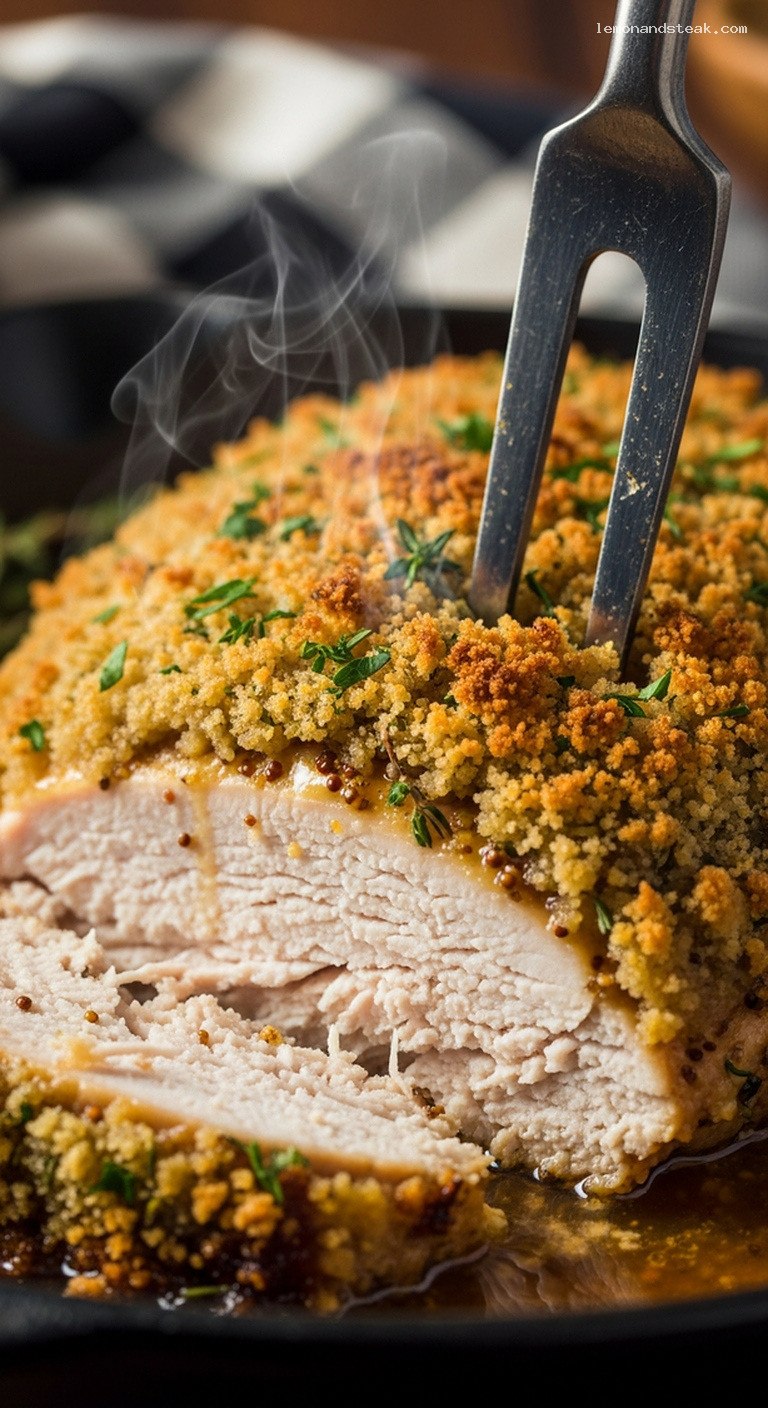
Once the turkey is done, carefully transfer it to a cutting board or serving platter. Let it rest, loosely tented with foil, for 20–30 minutes before carving. This rest allows the juices to redistribute, giving you tender, moist slices under that savory Dijon-herb crust.
Step 7: Make the Optional Dijon-Herb Pan Gravy
While the turkey rests, place the roasting pan over medium heat on the stovetop (use two burners if needed). Skim off excess fat from the pan juices, reserving about 3 tbsp of fat in the pan. If you do not have enough fat, add a little butter to make up the difference.
Sprinkle the flour over the fat and whisk constantly, scraping up the browned bits from the bottom of the pan. Cook for 2–3 minutes, until the roux turns lightly golden and smells toasty. Slowly whisk in 2 cups of warm broth, along with any defatted juices that have collected under the resting turkey.
Bring the gravy to a gentle simmer and cook, whisking often, until thickened to your liking, 5–10 minutes. If it is too thick, whisk in a bit more broth. Stir in the Dijon mustard and season to taste with salt and black pepper. Strain through a fine-mesh sieve into a warm gravy boat if you prefer a smooth texture.
Pro Tips
- Dry equals crisp: Pat the turkey very dry before seasoning and again if it sits for a while. Dryer skin allows the mustard to cling better and the breadcrumb crust to stay crackly instead of soggy.
- Use a thermometer, not the clock: Oven temperatures vary. An instant-read thermometer in the thigh and breast is the best way to avoid overcooking.
- Shield the crust if needed: If the herb-breadcrumb crust darkens before the turkey is done, tent loosely with foil. This protects the crust while the meat finishes cooking.
- Fresh breadcrumbs make a big difference: Pulse slightly stale crusty bread in a food processor for soft, fluffy crumbs that brown beautifully and stay tender.
- Prep ahead for a calmer day: You can chop the herbs, make the breadcrumb mixture, and even mix the Dijon coat a day in advance. Store each covered in the refrigerator and bring to room temperature before using.
Variations
- Citrus-Dijon Herb Crust: Add an extra teaspoon of lemon zest and 1 teaspoon of orange zest to the Dijon mixture, and tuck a few lemon slices into the cavity for a brighter, more aromatic turkey.
- Garlic & Herb Turkey Breast Only: Use a 5–7 lb bone-in turkey breast instead of a whole turkey. Roast at 375°F (190°C) for 1 1/2–2 hours total, adding the Dijon and herb crust after the first 20 minutes.
- Smoky Herb Crust: Add 1 teaspoon smoked paprika and 1/2 teaspoon onion powder to the breadcrumb mixture for a deeper, slightly smoky flavor that pairs beautifully with the Dijon.
Storage & Make-Ahead
Leftover turkey keeps well and stays moist thanks to the Dijon-herb coating. Cool leftovers to room temperature, then store sliced turkey in airtight containers in the refrigerator for up to 4 days. For longer storage, freeze tightly wrapped portions for up to 2 months; thaw overnight in the refrigerator before reheating.
Reheat gently, covered, in a 300°F (150°C) oven with a splash of broth in the dish to keep the meat from drying out. The breadcrumb crust will soften slightly on reheating but can be refreshed briefly under the broiler if desired—watch closely to avoid burning.
For make-ahead prep, you can season the turkey with salt and pepper up to 24 hours in advance and refrigerate it uncovered or loosely tented; this acts like a simple dry brine and improves both flavor and texture. The Dijon mixture and herb-breadcrumb topping can also be prepared up to 1 day ahead and refrigerated separately.
Nutrition (per serving)
Approximate values per serving (based on 12 servings, including some skin and a modest amount of crust, without gravy): about 420 calories; 53 g protein; 18 g fat; 4 g saturated fat; 4 g carbohydrates; 0.5 g fiber; 1 g sugar; 780 mg sodium. Actual values will vary based on the size of the turkey, how much skin and crust are eaten, and the exact ingredients used.
Leave a Reply