
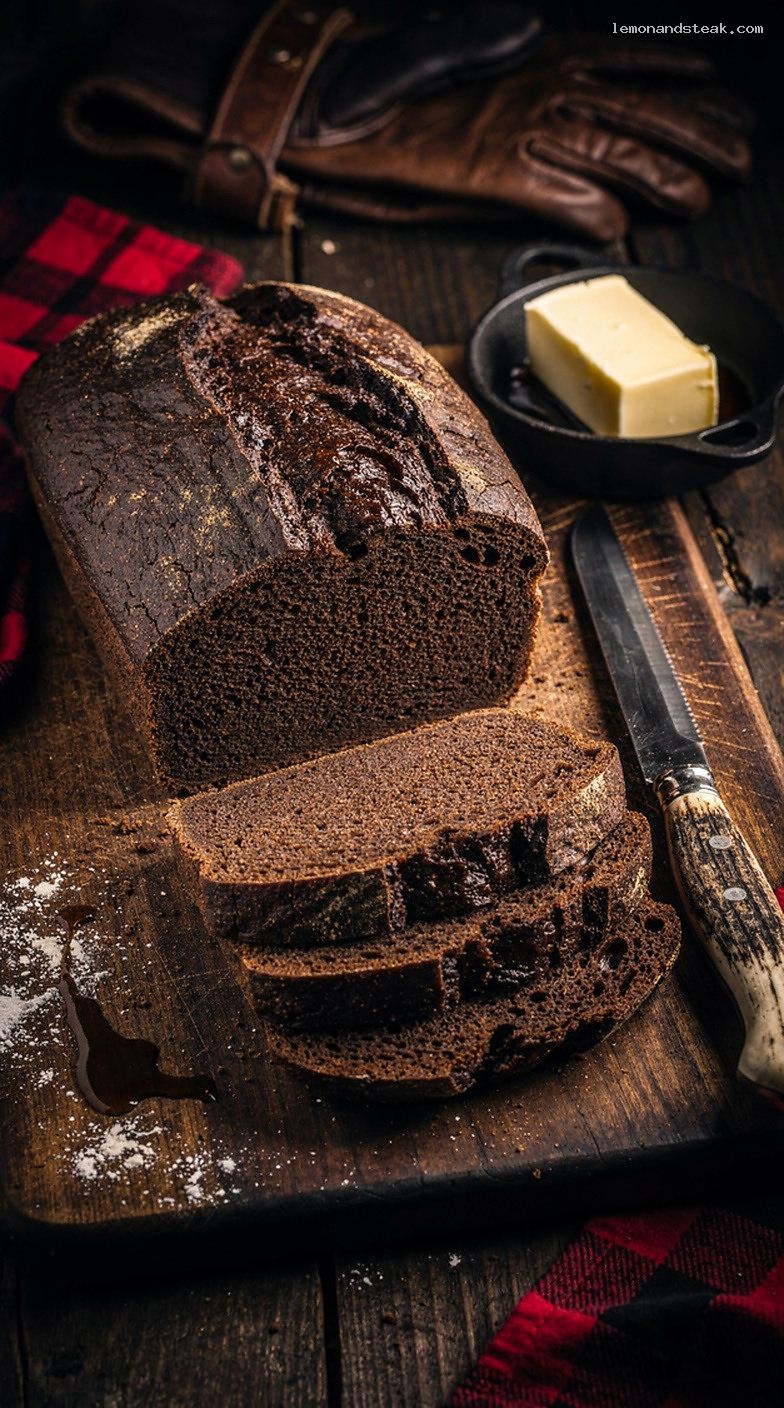
Quick Recipe Version (TL;DR)
Quick Ingredients
- 1 cup (240 g) warm brewed coffee, about 105–110°F (40–43°C)
- 1/3 cup (80 g) warm water, about 105–110°F (40–43°C)
- 2 1/4 tsp (7 g) active dry yeast
- 3 Tbsp (60 g) unsulphured molasses
- 2 Tbsp (28 g) unsalted butter, melted and cooled slightly
- 1 1/2 cups (180 g) medium rye flour
- 2 1/2 cups (300 g) bread flour (plus 1–3 Tbsp more as needed)
- 2 Tbsp (10 g) unsweetened cocoa powder
- 1 1/2 tsp (9 g) fine sea salt
- 1 Tbsp (10 g) caraway seeds (optional)
Do This
- 1) Mix coffee, water, yeast, molasses, and melted butter; rest 5 minutes.
- 2) Stir in rye flour, cocoa, salt (and caraway), then add bread flour to form a sticky dough.
- 3) Knead 8–10 minutes (or mix 6–8 minutes) until smooth and slightly tacky.
- 4) Rise covered until doubled, 60–90 minutes at warm room temp.
- 5) Shape into a log, place in a greased 9×5-inch pan, and proof 45–60 minutes.
- 6) Bake at 375°F (190°C) for 45–50 minutes, until 200–205°F (93–96°C) inside.
- 7) Cool completely (at least 1 hour) before slicing for the best dense, even crumb.
Why You’ll Love This Recipe
- Deep, dark flavor with gentle cocoa-and-coffee notes (not dessert-sweet).
- Molasses adds richness and a classic pumpernickel aroma.
- Dense-but-tender crumb that makes unbeatable sandwiches and toast.
- Home-baker friendly: one bowl, one loaf pan, and no specialty equipment required.
Grocery List
- Produce: None (optional: 1–2 tsp orange zest for a subtle twist)
- Dairy: Unsalted butter
- Pantry: Medium rye flour, bread flour, active dry yeast, unsulphured molasses, unsweetened cocoa powder, fine sea salt, brewed coffee (or instant coffee/espresso), caraway seeds (optional)
Full Ingredients
For the Dough
- Warm brewed coffee: 1 cup (240 g), about 105–110°F (40–43°C)
- Warm water: 1/3 cup (80 g), about 105–110°F (40–43°C)
- Active dry yeast: 2 1/4 tsp (7 g)
- Unsulphured molasses: 3 Tbsp (60 g)
- Unsalted butter: 2 Tbsp (28 g), melted and cooled slightly
- Medium rye flour: 1 1/2 cups (180 g)
- Bread flour: 2 1/2 cups (300 g), plus 1–3 Tbsp (8–24 g) more as needed for kneading
- Unsweetened cocoa powder: 2 Tbsp (10 g)
- Fine sea salt: 1 1/2 tsp (9 g)
- Caraway seeds (optional, classic deli flavor): 1 Tbsp (10 g)
For the Pan
- Softened butter or neutral oil: 1 tsp (for greasing the pan)
Optional Finish
- Egg wash: 1 egg (50 g) beaten with 1 Tbsp (15 g) water (for a shinier top)
- Extra caraway seeds: 1 tsp (sprinkle on top if using egg wash)
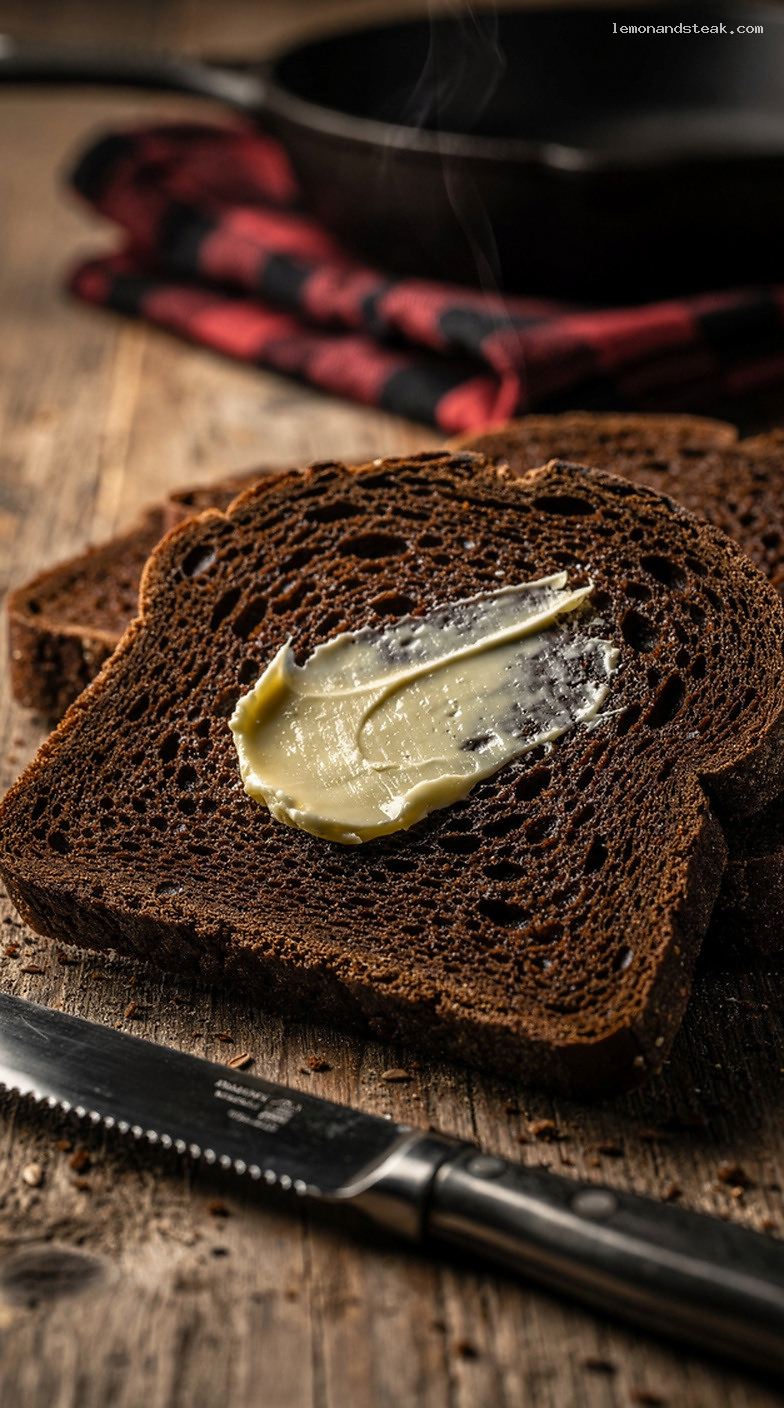
Step-by-Step Instructions
Step 1: Prep your pan and liquids
Grease a 9×5-inch (23×13 cm) loaf pan with 1 tsp softened butter or a light coating of oil. Set aside.
Brew coffee and let it cool (or warm it) to about 105–110°F (40–43°C). Combine the warm coffee and warm water in a large mixing bowl (or the bowl of a stand mixer).
Step 2: Activate the yeast and build the base flavor
Whisk the active dry yeast into the warm coffee-water mixture. Let it sit for 5 minutes until it looks slightly foamy on top (a few bubbles is enough).
Whisk in the molasses and melted butter until the molasses is fully dissolved and the liquid looks evenly tinted.
Step 3: Mix the dry ingredients, then form the dough
Add the rye flour, cocoa powder, salt, and optional caraway seeds to the bowl. Stir with a sturdy spoon (or use the stand mixer paddle) until you have a thick, dark batter-like mixture.
Add the bread flour and mix until a shaggy dough forms. The dough should be soft and a bit sticky at this stage, but it should hold together.
Step 4: Knead until smooth and elastic
Turn the dough out onto a lightly floured surface and knead for 8–10 minutes, adding 1 Tbsp (8 g) bread flour at a time only if the dough is too wet to handle. Aim for a dough that feels smooth and elastic, and is slightly tacky but not gluey.
If using a stand mixer: switch to the dough hook and knead on medium-low (speed 2) for 6–8 minutes. The dough should pull away from the sides but still cling a little to the bottom.
Step 5: First rise (bulk fermentation)
Shape the dough into a ball. Place it into a lightly greased bowl, turning once to coat. Cover tightly with a lid or plastic wrap.
Let rise at warm room temperature (about 75–78°F / 24–26°C) until doubled in size, 60–90 minutes. Rye doughs can look a little less “puffy” than white doughs, so use volume increase (roughly doubled) as your guide.
Step 6: Shape, pan, and proof the loaf
Gently deflate the dough and turn it onto a lightly floured surface. Pat it into a rectangle about as wide as your loaf pan (roughly 8×10 inches / 20×25 cm).
Roll it up tightly from the short end into a log, pinching the seam closed. Place seam-side down in the prepared loaf pan.
Cover loosely and let proof until the dough crowns about 1 inch (2.5 cm) above the rim of the pan, 45–60 minutes.
Step 7: Bake until deeply set and fragrant
About 20 minutes before baking, preheat the oven to 375°F (190°C) with a rack in the center.
If using the optional egg wash, gently brush it over the top of the proofed loaf and sprinkle with a pinch of caraway seeds.
Bake for 45–50 minutes. If the top is browning too quickly, tent loosely with foil after 30 minutes.
The loaf is done when it reaches an internal temperature of 200–205°F (93–96°C) and sounds hollow when tapped. For the best structure, don’t underbake—this style of bread benefits from a fully set crumb.
Step 8: Cool completely for the best dense crumb
Remove the loaf from the pan immediately and cool on a wire rack for at least 1 hour before slicing (90 minutes is even better). Slicing too early can compress the crumb and make it feel gummy.
Slice into 1/2-inch (1.25 cm) slices for sandwiches, or thinner for toast and smoked fish.
Pro Tips
- Measure flour by weight if you can. Rye and cocoa compact easily; a kitchen scale helps you get the intended dough texture.
- Don’t chase a perfectly “dry” dough. Pumpernickel-style dough should be slightly tacky; too much extra flour can make the loaf dry and heavy.
- Use warm (not hot) liquids. Keep liquids around 105–110°F (40–43°C) to support yeast without harming it.
- Cool before slicing. This bread continues setting as it cools; waiting makes slices cleaner and the crumb more pleasantly dense.
- For maximum flavor, proof a little longer. A slow, steady rise (within the listed time range) builds depth in rye doughs.
Variations
- Deli-style pumpernickel: Add 1 tsp onion powder and 1/2 tsp ground coriander with the dry ingredients, and definitely include the caraway seeds.
- Extra coffee-forward loaf: Replace the water with more coffee (use 1 1/3 cups / 320 g coffee total) and add 1 tsp instant espresso powder along with the cocoa.
- Seeded top: Brush with egg wash and top with a mix of 1 tsp caraway + 1 tsp sesame seeds for crunch and aroma.
Storage & Make-Ahead
Room temperature: Once completely cool, store the loaf in a paper bag for 1 day for a crisper crust, or in a sealed bag/container for a softer crust. Best within 3 days.
Freeze: Slice the fully cooled loaf, then freeze slices in a zip-top bag for up to 3 months. Toast slices straight from frozen.
Make-ahead option: After shaping and placing in the loaf pan, cover tightly and refrigerate for 8–12 hours. Bake the next day: let the pan sit at room temperature for 45–75 minutes (until the dough crowns about 1 inch / 2.5 cm above the rim), then bake as directed.
Nutrition (per serving)
Approximate per slice (1/12 loaf): 185 calories; 4 g protein; 3 g fat; 37 g carbohydrates; 3 g fiber; 7 g sugar; 320 mg sodium.
Leave a Reply