
Quick Recipe Version (TL;DR)
Quick Ingredients
- 14–16 oz extra-firm tofu, pressed
- 1/2 tsp kosher salt + 1/4 tsp black pepper
- 1/2 cup unsalted roasted peanuts, very finely chopped
- 1 cup panko breadcrumbs
- 1/2 cup all-purpose flour
- 1/4 cup cornstarch, divided
- 3/4 cup unsweetened non-dairy milk or 2 large eggs
- 1/2 tsp each garlic powder and onion powder
- Neutral oil for shallow frying (about 1 to 1 1/2 cups)
- 1/3 cup smooth peanut butter
- 3 tbsp ketchup, 2 tbsp soy sauce, 2 tbsp rice vinegar
- 1 tbsp brown sugar, 1 tsp grated ginger, 1 grated garlic clove
- 1 tsp toasted sesame oil; pinch of chili sauce (optional)
- 3 cups finely shredded green cabbage
- 2 cups hot cooked rice, sliced green onions, sesame seeds, lemon wedges
Do This
- 1. Press tofu 20–30 minutes, then slice into 4–6 cutlets; pat dry and season with salt and pepper.
- 2. Whisk peanut–katsu sauce ingredients in a small saucepan with a splash of water; warm gently until smooth and pourable.
- 3. Set up 3 bowls: seasoned flour; milk (or eggs) whisked with 2 tbsp cornstarch; panko mixed with finely chopped peanuts.
- 4. Dredge tofu: flour, then wet mixture, then firmly press into peanut–panko crumbs; rest on a plate.
- 5. Heat 1/4–1/2 inch oil in a skillet to about 350°F (175°C). Fry tofu 2–3 minutes per side until deep golden and crisp; drain on a rack.
- 6. Toss shredded cabbage lightly with a pinch of salt and a drizzle of rice vinegar.
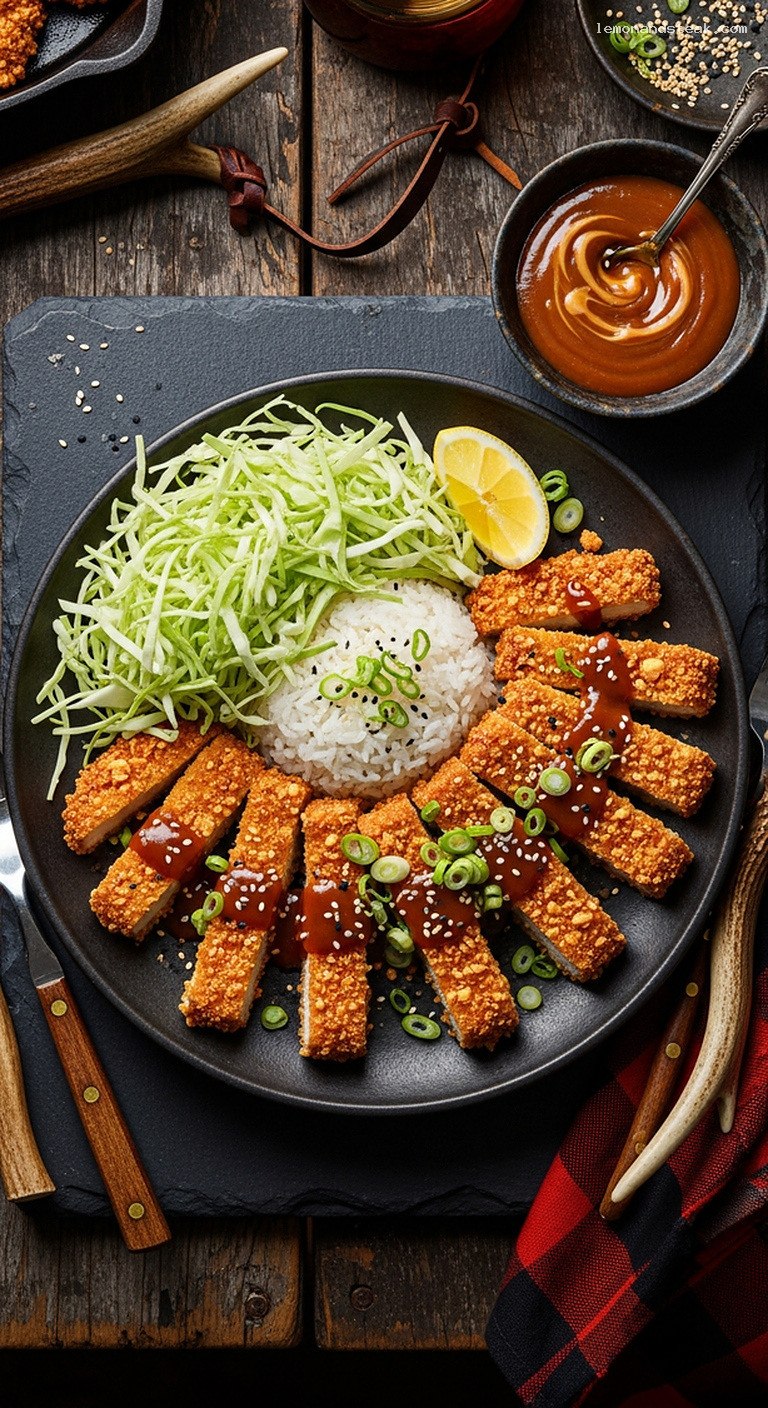
- 7. Slice tofu katsu into strips, serve over rice with cabbage, drizzle or dip in peanut–katsu sauce, and garnish with green onions, sesame seeds, and lemon wedges.
Why You’ll Love This Recipe
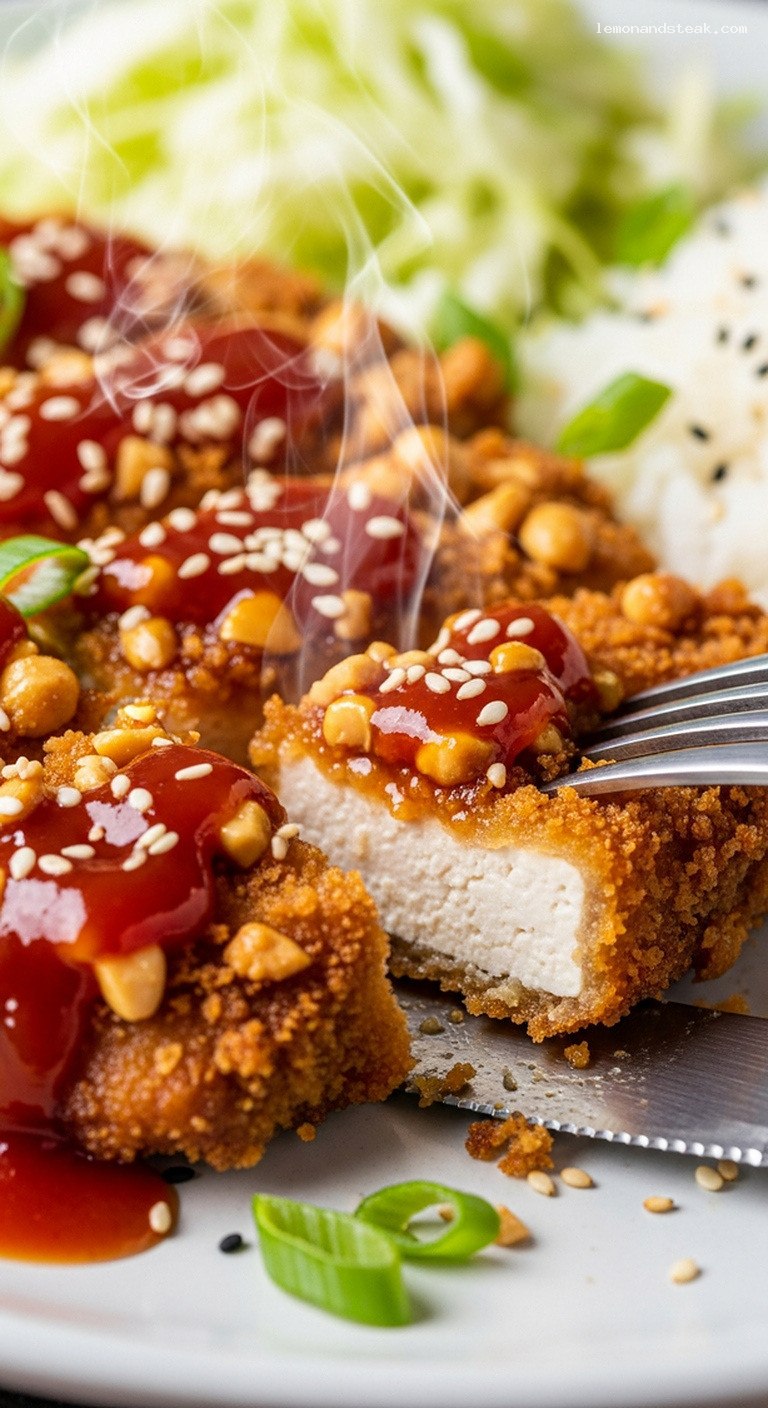
- Crispy, peanut-studded crust that stays crunchy and golden, just like classic katsu but completely plant-based if you choose.
- A tangy, savory peanut–katsu dipping sauce that tastes like a mash-up of Japanese katsu sauce and peanut satay.
- Approachable, weeknight-friendly method with simple ingredients you can find at any grocery store.
- Flexible: easily made vegan and gluten-free, plus great with rice, noodles, or a big cabbage salad.
Grocery List
- Produce: 1 small head green cabbage, 2–3 green onions, 1 lemon, 1 small piece fresh ginger, 1 head garlic.
- Dairy: None required; optional: 2 large eggs (if not using non-dairy milk).
- Pantry: Extra-firm tofu (14–16 oz), unsalted roasted peanuts, panko breadcrumbs, all-purpose flour, cornstarch, smooth peanut butter, soy sauce, rice vinegar, ketchup, brown sugar, toasted sesame oil, chili-garlic sauce or sriracha (optional), neutral oil for frying (canola, peanut, vegetable), kosher salt, black pepper, rice (for serving), sesame seeds.
Full Ingredients
Peanut-Crusted Tofu Katsu
- 14–16 oz extra-firm tofu, drained and pressed 20–30 minutes
- 1/2 tsp kosher salt, plus extra for finishing
- 1/4 tsp freshly ground black pepper
- 1/2 cup unsalted roasted peanuts, very finely chopped
- 1 cup panko breadcrumbs
- 1/2 cup all-purpose flour
- 1/4 cup cornstarch, divided (2 tbsp for the batter, 2 tbsp for dredging)
- 3/4 cup unsweetened non-dairy milk or 2 large eggs
- 1/2 tsp garlic powder
- 1/2 tsp onion powder
- Neutral oil for shallow frying (about 1 to 1 1/2 cups, enough for 1/4–1/2 inch depth in your pan)
Tangy Peanut–Katsu Dipping Sauce
- 1/3 cup smooth peanut butter
- 3 tbsp ketchup
- 2 tbsp soy sauce (use low-sodium if preferred)
- 2 tbsp unseasoned rice vinegar
- 1 tbsp packed light brown sugar (or maple syrup)
- 1 tsp Worcestershire sauce (use vegan Worcestershire if needed)
- 1 tsp freshly grated ginger
- 1 small garlic clove, finely grated or minced
- 1 tsp toasted sesame oil
- 1/2 cup water, plus 1–3 tbsp more as needed to thin
- 1–2 tsp chili-garlic sauce or sriracha (optional, for heat)
For Serving (Optional but Highly Recommended)
- 3 cups finely shredded green cabbage
- 2 cups hot cooked white rice (short-grain or medium-grain is nicest with katsu)
- 2 green onions, thinly sliced
- 1–2 tsp toasted sesame seeds
- 1 lemon, cut into wedges
Step-by-Step Instructions
Step 1: Press and Prep the Tofu
Remove the tofu from its package, drain, and gently pat dry. Wrap the block of tofu in a clean kitchen towel or several layers of paper towel. Place it on a plate or cutting board, then set a flat, heavy object on top (a cast iron skillet or a few cookbooks work well). Let it press for 20–30 minutes to remove excess moisture. This step is key for a firm, meaty texture and a crisp crust.
After pressing, unwrap the tofu and slice it into 4–6 rectangles, about 1/2 inch (1.25 cm) thick. Season both sides lightly with the 1/2 tsp kosher salt and 1/4 tsp black pepper. Set aside while you prepare the sauce and coating.
Step 2: Make the Tangy Peanut–Katsu Sauce
In a small saucepan, combine the peanut butter, ketchup, soy sauce, rice vinegar, brown sugar, Worcestershire sauce, grated ginger, grated garlic, toasted sesame oil, and 1/2 cup water. If using chili-garlic sauce or sriracha, add it now.
Place the pan over low to medium-low heat and whisk until the mixture is smooth, glossy, and gently warmed through, 3–5 minutes. If the sauce seems too thick for dipping, whisk in additional water 1 tablespoon at a time until it is pourable but still coats the back of a spoon. Taste and adjust: add more vinegar for tang, sugar for sweetness, or chili sauce for heat. Turn off the heat, cover, and keep warm on the lowest setting, or reheat briefly just before serving.
Step 3: Set Up the Peanut Katsu Coating
Very finely chop the roasted peanuts until they are the texture of coarse sand with a few small pieces for crunch. You can do this with a knife or by pulsing them briefly in a food processor (do not over-process into a paste). In a shallow bowl, combine the chopped peanuts with the panko breadcrumbs and stir well.
In a second shallow bowl, whisk together the all-purpose flour, remaining 2 tbsp cornstarch, garlic powder, and onion powder.
In a third bowl, whisk the non-dairy milk with the remaining 2 tbsp cornstarch until smooth (or beat the eggs until well combined if using eggs). This will be your wet batter that helps the peanut–panko coating stick firmly to the tofu.
Step 4: Bread the Tofu Cutlets
Working with one piece of tofu at a time, dredge it in the seasoned flour mixture, turning to coat all sides and shaking off any excess. Dip it into the milk–cornstarch mixture (or beaten egg), turning so it is fully coated and letting any extra drip off.
Immediately press the tofu into the peanut–panko mixture, patting firmly on all sides to create a thick, even crust. Place the coated cutlet on a plate or wire rack. Repeat with the remaining tofu pieces. For the crispiest crust, let the breaded tofu rest for 5–10 minutes while you heat the oil; this helps the coating adhere better during frying.
Step 5: Fry the Tofu Katsu Until Ultra-Crisp
Pour enough neutral oil into a large, heavy skillet to reach a depth of 1/4–1/2 inch (0.5–1.25 cm). Heat over medium to medium-high heat until the oil reaches about 350°F (175°C). If you do not have a thermometer, you can test by dropping in a few panko crumbs; they should sizzle immediately and turn golden in about 30 seconds.
Carefully lay 2–3 tofu cutlets into the hot oil, being careful not to overcrowd the pan. Fry for 2–3 minutes per side, or until the crust is a deep golden brown and very crisp. Turn gently with tongs or a spatula to avoid disturbing the coating.
Transfer cooked cutlets to a wire rack set over a baking sheet or to a plate lined with paper towels. Immediately sprinkle lightly with a pinch of salt. Repeat with remaining tofu, adjusting the heat as needed to maintain a steady sizzle without smoking. If you like, keep finished cutlets warm in a 200°F (95°C) oven while you fry the rest.
Step 6: Prep the Crunchy Cabbage and Garnishes
While the tofu fries (or just before), finely shred the green cabbage with a sharp knife or mandoline. You want very thin, feathery shreds for a classic katsu-style side. Toss the cabbage in a bowl with a pinch of salt and, if you like, a light drizzle of rice vinegar for extra brightness.
Slice the green onions thinly on a diagonal. Cut the lemon into wedges and set out the toasted sesame seeds. Make sure your rice is hot and ready for serving.
Step 7: Plate and Serve the Peanut-Crusted Tofu Katsu
To serve, place a mound of hot rice on each plate and add a generous handful of shredded cabbage alongside. Slice each tofu cutlet crosswise into thick, even strips, keeping the slices together so they look like a classic katsu “fan.” Arrange the slices over or next to the rice.
Either drizzle some of the warm peanut–katsu sauce over the tofu or serve it in small bowls on the side for dipping. Sprinkle with sliced green onions and toasted sesame seeds, and add a lemon wedge to each plate for squeezing over the crispy tofu. Serve immediately while the crust is still audibly crunchy.
Pro Tips
- Press the tofu well. Removing excess moisture is the single biggest factor in getting a firm, satisfying texture and preventing the coating from slipping off.
- Chop the peanuts finely, but not to dust. Very small pieces cling nicely to the tofu, while a few slightly larger bits give you that extra-crunchy, nutty bite.
- Keep the oil hot but not smoking. Around 350°F (175°C) is ideal; too cool and the crust absorbs oil, too hot and it burns before the inside heats through.
- Do not overcrowd the pan. Fry in batches so the oil temperature stays stable and every cutlet develops an even, golden crust.
- Adjust the sauce to your taste. A touch more vinegar brightens, extra sugar softens the tang, and chili sauce adds a pleasant kick.
Variations
- Baked or Air-Fried Version: For a lighter take, spray the breaded tofu all over with oil and bake at 425°F (220°C) for 18–22 minutes, flipping halfway, or air-fry at 390°F (200°C) for 10–14 minutes until golden and crisp.
- Gluten-Free Katsu: Use gluten-free panko breadcrumbs, a 1:1 gluten-free flour blend in place of all-purpose flour, and tamari instead of soy sauce. Check that your Worcestershire and ketchup are also gluten-free.
- Extra-Spicy Peanut Katsu: Double the chili-garlic sauce in the dipping sauce and sprinkle finished tofu with a pinch of red pepper flakes or shichimi togarashi.
Storage & Make-Ahead
The peanut–katsu sauce keeps very well: store it in an airtight container in the refrigerator for up to 5 days. Reheat gently on the stovetop or in the microwave, thinning with a splash of water if needed.
Breaded, uncooked tofu cutlets can be assembled a few hours ahead and refrigerated in a single layer on a plate, loosely covered, then fried just before serving. For longer storage, freeze them in a single layer until firm, then transfer to a freezer bag; fry from frozen, adding a minute or two to the cook time.
Leftover cooked tofu katsu is best within 2 days. Store in an airtight container in the fridge and re-crisp in a 400°F (205°C) oven or air fryer for 8–10 minutes. The crust will not be quite as shatteringly crisp as fresh, but it will still be very satisfying. Cabbage is best shredded fresh, but leftover rice reheats nicely in the microwave with a sprinkle of water.
Nutrition (per serving)
Approximate values for 1 serving (1/4 of the tofu and sauce, plus cabbage, but not including rice): about 560 calories, 27 g protein, 36 g fat, 33 g carbohydrates, 5 g fiber, and 720 mg sodium. Actual values will vary based on exact ingredients, oil absorption during frying, and portion sizes.
Leave a Reply