
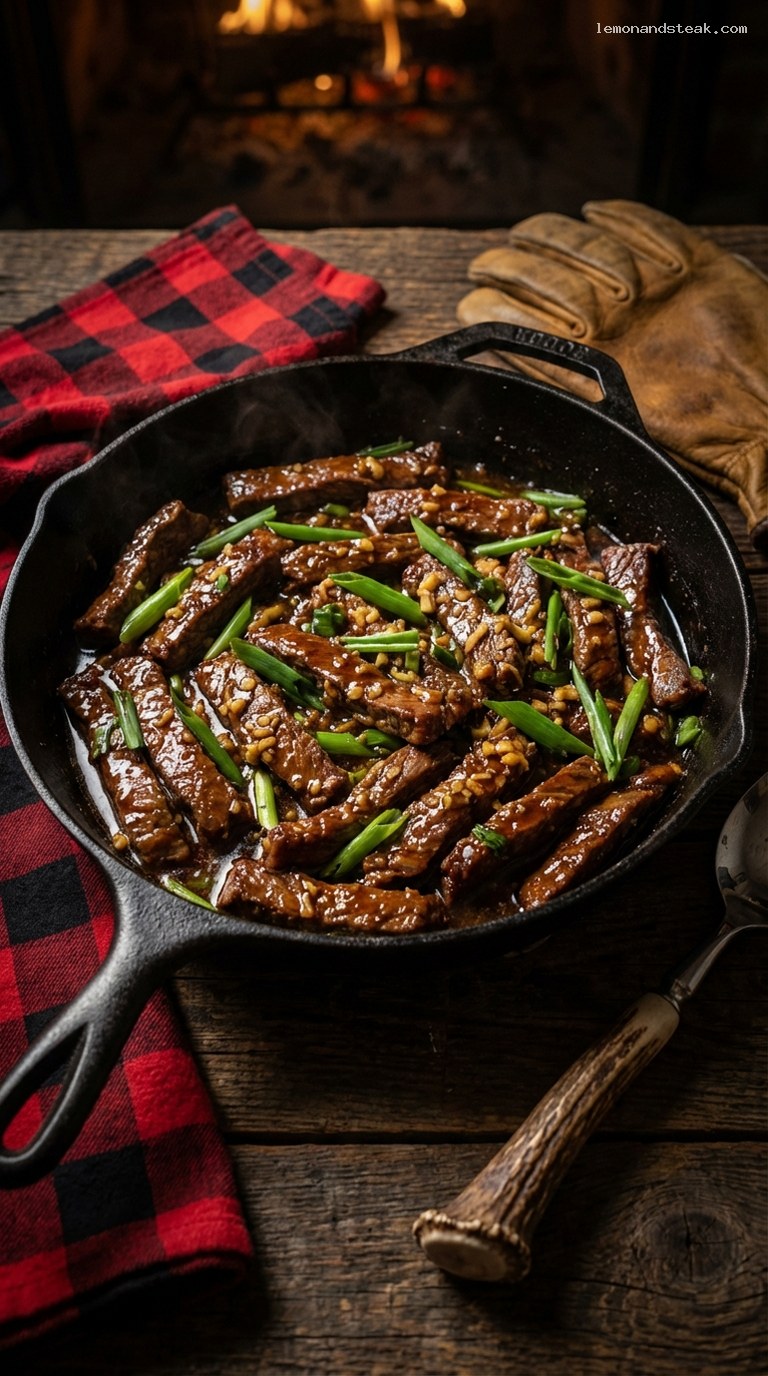
Quick Recipe Version (TL;DR)
Quick Ingredients
- 1 lb (450 g) flank steak, sliced thin against the grain
- 1 tbsp low-sodium soy sauce + 1 tbsp water (for marinating beef)
- 1 tsp vegetable oil + 1/3 cup cornstarch (for coating beef)
- 1 1/2 cups neutral oil (for flash-frying)
- 1/2 cup low-sodium soy sauce
- 1/3 cup packed brown sugar
- 2 tbsp hoisin sauce
- 1/2 cup water or low-sodium beef broth
- 1 tbsp rice vinegar (optional but recommended)
- 1 tsp cornstarch + 1 tbsp water (slurry)
- 4 cloves garlic, minced
- 1 1/2 tbsp fresh ginger, minced or in thin matchsticks
- 6 scallions, cut into 1 1/2-inch pieces
- 1 tsp toasted sesame oil
- Steamed white rice, for serving
Do This
- 1. Slice flank steak thinly against the grain. Toss with 1 tbsp soy sauce, 1 tbsp water, and 1 tsp oil; marinate 10–15 minutes.
- 2. Whisk sauce: 1/2 cup soy sauce, 1/3 cup brown sugar, 2 tbsp hoisin, 1/2 cup water/broth, 1 tbsp rice vinegar, and cornstarch slurry (1 tsp cornstarch + 1 tbsp water).
- 3. Pat beef dry, then coat evenly with 1/3 cup cornstarch, shaking off excess.
- 4. Heat 1 1/2 cups oil in a wok or deep skillet to about 350°F (175°C). Flash-fry beef in batches for 1–2 minutes until crisp and just cooked. Drain on a rack or paper towels.
- 5. Discard oil, leaving about 2 tsp. Stir-fry garlic and ginger 30 seconds, then add sauce and simmer 1–2 minutes until glossy and slightly thickened.
- 6. Add fried beef and scallions; toss 1–2 minutes until coated and hot. Finish with sesame oil.
- 7. Serve immediately over hot steamed rice.
Why You’ll Love This Recipe
- Better-than-takeout flavor: ultra-tender beef in a shiny, sweet-savory sauce with real ginger and garlic.
- Quick enough for a weeknight but impressive enough for guests.
- Made in one wok or skillet with simple pantry ingredients.
- Easy to customize for more spice, more veggies, or a lighter sauce.
Grocery List
- Produce: Fresh ginger, garlic, scallions (green onions), optional: broccoli or snap peas (for a veggie variation).
- Dairy: None.
- Pantry: Flank steak, low-sodium soy sauce, hoisin sauce, brown sugar, cornstarch, neutral oil (canola/vegetable/peanut), toasted sesame oil, rice vinegar, crushed red pepper flakes or chili-garlic sauce (optional), white rice, optional sesame seeds.
Full Ingredients
For the Beef
- 1 lb (450 g) flank steak, trimmed
- 1 tbsp low-sodium soy sauce
- 1 tbsp water
- 1 tsp neutral oil (canola, vegetable, or peanut)
- 1 tsp cornstarch (for the marinade)
- 1/3 cup (about 40 g) cornstarch (for coating the beef)
- 1/4 tsp freshly ground black or white pepper
- Pinch of kosher salt (optional, to season after frying if needed)
For the Mongolian Sauce
- 1/2 cup low-sodium soy sauce
- 1/3 cup packed light or dark brown sugar
- 2 tbsp hoisin sauce
- 1/2 cup water or low-sodium beef broth
- 1 tbsp unseasoned rice vinegar (optional but recommended for balance)
- 1/2 tsp crushed red pepper flakes or 1 tsp chili-garlic sauce (optional, for heat)
- 1 tsp cornstarch
- 1 tbsp water (to make a slurry with the cornstarch)
For Stir-Frying and Finishing
- 1 1/2 cups neutral oil (canola, vegetable, or peanut), for flash-frying the beef
- 2 tsp neutral oil (for stir-frying the aromatics and sauce)
- 4 cloves garlic, finely minced
- 1 1/2 tbsp fresh ginger, peeled and finely minced or cut into thin matchsticks
- 6 scallions (green onions), cut into 1 1/2-inch pieces (separate white/light green parts from dark green tops)
- 1 tsp toasted sesame oil
To Serve (Optional but Recommended)
- 4 cups cooked steamed white rice or jasmine rice
- 1–2 tsp toasted sesame seeds, for garnish
- Extra sliced scallion greens, for garnish
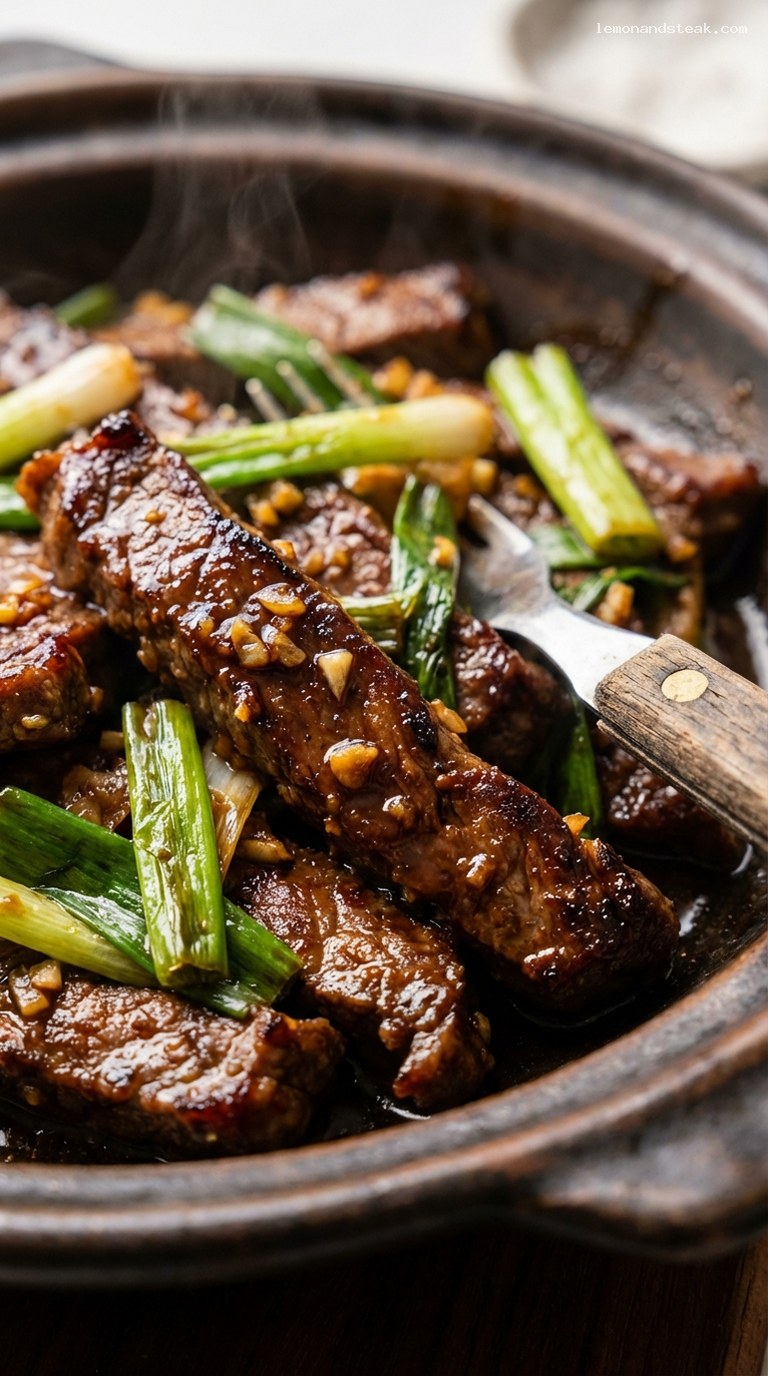
Step-by-Step Instructions
Step 1: Slice and marinate the beef
Place the flank steak on a cutting board. Slice it against the grain into thin strips about 1/4 inch (6 mm) thick and 2–3 inches long. Cutting against the grain shortens the muscle fibers and helps keep the beef tender even after flash-frying.
In a medium bowl, whisk together 1 tbsp soy sauce, 1 tbsp water, and 1 tsp neutral oil. Add the sliced beef and 1 tsp cornstarch. Toss well so every piece is lightly coated. Let the beef marinate at room temperature for 10–15 minutes while you prepare the sauce and aromatics. This quick “velveting” step seasons the beef and helps it stay juicy.
Step 2: Make the sweet-savory Mongolian sauce
In a separate bowl or large measuring cup, combine 1/2 cup soy sauce, 1/3 cup brown sugar, 2 tbsp hoisin sauce, and 1/2 cup water or beef broth. Add 1 tbsp rice vinegar if using, and the crushed red pepper flakes or chili-garlic sauce for a little heat (optional but delicious).
In a small bowl, stir together 1 tsp cornstarch and 1 tbsp water to form a smooth slurry with no lumps. Stir this slurry into the sauce mixture until fully combined. Set the sauce aside near the stove; you will add it quickly once the aromatics are fragrant.
Step 3: Prep aromatics and coat the beef in cornstarch
Finely mince the garlic and ginger. Cut the scallions into 1 1/2-inch pieces, separating the white/light green parts from the darker green tops. Keep each in its own small bowl so you can add them at the right times.
After the beef has marinated, sprinkle the 1/3 cup cornstarch over it. Toss gently with your hands or tongs until each piece is evenly coated but not clumpy. Shake off any excess cornstarch. This thin coating is what gives the beef its crisp exterior once flash-fried.
Step 4: Flash-fry the beef until crisp
In a wok or deep, heavy skillet, pour in 1 1/2 cups neutral oil. Heat over medium-high heat until the oil reaches about 350°F (175°C). If you do not have a thermometer, dip a piece of coated beef into the oil; it should sizzle immediately but not burn.
Working in 2–3 batches, carefully add a single layer of beef strips to the hot oil. Fry for 1–2 minutes, stirring gently to prevent sticking, just until the beef turns deep brown and crisp at the edges but is still tender inside. Do not overcrowd the pan or the oil temperature will drop and the beef will turn soggy.
Use a slotted spoon or spider strainer to remove the beef and transfer it to a wire rack set over a baking sheet or a plate lined with paper towels. Repeat with remaining beef. Lightly sprinkle with a pinch of salt and pepper while it is hot, if desired.
Step 5: Build the sauce with garlic, ginger, and scallions
Carefully pour off the frying oil from the wok, leaving about 2 tsp in the pan. (Let the oil cool before discarding or saving it.) Return the wok to medium heat.
Add the minced garlic, minced or julienned ginger, and the white/light green parts of the scallions. Stir-fry for about 30 seconds, just until very fragrant but not browned.
Give the prepared sauce a quick stir (the cornstarch can settle), then pour it into the wok. Bring it to a gentle simmer and cook for 1–2 minutes, stirring constantly, until it turns glossy and slightly thickened. It should coat the back of a spoon; if it becomes too thick, thin with 1–2 tbsp water.
Step 6: Toss everything together and serve
Once the sauce is glossy and bubbling, add the fried beef back to the wok along with the dark green scallion tops. Toss or stir-fry for 1–2 minutes so the beef is fully coated in the sauce and the scallions just begin to wilt but still stay bright green.
Turn off the heat and drizzle in 1 tsp toasted sesame oil. Give everything one last toss. Taste and adjust seasoning if needed (a splash of soy sauce for salt, a pinch of sugar for sweetness, or a dash more vinegar for brightness).
Serve the Mongolian Beef immediately over hot steamed white rice. Spoon extra sauce over the top and garnish with additional scallion greens and toasted sesame seeds, if you like. Enjoy while the beef edges are still crisp and the sauce is piping hot.
Pro Tips
- Slice against the grain: Look for the lines of muscle running through the flank steak and cut perpendicular to them. Thin slices against the grain are the key to tender, restaurant-style beef.
- Dry, hot oil = crispy beef: Make sure the beef is not wet before coating with cornstarch, and let the oil preheat properly. If the oil is too cool, the coating will soak up oil instead of crisping.
- Do not overcrowd the pan: Fry the beef in batches so the temperature stays high and the strips sear instead of steaming.
- Adjust the sauce thickness: If the sauce is too thick, add a splash of water; if it is too thin, simmer a bit longer or add a tiny extra cornstarch slurry.
- Serve immediately: The beef is crispiest right after tossing with the sauce. Have your rice cooked and ready before you start frying.
Variations
- Spicy Mongolian Beef: Increase the crushed red pepper flakes or chili-garlic sauce (up to 1–2 tsp). You can also add a little sriracha or fresh sliced red chilies when stir-frying the aromatics.
- Veggie-Packed Mongolian Beef: Before adding the sauce, stir-fry bite-size broccoli florets, snap peas, or thinly sliced bell peppers in a little oil until crisp-tender. Remove them, make the sauce, then add them back with the beef.
- Extra-Gingery Version: Double the fresh ginger and cut it into thin matchsticks. Let a few ginger matchsticks stay visible in the sauce for a punchier, aromatic bite.
Storage & Make-Ahead
This dish is best eaten fresh, but leftovers still taste great. Store cooled Mongolian Beef in an airtight container in the refrigerator for up to 3–4 days. Reheat gently in a skillet over medium heat with a splash of water to loosen the sauce, or microwave in short bursts, stirring in between. The beef will lose some crispness but remain flavorful.
For make-ahead prep, you can slice and marinate the beef (without the final cornstarch coating) up to 24 hours in advance and keep it chilled. You can also mix the sauce ingredients and mince the garlic and ginger ahead of time. When ready to cook, simply coat the beef in cornstarch, flash-fry, and finish the stir-fry. This makes it very fast to pull together on a busy night.
Nutrition (per serving)
Approximate values for 1 of 4 servings (beef and sauce only, without rice): about 430 calories, 28 g protein, 23 g fat, 24 g carbohydrates, 1 g fiber, 14 g sugars, 1,400 mg sodium. Serving over 1 cup cooked white rice adds approximately 200 additional calories and 45 g carbohydrates per serving.
Leave a Reply