
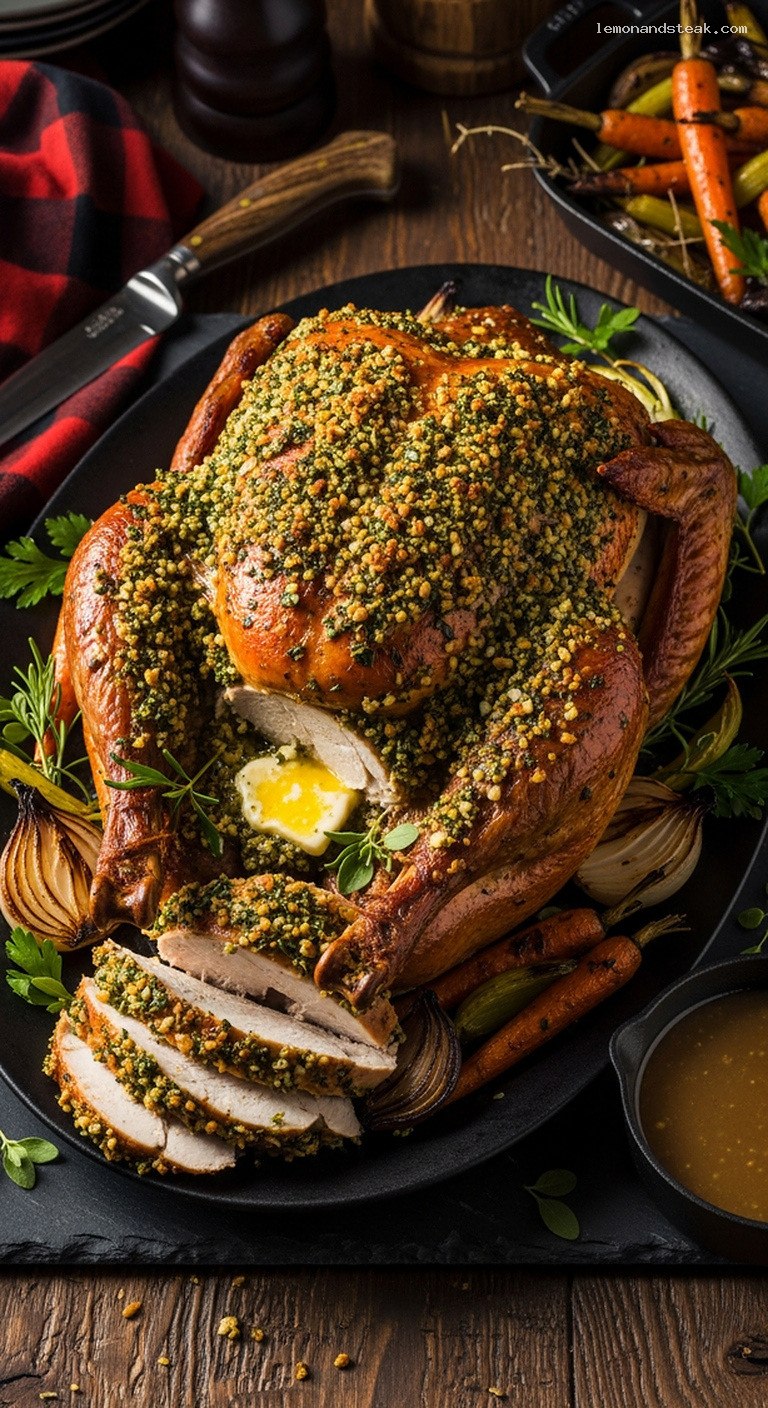
Quick Recipe Version (TL;DR)
Quick Ingredients
- 1 whole turkey (12–14 lb / 5.5–6.5 kg), thawed
- 2 ½ Tbsp kosher salt (for dry brine)
- 1 tsp black pepper
- 1 cup (225 g) unsalted butter, softened
- 1 cup finely chopped fresh flat-leaf parsley
- 3 Tbsp finely chopped fresh oregano (or 1 Tbsp dried)
- 8 cloves garlic, minced
- 1 Tbsp lemon zest + 2 Tbsp lemon juice
- 2 Tbsp olive oil
- 1 large onion, 2 carrots, 2 celery stalks (for roasting bed)
- 2 cups (480 ml) low-sodium chicken or turkey broth
- 3 Tbsp all-purpose flour (for optional gravy)
Do This
- 1. Dry-brine turkey with kosher salt (under skin and all over); refrigerate uncovered 12–24 hours if possible.
- 2. Mix softened butter with parsley, oregano, garlic, lemon zest/juice, pepper, and olive oil to form a thick herb butter.
- 3. Pat turkey dry; loosen skin; spread half the herb butter under skin and half over skin and in cavity.
- 4. Place turkey on onions, carrots, and celery in a roasting pan; pour broth into pan.
- 5. Roast 20 minutes at 425°F (220°C), then 2½–3 hours at 325°F (165°C) until breast is 160°F (71°C) and thighs 175°F (79°C).
- 6. Rest turkey 20–30 minutes, loosely tented with foil.
- 7. Make a quick pan gravy by whisking flour into strained drippings; carve turkey and serve with the herb-crusted skin on top.
Why You’ll Love This Recipe
- A generous crust of parsley, oregano, garlic, and butter turns into a crunchy, aromatic shell over juicy turkey meat.
- Dry-brining and careful roasting give you moist breast meat and flavorful dark meat, without complicated techniques.
- The herb butter seasons the meat from the inside out, so every bite tastes special, not just the skin.
- Includes a simple pan gravy and flexible timing so you can serve a show-stopping centerpiece without stress.
Grocery List
- Produce: 1 whole turkey (fresh or thawed frozen), flat-leaf parsley, fresh oregano (or dried), garlic, 1 lemon, 1 large onion, 2 carrots, 2 celery stalks, optional fresh thyme and rosemary (for aroma).
- Dairy: Unsalted butter.
- Pantry: Kosher salt, black pepper, olive oil, low-sodium chicken or turkey broth, all-purpose flour, optional white wine.
Full Ingredients
Turkey & Dry Brine
- 1 whole turkey, 12–14 lb (5.5–6.5 kg), thawed and giblets removed
- 2 ½ Tbsp kosher salt (Diamond Crystal; use 1 Tbsp + 2 tsp if using Morton)
- 1 tsp freshly ground black pepper
Herb-Garlic Butter Crust
- 1 cup (225 g) unsalted butter, very soft but not melted
- 1 cup finely chopped fresh flat-leaf parsley (about 1 large bunch, leaves only)
- 3 Tbsp finely chopped fresh oregano leaves
- or 1 Tbsp dried oregano, crushed between your fingers
- 8 large cloves garlic, finely minced or pressed
- 1 Tbsp finely grated lemon zest (from about 1 lemon)
- 2 Tbsp fresh lemon juice
- 2 Tbsp extra-virgin olive oil
- ½ tsp kosher salt (to season the butter)
- ½ tsp freshly ground black pepper
Roasting Pan Aromatics
- 1 large yellow or white onion, cut into thick wedges
- 2 medium carrots, cut into 2-inch (5 cm) chunks
- 2 celery stalks, cut into 2-inch (5 cm) chunks
- 2–3 garlic cloves, smashed (optional, for extra aroma)
- 2–3 sprigs fresh thyme or rosemary (optional)
- 2 cups (480 ml) low-sodium chicken or turkey broth
- ½ cup (120 ml) dry white wine (optional; replace with more broth if not using wine)
Simple Herb Pan Gravy (Optional but Recommended)
- 3 Tbsp fat from pan drippings (or unsalted butter)
- 3 Tbsp all-purpose flour
- 2–3 cups (480–720 ml) defatted pan drippings plus extra broth, as needed
- Salt and pepper, to taste
- 1 Tbsp finely chopped fresh parsley or oregano (optional, for color and freshness)
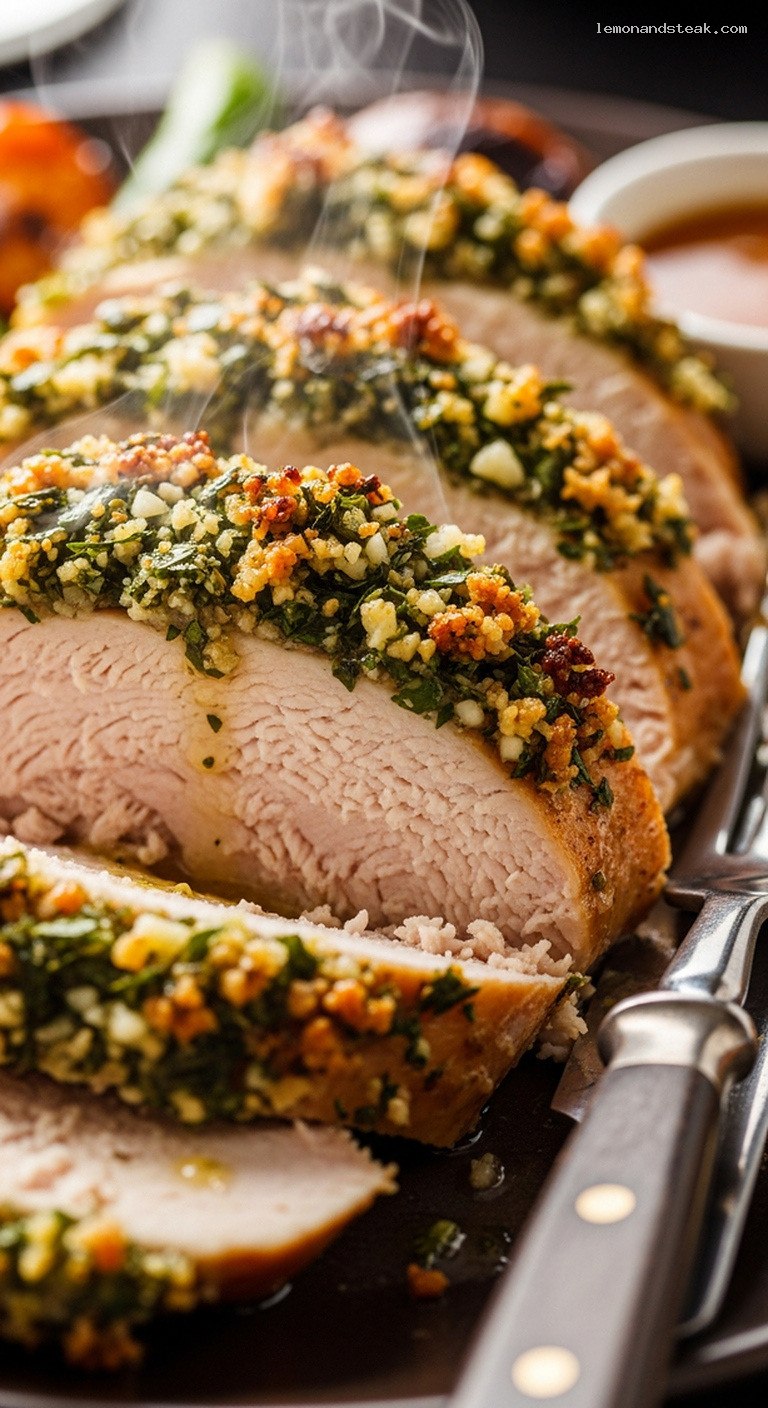
Step-by-Step Instructions
Step 1: Dry-brine the turkey for juicy, well-seasoned meat
If the turkey is frozen, thaw it completely in the refrigerator (allow about 24 hours per 4–5 lb / 1.8–2.3 kg). Remove the giblets and neck from the cavities and pat the turkey very dry with paper towels. Place it on a rack set over a rimmed baking sheet or in a roasting pan.
In a small bowl, mix the kosher salt and the 1 tsp black pepper. Gently loosen the skin over the breast and thighs by sliding your fingers between the skin and meat, being careful not to tear the skin. Rub some of the salt mixture directly onto the meat under the skin, then sprinkle the rest all over the outside and inside the cavity.
For best results, refrigerate the turkey uncovered for 12–24 hours. This dry brine seasons the meat and helps the skin crisp. If you are short on time, aim for at least 1 hour in the fridge after salting.
Step 2: Make the parsley-oregano garlic butter
About 30–60 minutes before roasting, take the turkey and butter out of the refrigerator so they can lose some of their chill. The butter should be very soft. In a medium bowl, combine the softened butter, chopped parsley, chopped oregano (or dried oregano), minced garlic, lemon zest, lemon juice, olive oil, ½ tsp salt, and ½ tsp black pepper.
Mash everything together with a fork or spatula until you have a thick, bright green, evenly mixed herb butter. It should be easily spreadable. If it seems too stiff, let it sit at room temperature for another 5–10 minutes. This mixture will create the crunchy, aromatic herb shell as it roasts.
Step 3: Coat the turkey under and over the skin
Preheat your oven to 425°F (220°C), with a rack in the lower third. If your turkey came with a plastic or metal trussing device, remove it so you can loosen the skin more easily.
Pat the turkey dry again if any moisture has collected. Using your fingers, gently loosen the skin over the breasts and as far down over the thighs and drumsticks as you can reach, without tearing. Take about half of the herb butter and slide it under the skin, pressing it directly onto the meat. Use your hands on top of the skin to push and spread it around into an even layer.
Rub the remaining herb butter all over the outside of the turkey, including the legs, wings, and the area where the thighs meet the body. Massage some inside the main cavity as well. The turkey should be generously coated, with lots of visible green herbs on the surface. Tuck the wing tips under the bird to prevent burning, and, if you like, tie the legs together with kitchen twine.
Step 4: Set up the roasting pan with a flavorful base
Scatter the onion wedges, carrot chunks, celery pieces, and optional garlic cloves and herb sprigs in the bottom of a large roasting pan. These will flavor the drippings and help support the turkey. Pour the broth and optional white wine into the pan around (not over) the vegetables.
Set a roasting rack over the vegetables and place the turkey breast-side up on the rack. If you do not have a rack, you can nestle the turkey directly onto the vegetable bed; just be aware the bottom will be more moist and less crisp. Make sure there is some space around the turkey for hot air to circulate, and adjust your oven racks if needed so the bird sits in the lower third of the oven with plenty of clearance on top.
Step 5: Roast hot to set the crust, then lower the heat to finish
Place the roasting pan in the preheated 425°F (220°C) oven and roast for 20 minutes. This initial blast of high heat starts browning and helps the herb-butter coating begin to form a crust.
After 20 minutes, reduce the oven temperature to 325°F (165°C) without opening the door if possible. Continue roasting, basting the turkey lightly with pan juices every 45 minutes, until an instant-read thermometer inserted into the thickest part of the breast reads 160°F (71°C), and the thigh registers about 175°F (79°C). For a 12–14 lb (5.5–6.5 kg) turkey, this usually takes an additional 2½ to 3 hours.
If at any point the herb crust is browning too quickly, loosely tent the breast area with foil, leaving gaps so steam can escape and the skin stays somewhat crisp. Avoid over-basting: you want the butter and herbs to stay mostly in place to form that crunchy, aromatic shell.
Step 6: Rest the turkey and make the herb pan gravy
When the turkey reaches temperature, remove the pan from the oven. Carefully lift the turkey onto a cutting board or platter, keeping as much of the herb crust intact as possible. Loosely tent with foil and let it rest for 20–30 minutes; this allows the juices to redistribute, so the meat stays moist when carved.
Meanwhile, set the roasting pan over medium heat on the stovetop (you may need to span two burners). Tilt the pan and spoon off most of the fat, reserving about 3 Tbsp. Strain the remaining liquid and vegetables through a sieve into a bowl or measuring cup, pressing on the solids to extract their juices. Return the strained liquid to the pan and supplement with additional broth as needed to reach 2–3 cups (480–720 ml).
In a small bowl, whisk together 3 Tbsp reserved fat (or butter) with 3 Tbsp flour to make a smooth paste. Whisk this into the simmering pan juices and cook, whisking often, until thickened, 5–8 minutes. Season to taste with salt and pepper, and stir in chopped parsley or oregano if using.
Step 7: Carve and serve with the crunchy herb shell on top
To carve, remove the legs and thighs by cutting through the joints, then separate the drumsticks from thighs. Slice the breast meat off the bone in large slabs, keeping as much of the herb-crusted skin attached as you can. Cut crosswise into thick slices so every piece has a good amount of that crunchy, garlicky herb shell.
Arrange the slices and pieces on a warm platter, fanning breast slices with the skin side facing up so the parsley-oregano crust is visible. Spoon a little hot gravy around (not over) the turkey so you keep the crust crisp, and serve the remaining gravy on the side. Enjoy immediately while the meat is juicy and the herb crust is still crisp and aromatic.
Pro Tips
- Do not skip drying the turkey well. Moisture on the surface steams the skin instead of crisping it. Pat dry before salting, and again before applying the herb butter.
- Dry-brine as early as you can. Even 12 hours helps; 24 is ideal. The salt works its way in, seasoning the meat and improving texture.
- Use a thermometer, not the clock. Oven temperatures and turkey sizes vary; the instant-read thermometer is your best friend for juicy meat.
- Let the butter fully soften. If it is too firm, it will tear the skin rather than spreading evenly under and over it.
- Protect the crust at the end. If the herbs start to get too dark, loosely tent with foil so they keep their toasty flavor without burning.
Variations
- Citrus-herb version: Add the zest of an extra lemon and an orange to the herb butter, and tuck a halved lemon and onion into the cavity for a brighter, more citrus-forward aroma.
- Rosemary-thyme blend: Replace half of the parsley with chopped fresh rosemary and thyme for a more woodsy, holiday-style flavor, while keeping the oregano and garlic.
- Spiced herb crust: Add 1 tsp smoked paprika and ½ tsp crushed red pepper flakes to the herb butter for a deeper color and a gentle, smoky heat.
Storage & Make-Ahead
You can dry-brine the turkey up to 2 days ahead; keep it uncovered in the refrigerator after salting to help the skin dry out for extra crispiness. The herb-garlic butter can be made 2–3 days in advance and refrigerated; bring it back to room temperature until very soft before spreading. Leftover turkey keeps well: store carved meat in an airtight container with a little gravy or broth drizzled over to keep it moist, and refrigerate for up to 4 days. Reheat gently, covered, in a 300°F (150°C) oven until just warmed through. Gravy can be refrigerated for 3–4 days or frozen for up to 3 months; reheat slowly and whisk in a splash of broth if it thickens too much.
Nutrition (per serving)
Approximate values, assuming 12 servings and including some skin and a small amount of gravy: 450–500 calories; 32 g fat; 12–15 g saturated fat; 1,100–1,300 mg sodium (will vary with brining time and broth); 3–5 g carbohydrates; 0–1 g fiber; 1–2 g sugar; 38–42 g protein. These numbers are estimates and will change based on portion size, how much skin and gravy you consume, and the exact weight of your turkey.
Leave a Reply