
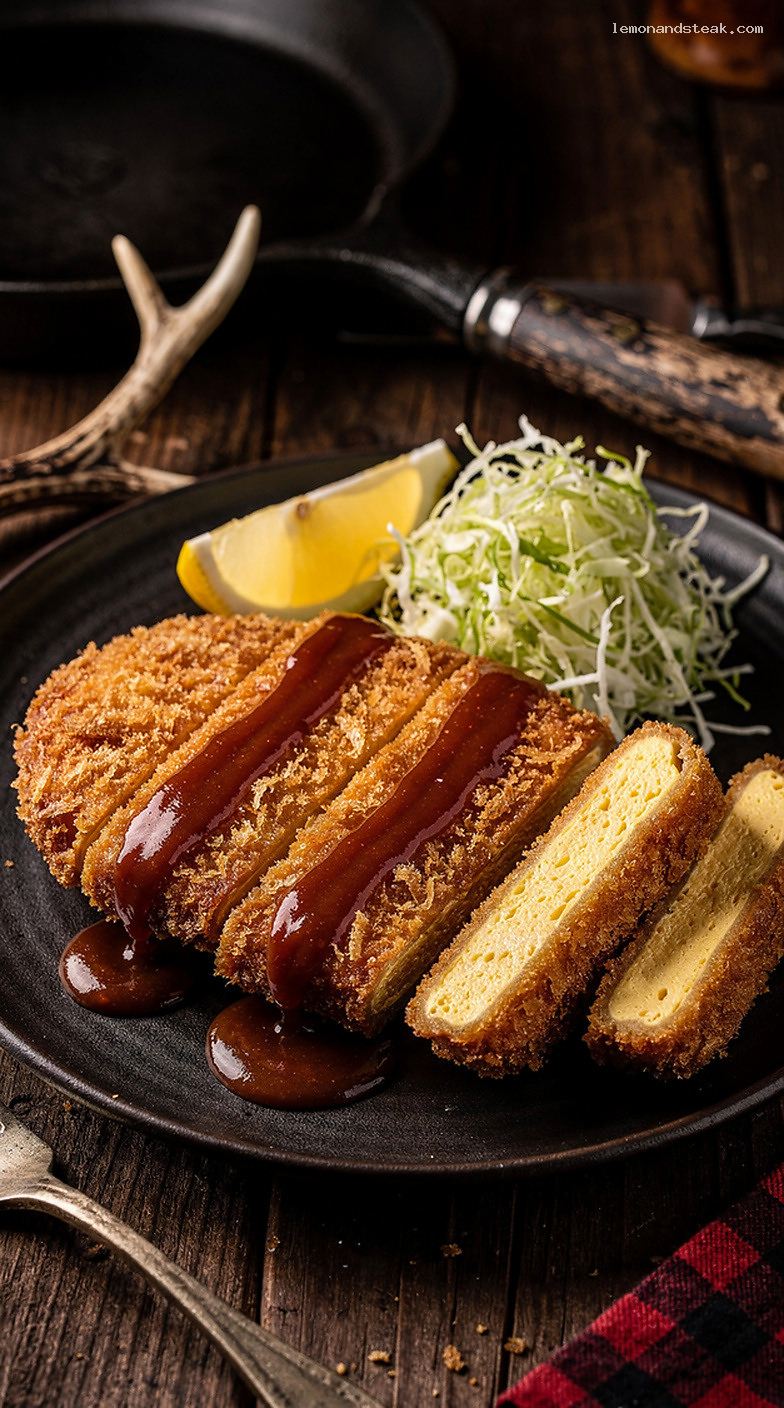
Quick Recipe Version (TL;DR)
Quick Ingredients
- 8 large eggs
- 60 mL (1/4 cup) milk
- 10 mL (2 tsp) soy sauce
- 2.5 mL (1/2 tsp) kosher salt
- 1.25 mL (1/4 tsp) black pepper
- 30 g (2 tbsp) unsalted butter
- 65 g (1/2 cup) all-purpose flour
- 1 large egg + 15 mL (1 tbsp) water (for breading)
- 100 g (2 cups) panko breadcrumbs
- 1 L (4 cups) neutral frying oil (canola, peanut, or vegetable), for 5 cm (2-inch) depth
- For serving: 300 g (about 4 cups) shredded green cabbage, lemon wedges, tonkatsu sauce (store-bought or homemade)
Do This
- 1. Whisk 8 eggs with milk, soy sauce, salt, and pepper.
- 2. Cook a thick omelet in an 20 cm (8-inch) nonstick skillet over medium-low until set (165°F/74°C), about 6–8 minutes total.
- 3. Chill omelet 10 minutes, then cut into 8 rectangles.
- 4. Set up breading: flour, beaten egg + water, and panko.
- 5. Bread each piece (flour → egg → panko), pressing crumbs on firmly.
- 6. Fry at 350°F (177°C) for 2–3 minutes per side until deep golden; drain and serve with cabbage and tonkatsu sauce.
Why You’ll Love This Recipe
- Big crunch, tender center: crisp panko outside with a soft, savory egg cutlet inside.
- Comfort-food simple: familiar pantry ingredients, straightforward steps.
- Fast payoff: the omelet cooks quickly, and frying takes just minutes.
- Flexible serving: great with rice, salad, curry, or tucked into a sandwich.
Grocery List
- Produce: green cabbage (or coleslaw mix), lemons (optional), green onions (optional garnish)
- Dairy: large eggs, milk, unsalted butter
- Pantry: soy sauce, all-purpose flour, panko breadcrumbs, neutral frying oil, kosher salt, black pepper, tonkatsu sauce (or ketchup + Worcestershire + soy sauce for homemade)
Full Ingredients
Egg Cutlet (Cooked Egg Base)
- 8 large eggs
- 60 mL (1/4 cup) milk
- 10 mL (2 tsp) soy sauce
- 2.5 mL (1/2 tsp) kosher salt
- 1.25 mL (1/4 tsp) black pepper
- 30 g (2 tbsp) unsalted butter
Breading Station
- 65 g (1/2 cup) all-purpose flour
- 1 large egg
- 15 mL (1 tbsp) water
- 100 g (2 cups) panko breadcrumbs
For Frying
- 1 L (4 cups) neutral oil (canola, peanut, or vegetable), for about 5 cm (2-inch) depth in a medium pot
For Serving
- 300 g (about 4 cups) finely shredded green cabbage (or coleslaw mix)
- Lemon wedges (optional)
- Tonkatsu sauce, 60–120 mL (1/4–1/2 cup), for drizzling or dipping
Optional Quick Homemade Tonkatsu-Style Sauce (Makes about 120 mL / 1/2 cup)
- 60 mL (1/4 cup) ketchup
- 30 mL (2 tbsp) Worcestershire sauce
- 15 mL (1 tbsp) soy sauce
- 15 mL (1 tbsp) mirin (or 10 mL / 2 tsp honey)
- 2.5 mL (1/2 tsp) Dijon mustard (optional)
Step-by-Step Instructions
Step 1: Get set up (and make sauce if using)
Set out a wire rack over a sheet pan (best for keeping the katsu crisp). If you’re making the quick homemade tonkatsu-style sauce, whisk together the ketchup, Worcestershire, soy sauce, mirin (or honey), and Dijon (if using). Set aside.
If serving with cabbage, shred it finely now and refrigerate so it stays extra crisp.
Step 2: Whisk the egg mixture
In a medium bowl, whisk together the 8 eggs, milk, soy sauce, salt, and pepper until the mixture is very smooth and evenly colored (no streaks of egg white).
Step 3: Cook a thick omelet “slab”
Heat an 20 cm (8-inch) nonstick skillet over medium-low heat for 1 minute. Add the butter and swirl to coat the pan.
Pour in the egg mixture. Let it cook gently; as the edges set, use a silicone spatula to nudge the cooked edges toward the center so uncooked egg flows outward. Keep the heat medium-low so the eggs set without browning.
Cook until the top is mostly set and only slightly glossy, about 6–8 minutes. Flip carefully (or cover with a lid for 1–2 minutes) until the center reaches 165°F (74°C) and the omelet feels set when lightly pressed.
Slide onto a plate or cutting board and let cool for 5 minutes.
Step 4: Chill, then cut into “cutlets”
Move the cooked omelet to the refrigerator for 10 minutes. This firms it up, which makes breading and frying much easier (and helps prevent blowouts in the oil).
Cut into 8 equal rectangles (about 2 cm / 3/4-inch thick pieces). Pat the surfaces lightly with paper towel if there’s any moisture.
Step 5: Bread the egg pieces (flour → egg → panko)
Set up three shallow bowls:
- Bowl 1: flour
- Bowl 2: 1 egg beaten with 1 tbsp water
- Bowl 3: panko
Dredge each egg rectangle in flour (shake off excess), dip in the beaten egg, then press firmly into panko on all sides. Pressing matters: you want a thick, even coat so the crust turns deeply crisp and doesn’t fall off.
Place breaded pieces on a plate or tray while you heat the oil.
Step 6: Deep-fry until crisp and golden
In a medium, heavy pot (or Dutch oven), add 1 L (4 cups) oil to reach about 5 cm (2 inches) deep. Heat to 350°F (177°C) over medium heat. Use a thermometer and adjust heat to keep the oil between 340–360°F (171–182°C).
Fry in batches (don’t crowd the pot). Carefully lower in 2–4 pieces at a time. Fry for 2–3 minutes per side, turning once, until deep golden brown and audibly crisp.
Lift out with a spider or slotted spoon and drain on the wire rack. Sprinkle with a tiny pinch of salt while hot (optional but tasty). Let the oil return to 350°F (177°C) before frying the next batch.
Step 7: Slice and serve
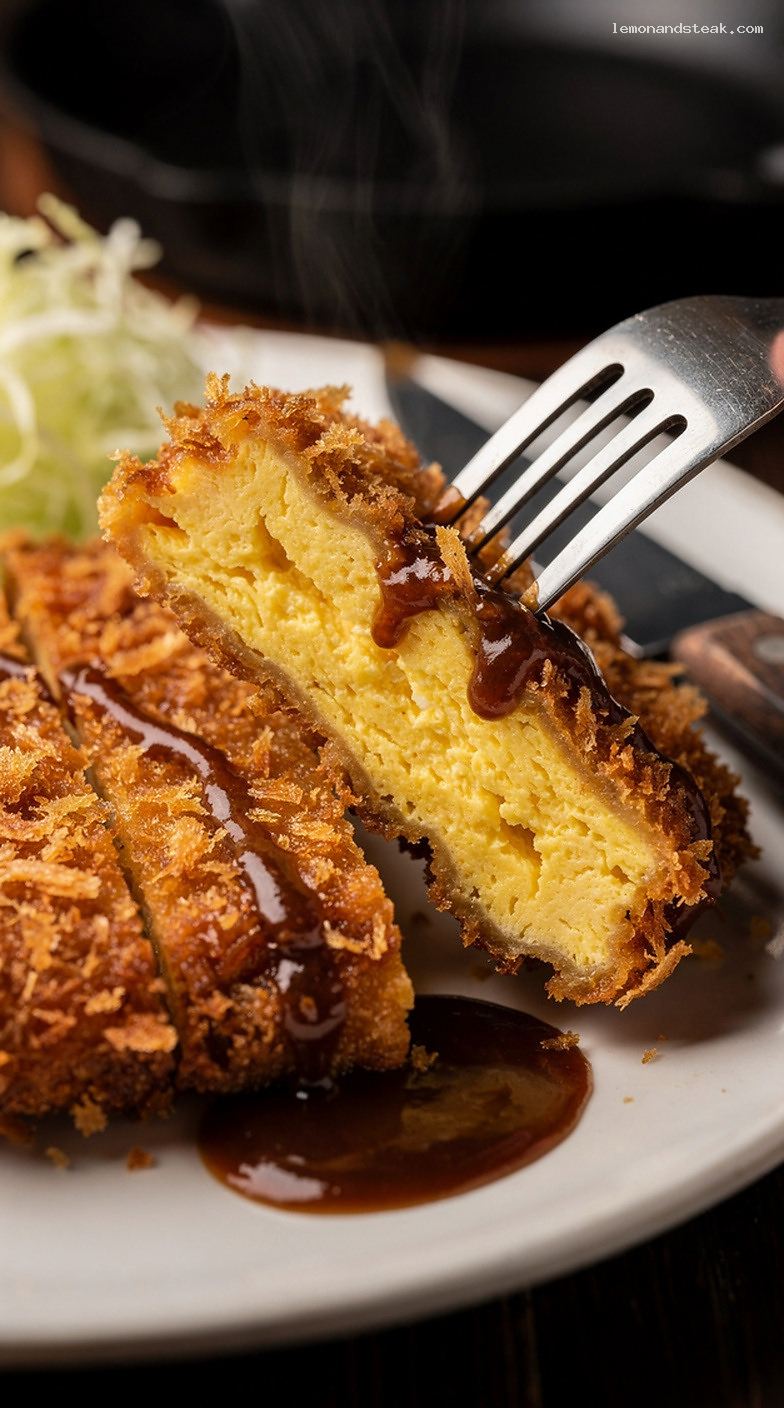
Let the egg katsu rest for 2 minutes, then slice each piece in half on a slight diagonal (classic katsu style) if you like.
Serve immediately with shredded cabbage and lemon wedges. Drizzle with tonkatsu sauce or serve the sauce on the side for dipping. This is especially good with steamed rice and a simple miso soup.
Pro Tips
- Chill before breading: the 10-minute fridge rest makes the egg pieces sturdier, so the coating stays put during frying.
- Press the panko on firmly: gentle pressing creates a thicker, crunchier crust and reduces bald spots.
- Maintain oil temperature: 350°F (177°C) gives crisp results without greasy breading. If the oil drops too low, the crumbs absorb oil.
- Use a rack, not paper towels: a wire rack keeps steam from softening the crust.
- Work in batches: overcrowding lowers oil temp and makes the crust less crisp.
Variations
- Curry egg katsu: serve the fried egg cutlets over rice with Japanese curry sauce instead of tonkatsu sauce.
- Spicy katsu: mix 2.5 mL (1/2 tsp) cayenne or 5 mL (1 tsp) chili powder into the flour, or stir 15–30 mL (1–2 tbsp) sriracha into the dipping sauce.
- Extra-savory crust: mix 15 g (2 tbsp) finely grated Parmesan into the panko for a richer, toastier flavor (not traditional, but delicious).
Storage & Make-Ahead
Best fresh: Egg katsu is crispiest right after frying.
Refrigerate: Cool completely, then store in an airtight container for up to 3 days.
Reheat for crispness: Place on a wire rack over a sheet pan and reheat in a 400°F (204°C) oven for 10–12 minutes, flipping once halfway through. (Avoid the microwave if you want the crust crisp.)
Make-ahead option: Cook the omelet up to 24 hours ahead and refrigerate tightly wrapped. Bread and fry right before serving for the best texture.
Nutrition (per serving)
Approximate, assuming 1/8 of the recipe and moderate oil absorption; sauce not included: Calories: 480; Protein: 18 g; Carbohydrates: 34 g; Fat: 30 g; Saturated Fat: 7 g; Fiber: 2 g; Sugar: 2 g; Sodium: 720 mg.
Leave a Reply