
Quick Recipe Version (TL;DR)
Quick Ingredients
- 2 lb russet potatoes, peeled
- 1/2 small yellow onion, grated (about 1/3 cup)
- 2 large eggs
- 1/4 cup all-purpose flour
- 1 1/2 tsp kosher salt, divided
- 1/2 tsp black pepper, divided
- 1/2 tsp garlic powder
- 1/4 tsp smoked paprika (optional)
- 8 oz sharp cheddar cheese, coarsely shredded (about 2 cups packed)
- 1/4 cup chopped fresh chives, plus extra for serving
- 1/4 cup neutral oil (canola, avocado, or vegetable), plus 2 tbsp butter
- Optional: sour cream or Greek yogurt for serving
Do This
- 1. Heat oven to 250°F (120°C) and place a wire rack on a sheet pan for keeping flapjacks warm.
- 2. Grate potatoes and onion, squeeze very dry in a towel, then mix with eggs, flour, 1 tsp salt, 1/4 tsp pepper, garlic powder, and smoked paprika.
- 3. Heat 2 tbsp oil in a 10–12 inch cast-iron skillet over medium to medium-high heat; drop 1/4-cup mounds of batter and flatten into thin 3–4 inch rounds.
- 4. Fry 3–4 minutes per side until deep golden and crisp; transfer to the rack in the warm oven. Repeat with remaining batter, adding more oil as needed.
- 5. Reduce heat to medium-low, wipe out the skillet, then lightly oil it. Layer flapjacks and cheddar in the skillet to form 4 short stacks.
- 6. Cover and heat 3–5 minutes until the cheese is fully melted and bubbly, rotating skillet as needed.
- 7. Sprinkle with remaining salt, pepper, and chives; serve hot straight from the skillet with optional sour cream.
Why You’ll Love This Recipe
- It turns simple potatoes and cheddar into a towering, diner-style stack that eats like a full meal.
- The thin flapjacks get beautifully crisp edges while staying tender inside.
- Everything cooks in one cast-iron skillet for maximum flavor and minimal cleanup.
- It is endlessly customizable: change the cheese, add bacon, or top with a fried egg.
Grocery List
- Produce: Russet potatoes, yellow onion, fresh chives.
- Dairy: Sharp cheddar cheese, eggs, butter, optional sour cream or Greek yogurt.
- Pantry: All-purpose flour, kosher salt, black pepper, garlic powder, smoked paprika, neutral oil (canola, avocado, or vegetable).
Full Ingredients
For the Potato Flapjacks
- 2 lb russet potatoes, peeled (about 4 medium-large potatoes)
- 1/2 small yellow onion, grated (about 1/3 cup lightly packed)
- 2 large eggs
- 1/4 cup all-purpose flour
- 1 tsp kosher salt
- 1/4 tsp freshly ground black pepper
- 1/2 tsp garlic powder
- 1/4 tsp smoked paprika (optional, for a subtle smoky note)
For Frying & Stacking
- 1/4 cup neutral oil (such as canola, vegetable, or avocado), divided, plus more as needed
- 2 tbsp unsalted butter, divided (for flavor and browning)
- 8 oz sharp cheddar cheese, coarsely shredded (about 2 packed cups)
- 1/2 tsp kosher salt (for seasoning finished stacks)
- 1/4 tsp freshly ground black pepper (for seasoning finished stacks)
For Garnish & Serving
- 1/4 cup finely chopped fresh chives, plus extra for sprinkling at the table
- Optional: 1/2 to 3/4 cup sour cream or plain Greek yogurt, for dolloping on top
Step-by-Step Instructions
Step 1: Set up your oven and skillet
Preheat your oven to 250°F (120°C). Place a wire cooling rack on top of a rimmed sheet pan and slide it into the oven; this will keep your potato flapjacks warm and crisp while you cook the rest.
Choose a 10–12 inch cast-iron skillet. You will fry the flapjacks in it first, then use the same pan to assemble and melt the cheesy stacks, which builds great flavor and saves on dishes.
Step 2: Grate and drain the potatoes and onion
Using the large holes of a box grater or a food processor with a shredding disk, grate the peeled russet potatoes into a large bowl. Grate the onion as well. Potatoes contain a lot of water, which can make flapjacks soggy if not removed.
Transfer the grated potatoes and onion to a clean kitchen towel or double layer of cheesecloth. Gather the towel into a bundle and twist firmly over the sink, squeezing out as much liquid as you possibly can. Spend a full minute squeezing; the drier the mixture, the crispier your flapjacks will be.
Return the squeezed potato-onion mixture to a clean, dry mixing bowl.
Step 3: Mix the flapjack batter
To the bowl of drained potatoes and onion, add 2 eggs, 1/4 cup flour, 1 tsp kosher salt, 1/4 tsp black pepper, 1/2 tsp garlic powder, and the optional 1/4 tsp smoked paprika. Use a fork or your hands to mix until everything is evenly combined and the shreds are lightly coated in the egg-flour mixture.
The mixture should feel moist and cohesive but not watery. If it seems very loose or liquidy, sprinkle in up to an additional 1 tbsp flour, just until the mixture holds together when you press a small handful into a patty.
Step 4: Fry thin, crispy potato flapjacks
Place your cast-iron skillet over medium to medium-high heat. Add about 2 tbsp oil and 1/2 tbsp butter. When the fat is hot and shimmering (a small bit of mixture should sizzle immediately), you are ready to cook.
Working in batches, scoop a generous 1/4 cup of potato mixture for each flapjack. Drop into the skillet and use the back of a spoon or spatula to flatten into thin rounds about 3–4 inches wide and 1/4 inch thick. Do not overcrowd the pan; 3–4 flapjacks at a time is ideal.
Cook each flapjack for 3–4 minutes per side, until the edges are deeply golden and crisp and the centers feel set when gently pressed. Adjust the heat as needed to prevent burning while achieving good color.
Transfer finished flapjacks to the wire rack in the warm oven. Repeat with the remaining mixture, adding more oil and small pats of butter between batches as needed. You should end up with about 12–16 flapjacks, depending on size.
Step 5: Prep the cheese and chives
While the flapjacks are frying (or once they are all in the oven), coarsely shred the 8 oz sharp cheddar cheese. A coarser shred melts into lovely pockets and layers instead of a perfectly smooth sheet, which suits the rustic style of this dish.
Finely chop the fresh chives. Reserve about half for sprinkling over the finished dish at the table.
Step 6: Build the skillet flapjack stacks
Once all the flapjacks are cooked, carefully remove the hot skillet from the burner and pour off any excess grease. Wipe it out with a folded paper towel, leaving just a very thin film of oil. Return the skillet to the stove over medium-low heat and add 1–2 tsp oil to lightly coat the bottom.
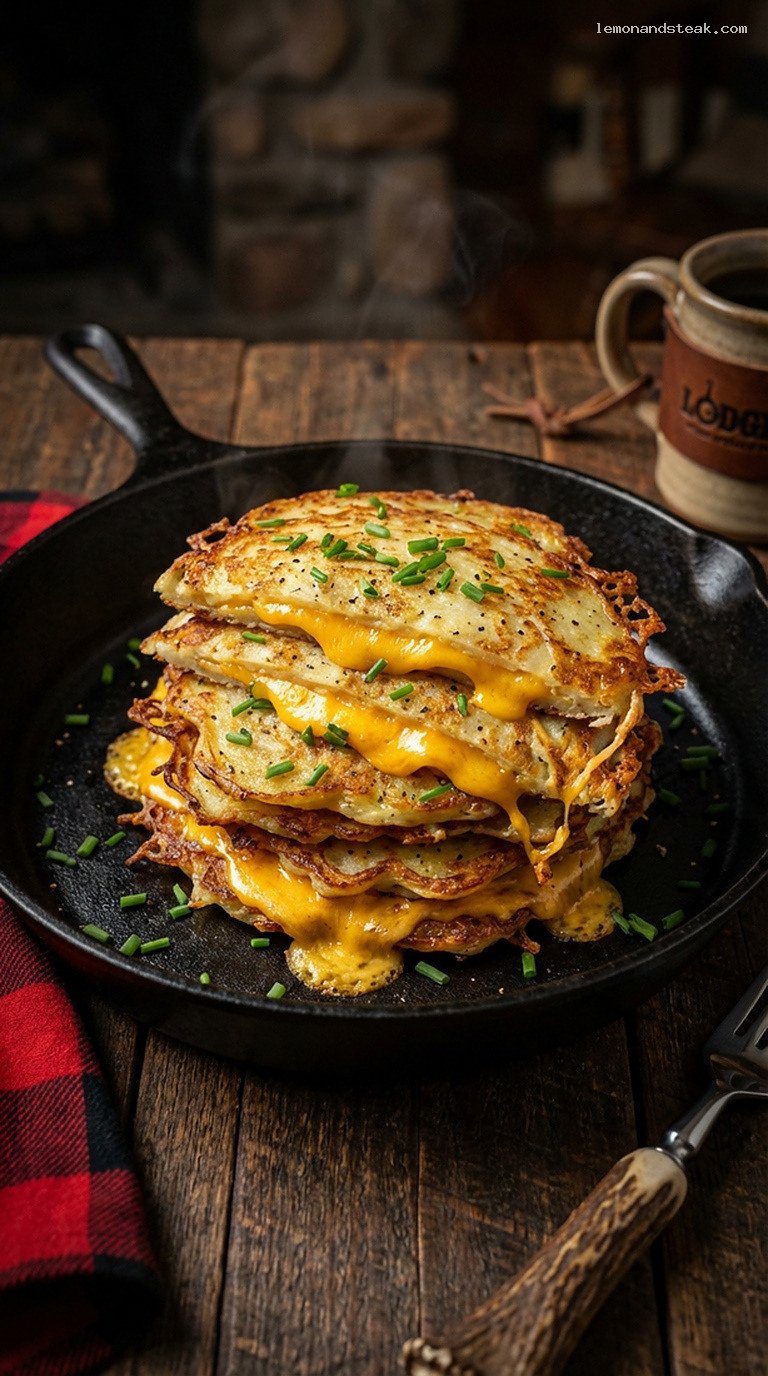
Divide the flapjacks into 4 equal groups. In the skillet, arrange one group into a small stack: place a flapjack down, sprinkle a couple of tablespoons of shredded cheddar over it, then add another flapjack and more cheese. Repeat until you have a 3–4 flapjack stack with cheese between each layer and a small mound of cheese on top. Repeat to create 4 short stacks, spaced evenly in the skillet.
Step 7: Melt the cheese and finish with chives
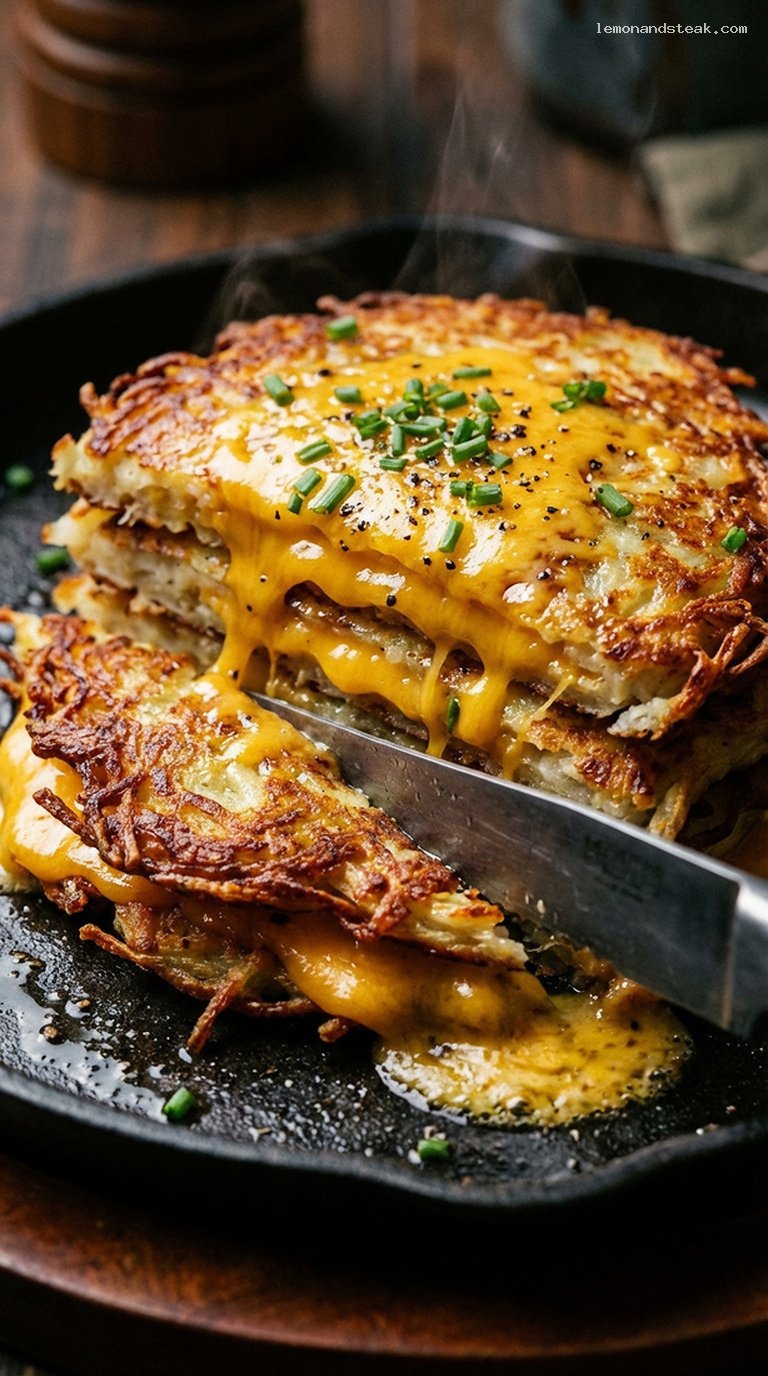
Cover the skillet with a lid (or a sheet of foil) and cook over medium-low heat for 3–5 minutes, rotating the skillet once or twice so the stacks melt evenly. The cheese should be fully melted, bubbly in spots, and just starting to run down the sides of the stacks.
Remove the lid and turn off the heat. Sprinkle the tops with the remaining 1/2 tsp kosher salt, 1/4 tsp pepper, and a generous shower of chopped chives.
Serve the stacks directly from the skillet, using a wide spatula to transfer each to a plate. Add a dollop of sour cream or Greek yogurt on top if you like, plus extra chives. Serve immediately while the edges are crisp and the cheese is gooey.
Pro Tips
- Squeeze the potatoes really dry. Extra moisture is the main enemy of crispiness. Do not rush the squeezing step.
- Keep them thin. Flatter flapjacks get crisper and stack more neatly than thick ones. Aim for about 1/4 inch thick.
- Control your heat. If the flapjacks are browning too quickly but staying pale inside, lower the heat slightly and give them another minute.
- Use sharp cheddar. A sharp or extra-sharp cheddar delivers the most flavor and stands up perfectly to the hearty potatoes.
- Serve right away. The stacks are at their best piping hot, with contrast between crunchy edges and melted cheese.
Variations
- Bacon and Cheddar Stack: Cook 4–6 slices of bacon until crisp, crumble, and layer the bacon bits between flapjacks with the cheese.
- Herb and Gruyère: Swap half the cheddar for Gruyère and add 2 tbsp chopped fresh parsley and thyme to the potato mixture.
- Breakfast Version: Top each finished stack with a fried or poached egg and a drizzle of hot sauce or chili crisp.
Storage & Make-Ahead
The potato flapjacks themselves store well, but the assembled stacks are best fresh. To make ahead, cook the flapjacks, cool completely, and refrigerate in an airtight container for up to 3 days, separating layers with parchment. Reheat flapjacks on a wire rack set over a baking sheet in a 400°F (200°C) oven for 8–10 minutes, until hot and crisp again. Then layer with shredded cheddar in a lightly oiled cast-iron skillet and melt over medium-low heat or in a 375°F (190°C) oven for 5–7 minutes. Leftover assembled stacks can be refrigerated up to 2 days and reheated in a covered skillet over medium-low heat or in the oven; the texture will be softer but still tasty.
Nutrition (per serving)
Approximate values per serving (1 stack, without sour cream): about 550 calories, 33 g fat (15 g saturated), 43 g carbohydrates, 5 g fiber, 7 g sugar, and 20 g protein. Sodium and calories will vary depending on your cheese, salt, and any added toppings like bacon or sour cream.
Leave a Reply