
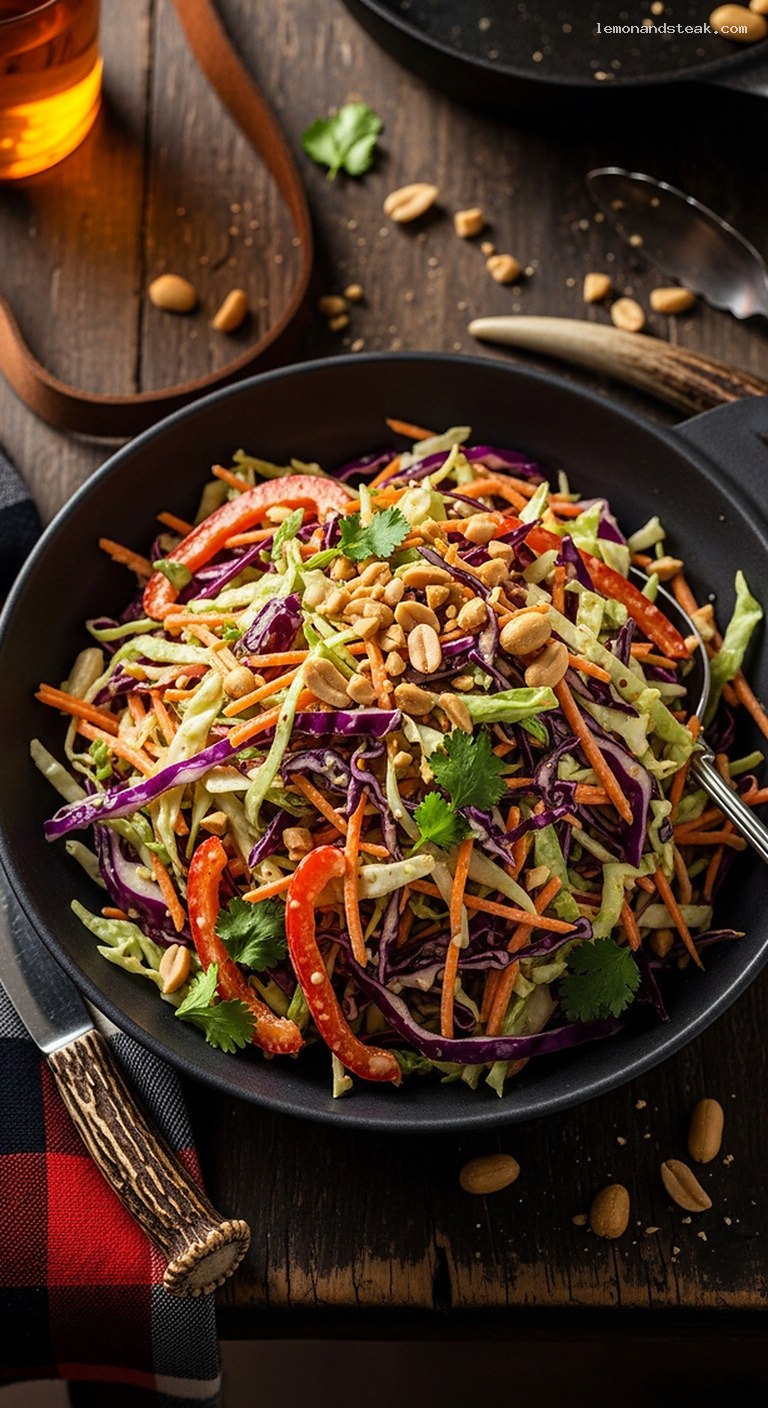
Quick Recipe Version (TL;DR)
Quick Ingredients
- 4 cups finely shredded green cabbage (about 1/2 small head)
- 2 cups finely shredded red cabbage (about 1/4 medium head)
- 1 1/2 cups shredded carrots (about 3 medium)
- 1 red bell pepper, thinly sliced
- 4 scallions, thinly sliced
- 1/2 cup chopped fresh cilantro
- 1/3 cup roasted salted peanuts, roughly chopped (plus extra for garnish)
- 1/3 cup creamy peanut butter
- 1/4 cup fresh lime juice (about 2 limes)
- 2 tbsp rice vinegar
- 2 tbsp soy sauce or tamari (low-sodium if possible)
- 1 1/2 tbsp honey or maple syrup
- 1 tbsp toasted sesame oil
- 1 tbsp neutral oil (canola, grapeseed, or light olive)
- 1 tsp freshly grated ginger
- 1 small garlic clove, minced or grated
- 1–3 tsp sriracha or chili-garlic sauce, to taste
- 2–4 tbsp warm water, to thin dressing
- 1/4 tsp kosher salt, plus more to taste
- Freshly ground black pepper, to taste
Do This
- 1. Prep vegetables: finely shred cabbages and carrots; slice bell pepper and scallions; chop cilantro and peanuts. Add everything except peanuts to a large bowl.
- 2. Make dressing: in a medium bowl, whisk peanut butter, lime juice, rice vinegar, soy sauce, honey, sesame oil, neutral oil, ginger, garlic, and sriracha until smooth.
- 3. Thin and season: whisk in 2–4 tbsp warm water until creamy and pourable. Taste and adjust salt, pepper, lime, sweetness, and heat as needed.
- 4. Toss slaw: pour dressing over vegetables. Toss well for 1–2 minutes until everything is evenly coated.
- 5. Add crunch: sprinkle chopped peanuts over the slaw and toss lightly, reserving some peanuts for garnish.
- 6. Serve: mound into a serving bowl, top with extra cilantro and peanuts, and serve right away or chill up to 30 minutes to let flavors meld.
Why You’ll Love This Recipe
- Bright, zesty flavors from lime, cilantro, and a savory peanut dressing that beats any store-bought slaw.
- All crunch, no cooking: just chop, whisk, and toss for a fresh side in about 20 minutes.
- Versatile and meal-prep friendly: serve with grilled meats, taco nights, rice bowls, or as a light lunch.
- Easily adaptable for different diets and spice levels with simple ingredient swaps.
Grocery List
- Produce: Green cabbage, red cabbage, carrots, red bell pepper, scallions, fresh cilantro, fresh ginger, garlic, limes
- Dairy: None
- Pantry: Creamy peanut butter, roasted salted peanuts, soy sauce or tamari, rice vinegar, honey or maple syrup, toasted sesame oil, neutral oil (canola, grapeseed, or light olive), sriracha or chili-garlic sauce, kosher salt, black pepper
Full Ingredients
For the Slaw
- 4 cups finely shredded green cabbage (about 1/2 small head, 10–12 oz)
- 2 cups finely shredded red cabbage (about 1/4 medium head)
- 1 1/2 cups shredded carrots (about 3 medium carrots, peeled)
- 1 medium red bell pepper, seeded and very thinly sliced (about 1 cup)
- 4 scallions, thinly sliced (white and green parts)
- 1/2 cup loosely packed fresh cilantro leaves, roughly chopped
- 1/3 cup roasted salted peanuts, roughly chopped, plus more for garnish
For the Peanut-Lime Dressing
- 1/3 cup creamy peanut butter (smooth; natural or regular)
- 1/4 cup fresh lime juice (about 2 medium limes)
- 2 tbsp rice vinegar (or apple cider vinegar)
- 2 tbsp soy sauce or tamari (low-sodium recommended)
- 1 1/2 tbsp honey or pure maple syrup
- 1 tbsp toasted sesame oil
- 1 tbsp neutral oil (canola, grapeseed, or light olive oil)
- 1 tsp freshly grated ginger (from a 1-inch piece)
- 1 small garlic clove, finely minced or grated (about 1/2 tsp)
- 1–3 tsp sriracha or chili-garlic sauce, to taste
- 2–4 tbsp warm water, to thin dressing to a pourable consistency
- 1/4 tsp kosher salt, plus more to taste
- Freshly ground black pepper, to taste (start with 1/8 tsp)
Optional Garnishes
- Extra chopped roasted peanuts
- Additional chopped cilantro
- Extra lime wedges for squeezing over the top
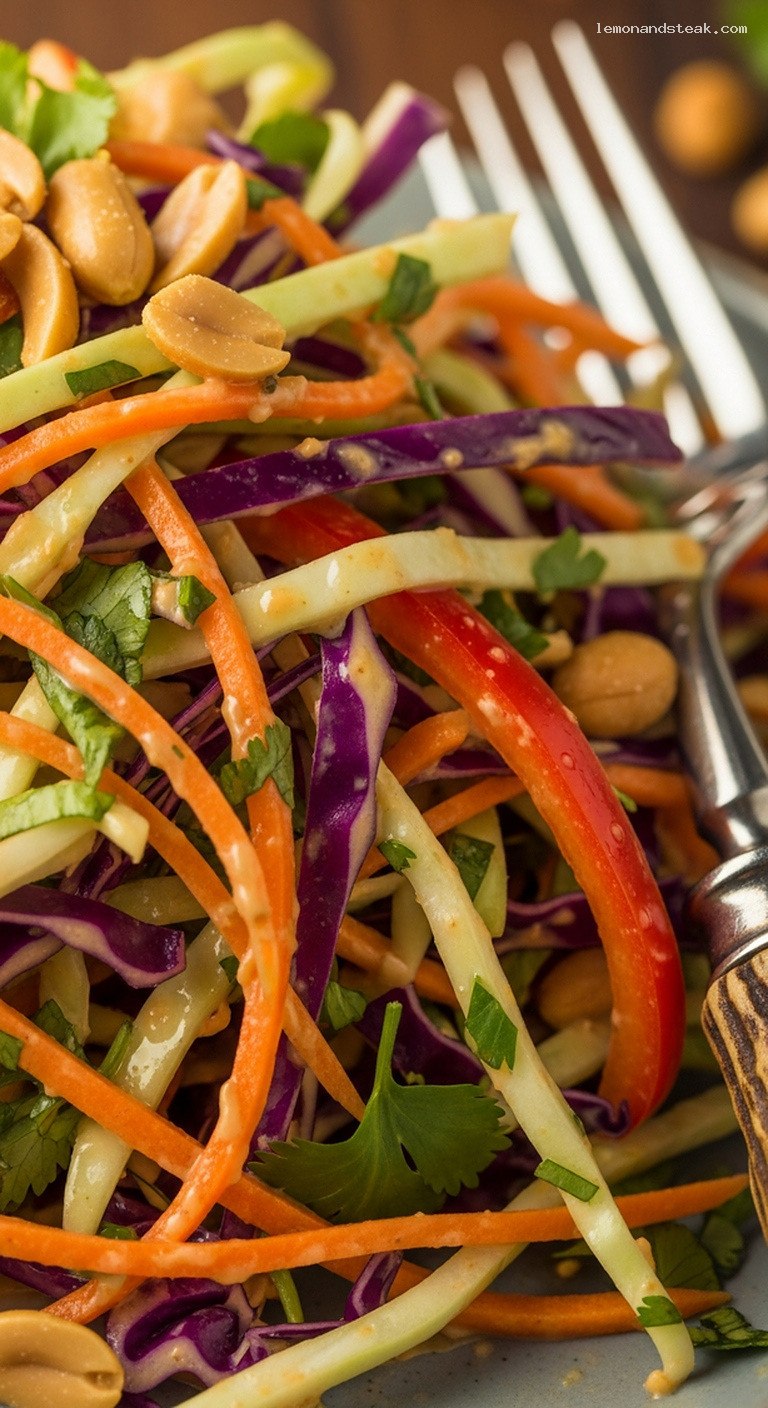
Step-by-Step Instructions
Step 1: Prep and Shred the Vegetables
Remove any tough or damaged outer leaves from the green and red cabbage. Cut the cabbages into quarters, remove the cores, and finely shred them using a sharp knife, mandoline, or food processor with a shredding disk. You are aiming for very thin, ribbon-like strips so the slaw feels light and crisp rather than chunky.
Peel the carrots and shred them on the large holes of a box grater or using a julienne peeler. Slice the red bell pepper into thin strips. Trim the scallions and slice them thinly on a slight diagonal. Roughly chop the cilantro leaves and tender stems. Add all of these vegetables and herbs to a large mixing bowl.
Step 2: Chop the Peanuts for Crunch
Place the roasted salted peanuts on a cutting board and roughly chop them with a sharp knife. You want a mix of small pieces and a few slightly larger bits for texture. Measure out 1/3 cup for mixing into the slaw and reserve a small handful to sprinkle on top just before serving. Set the chopped peanuts aside while you make the dressing.
Step 3: Whisk Together the Peanut-Lime Dressing
In a medium bowl, add the peanut butter, lime juice, rice vinegar, soy sauce or tamari, honey or maple syrup, toasted sesame oil, neutral oil, grated ginger, minced garlic, and sriracha or chili-garlic sauce. Whisk steadily until the mixture is smooth and emulsified; it will be quite thick at first.
Gradually whisk in 2 tablespoons of warm water. If the dressing still seems too thick to pour, whisk in additional warm water 1 tablespoon at a time until it is creamy and pourable but not runny. Taste, then season with the 1/4 teaspoon kosher salt and a few grinds of black pepper. Adjust to your liking: add more lime for brightness, honey for sweetness, soy for saltiness, or sriracha for heat.
Step 4: Toss the Slaw with the Dressing
Pour the peanut-lime dressing over the prepared vegetables in the large bowl. Using salad tongs or clean hands, toss everything together thoroughly for 1–2 minutes, making sure the dressing coats all the cabbage shreds and carrot strands. The volume of the slaw will shrink slightly as the vegetables soften under the dressing.
Sprinkle in the 1/3 cup of chopped peanuts you measured earlier and toss again briefly to distribute them throughout the slaw. Reserve the remaining peanuts for garnish so they stay extra crisp.
Step 5: Taste and Fine-Tune the Seasoning
Give the slaw a taste. This is your chance to customize it exactly to your preference. If it feels a bit flat, add a pinch more salt or a drizzle of soy sauce. For more brightness, squeeze in a little extra lime juice. If you want it sweeter or milder, whisk a teaspoon or two of honey or maple syrup into any remaining dressing in the bowl, then fold it back into the slaw.
If the slaw seems too heavy or overdressed, add a small handful of extra shredded cabbage or carrots to balance it out. Toss again until everything is well combined and tastes vibrant and balanced.
Step 6: Garnish and Serve (or Chill Briefly)
Transfer the dressed slaw to a serving bowl or platter, piling it up to showcase the colors and textures. Scatter the reserved chopped peanuts and a little extra chopped cilantro over the top for a fresh, crunchy finish. If desired, tuck a few lime wedges around the edge of the bowl for squeezing over individual portions.
You can serve the peanut-lime slaw immediately for maximum crunch, or cover and chill it for 15–30 minutes to let the flavors meld slightly. Serve as a side dish with grilled chicken, steak, shrimp, burgers, or tacos, or spoon it over rice, noodles, or grain bowls for a fresh, crunchy component.
Pro Tips
- Slice the cabbage extra thin. The finer the shred, the more delicate and restaurant-quality the slaw feels, and the better it soaks up the creamy peanut dressing.
- Use warm water for the dressing. Warm (not hot) water helps loosen peanut butter smoothly without clumping, making it easy to get a silky, pourable texture.
- Adjust sweetness and acidity at the end. Limes vary; always give the finished slaw a final taste and tweak with extra lime juice, honey, or a splash more soy sauce to get that perfect sweet-salty-tangy balance.
- Keep some peanuts for last-minute crunch. Stir some into the slaw and save some to sprinkle on top right before serving so you get a mix of soft, saucy crunch and super-crisp bits.
- Do not overdress. If you are unsure, start by adding about three-quarters of the dressing, toss, and then add more only if needed. You can always drizzle extra at the table.
Variations
- Nut-free version: Swap peanut butter for sunflower seed butter or tahini and use roasted sunflower or pumpkin seeds instead of peanuts for a similar crunch.
- Protein-packed meal salad: Turn this into a main dish by adding sliced grilled chicken, seared tofu, shrimp, or thinly sliced flank steak on top.
- Extra veggie crunch: Add thinly sliced cucumber, snap peas, or shredded purple carrots to boost color, freshness, and texture even more.
Storage & Make-Ahead
For the best texture, store the components separately if making ahead. The peanut-lime dressing can be prepared up to 5–7 days in advance and kept in an airtight container in the refrigerator; it will thicken as it chills, so whisk in a splash of warm water before using if needed. The shredded cabbage, carrots, and sliced pepper can be prepped 1–2 days ahead and stored in a sealed container or bag in the fridge. Toss everything with the dressing and peanuts within a few hours of serving for peak crunch. Leftover dressed slaw will keep for about 2–3 days in the refrigerator; it will soften over time but remains flavorful. Stir in a small handful of fresh cabbage or carrots and a sprinkle of new peanuts to refresh leftovers.
Nutrition (per serving)
Approximate values per side-dish serving (1/6 of the recipe): about 230 calories; 17 g fat; 15 g carbohydrates; 5 g protein; 4 g fiber; 6 g sugar; 360 mg sodium. These numbers are estimates and will vary based on specific brands and any substitutions you use.
Leave a Reply