
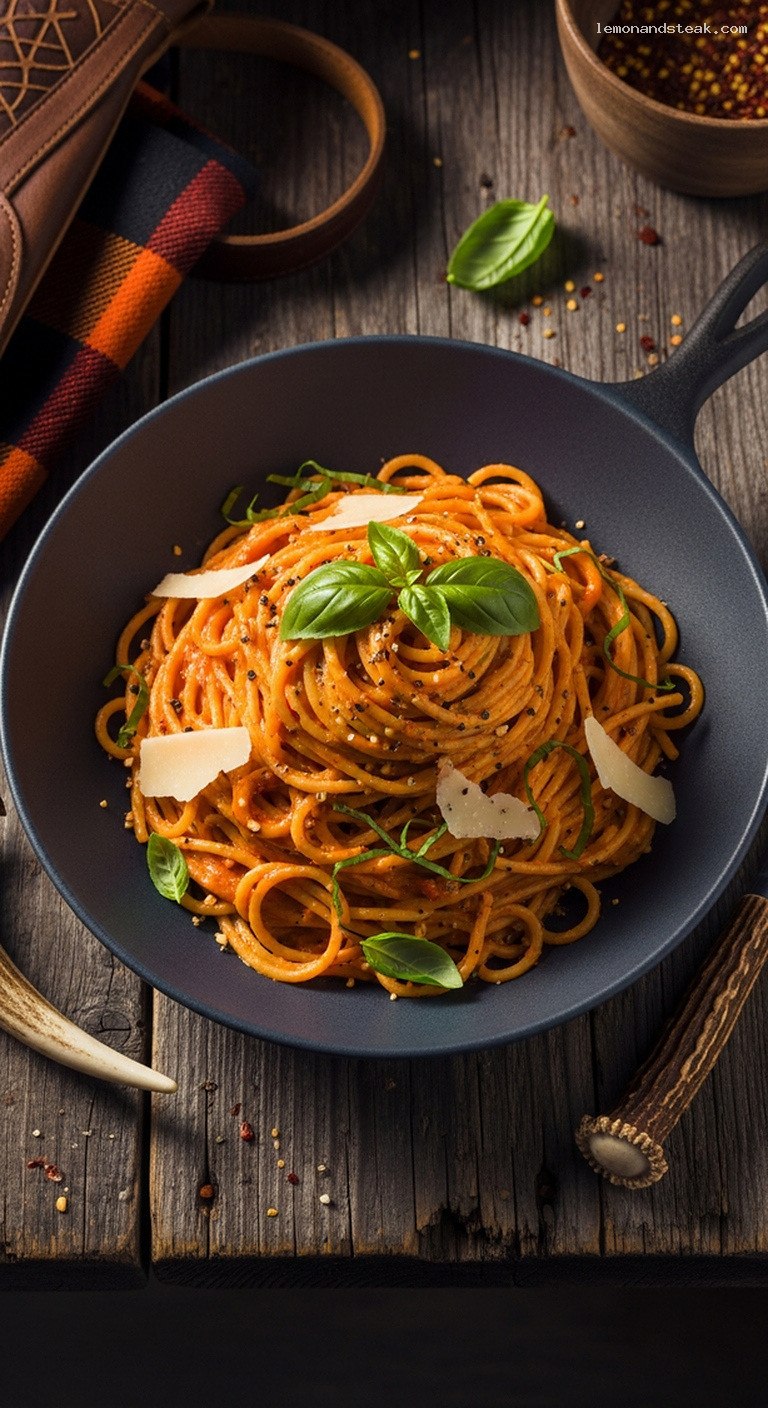
Quick Recipe Version (TL;DR)
Quick Ingredients
- 12 oz (340 g) dried pasta (spaghetti, penne, or rigatoni)
- 2 tbsp olive oil
- 4 cloves garlic, thinly sliced
- 1 small yellow onion, finely chopped
- 1/2 tsp crushed red pepper flakes (optional)
- 1 can (14.5 oz / 410 g) crushed tomatoes
- 1 cup (240 ml) low-sodium vegetable or chicken broth
- 1/3 cup (85 g) smooth peanut butter
- 1 tbsp soy sauce
- 1 tsp sugar or honey
- 1/4 cup (60 ml) heavy cream
- 1/2 cup (12 g) fresh basil leaves, chopped
- 1/4 cup (25 g) grated Parmesan cheese, plus extra for serving
- Salt and freshly ground black pepper
Do This
- 1. Boil pasta in well-salted water until al dente; reserve 1 cup pasta water, then drain.
- 2. While pasta cooks, sauté onion in olive oil over medium heat until soft, then add garlic and red pepper flakes.
- 3. Stir in crushed tomatoes, broth, soy sauce, and sugar; simmer 8–10 minutes.
- 4. Whisk peanut butter with a ladle of hot tomato sauce in a bowl, then stir this smooth mixture back into the pan.
- 5. Add cream and chopped basil; simmer gently 2–3 minutes. Season with salt and pepper.
- 6. Toss drained pasta with sauce and Parmesan, loosening with reserved pasta water as needed.
- 7. Serve hot, topped with extra basil, Parmesan, and a drizzle of olive oil if desired.
Why You’ll Love This Recipe
- It is a comforting pasta dish with a surprisingly harmonious blend of peanut butter, tomato, garlic, and basil.
- The sauce is silky, rich, and restaurant-worthy, but uses simple pantry ingredients.
- Ready in about 35 minutes, it is perfect for weeknights yet special enough for guests.
- Easy to customize: make it spicier, creamier, or add your favorite protein.
Grocery List
- Produce: Garlic, yellow onion, fresh basil
- Dairy: Heavy cream, Parmesan cheese
- Pantry: Dried pasta, olive oil, smooth peanut butter, crushed tomatoes, vegetable or chicken broth, soy sauce, sugar or honey, crushed red pepper flakes, salt, black pepper
Full Ingredients
For the Pasta
- 12 oz (340 g) dried pasta (spaghetti, linguine, penne, or rigatoni work well)
- 4 qt (3.8 L) water, for boiling
- 2 tbsp kosher salt (for salting the pasta water)
For the Peanut-Butter Tomato Sauce
- 2 tbsp olive oil
- 1 small yellow onion, finely chopped (about 1 cup / 120 g)
- 4 cloves garlic, thinly sliced
- 1/2 tsp crushed red pepper flakes (optional, for gentle heat)
- 1 can (14.5 oz / 410 g) crushed tomatoes
- 1 cup (240 ml) low-sodium vegetable or chicken broth
- 1 tbsp soy sauce (adds savory depth)
- 1 tsp sugar or honey (balances acidity)
- 1/3 cup (85 g) smooth, unsweetened peanut butter
- 1/4 cup (60 ml) heavy cream
- 1/2 cup (12 g) fresh basil leaves, loosely packed, chopped
- 1/4 cup (25 g) grated Parmesan cheese, plus more for serving
- 1/2–1 tsp kosher salt, or to taste
- Freshly ground black pepper, to taste
For Serving (Optional)
- Extra chopped fresh basil
- Extra grated Parmesan cheese
- Extra crushed red pepper flakes
- Drizzle of good-quality olive oil
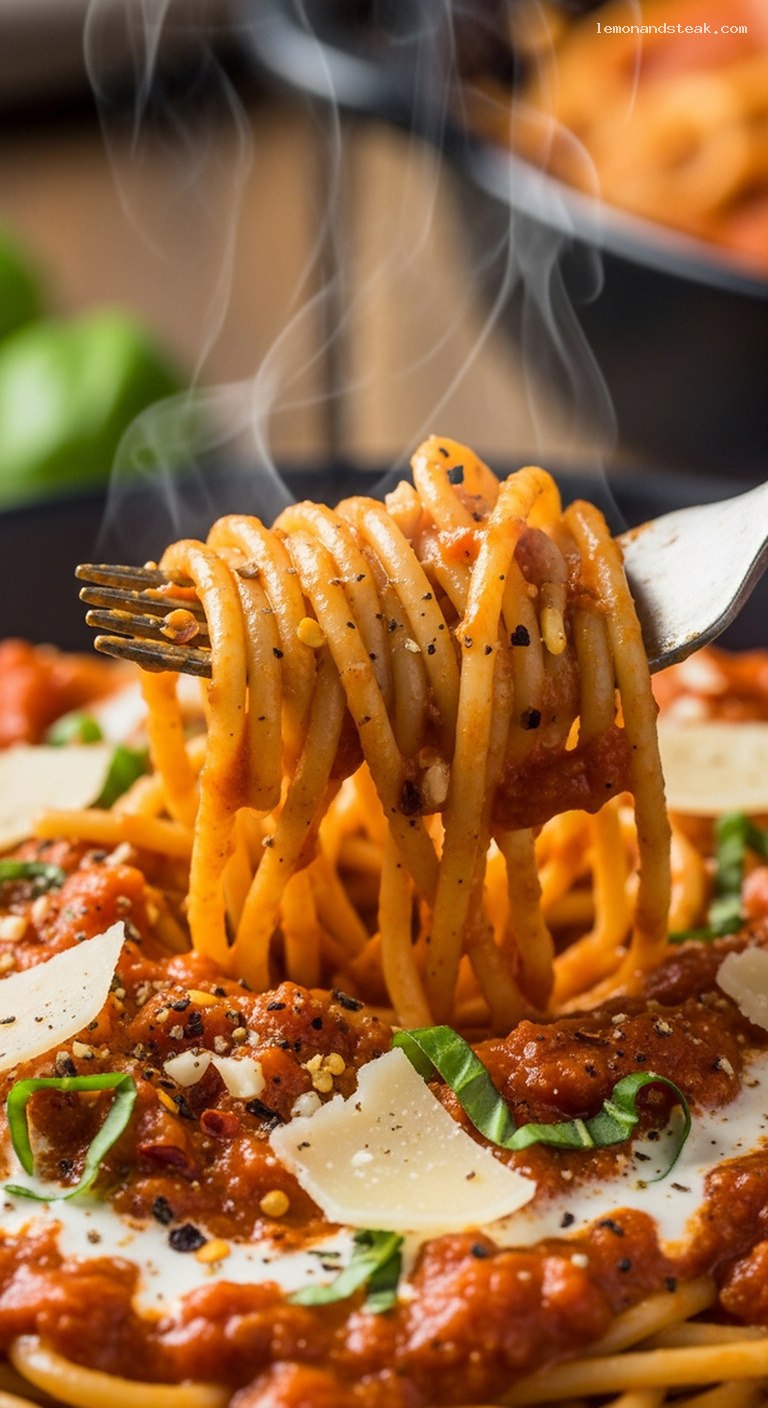
Step-by-Step Instructions
Step 1: Boil the pasta
Fill a large pot with about 4 qt (3.8 L) of water and bring it to a rolling boil over high heat. Stir in 2 tbsp kosher salt; the water should taste pleasantly salty, like the sea. Add the 12 oz (340 g) of pasta and cook according to the package directions until just al dente (usually 8–11 minutes, depending on the shape). Before draining, ladle out about 1 cup of the starchy pasta water and set it aside. Drain the pasta but do not rinse it. Leave it in the colander or return it to the warm pot off the heat while you finish the sauce.
Step 2: Prep the aromatics and basil
While the water comes to a boil and the pasta cooks, prepare the sauce ingredients. Finely chop the yellow onion, thinly slice the garlic cloves, and roughly chop the fresh basil leaves. Measure out the crushed tomatoes, broth, soy sauce, sugar or honey, peanut butter, and cream so they are ready to go. Having everything prepped makes the sauce come together smoothly and quickly once you start cooking.
Step 3: Sauté onion, garlic, and chili flakes
In a large, deep skillet or wide saucepan, heat 2 tbsp olive oil over medium heat. Add the chopped onion and a pinch of salt. Cook, stirring occasionally, for 5–7 minutes, until the onion is soft and translucent but not browned. Add the sliced garlic and crushed red pepper flakes (if using). Cook for another 1–2 minutes, stirring frequently, until the garlic is fragrant and just turning golden at the edges. Do not let the garlic burn, as it will make the sauce bitter.
Step 4: Build the tomato base
Pour in the crushed tomatoes and the broth, then add the soy sauce and sugar or honey. Stir well, scraping up any browned bits from the bottom of the pan. Bring the mixture to a gentle simmer. Reduce the heat to medium-low and let it simmer uncovered for 8–10 minutes, stirring occasionally. The sauce should thicken slightly and the flavors will meld, softening the sharpness of the tomatoes and garlic.
Step 5: Emulsify the peanut butter into the sauce
To avoid clumps of peanut butter, you will temper it first. Scoop the 1/3 cup (85 g) peanut butter into a medium bowl. Ladle in about 1/2 cup of the hot tomato sauce and whisk vigorously until the mixture is completely smooth and glossy. It should look like a thick, creamy sauce. Pour this peanut-tomato mixture back into the skillet and whisk or stir until fully incorporated. Simmer for 2–3 minutes more; the sauce will become richer, slightly thicker, and wonderfully silky.
Step 6: Finish with cream, basil, and seasoning
Reduce the heat to low. Stir in the 1/4 cup (60 ml) heavy cream and the chopped basil. Simmer gently for 2–3 minutes, being careful not to let the sauce boil hard, which could cause the cream to separate. Taste and season with 1/2–1 tsp kosher salt (depending on how salty your broth and soy sauce are) and several grinds of black pepper. Adjust to your liking; the sauce should taste balanced, savory, and slightly nutty with a gentle tomato tang.
Step 7: Toss pasta with sauce and serve
Add the drained pasta directly to the skillet with the sauce. Sprinkle in the 1/4 cup (25 g) grated Parmesan cheese. Using tongs or a large spoon, toss the pasta and sauce together over low heat for 1–2 minutes, adding a splash of reserved pasta water at a time as needed to create a glossy coating that clings to the noodles. The sauce should be creamy and fluid, not stiff or dry. Once everything is hot and well combined, taste one last time and adjust salt, pepper, or chili flakes if desired. Serve immediately in warm bowls, topped with extra basil, Parmesan, and a light drizzle of olive oil.
Pro Tips
- Temper the peanut butter. Always whisk peanut butter with some hot sauce in a separate bowl before adding it to the pan. This prevents lumps and gives you a perfectly smooth, velvety sauce.
- Do not skimp on salting the pasta water. Properly seasoned pasta water is the foundation of flavorful pasta; the noodles should taste seasoned even before they hit the sauce.
- Use low-sodium broth. Because soy sauce and Parmesan are salty, starting with low-sodium broth gives you more control over the final seasoning.
- Adjust consistency with pasta water. If the sauce seems too thick or sticky, stir in a few tablespoons of hot pasta water at a time until it reaches a silky, pourable texture that coats the noodles.
- Finish the pasta in the sauce. Tossing the pasta in the sauce over gentle heat for a minute or two helps the starches and fats emulsify, making the dish taste more cohesive and luxurious.
Variations
- Spicy peanut-butter tomato pasta. Increase the crushed red pepper flakes to 1–1 1/2 tsp, and add a teaspoon of your favorite hot sauce or a pinch of cayenne when you add the peanut butter for a bolder kick.
- Protein boost. Stir in cooked shredded chicken, sautéed shrimp, or crispy tofu cubes when you add the cream and basil, simmering gently until heated through.
- Vegan version. Use vegetable broth, swap the heavy cream for full-fat coconut milk or a barista-style oat cream, and omit the Parmesan (or use a vegan Parmesan-style cheese). The sauce will still be richly creamy and flavorful.
Storage & Make-Ahead
Leftover pasta keeps well in an airtight container in the refrigerator for up to 3 days. To reheat, add a splash of water or broth and warm gently on the stovetop over low heat, stirring often, until hot and creamy again. You can also reheat in the microwave in 45-second bursts, stirring and adding a teaspoon or two of water as needed to loosen the sauce. For advance prep, the peanut-butter tomato sauce (without the pasta) can be made up to 3 days ahead and refrigerated. Reheat gently, stir in a splash of broth or water if thick, and cook fresh pasta just before serving. The sauce can also be frozen in a sealed container for up to 2 months; thaw overnight in the fridge and reheat slowly.
Nutrition (per serving)
Approximate values per serving (1/4 of the recipe, using vegetable broth and heavy cream): about 560 calories, 21 g protein, 25 g fat, 65 g carbohydrates, 4 g fiber, and 720 mg sodium. Actual values will vary based on the specific brands of pasta, broth, peanut butter, and cheese you use, as well as how much salt and Parmesan you add for serving.
Leave a Reply