
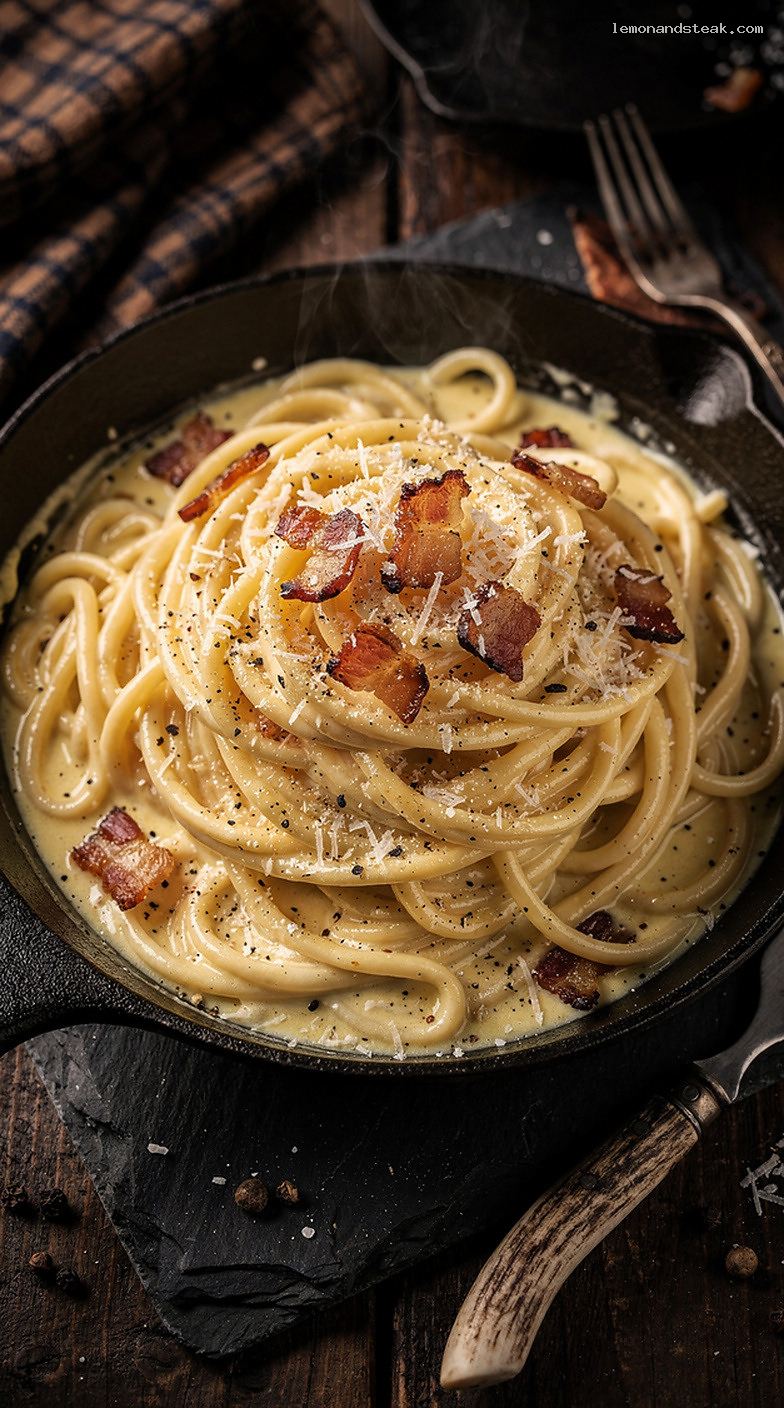
Quick Recipe Version (TL;DR)
Quick Ingredients
- 12 oz (340 g) spaghetti
- 6 oz (170 g) guanciale, pancetta, or thick-cut bacon, cut into 1/4-inch (6 mm) lardons
- 2 large eggs
- 2 large egg yolks
- 1 cup (100 g) finely grated Pecorino Romano
- 1/2 cup (50 g) finely grated Parmigiano-Reggiano
- 1 tsp freshly ground black pepper, plus more to serve
- 1 tbsp Diamond Crystal kosher salt (or 1 1/2 tsp Morton kosher salt), for the pasta water
- Up to 1 cup (240 ml) hot reserved pasta water, as needed
Do This
- 1) Whisk eggs + yolks, cheeses, and pepper into a thick paste.
- 2) Cook guanciale in a skillet over medium-low heat until crisp; keep the rendered fat.
- 3) Boil spaghetti in salted water until al dente; reserve 1 cup pasta water.
- 4) Toss drained pasta into the skillet with guanciale and fat (heat off) for 30 seconds.
- 5) Cool 60 seconds, then add egg-cheese mixture and toss vigorously.
- 6) Add hot pasta water a splash at a time until glossy and silky (no scrambling).
- 7) Serve immediately with extra cheese and lots of black pepper.
Why You’ll Love This Recipe
- Silky, creamy sauce made from eggs and cheese only (no cream needed).
- Big, savory flavor from cured pork and plenty of black pepper.
- Fast enough for weeknights, special enough for guests.
- Uses simple ingredients with restaurant-style results.
Grocery List
- Produce: None required (optional: parsley for garnish)
- Dairy: Pecorino Romano, Parmigiano-Reggiano, eggs
- Pantry: Spaghetti, kosher salt, whole black peppercorns (or ground black pepper)
- Meat: Guanciale (preferred) or pancetta (or thick-cut bacon)
Full Ingredients
Pasta
- 12 oz (340 g) spaghetti
- 4 quarts (3.8 L) water
- 1 tbsp Diamond Crystal kosher salt (or 1 1/2 tsp Morton kosher salt)
Cured Pork
- 6 oz (170 g) guanciale (preferred) or pancetta, cut into 1/4-inch (6 mm) lardons
Egg-Cheese Mixture (the no-cream “sauce base”)
- 2 large eggs
- 2 large egg yolks
- 1 cup (100 g) finely grated Pecorino Romano
- 1/2 cup (50 g) finely grated Parmigiano-Reggiano
- 1 tsp freshly ground black pepper
To Finish
- Up to 1 cup (240 ml) hot reserved pasta water, added gradually as needed
- More finely grated Pecorino Romano or Parmigiano-Reggiano, to serve
- More freshly ground black pepper, to serve
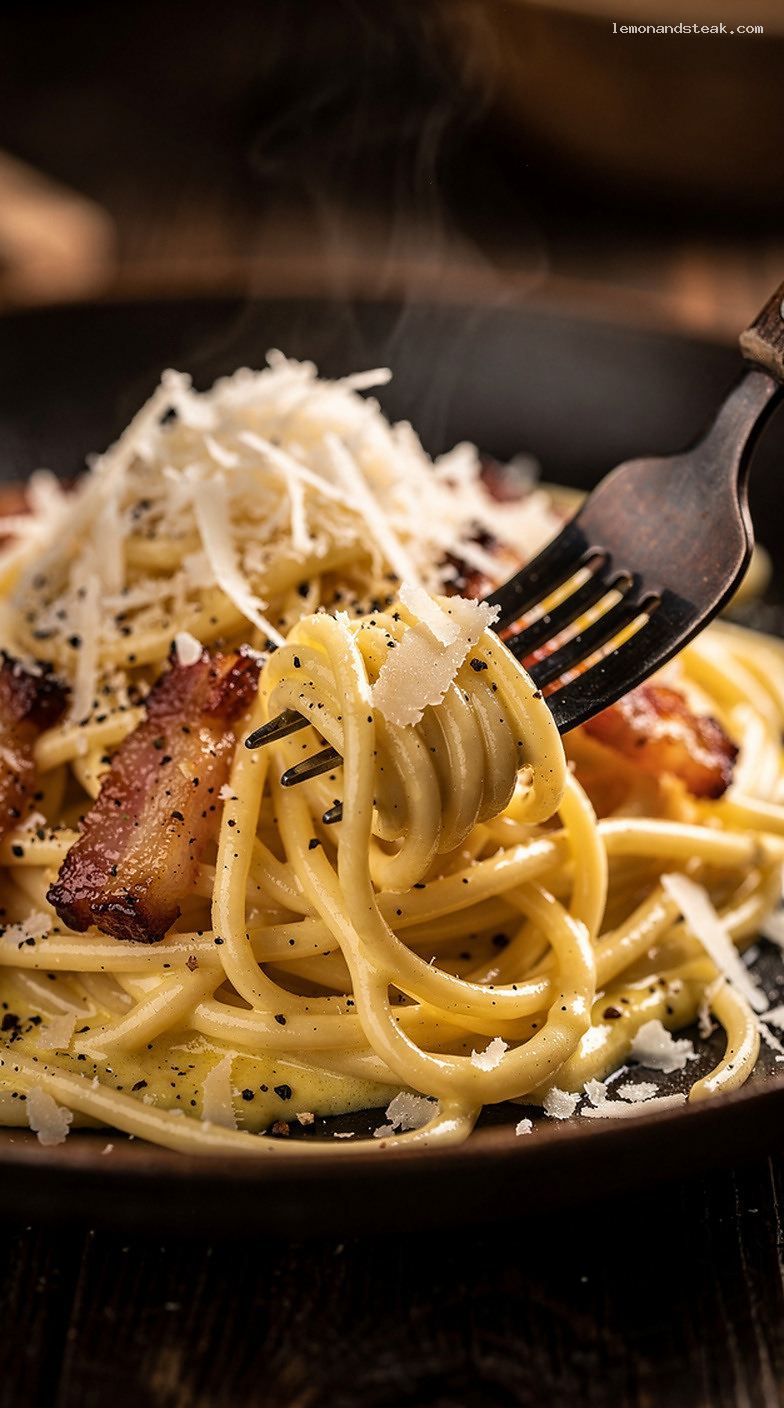
Step-by-Step Instructions
Step 1: Set up your workspace
Bring a large pot with 4 quarts (3.8 L) water to a boil. While it heats, cut the guanciale (or pancetta) into 1/4-inch (6 mm) pieces and finely grate your cheeses. Carbonara moves quickly at the end, so having everything ready makes it stress-free.
Step 2: Make the egg-and-cheese mixture
In a large heatproof mixing bowl (big enough to toss all the pasta), whisk together 2 large eggs and 2 large egg yolks until blended. Add 1 cup (100 g) Pecorino Romano, 1/2 cup (50 g) Parmigiano-Reggiano, and 1 tsp black pepper. Stir until it forms a thick, grainy paste. Set aside.
Why this works: The eggs thicken gently from the pasta’s heat, and the cheese melts into the eggs, creating a glossy sauce without any cream.
Step 3: Render the guanciale until crisp
Place the guanciale in a large skillet (12-inch is ideal) over medium-low heat. Cook, stirring occasionally, until the fat renders and the pieces turn crisp and golden, about 8–10 minutes. Turn off the heat.
Use a slotted spoon to transfer the crisp guanciale to a small bowl, leaving the rendered fat in the skillet. (If there is more than about 3 tbsp fat, you can spoon off the excess and save it for roasting vegetables.)
Step 4: Cook the pasta until al dente
Once the water is at a rolling boil (212°F / 100°C), add the salt: 1 tbsp Diamond Crystal kosher salt (or 1 1/2 tsp Morton kosher salt). Add the spaghetti and stir for the first 30 seconds to prevent sticking.
Cook until al dente (typically 9–11 minutes, but follow your package and start tasting 2 minutes early). Right before draining, carefully reserve 1 cup (240 ml) of the hot pasta water.
Step 5: Toss pasta with the guanciale and rendered fat
Add the drained spaghetti to the skillet with the rendered fat. Add the crisp guanciale back in. Toss over the residual heat only (keep the burner off) for about 30–45 seconds so the pasta gets coated in the flavorful fat.
If your kitchen is very cold and the pan cools instantly, you can briefly warm the skillet over low heat for 10–15 seconds, then turn it off again. The key is to avoid high heat before the eggs go in.
Step 6: Create the silky sauce (off heat)
Let the skillet cool for 60 seconds (this small pause helps prevent scrambled eggs). Pour the pasta-and-guanciale mixture into the bowl with the egg-cheese mixture.
Toss vigorously with tongs for 45–60 seconds, lifting and turning so the eggs thicken into a glossy coating. Add reserved hot pasta water 1 tbsp (15 ml) at a time while tossing until the sauce becomes silky and clings to the noodles. You’ll typically use 1/4 to 3/4 cup (60–180 ml), depending on heat and cheese.
Target texture: shiny, creamy, and flowing—not dry or clumpy. The sauce should look like it’s hugging the pasta, not sitting at the bottom of the bowl.
Step 7: Serve immediately
Divide among warm bowls. Finish with extra grated cheese and plenty of freshly ground black pepper. Carbonara is at its best right away, while the sauce is silky and the guanciale is still crisp-edged.
Pro Tips
- Keep the heat gentle: The #1 rule is to combine eggs with pasta off heat (or at most very low residual heat) so you get a sauce, not scrambled eggs.
- Use finely grated cheese: Microplane-fine cheese melts quickly and makes the sauce smoother.
- Save more pasta water than you think: The starchy water is your “dial” for loosening the sauce. Reserve 1 cup (240 ml), even if you don’t use it all.
- Toss hard and fast: Vigorous tossing emulsifies the fat, egg, cheese, and water into that signature glossy coating.
- Pepper matters: Freshly ground black pepper gives carbonara its warm bite. Start with 1 tsp and add more at the table.
Variations
- Use pancetta or bacon: Guanciale is traditional, but 6 oz (170 g) pancetta works beautifully. Thick-cut bacon adds smokiness (not traditional, but tasty).
- Try a different pasta: Swap spaghetti for 12 oz (340 g) bucatini, rigatoni, or fettuccine. Ridged shapes hold sauce well.
- Add a light allium note (optional): Sauté 1 small garlic clove, smashed in the rendered fat for 60 seconds, then remove it before adding pasta. (This is not classic, but it’s a gentle twist.)
Storage & Make-Ahead
Carbonara is best eaten immediately. If you have leftovers, cool and refrigerate in an airtight container for up to 2 days. Reheat gently in a skillet over low heat with 1–3 tbsp (15–45 ml) water, tossing constantly until just warmed through; avoid high heat or the eggs can tighten and turn grainy. For make-ahead: you can pre-grate the cheeses and cut the guanciale up to 24 hours ahead and refrigerate separately.
Nutrition (per serving)
Approximate, based on 4 servings: 720 calories, 30 g protein, 34 g fat, 70 g carbohydrates, 3 g fiber, 4 g sugars, 1150 mg sodium.
Leave a Reply