

Quick Recipe Version (TL;DR)
Quick Ingredients
- 4 cups (1 L) low-sodium vegetable or chicken stock
- 2 tbsp unsalted butter, divided
- 2 tbsp olive oil
- 1 small yellow onion, finely diced
- 2 garlic cloves, minced
- 1 1/2 cups (300 g) arborio rice
- 1/2 cup (120 ml) dry white wine (or extra stock)
- 1 cup (240 g) pumpkin puree (100% pumpkin)
- 8–10 fresh sage leaves, finely chopped (plus extra for garnish)
- 1 tsp fresh thyme leaves or 1/2 tsp dried thyme
- 1/4 tsp ground nutmeg
- 1/2 cup (50 g) freshly grated Parmesan cheese, plus extra for serving
- 1/2 tsp fine sea salt, plus more to taste
- 1/4 tsp freshly ground black pepper, plus more to taste
- Optional: extra butter and whole sage leaves for crispy sage garnish
Do This
- 1. Warm stock in a small pot over low heat; keep it just below a simmer.
- 2. In a wide pot, heat 1 tbsp butter and olive oil, then gently cook onion and garlic until soft and translucent.
- 3. Stir in rice and toast 2 minutes, then add wine and cook until mostly absorbed.
- 4. Stir in pumpkin puree, chopped sage, thyme, nutmeg, salt, and pepper.
- 5. Add hot stock a ladle at a time, stirring often and letting each addition absorb before adding more, about 18–20 minutes.
- 6. When rice is just al dente and creamy, remove from heat and stir in remaining 1 tbsp butter and Parmesan.
- 7. Adjust seasoning, top with extra Parmesan and optional crispy sage leaves, and serve immediately.
Why You’ll Love This Recipe
- Deep, cozy fall flavors from pumpkin, sage, and nutmeg in a single creamy bowl.
- Classic risotto technique broken down into simple, reassuring steps for home cooks.
- Uses pantry-friendly canned pumpkin, yet feels special enough for guests.
- Easily adaptable: make it vegetarian, richer, or more herby to suit your taste.
Grocery List
- Produce: 1 small yellow onion, garlic, fresh sage, fresh thyme (or dried), optional lemon (for a finishing squeeze, if desired).
- Dairy: Unsalted butter, Parmesan cheese (block for grating; not pre-shredded), optional heavy cream or mascarpone (for extra richness).
- Pantry: Arborio rice, pumpkin puree (100% pumpkin), olive oil, vegetable or chicken stock, dry white wine (or extra stock), salt, black pepper, ground nutmeg.
Full Ingredients
Pumpkin and Sage Risotto
- 4 cups (1 L) low-sodium vegetable or chicken stock
- 2 tbsp unsalted butter, divided
- 2 tbsp olive oil
- 1 small yellow onion, finely diced (about 1 cup / 120 g)
- 2 garlic cloves, minced
- 1 1/2 cups (300 g) arborio rice (or other risotto rice such as carnaroli)
- 1/2 cup (120 ml) dry white wine (such as Pinot Grigio or Sauvignon Blanc), or additional stock
- 1 cup (240 g) canned pumpkin puree (100% pumpkin, not pumpkin pie filling)
- 8–10 fresh sage leaves, finely chopped (about 2 tbsp)
- 1 tsp fresh thyme leaves, or 1/2 tsp dried thyme
- 1/4 tsp ground nutmeg
- 1/2 tsp fine sea salt, plus more to taste
- 1/4 tsp freshly ground black pepper, plus more to taste
- 1/2 cup (50 g) freshly grated Parmesan cheese, plus extra for serving
Optional Crispy Sage Garnish
- 1–2 tbsp unsalted butter
- 8–10 whole fresh sage leaves
- Pinch of salt
Optional Extra Richness (Choose One, If Desired)
- 2–3 tbsp heavy cream, stirred in at the end
- 2 tbsp mascarpone cheese, stirred in at the end
Step-by-Step Instructions
Step 1: Warm the Stock
Pour the 4 cups (1 L) of vegetable or chicken stock into a small saucepan. Set the pan over low heat and bring it just to a bare simmer. Once hot, reduce the heat to the lowest setting so it stays warm but is not boiling.
Keeping the stock warm is important: adding cold liquid to the rice would slow down cooking and make it harder for the starches in the rice to release, which is what gives risotto its classic creamy texture.
Step 2: Soften the Aromatics
In a wide, heavy-bottomed pot or deep skillet, heat 1 tablespoon of the butter and the 2 tablespoons of olive oil over medium heat. When the butter has melted and is slightly foamy, add the finely diced onion and a pinch of salt. Cook, stirring often, for 5–7 minutes, until the onion is very soft and translucent but not browned.
Add the minced garlic and cook for another 30–60 seconds, just until fragrant. Keep the heat moderate; you want everything soft and sweet, not caramelized or browned, which would give a different flavor profile.
Step 3: Toast the Rice and Deglaze
Add the arborio rice to the pot with the onions and garlic. Stir well so every grain is coated in the buttery oil. Cook, stirring constantly, for 2–3 minutes. The rice should look slightly translucent at the edges with an opaque white center. This toasting step helps the grains stay pleasantly firm in the center while the outside becomes creamy.
Pour in the white wine (or an equal amount of warm stock if you prefer not to use wine). Stir continuously, scraping up any bits stuck to the bottom of the pot. Let the liquid simmer gently until it is mostly absorbed and you no longer smell strong alcohol, about 2–3 minutes.
Step 4: Add Pumpkin and Herbs
Stir the pumpkin puree into the rice until it is fully incorporated and the grains are coated in a rich orange mixture. Add the chopped sage, thyme, nutmeg, 1/2 teaspoon salt, and 1/4 teaspoon black pepper. Mix until the herbs and spices are evenly distributed.
This is the moment when the cozy flavor base is built: the pumpkin brings natural sweetness and color, while the sage, thyme, and nutmeg add warmth and depth. Taste a tiny bit and adjust the seasoning if you like it slightly saltier at this stage.
Step 5: Slowly Stir in the Stock
Add your first ladle (about 1/2 cup / 120 ml) of hot stock to the rice. Stir gently but frequently over medium-low heat, keeping the risotto at a gentle simmer. When most of the liquid has been absorbed and you can draw a spoon through the pot and see the bottom briefly, add another ladleful of hot stock.
Continue this rhythm: add a ladle of stock, stir often, and wait for it to be mostly absorbed before adding the next one. This process should take about 18–20 minutes. The rice will gradually plump up and release starch, creating a naturally creamy sauce. Adjust the heat as needed to maintain a gentle simmer; if it boils too hard, the rice exterior will overcook before the center is tender.
Step 6: Check Doneness and Finish with Butter and Parmesan
After about 18 minutes, start tasting the rice. It should be tender but still have a slight firmness in the center (al dente). If it is still too firm, keep adding stock in small amounts and stirring for another 3–5 minutes. You may not need all the stock, or you might need a splash more hot water or stock; use your judgment.
Once the rice is just right and the consistency is loose and creamy (it should slowly flow if you tilt the pan), remove the pot from the heat. Stir in the remaining 1 tablespoon butter and the 1/2 cup (50 g) grated Parmesan. If using, add the heavy cream or mascarpone now. Stir vigorously for 30–60 seconds to emulsify the fat into the sauce, making the risotto glossy and luxurious.
Taste and adjust seasoning with more salt and pepper if needed. If the risotto seems too thick, stir in a small splash of hot stock or water until it looses to a creamy, spoonable consistency.
Step 7: Make Crispy Sage (Optional) and Serve
For an optional but highly recommended garnish, heat 1–2 tablespoons of butter in a small skillet over medium heat. When the butter is foamy, add the whole sage leaves in a single layer. Fry for 30–60 seconds per side, just until crisp and slightly darker green. Transfer the leaves to a paper towel-lined plate and sprinkle with a tiny pinch of salt.
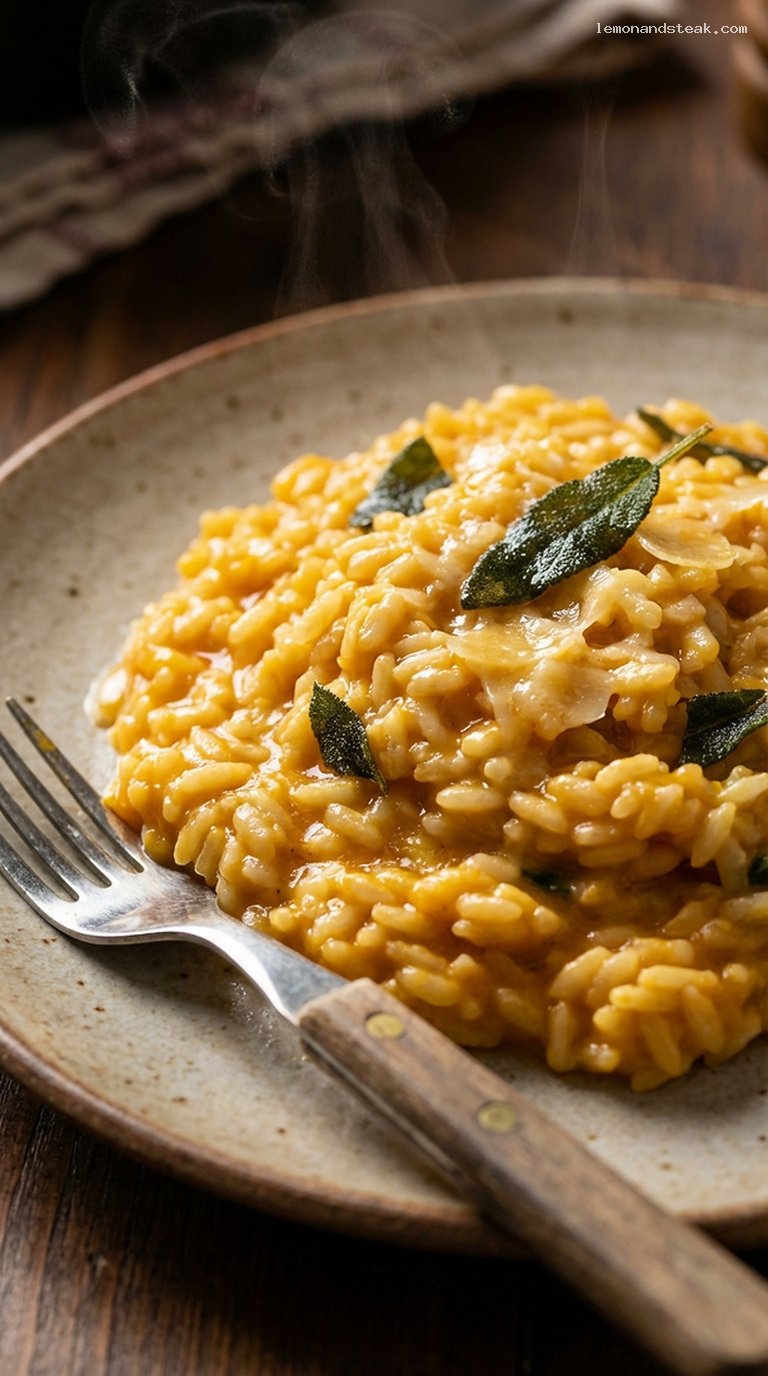
Spoon the hot pumpkin and sage risotto into warm shallow bowls. Top with extra grated Parmesan and the crispy sage leaves. Finish with a twist of black pepper and, if you enjoy a touch of brightness, a very small squeeze of fresh lemon over each bowl. Serve immediately while piping hot and creamy.
Pro Tips
- Use the right rice. Arborio or carnaroli are ideal; long-grain rice will not release enough starch to become creamy.
- Stir enough, but not frantically. Occasional, steady stirring is perfect. It keeps the rice from sticking and helps release starch without breaking the grains.
- Control the heat. The risotto should gently simmer, never boil hard. Too much heat leads to mushy outsides and undercooked centers.
- Adjust texture at the end. Risotto thickens as it sits. Aim for slightly looser than you think you want, and add a splash of hot stock just before serving if it tightens up.
- Grate Parmesan fresh. Pre-grated cheese often contains anti-caking agents that prevent it from melting smoothly into the risotto.
Variations
- Brown Butter and Hazelnut Pumpkin Risotto: Brown the butter until nutty before starting the risotto, and sprinkle toasted chopped hazelnuts on top just before serving.
- Sausage and Pumpkin Risotto: Brown 8 oz (225 g) of crumbled Italian sausage in the pot before the onions, remove it, then proceed with the recipe. Stir the cooked sausage back in at the end.
- Extra Herby Version: Add 1 tablespoon finely chopped fresh parsley and 1 teaspoon chopped fresh rosemary near the end of cooking for a more pronounced herbal flavor.
Storage & Make-Ahead
Risotto is at its absolute best straight from the pot, but leftovers can still be very enjoyable. Cool any remaining risotto quickly by spreading it in a thin layer on a plate or shallow container. Transfer to an airtight container and refrigerate for up to 3 days. To reheat, add a splash of water or stock to a saucepan, then stir in the risotto over low heat until hot and creamy again, adding more liquid as needed. You can also reheat gently in the microwave with a spoonful of stock or water, stirring halfway through.
For a fun second life, shape cold leftover risotto into small patties or balls, coat lightly in breadcrumbs, and pan-fry in a little oil until crisp and golden on both sides. Serve as savory risotto cakes with extra Parmesan on top.
Nutrition (per serving)
Approximate values per serving (1/4 of the recipe, without optional cream or mascarpone): 430 calories; 15 g fat; 57 g carbohydrates; 12 g protein; 2 g fiber; 6 g saturated fat; 900 mg sodium (varies with stock and salt); 6 g sugars (mostly from pumpkin and onion). These numbers are estimates and will vary based on the exact products and brands you use.
Leave a Reply