
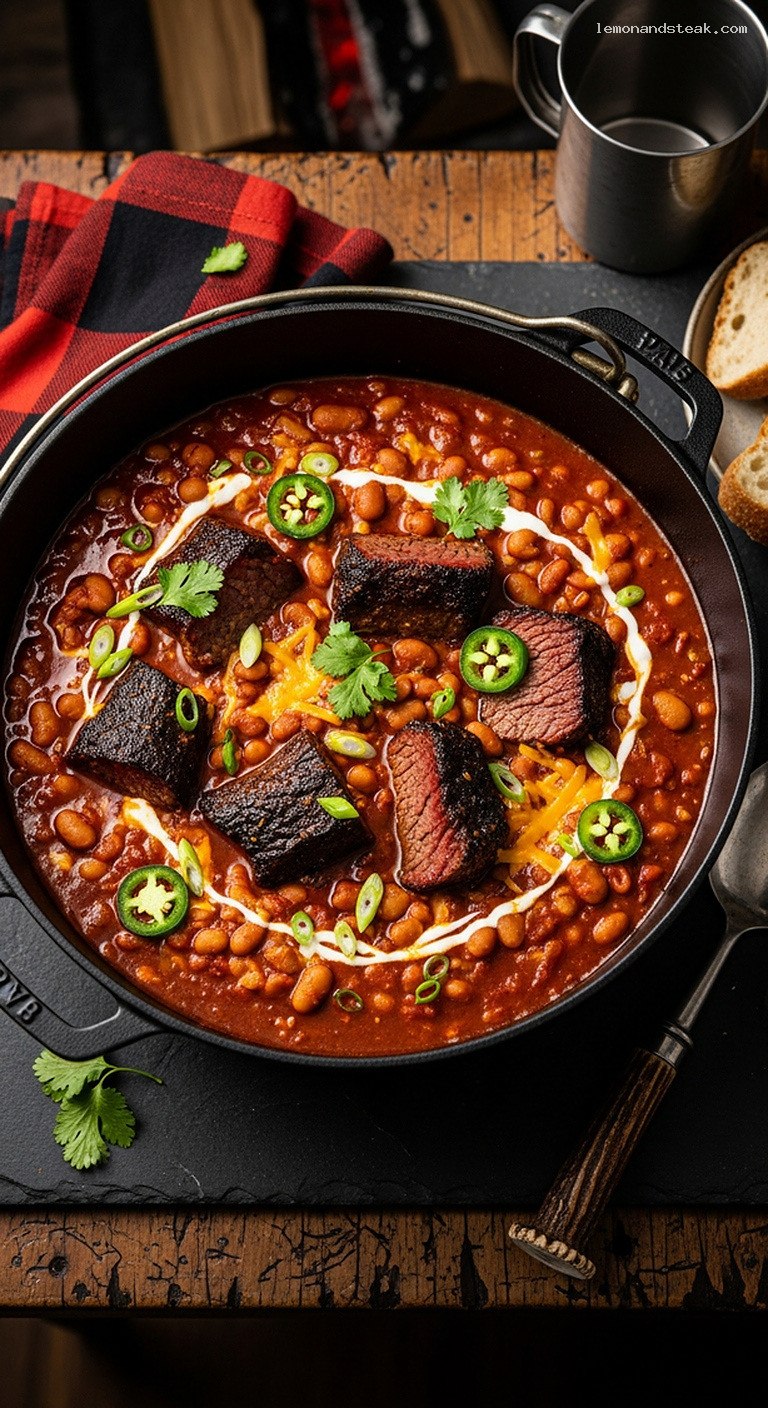
Cowboy-Style Beans and Brisket Pot (Campfire or Home Version)
Quick Recipe Version (TL;DR)
Quick Ingredients
- 3 lb (1.4 kg) beef brisket, trimmed and cut into 2-inch chunks
- 1 lb (about 2 cups) dried pinto beans, soaked 8–12 hours and drained
- 2 tbsp neutral oil
- 2 tsp kosher salt, 1 tsp black pepper
- 2 tsp smoked paprika, 2 tsp chili powder
- 1 tsp ground cumin, 1 tsp dried oregano, 1/2 tsp chipotle powder
- 1 large onion, 1 red bell pepper, 1 jalapeño, 4 garlic cloves
- 4 cups beef broth, 2–3 cups water
- 1 can (14.5 oz / 410 g) fire-roasted diced tomatoes
- 2 tbsp tomato paste, 1 tbsp brown sugar
- 2 tbsp apple cider vinegar
- Optional garnishes: chopped green onions, cilantro, shredded cheddar, sour cream, lime wedges
Do This
- 1. Soak pinto beans in plenty of water 8–12 hours, then drain and rinse.
- 2. Rub brisket chunks with salt, pepper, smoked paprika, cumin, chili and chipotle powders.
- 3. Over hot embers or medium-high stovetop heat, sear brisket in oil in a heavy Dutch oven until well browned; set aside.
- 4. Sauté diced onion, bell pepper, and jalapeño; add garlic, tomato paste, brown sugar, and oregano and cook briefly.
- 5. Add soaked beans, seared brisket, tomatoes, beef broth, and enough water to cover; bring to a simmer.
- 6. Cover and cook low and slow over embers (or in a 300°F / 150°C oven), 3.5–4 hours, until beans are tender and brisket shreds easily.
- 7. Stir in vinegar, adjust seasoning, rest 10 minutes, then serve hot with your favorite garnishes.
Why You’ll Love This Recipe
- Deeply smoky, campfire-style flavor from long, slow cooking and bold spices.
- One-pot meal with tender brisket, creamy pinto beans, and a rich, thick broth.
- Flexible cooking method: do it over embers, on the stovetop, or in the oven or slow cooker.
- Feeds a crowd and tastes even better the next day, perfect for gatherings or meal prep.
Grocery List
- Produce: 1 large yellow onion, 1 red bell pepper, 1–2 jalapeños, 4 garlic cloves, green onions, fresh cilantro, 1 lime (optional)
- Dairy: Sour cream, shredded sharp cheddar or Monterey Jack (optional, for serving)
- Pantry: 3 lb beef brisket, 1 lb dried pinto beans, neutral oil, kosher salt, black pepper, smoked paprika, chili powder, ground cumin, dried oregano, chipotle chili powder, brown sugar, tomato paste, 1 can fire-roasted diced tomatoes, beef broth, apple cider vinegar, hot sauce (optional), cornmeal or crusty bread or tortillas for serving (optional)
Full Ingredients
For the Brisket & Rub
- 3 lb (1.4 kg) beef brisket, trimmed of excess hard fat and cut into 2-inch chunks
- 2 tsp kosher salt (plus more to taste)
- 1 tsp freshly ground black pepper
- 2 tsp smoked paprika
- 1 tsp ground cumin
- 1 tsp chili powder
- 1/2 tsp chipotle chili powder (or more for extra heat)
- 2 tbsp neutral oil (canola, grapeseed, or vegetable oil)
For the Beans & Broth
- 1 lb (about 2 cups) dried pinto beans, picked over, rinsed, and soaked 8–12 hours
- 4 cups (960 ml) beef broth
- 2–3 cups (480–720 ml) water, as needed to cover
- 1 can (14.5 oz / 410 g) fire-roasted diced tomatoes with juices
- 2 tbsp tomato paste
- 1 tbsp packed brown sugar
- 2 tbsp apple cider vinegar (added at the end)
Aromatics & Seasonings
- 1 large yellow onion, diced
- 1 red bell pepper, diced
- 1 jalapeño, seeded and finely chopped (leave some seeds for more heat, if desired)
- 4 garlic cloves, minced
- 1 tsp dried oregano
- 1 bay leaf (optional but nice)
- Hot sauce, to taste (optional, for serving or stirring in at the end)
For Serving (Optional but Recommended)
- Chopped green onions (scallions)
- Chopped fresh cilantro
- Shredded sharp cheddar or Monterey Jack cheese
- Sour cream or plain yogurt
- Lime wedges
- Crusty bread, cornbread, or warm flour tortillas
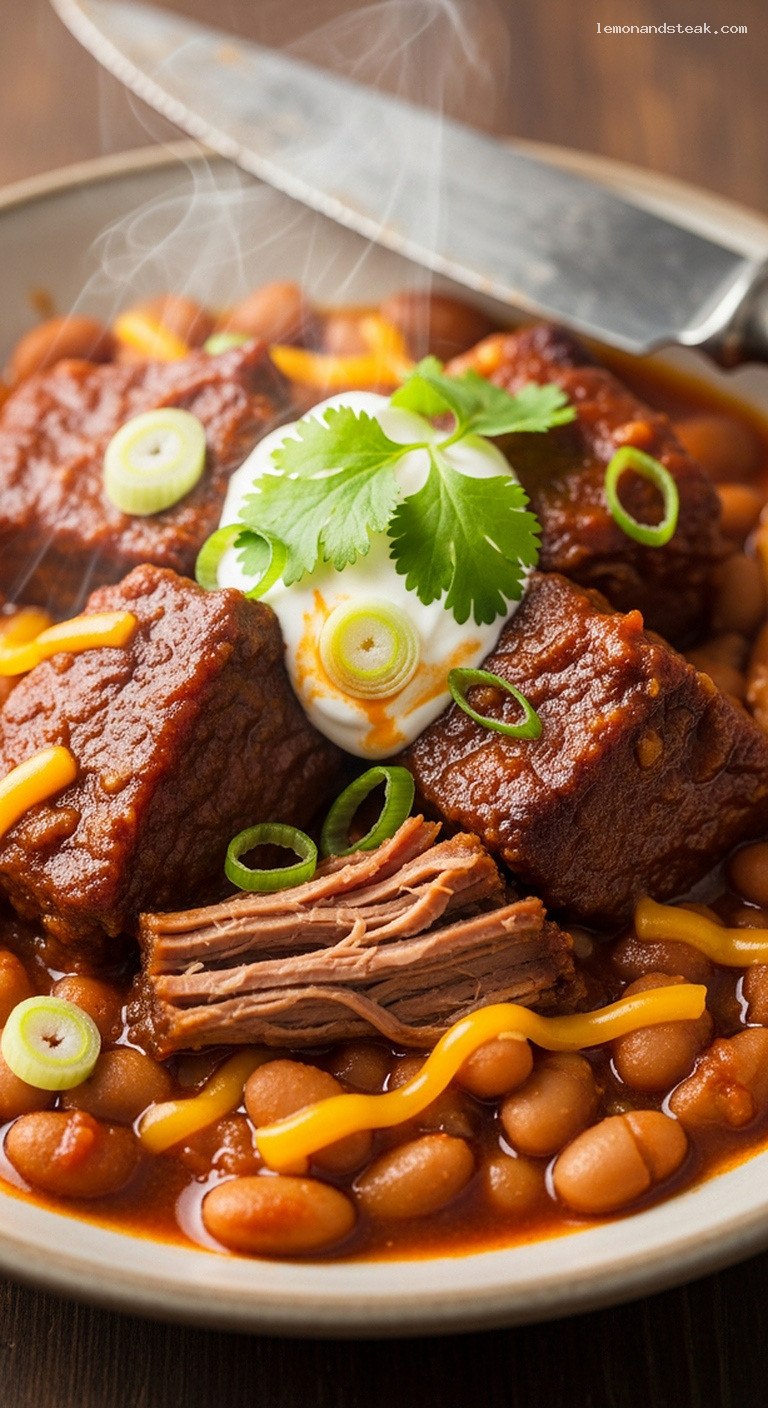
Step-by-Step Instructions
Step 1: Soak the Beans
Pick through the dried pinto beans to remove any debris or damaged beans. Rinse well. Place the beans in a large bowl and cover with at least 3 inches of cold water. Soak for 8–12 hours (overnight is ideal). When ready to cook, drain and rinse the beans again. Set aside.
Note: Soaking helps the beans cook more evenly and more quickly, and makes them easier to digest. If you forget to soak, you can quick-soak by simmering the beans in water for 1 hour, then draining, but the full overnight soak gives the best texture.
Step 2: Season the Brisket
Pat the brisket chunks dry with paper towels; dry meat browns better. In a small bowl, mix together the kosher salt, black pepper, smoked paprika, ground cumin, chili powder, and chipotle chili powder. Sprinkle this spice mixture evenly over the brisket pieces and rub it in so each piece is well coated. Let the seasoned brisket sit at room temperature for about 20 minutes while you prep the vegetables and fire. This short rest helps the seasoning penetrate and takes the chill off the meat for better searing.
Step 3: Build Your Fire or Preheat the Oven
For a true cowboy-style pot, build a wood or charcoal fire and let it burn down until you have a solid bed of glowing embers with a few small flames. You want medium heat under the pot: when you hold your hand about 6 inches above the grate, you should be able to keep it there for 3–4 seconds before it feels too hot. Plan to add a few fresh coals or small logs every 30–45 minutes to maintain gentle heat.
For an indoor version, preheat your oven to 300°F (150°C). You will start the stew on the stovetop over medium-high heat, then transfer the covered pot to the oven to braise low and slow.
Step 4: Sear the Brisket
Place a heavy 5–6 quart cast iron Dutch oven directly over the campfire grate or on a stovetop burner over medium-high heat. Add the neutral oil and heat until it shimmers. Working in 2–3 batches so you do not crowd the pot, add the brisket pieces in a single layer. Sear for 3–4 minutes per side, until deeply browned with a good crust. Adjust the pot position over the coals or the burner heat as needed to avoid scorching.
Transfer the browned brisket to a plate or bowl and repeat with the remaining meat, adding a splash more oil if the pot looks dry. Do not rush this step; browning builds the deep, meaty flavor that makes this stew so satisfying. Leave the browned bits (fond) in the pot; they are flavor gold.
Step 5: Cook the Aromatics and Build the Base
With the pot still over medium or medium-high heat, add the diced onion and red bell pepper to the remaining fat in the pot. If things look dry, add another teaspoon of oil. Cook, stirring frequently, for 5–7 minutes until the vegetables soften and the onion turns translucent, scraping up the browned bits from the bottom as they loosen.
Stir in the chopped jalapeño and cook 1–2 minutes more. Add the minced garlic, tomato paste, brown sugar, dried oregano, and bay leaf. Cook, stirring constantly, for 1–2 minutes until the tomato paste darkens slightly in color and smells sweet and rich, but does not burn. This quick toasting step develops deeper flavor in the base.
Step 6: Add Beans, Brisket, and Liquids
Return the seared brisket and any accumulated juices to the pot. Add the soaked and drained pinto beans. Pour in the beef broth and the can of fire-roasted tomatoes with their juices. Stir well to combine. Add enough water to cover everything by about 1 inch; this will likely be 2–3 cups, depending on your pot size and how crowded it is.
Bring the pot just up to a gentle simmer over the embers or stovetop. You should see small, steady bubbles, not a rolling boil. Once simmering, taste the broth and add a pinch more salt if it tastes flat. Remember that flavors will concentrate as it cooks, so do not over-salt at this stage.
Step 7: Slow-Cook Until Tender
Cover the Dutch oven with its lid. For campfire cooking, nestle the pot so it sits over a steady bed of embers. Place a small shovel’s worth of hot coals on top of the lid if your pot allows; this creates an even, all-around heat like an oven. Aim for a gentle simmer and adjust the pot position or coals as needed. Cook for 3.5–4 hours, checking every 45–60 minutes to make sure the beans stay mostly submerged, adding a splash of water if necessary, and giving the pot a gentle stir to prevent sticking.
For oven cooking, once the pot is simmering on the stovetop, cover it and transfer to the 300°F (150°C) oven. Cook 3.5–4 hours, stirring once or twice, until the beans are creamy and the brisket is fork-tender and starting to fall apart.
When done, the liquid should be thick and stew-like, not soupy. If it is too thin, simmer uncovered on the stovetop or over slightly hotter coals for 10–20 minutes to reduce. If it is too thick, stir in a bit more hot water or broth.
Step 8: Finish, Rest, and Serve
Once the beans and brisket are fully tender, remove the pot from the heat. Discard the bay leaf. Use a spoon or forks to break up any very large brisket pieces into bite-size chunks or shreds right in the pot. Stir in the apple cider vinegar; this brightens the flavors and balances the richness. Taste and adjust seasoning with additional salt, black pepper, and hot sauce if you like more kick.
Let the stew rest, covered, for about 10 minutes before serving to allow the flavors to settle and the broth to thicken slightly. Ladle into warm bowls and top with chopped green onions, cilantro, shredded cheese, and a dollop of sour cream if desired. Serve with lime wedges for squeezing over the top and plenty of crusty bread, cornbread, or warm tortillas for scooping up every last bit.
Pro Tips
- Control the campfire heat: Too much heat will toughen the meat and split the beans. You want a lazy simmer, not a hard boil. Move the pot closer to or farther from the coals to fine-tune.
- Do not skip the browning: A deep sear on the brisket and a quick toast of the tomato paste are the keys to smoky, complex flavor.
- Watch the liquid level: Beans should stay mostly submerged the entire time. Add hot water or broth in small amounts if needed.
- Rest for better texture: A short rest after cooking lets the starch from the beans thicken the broth and helps the flavors meld.
- Make it milder or hotter: For a milder pot, skip the chipotle powder and use just half the jalapeño. For more heat, leave some jalapeño seeds in and add extra hot sauce at the end.
Variations
- Molasses and coffee chuckwagon beans: Add 2 tbsp molasses and replace 1 cup of the water with 1 cup strong brewed coffee. This gives a slightly sweet, dark, old-school trail flavor that pairs beautifully with the smoky brisket.
- Smoky chipotle version: Stir in 1–2 chopped chipotle peppers in adobo (plus a spoonful of their sauce) along with the tomatoes for intense smoke and gentle heat.
- Slow cooker adaptation: Sear the brisket and cook the aromatics in a skillet on the stovetop. Transfer everything to a 6–7 quart slow cooker, add beans, broth, and tomatoes, and cook on LOW for 8–10 hours or HIGH for 5–6 hours, until tender.
Storage & Make-Ahead
This stew keeps and reheats wonderfully. Let leftovers cool completely, then transfer to airtight containers and refrigerate for up to 4 days. The flavors deepen overnight, so it often tastes even better the next day. Reheat gently on the stovetop over low heat with a splash of water or broth if it has thickened too much, stirring occasionally until hot. You can also reheat in the microwave in covered bowls.
For longer storage, freeze in portioned containers for up to 3 months. Thaw overnight in the refrigerator, then reheat as above. If you are planning ahead for a trip or gathering, you can fully cook the stew at home, chill it, and then reheat it over a campfire or stove with a bit of added liquid.
Nutrition (per serving)
Approximate values per serving (1/8 of the recipe, without garnishes): about 550 calories; 35 g protein; 32 g carbohydrates; 30 g fat; 8 g fiber; 7 g sugar; 950 mg sodium. Actual values will vary based on exact ingredients, brands, and garnishes used.
Leave a Reply