
Quick Recipe Version (TL;DR)
Quick Ingredients
- 1 whole turkey (12–14 lb), thawed, giblets removed
- 3 tbsp kosher salt (for dry brine)
- 2 tsp freshly ground black pepper
- 1 cup (2 sticks) unsalted butter, very soft
- 1 medium yellow onion, very finely grated
- 3 tbsp fresh sage, finely chopped
- 1 tbsp fresh thyme, finely chopped
- 4 garlic cloves, minced
- 1 tsp lemon zest
- 2 medium carrots, 2 celery stalks, 1 large onion (for roasting pan)
- 1 head garlic, halved; 1 lemon, quartered; a few herb sprigs
- 3–4 cups low-sodium chicken or turkey broth (for roasting and gravy)
- 4 tbsp unsalted butter + 4 tbsp all-purpose flour (for gravy)
Do This
- 1. Dry-brine turkey 12–24 hours: pat dry and rub all over (including cavity) with 3 tbsp kosher salt; refrigerate uncovered.
- 2. Make sage-onion butter: mix soft butter, grated onion, sage, thyme, garlic, lemon zest, 1 tsp salt, and 1/2 tsp pepper.
- 3. Prep for roasting: heat oven to 425°F (220°C). Fill roasting pan with chopped carrots, celery, onion, halved garlic, lemon, and herb sprigs; pour in 1 cup broth and set a rack over top.
- 4. Butter the turkey: pat turkey dry, season skin with 2 tsp pepper, loosen skin over breasts and thighs, and massage most of the sage-onion butter under the skin; smear remaining butter all over outside.
- 5. Roast: place turkey breast-side up on rack. Roast 30 minutes at 425°F, then reduce to 325°F (165°C) and roast 2 1/2–2 3/4 hours more, basting occasionally and adding broth as needed, until thigh hits 165°F (74°C).
- 6. Rest and make gravy: let turkey rest 30–40 minutes. Meanwhile, make pan gravy with drippings, 4 tbsp butter, and 4 tbsp flour, thinning with broth. Carve and serve with gravy.
Why You’ll Love This Recipe
- The buttery sage-onion paste melts into the turkey skin, giving you shatteringly crisp, deeply flavored, golden-brown skin.
- Fresh herbs, onion, and garlic create a nostalgic, homestyle aroma that feels like a classic holiday meal.
- The method is straightforward and forgiving, with clear cues for doneness so you get juicy meat, not dry turkey.
- Includes a simple, rich pan gravy so none of that fragrant flavor goes to waste.
Grocery List
- Produce: 2–3 yellow onions, 1 head garlic plus 4 extra cloves, 1 lemon, 2 carrots, 2 celery stalks, fresh sage, fresh thyme
- Dairy: 1 1/4 cups unsalted butter (2 sticks + 4 tbsp extra)
- Pantry: 1 whole turkey (12–14 lb), kosher salt, freshly ground black pepper, low-sodium chicken or turkey broth, all-purpose flour
Full Ingredients
For the Turkey
- 1 whole turkey (12–14 lb), fully thawed, giblets and neck removed
- 3 tbsp kosher salt (for dry brining the turkey)
- 2 tsp freshly ground black pepper (for the skin)
For the Sage-Onion Butter Paste
- 1 cup (2 sticks / 226 g) unsalted butter, very soft but not melted
- 1 medium yellow onion, very finely grated or pureed (about 1 cup loosely packed; squeeze out excess liquid if very juicy)
- 3 tbsp fresh sage leaves, finely chopped
- 1 tbsp fresh thyme leaves, finely chopped
- 4 garlic cloves, finely minced or grated
- 1 tsp fine kosher salt
- 1/2 tsp freshly ground black pepper
- 1 tsp finely grated lemon zest
For Roasting Pan Aromatics (Optional but Recommended)
- 2 medium carrots, cut into 2-inch chunks
- 2 celery stalks, cut into 2-inch chunks
- 1 large yellow onion, peeled and cut into thick wedges
- 1 head garlic, halved horizontally
- 1 lemon, quartered
- 4 sprigs fresh sage
- 4 sprigs fresh thyme
- 3–4 cups low-sodium chicken or turkey broth, divided (start with 1 cup in the pan, reserve the rest for basting and gravy)
For the Simple Pan Gravy
- 3 cups combined turkey drippings and broth (separated from fat; top up with broth if needed)
- 4 tbsp unsalted butter
- 4 tbsp all-purpose flour
- Salt and freshly ground black pepper, to taste
- Optional: 1 tsp finely chopped fresh sage or thyme, and a squeeze of lemon juice for brightness
Step-by-Step Instructions
Step 1: Dry-Brine and Prep the Turkey
If your turkey is frozen, thaw it in the refrigerator for several days before cooking (as a guideline, allow about 24 hours per 4–5 lb / 1.8–2.3 kg of turkey). Once thawed, remove the turkey from its packaging. Take out the neck and giblet packet from the cavities and set them aside if you plan to use them for stock or gravy.
Pat the turkey very dry inside and out with paper towels. Place it on a wire rack set over a rimmed baking sheet or in your roasting pan. Sprinkle the 3 tbsp kosher salt all over the turkey, including under the wings and legs and inside the main cavity. Gently rub the salt into the skin. Refrigerate the turkey uncovered for 12–24 hours. This dry brine seasons the meat all the way through and helps the skin crisp beautifully.
Step 2: Bring Turkey Toward Room Temperature and Preheat Oven
About 1 hour before you plan to roast, remove the turkey from the refrigerator so it can lose some of its chill. This promotes more even cooking. Pat the surface again with paper towels to remove any moisture that has risen to the skin; do not rinse off the salt.
Adjust your oven rack so the turkey will sit roughly in the center of the oven. Preheat the oven to 425°F (220°C). While the oven heats, prepare the sage-onion butter paste and the roasting pan aromatics.
Step 3: Make the Buttery Sage-Onion Paste
In a medium bowl, combine the very soft butter, finely grated onion, chopped sage, chopped thyme, minced garlic, 1 tsp kosher salt, 1/2 tsp black pepper, and lemon zest. Use a spatula or spoon to mash everything together until you have a thick, fragrant paste. The onion will loosen the butter slightly; you want a spreadable consistency that will cling to the turkey but still feel rich and buttery.
If the paste feels too stiff to spread easily, let it sit at room temperature for a few more minutes and stir again. If it seems too loose or watery (onions can vary), squeeze a little more moisture out of any remaining grated onion before adding, or chill briefly to firm it up.
Step 4: Prepare the Roasting Pan and Aromatics
Scatter the carrot chunks, celery chunks, and onion wedges evenly over the bottom of a large roasting pan. Add the halved head of garlic, lemon quarters, and herb sprigs. These vegetables will flavor the drippings and help prevent them from burning.
Pour 1 cup of the broth into the pan. Set a roasting rack over the vegetables and lightly oil the rack if it is prone to sticking. Place the turkey breast-side up on the rack. Tuck the wing tips behind the bird so they do not burn. If desired, you can place a few of the lemon quarters and herb sprigs inside the cavity for more aroma (do not tightly pack the cavity; air needs to circulate for even cooking).
Step 5: Coat the Turkey with Sage-Onion Butter
Season the outside of the turkey with the 2 tsp freshly ground black pepper. Now, using clean hands, gently loosen the skin over the breast meat: start at the cavity end and slide your fingers between the skin and meat, being careful not to tear the skin. Work your way up over the breasts and down toward the thighs as far as you comfortably can.
Scoop up generous handfuls of the sage-onion butter paste and push it under the skin, spreading it evenly over the breast and thigh meat. Use about two-thirds of the paste under the skin. Massage the outside of the skin to help distribute the butter in a smooth layer. Then smear the remaining butter paste all over the outside of the turkey, including legs, wings, and any exposed areas. The turkey should look thoroughly coated in a pale, speckled, herb-flecked butter layer. This is what will melt into the skin as it roasts, basting the meat from within.
Step 6: Roast the Turkey until Juicy and Golden
Place the prepared turkey in the preheated 425°F (220°C) oven and roast for 30 minutes. This high-heat blast helps set and brown the skin. After 30 minutes, reduce the oven temperature to 325°F (165°C) without opening the door for too long.
Continue roasting at 325°F for about 2 1/2 to 2 3/4 hours, depending on the exact size of your turkey. Every 45 minutes or so, baste the turkey with the buttery pan juices, and check the liquid in the bottom of the pan. If it looks dry or the vegetables are starting to burn, add 1/2 to 1 cup broth at a time. If the skin is browning too quickly before the meat is done, loosely tent the breast with foil.
Begin checking for doneness about 30–40 minutes before you expect the turkey to be finished. Insert an instant-read thermometer into the thickest part of the thigh (without touching bone); it should register 165°F (74°C). Check the breast in its thickest part; it should be around 160°F (71°C). The temperatures will rise slightly as the turkey rests.
Step 7: Rest, Make Pan Gravy, and Carve
When the turkey reaches temperature, carefully transfer it (still on the rack, if possible) to a large cutting board or serving platter. Tent loosely with foil and let rest for 30–40 minutes. Resting allows the juices to redistribute, giving you moist slices instead of dry meat.
While the turkey rests, tilt the roasting pan and spoon off most of the fat, reserving 3–4 tbsp. Strain the remaining drippings and vegetables through a fine-mesh sieve into a bowl or large measuring cup, pressing on the solids to extract as much liquid as possible. Add enough broth to measure about 3 cups total liquid.
In a medium saucepan, melt 4 tbsp butter over medium heat, then whisk in 4 tbsp flour. Cook, whisking constantly, for 2–3 minutes to form a golden roux. Slowly pour in the hot drippings-broth mixture while whisking, and bring to a gentle simmer. Cook 5–10 minutes, stirring often, until thickened to a silky gravy. Season with salt and pepper to taste, and stir in chopped herbs or a squeeze of lemon if you like.
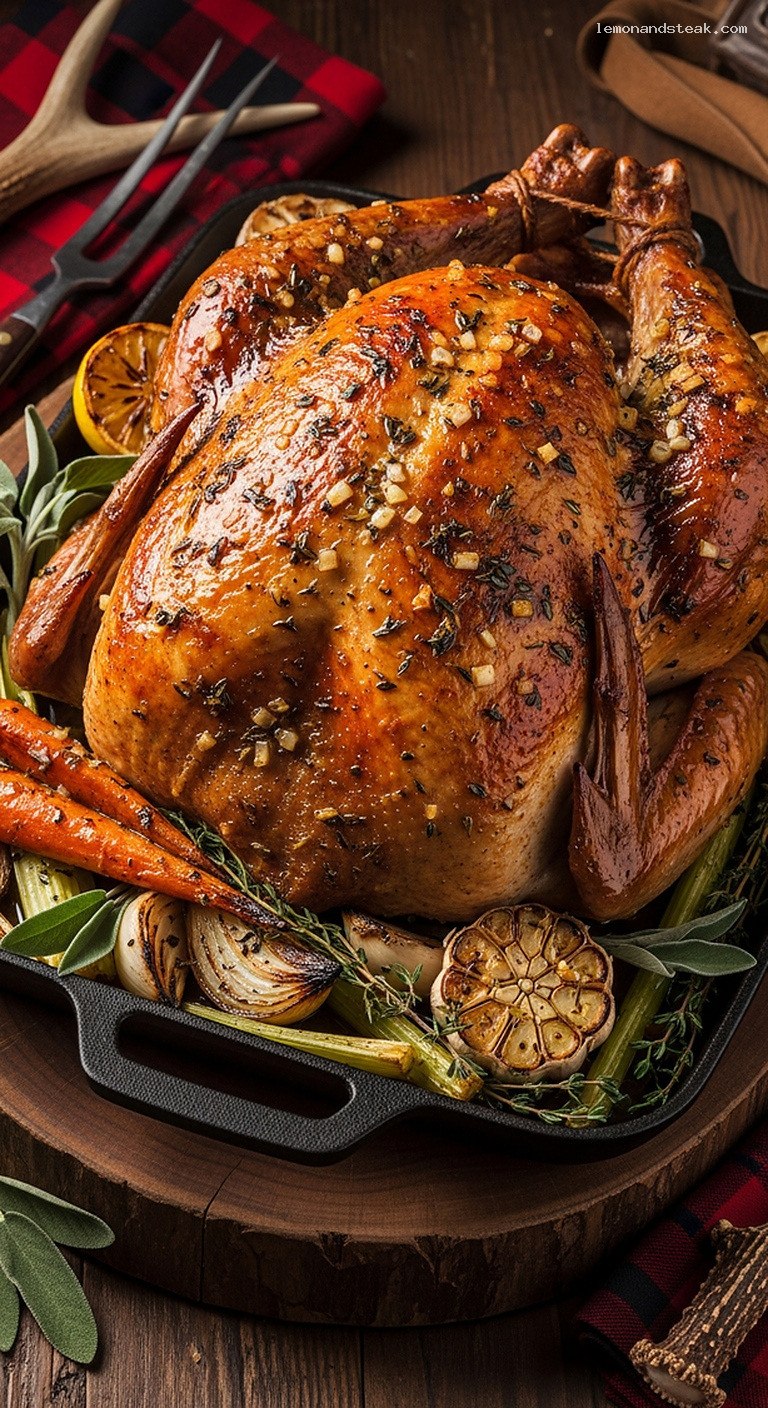
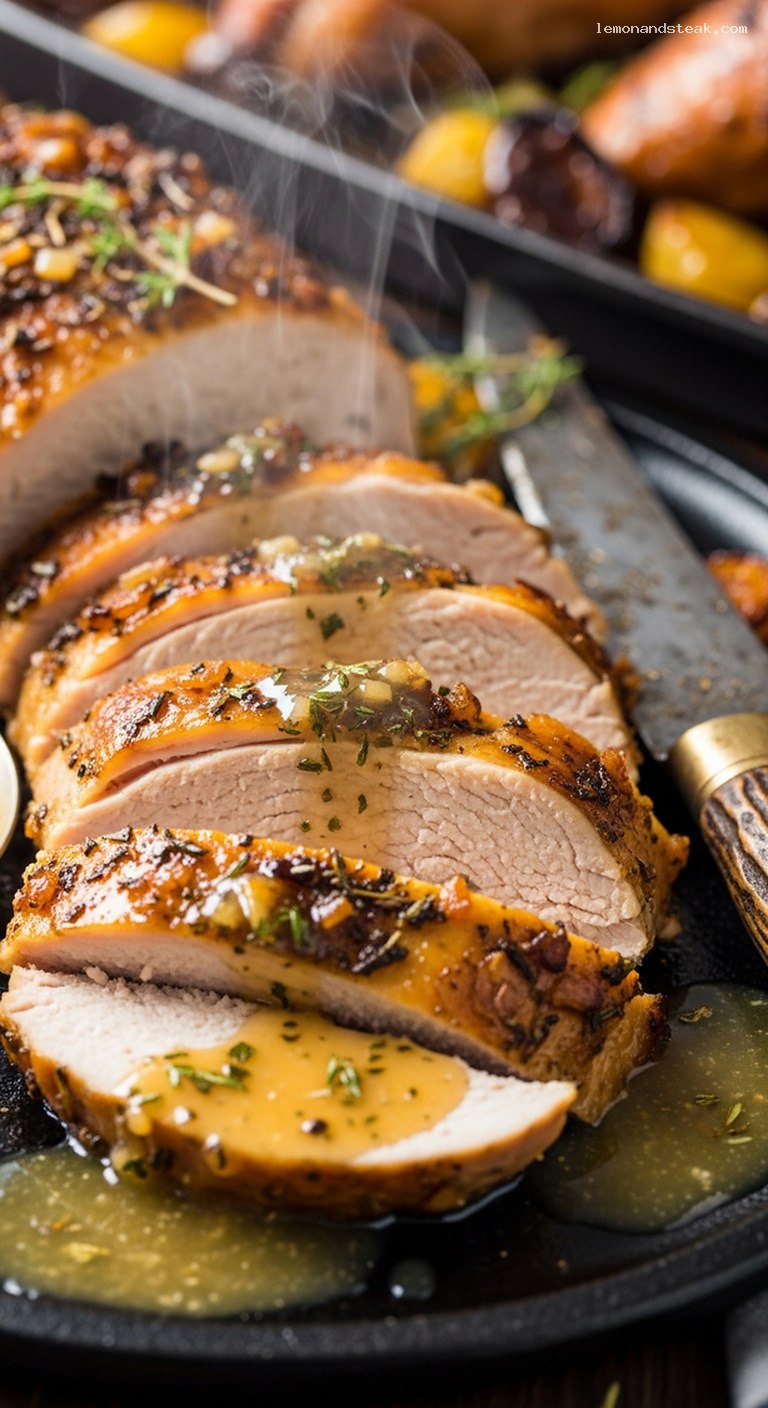
To carve, remove the legs and thighs, then the wings, and finally slice the breast meat across the grain. Arrange the meat on a warm platter, drizzle with a little of the gravy, and serve the rest on the side. The skin should be deeply golden, crisp, and richly perfumed with sage and onion.
Pro Tips
- Do not skip drying the turkey. Patting it very dry before salting and again before buttering is key to crisp skin.
- Use an instant-read thermometer. Turkeys vary; temperature is far more reliable than time for perfectly cooked, juicy meat.
- Keep the butter paste soft. If the paste is too cold and stiff, it will not spread under the skin easily. Room-temperature butter works best.
- Rotate the pan if needed. If one side browns faster, rotate the pan halfway through roasting for more even color.
- Rest generously. That 30–40 minute rest not only improves juiciness; it also gives you calm time to make gravy and finish side dishes.
Variations
- Garlic-Sage Butter Turkey: Double the garlic in the butter paste and omit the thyme and lemon zest for a simpler, strongly garlicky sage profile.
- Citrus-Herb Turkey: Add the zest of an orange to the butter paste, and tuck orange wedges into the cavity along with the lemon for a brighter, more citrus-forward flavor.
- Herb-Roasted Turkey Breast Only: Use the same sage-onion butter on a 6–7 lb bone-in turkey breast. Roast at 425°F for 20 minutes, then at 325°F until the thickest part of the breast reaches 160°F (about 1 3/4–2 hours).
Storage & Make-Ahead
Leftover turkey keeps well for 3–4 days in the refrigerator. Cool completely, then store in airtight containers. For longer storage, freeze sliced meat and gravy separately for up to 3 months; thaw overnight in the fridge before reheating.
You can dry-brine the turkey up to 2 days in advance; simply keep it uncovered in the fridge. The sage-onion butter paste can be made up to 3 days ahead and refrigerated; bring it back to room temperature until easily spreadable before using. The vegetables for the roasting pan can be chopped 1 day ahead and stored in a covered container in the fridge.
Reheat leftover turkey gently, covered, with a splash of broth or gravy in a low oven (300°F / 150°C) just until warmed through, to avoid drying out the meat.
Nutrition (per serving)
Approximate values for one serving (about 6 oz cooked turkey with some skin and 2–3 tbsp gravy): 480 calories; 32 g protein; 34 g fat; 6 g saturated fat; 6 g carbohydrates; 0 g fiber; 2 g sugar; 880 mg sodium. These numbers are estimates and will vary based on the exact size of your turkey, how much skin is eaten, and how much gravy is used.
Leave a Reply