
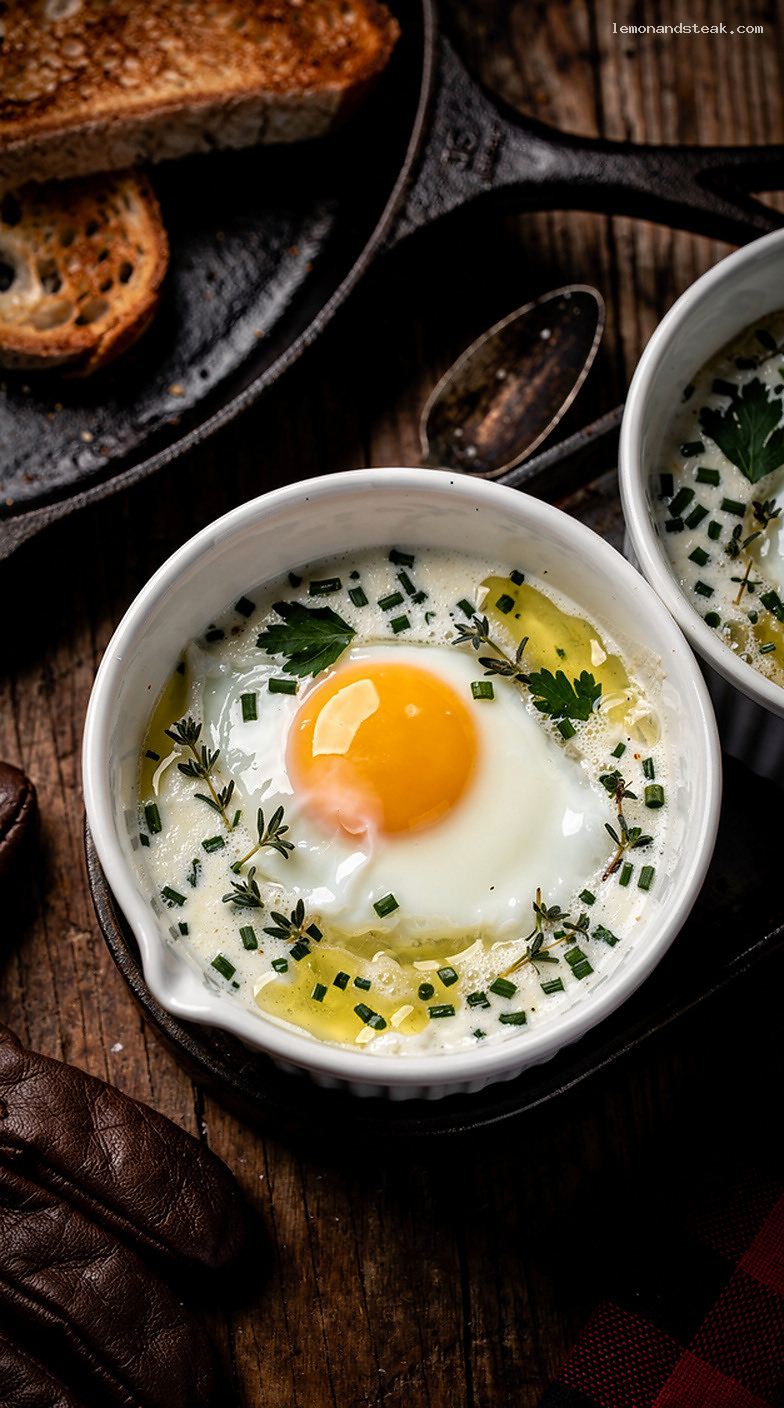
Quick Recipe Version (TL;DR)
Quick Ingredients
- 2 tbsp unsalted butter, divided
- 1/2 cup (120 ml) heavy cream, divided
- 4 large eggs
- 2 tbsp finely chopped fresh chives
- 1 tbsp finely chopped fresh parsley
- 1 tsp fresh thyme leaves (or 1/4 tsp dried thyme)
- 1/2 tsp kosher salt
- 1/4 tsp freshly ground black pepper
- Pinch of ground nutmeg (optional)
Do This
- 1. Heat oven to 325°F (163°C) and set a kettle of water to boil.
- 2. Butter 4 (6-oz/180-ml) ramekins; place them in a deep baking dish.
- 3. Add 1 tbsp cream to each ramekin; sprinkle in herbs, salt, pepper (and nutmeg, if using).
- 4. Crack 1 egg into each ramekin; top each with 1 tbsp cream and a small dot of butter.
- 5. Pour boiling water into the baking dish until it comes halfway up the ramekins.
- 6. Bake 12–16 minutes until whites are just set but yolks still jiggle; rest 2 minutes and serve.
Why You’ll Love This Recipe
- Restaurant-level brunch with minimal effort: creamy, softly set eggs with a rich finish.
- Gentle water-bath baking makes the texture silky and forgiving.
- Easy to scale up or down for guests or a cozy breakfast for two.
- Endlessly customizable with different herbs and simple add-ins.
Grocery List
- Produce: fresh chives, fresh parsley, fresh thyme (optional if using dried)
- Dairy: unsalted butter, heavy cream
- Pantry: kosher salt, black pepper, ground nutmeg (optional)
Full Ingredients
For the eggs en cocotte
- Unsalted butter: 2 tbsp, divided (about 1 tbsp to grease ramekins, 1 tbsp to dot the tops)
- Heavy cream: 1/2 cup (120 ml), divided (1/4 cup for the bottom + 1/4 cup for the top)
- Large eggs: 4
- Fresh chives: 2 tbsp, finely chopped
- Fresh parsley: 1 tbsp, finely chopped
- Fresh thyme leaves: 1 tsp (or 1/4 tsp dried thyme)
- Kosher salt: 1/2 tsp
- Freshly ground black pepper: 1/4 tsp
- Ground nutmeg: 1 pinch (optional)
To serve (optional, but highly recommended)
- Toast or baguette slices: 4–8 pieces
- Extra chopped chives or parsley: 1–2 tsp
Step-by-Step Instructions
Step 1: Preheat the oven and prep hot water
Arrange an oven rack in the middle position. Preheat the oven to 325°F (163°C). Bring a kettle or small pot of water to a boil (you’ll use it for the water bath, which helps the eggs cook gently and evenly).
Step 2: Butter the ramekins and set up the baking dish
Use about 1 tbsp of the butter to thoroughly grease 4 (6-oz/180-ml) ramekins, coating the bottoms and sides. Place the ramekins in a deep baking dish or roasting pan where they can sit flat without touching too tightly.
Step 3: Add cream, herbs, and seasoning
Divide 1/4 cup (60 ml) of the heavy cream among the ramekins (that’s 1 tbsp per ramekin). Sprinkle the chives, parsley, and thyme evenly over the cream.
Season evenly with the kosher salt, black pepper, and a pinch of nutmeg if using. (Nutmeg is optional, but it subtly boosts the “classic French” flavor.)
Step 4: Crack in the eggs carefully
Crack 1 large egg into a small bowl first, then gently slide it into a ramekin. Repeat with the remaining eggs. This extra step helps keep yolks intact and makes it easy to remove any stray shell pieces.
Step 5: Top with more cream and butter
Divide the remaining 1/4 cup (60 ml) heavy cream over the eggs (another 1 tbsp per ramekin). Cut the remaining 1 tbsp butter into 4 small pieces and place one piece on top of each egg.
Step 6: Create a hot water bath and bake gently
Carefully place the baking dish on the oven rack (pull the rack out slightly if that feels safer). Pour the boiling water into the baking dish (not into the ramekins) until the water comes about halfway up the sides of the ramekins.
Bake at 325°F (163°C) for 12–16 minutes, until the whites are opaque and just set but the yolks still have a soft jiggle when you gently tap the ramekin. If you prefer a firmer yolk, bake 1–3 minutes longer.
Step 7: Rest briefly and serve
Carefully remove the ramekins from the water bath (tongs and a kitchen towel help). Let them rest for 2 minutes; the residual heat will finish setting the whites without overcooking.
Serve warm, ideally with toast or baguette for dipping into the creamy edges and soft yolk. Finish with a pinch of extra chopped herbs if you like.
Pro Tips
- Watch the jiggle, not just the clock: Ovens vary. Start checking at 12 minutes. The center should wobble slightly; it will continue to set as it rests.
- Use hot (boiling) water for the bain-marie: Starting with hot water prevents the eggs from sitting too long in lukewarm water, which can overcook the edges by the time the centers set.
- Grease generously: Butter on the sides makes serving (and cleanup) much easier, and it adds flavor.
- Keep the ramekin size consistent: This recipe is written for 6-oz (180-ml) ramekins. Smaller ramekins cook faster; larger ones need a bit longer.
- For extra tenderness: Let eggs sit at room temperature for 10 minutes before baking (optional, but it helps even cooking).
Variations
- Gruyère herb eggs en cocotte: Add 1 tbsp (about 7 g) finely grated Gruyère to each ramekin before cracking in the egg.
- Smoked salmon and dill: Add 1 oz (28 g) chopped smoked salmon total (divide among ramekins) and swap thyme for 2 tsp chopped dill.
- Mushroom tarragon: Spoon 2 tbsp cooked, finely chopped sautéed mushrooms into each ramekin and replace parsley with 2 tsp chopped tarragon.
Storage & Make-Ahead
Eggs en cocotte are at their best right out of the oven while the yolks are still soft. If you do have leftovers, cover and refrigerate for up to 1 day. Reheat gently in a 300°F (149°C) oven for 8–12 minutes (the yolks will likely firm up).
To make ahead: butter the ramekins and chop the herbs up to 24 hours in advance. You can also portion the cream and seasonings into the ramekins, cover, and refrigerate. Crack in the eggs right before baking for the neatest presentation and most consistent timing.
Nutrition (per serving)
Approximate, per 1 ramekin: 220 calories, 9 g protein, 2 g carbs, 20 g fat, 12 g saturated fat, 240 mg sodium, 385 mg cholesterol.
Leave a Reply