
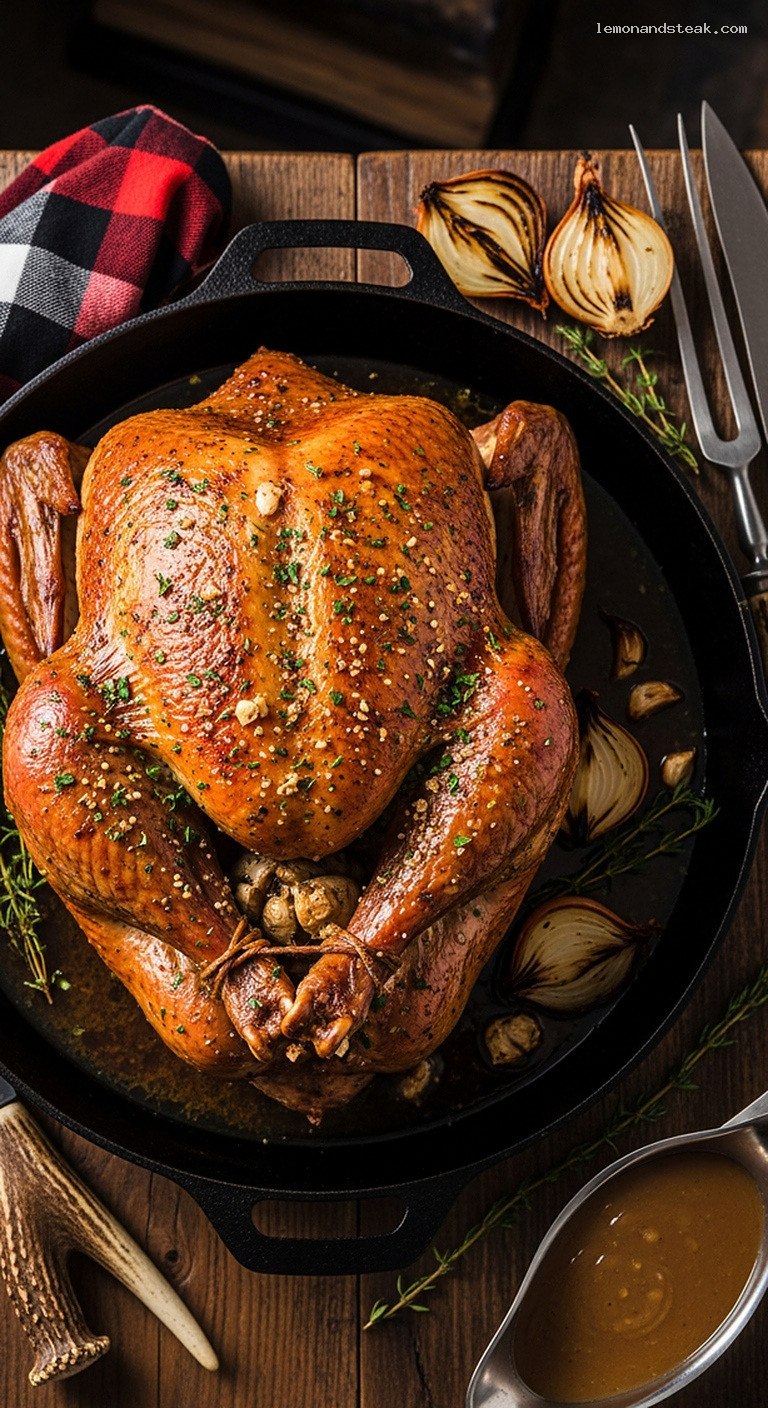
Quick Recipe Version (TL;DR)
Quick Ingredients
- 1 whole turkey, 12–14 lb (5.5–6.5 kg), thawed
- 1 cup (2 sticks / 225 g) unsalted butter, very soft
- 6 cloves garlic, finely minced
- 2 tbsp onion powder
- 2 tbsp dried parsley
- 2½ tbsp kosher salt (use 1½ tbsp if using table salt)
- 2 tsp freshly ground black pepper
- 1 large onion, quartered
- 1 lemon, halved (optional but nice)
- 3 cups (720 ml) low-sodium chicken or turkey broth
Do This
- 1. Heat oven to 325°F (163°C). Set a rack in a large roasting pan.
- 2. Pat turkey very dry; remove giblets and neck. Season cavity with some of the salt and pepper, and stuff with onion and lemon.
- 3. Mix butter, garlic, onion powder, dried parsley, remaining salt, and pepper. Gently loosen turkey breast skin and rub some butter under the skin; spread the rest all over the outside.
- 4. Pour broth into the pan. Place turkey breast-side up on the rack and tuck wing tips under. Roast, uncovered, 45–60 minutes.
- 5. When nicely golden, tent loosely with foil. Continue roasting 2½–3 hours more, basting a few times, until breast reaches 160°F (71°C) and thigh 175°F (79°C).
- 6. Transfer to a cutting board; rest, tented with foil, 30–45 minutes before carving.
- 7. Meanwhile, skim fat from pan drippings and simmer with extra broth and a little flour or cornstarch to make simple gravy.
Why You’ll Love This Recipe
- Classic, comforting flavor from butter, garlic, onion powder, and dried parsley that appeals to almost everyone.
- Simple, straightforward method tailored for home cooks, with no complicated brines or specialty equipment required.
- Juicy meat and crisp, golden-brown skin thanks to a generous buttery rub and gentle roasting temperature.
- Built-in pan gravy method so every slice of turkey can be served with rich, savory drippings.
Grocery List
- Produce: 1 whole garlic bulb, 1 large yellow or white onion, 1 lemon (optional), 2 medium carrots (optional, for the pan), 2 celery stalks (optional, for the pan), fresh herbs for garnish such as parsley or thyme (optional)
- Dairy: 1 cup (2 sticks / 225 g) unsalted butter
- Pantry: 1 whole turkey (12–14 lb), kosher salt, black pepper, onion powder, dried parsley, low-sodium chicken or turkey broth (about 4–5 cups total), all-purpose flour or cornstarch (for gravy), olive oil (optional)
Full Ingredients
For the Butter-Roasted Turkey
- 1 whole turkey, 12–14 lb (5.5–6.5 kg), completely thawed, neck and giblets removed
- 2½ tbsp kosher salt (use about 1½ tbsp if using fine table salt)
- 2 tsp freshly ground black pepper
- 1 cup (2 sticks / 225 g) unsalted butter, very soft but not melted
- 6 cloves garlic, finely minced or pressed
- 2 tbsp onion powder
- 2 tbsp dried parsley
- 1 large yellow or white onion, peeled and quartered
- 1 lemon, halved (optional, for the cavity)
- 2 medium carrots, cut into large chunks (optional, for under the turkey)
- 2 celery stalks, cut into large chunks (optional, for under the turkey)
- 3 cups (720 ml) low-sodium chicken or turkey broth, plus more as needed to keep the pan from drying out
- 1–2 tbsp olive oil (optional, for extra crisp skin if desired)
For a Simple Pan Gravy (Optional but Recommended)
- Pan drippings from the roasted turkey (skimmed of excess fat)
- 1½–2 cups (360–480 ml) low-sodium chicken or turkey broth (plus the drippings to total around 2–3 cups liquid)
- 3 tbsp all-purpose flour or 2 tbsp cornstarch
- 2–4 tbsp cold water (if using cornstarch slurry)
- Salt and black pepper, to taste
Step-by-Step Instructions
Step 1: Thaw and Prep the Turkey
If your turkey is frozen, thaw it safely in the refrigerator: allow about 24 hours of thawing time for every 4–5 lb (1.8–2.3 kg) of turkey. A 12–14 lb bird will need roughly 3–4 days in the fridge. Once fully thawed, remove the turkey from its packaging in a clean sink. Remove the neck and giblet packet from the cavity (often there is a second packet tucked in the neck cavity). Pat the turkey very dry inside and out with plenty of paper towels; a dry surface is key to crisp, golden skin.
Place the turkey on a rack set inside a large roasting pan, breast-side up. If you do not have a roasting rack, you can make a simple bed of roughly chopped carrots and celery under the turkey to lift it off the bottom of the pan and improve air circulation.
Step 2: Preheat the Oven and Mix the Butter Rub
Preheat your oven to 325°F (163°C) with a rack positioned in the lower third of the oven; this leaves enough room for the tall turkey while keeping it centered for even heat. While the oven heats, make your flavored butter.
In a medium bowl, combine the 1 cup softened butter, minced garlic, onion powder, and dried parsley. Add 2 tbsp of the kosher salt and 1½ tsp of the black pepper (reserve the remaining salt and pepper for the cavity and finishing touches). Mash everything together with a fork until the mixture is smooth, spreadable, and evenly seasoned. Taste a tiny bit of the butter so you can adjust the salt or pepper if you like; it should taste well-seasoned and pleasantly garlicky, with a warm onion aroma and flecks of green parsley throughout.
Step 3: Season the Cavity and Loosen the Skin
Sprinkle the remaining ½ tbsp kosher salt and ½ tsp black pepper all over the inside of the turkey cavity. Stuff the cavity with the quartered onion and lemon halves (if using). These aromatics gently perfume the meat with a homestyle smell and help keep the bird moist, without dramatically changing the classic flavor.
Next, gently loosen the skin over the turkey breasts: slide clean fingers under the skin at the bottom edge near the cavity opening, then carefully work your hand up toward the top of the breast, separating skin from meat but taking care not to tear it. Do this on both sides; you are creating a pocket for the butter, which will baste the meat from the inside as it roasts.
Step 4: Rub with Garlic-Parsley Butter (Under and Over the Skin)
Scoop up a small handful of the prepared butter mixture and slide it under the loosened breast skin on one side, spreading it as evenly as you can over the meat. Repeat on the other side. If you can also gently loosen a bit of skin over the upper thighs, tuck some butter there too. Getting butter directly on the meat is one of the best ways to ensure juicy breasts and flavorful dark meat.
Next, spread the remaining butter all over the outside of the turkey, including the legs, thighs, and wings. If your kitchen is cool and the butter is stiff, you can dip your fingers in warm water occasionally to help it spread. For extra-crisp skin, you can drizzle or rub 1–2 tbsp olive oil over the butter-coated skin. Tuck the wing tips under the body so they do not scorch, and if you like, tie the legs loosely together with kitchen twine for a neater presentation.
Step 5: Set Up the Roasting Pan and Start Roasting
If using, scatter the carrot and celery chunks in the bottom of the roasting pan around the rack; they will help flavor your drippings and future gravy. Pour 3 cups (720 ml) broth into the pan. The liquid will keep the drippings from burning and create a moist environment in the oven.
Place the prepared turkey on the rack, breast-side up. Transfer the pan to the oven and roast at 325°F (163°C) for about 45–60 minutes, or until the skin is beginning to turn a light golden brown. At this point, if parts of the turkey (usually the breast or wing tips) are already darkening nicely, loosely tent those areas with a sheet of aluminum foil to prevent over-browning. You want an even, deep golden color by the end, not burnt spots.
Step 6: Continue Roasting Until Perfectly Done
Continue roasting the turkey, basting every 30–45 minutes with the buttery pan juices. Add more broth to the pan as needed to keep a shallow layer of liquid, especially during the last half of cooking. For a 12–14 lb turkey at 325°F (163°C), the total roasting time is typically about 3–3½ hours, but always rely on temperature, not just the clock.
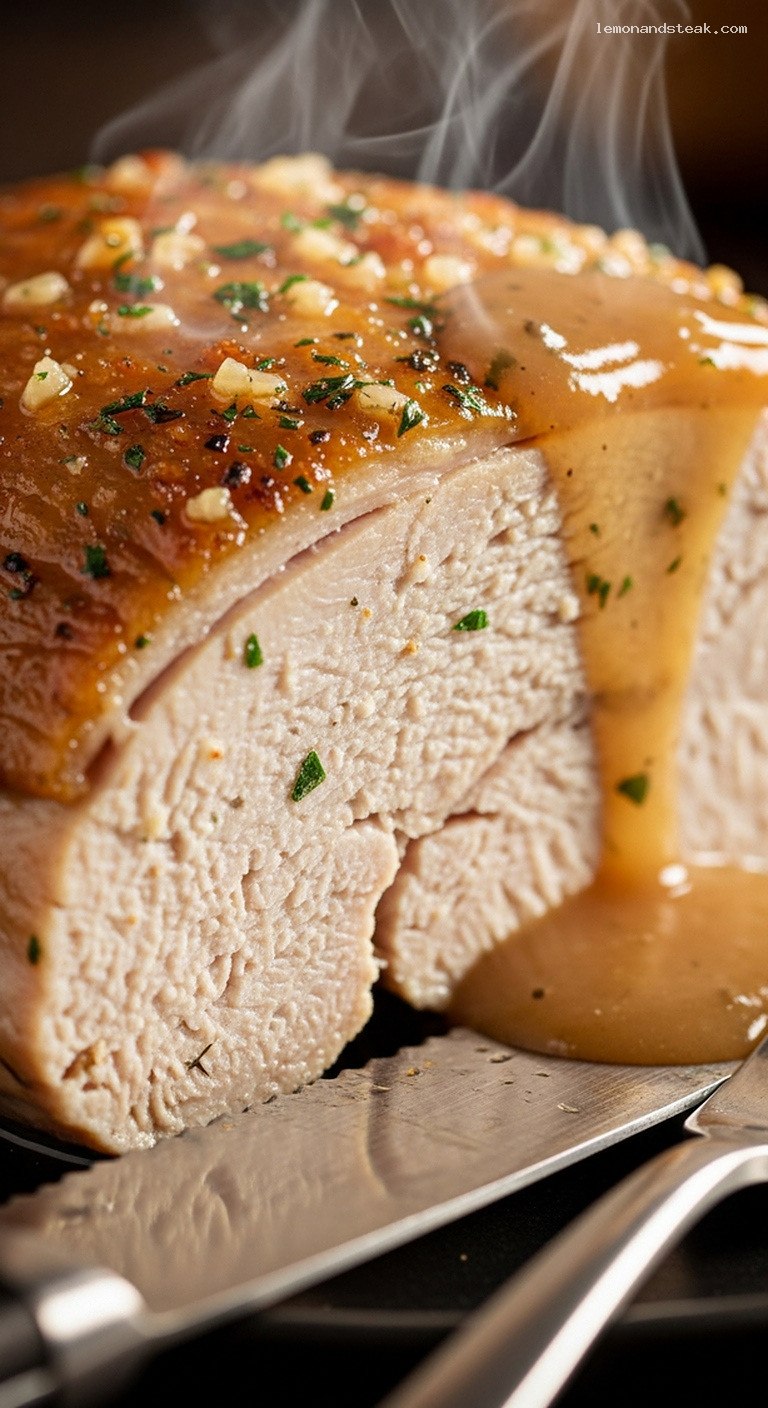
Begin checking for doneness after about 2¾ hours of total roasting time. Insert an instant-read thermometer into the thickest part of the breast (without touching bone); it should register at least 160°F (71°C). Check the thickest part of the thigh; it should read around 175°F (79°C). If one area is done before the rest, you can tent it with foil while the rest continues roasting. Once the turkey reaches temperature, carefully transfer it to a large cutting board or serving platter. Tent loosely with foil and let it rest for 30–45 minutes before carving; this rest lets the juices redistribute so the meat slices moist and tender.
Step 7: Make Simple Pan Gravy (Optional)
While the turkey rests, make use of those flavorful drippings. Place the roasting pan over two stovetop burners set to medium heat. Carefully skim off most of the clear fat from the surface; leave a few tablespoons behind for flavor. If there are any large vegetable chunks, you can mash them into the drippings for extra body, or strain them out for a smoother gravy.
For flour-based gravy: Sprinkle 3 tbsp all-purpose flour into the pan drippings and whisk constantly for 1–2 minutes until a pale golden paste forms. Gradually whisk in enough broth (usually 1½–2 cups) to reach a smooth, slightly thin consistency; it will thicken as it simmers. For cornstarch gravy: whisk together 2 tbsp cornstarch with 2–4 tbsp cold water to make a slurry, then whisk it into simmering drippings and broth, cooking a few minutes until thickened. Season with salt and pepper to taste. Keep the gravy warm over low heat until ready to serve with the carved turkey.
Pro Tips
- Dry is key for crisp skin: Take your time patting the turkey dry before adding the butter. Excess moisture on the surface will steam instead of roast.
- Soft, not melted butter: Butter that is very soft spreads easily and clings to the meat and skin; melted butter tends to slide off and pool in the pan.
- Use a thermometer, not just time: Every oven and turkey is a little different. Checking both breast and thigh temperatures is the most reliable way to avoid dry meat.
- Rest before carving: That 30–45 minute rest is non-negotiable for juicy turkey. The interior temperature will also climb a few degrees, finishing the cooking gently.
- Season the gravy well: Taste and adjust during the last minute of cooking; a small pinch of salt or black pepper can make the gravy taste restaurant-level.
Variations
- Herb-boosted version: Add 1 tbsp dried thyme or rosemary, or 2–3 tbsp finely chopped fresh herbs, to the butter rub for a more herb-forward aroma while keeping the same homestyle profile.
- Garlic lovers’ turkey: Increase the garlic to 8–10 cloves and add 1 tsp garlic powder to the butter rub for a deeper garlic flavor that still stays family-friendly.
- Citrus and parsley twist: Add the finely grated zest of 1 lemon and 1 orange to the butter mixture for a bright, fresh note that pairs beautifully with the parsley and onion flavors.
Storage & Make-Ahead
Leftover turkey should be cooled to room temperature (no more than 2 hours out of the oven) and then transferred to airtight containers. Refrigerate for up to 4 days. For longer storage, freeze slices of turkey (preferably moistened with a little gravy or broth) for up to 3 months. Reheat gently, covered, in a 300°F (150°C) oven with a splash of broth or gravy until warmed through, or reheat in a covered skillet over low heat. The gravy will thicken in the fridge; thin it with a bit of broth or water as you reheat.
To get a head start, you can mix the garlic-onion-parsley butter 1–2 days in advance and keep it in the refrigerator. Let it sit at room temperature until spreadable before using. You can also chop the carrots, celery, and onion for the pan the day before and store them in an airtight container in the fridge. If you like, you can season the turkey with salt inside and out the night before, leave it uncovered in the refrigerator, and then butter and roast it the next day for even better seasoning and skin.
Nutrition (per serving)
Approximate values for one serving (about 6 oz / 170 g roasted turkey meat with some skin and a small amount of gravy): Calories: ~400; Protein: ~50 g; Fat: ~20–24 g; Saturated fat: ~9–11 g; Carbohydrates: ~3–5 g (mostly from gravy); Fiber: 0 g; Sodium: ~650–800 mg. Actual numbers will vary depending on the size of the turkey, how much skin is eaten, and how much butter and gravy you use per serving.
Leave a Reply