
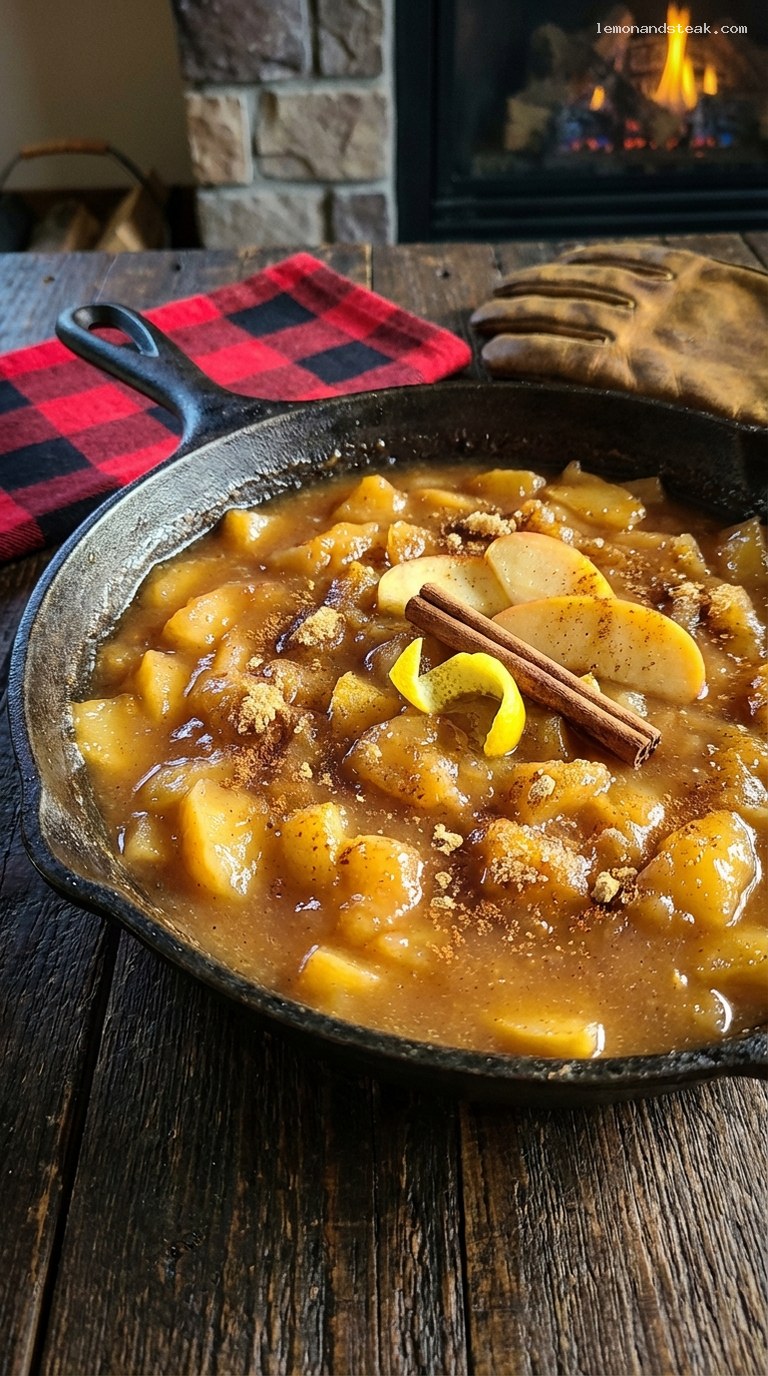
Quick Recipe Version (TL;DR)
Quick Ingredients
- 3 lb (about 6 medium) apples, peeled, cored, chopped
- 2 tbsp unsalted butter
- 1/3 cup packed brown sugar
- 1 tsp ground cinnamon
- 1/2 tsp ground ginger
- 1/8 tsp ground cloves or nutmeg (optional)
- 1/4 tsp fine salt
- 1/2 cup water or apple cider
- 1 tbsp lemon juice
- 1 tsp vanilla extract (optional)
Do This
- 1. Peel, core, and chop apples into 1/2-inch chunks.
- 2. In a large cast-iron skillet over medium heat, melt butter; stir in brown sugar, cinnamon, ginger, cloves, and salt for 1 minute.
- 3. Add apples and stir to coat. Pour in water or cider and bring to a gentle simmer.
- 4. Reduce heat to low, cover, and cook 15–20 minutes, stirring occasionally, until apples are very tender.
- 5. Uncover and simmer 5–10 minutes, stirring, until excess liquid evaporates and apples look glossy and caramel-soft.
- 6. Mash for chunky sauce or blend for smooth. Stir in lemon juice and vanilla, taste, and adjust sweetness or spice as needed.
Why You’ll Love This Recipe
- Slow-stewed in a cast-iron skillet, this ginger-spiced cabin applesauce tastes deep, cozy, and caramel-rich, like it came from a mountain lodge kitchen.
- Uses simple pantry staples and everyday apples, but the warm ginger and cinnamon make it feel special and nostalgic.
- Customizable texture: keep it chunky and rustic or blend it velvety smooth, depending on your mood and how you want to serve it.
- Makes a versatile batch that works for breakfast, dessert, snacks, and as a side dish with pork or roasted meats.
Grocery List
- Produce: 3 lb apples (mix of sweet and tart), 1 lemon (for juice, optional zest).
- Dairy: Unsalted butter (optional but recommended for richness).
- Pantry: Brown sugar, ground cinnamon, ground ginger, ground cloves or nutmeg (optional), fine salt, vanilla extract, water or apple cider.
Full Ingredients
For the Ginger-Spiced Cabin Skillet Applesauce
- 3 lb apples (about 6 medium), preferably a mix of sweet and tart (such as Honeycrisp, Gala, Fuji, and Granny Smith)
- 2 tbsp unsalted butter
- 1/3 cup packed light or dark brown sugar
- 1 tsp ground cinnamon
- 1/2 tsp ground ginger
- 1/8 tsp ground cloves or nutmeg (optional, for extra warmth)
- 1/4 tsp fine sea salt or kosher salt
- 1/2 cup water or apple cider
Finishing and Flavor Balancing
- 1 tbsp freshly squeezed lemon juice (about 1/2 small lemon)
- 1 tsp vanilla extract (optional, added at the end for aroma)
- Additional brown sugar, to taste (1–3 tbsp, if you like it sweeter)
- Additional ground ginger or cinnamon, to taste, if you want more spice
Step-by-Step Instructions
Step 1: Prep and choose your apples
Rinse and dry the apples. Peel them with a vegetable peeler, then cut each apple into quarters and remove the cores. Chop into roughly 1/2-inch pieces. Keeping the pieces fairly even helps them cook at the same rate and break down into a cohesive sauce. A mix of sweet apples (like Honeycrisp, Gala, or Fuji) and tart apples (like Granny Smith) gives the best flavor: natural sweetness plus a gentle tang so you do not need as much added sugar.
Step 2: Warm the skillet and bloom the spices
Place a large, heavy skillet (ideally 10- to 12-inch cast iron) over medium heat (about 5 out of 10 on most stoves). Add the 2 tablespoons butter and let it melt. Stir in the brown sugar, cinnamon, ginger, cloves or nutmeg (if using), and salt. Cook, stirring constantly, for 1 to 2 minutes. The mixture should look glossy and smell fragrant but not burnt. This quick “blooming” step wakes up the spices and helps the sugar begin to caramelize, building deep cabin-style flavor.
Step 3: Add apples and liquid
Add the chopped apples to the skillet. Toss well to coat every piece in the spiced brown sugar butter. Pour in the 1/2 cup water or apple cider, scraping the bottom of the pan with a wooden spoon to loosen any browned bits. Those dark, syrupy bits hold extra flavor that will melt into the applesauce as it cooks.
Step 4: Cover and slow-stew until tender
Once the liquid begins to bubble, reduce the heat to low. Cover the skillet with a lid or a piece of foil, leaving just a small vent for steam. Simmer gently for 15 to 20 minutes, stirring every 5 minutes or so, until the apples are very soft and starting to collapse. You want a gentle simmer, not a rolling boil, which is typically around 190–200°F (88–93°C). If the skillet ever looks dry or apples start to stick, splash in another tablespoon or two of water and reduce the heat slightly.
Step 5: Uncover and caramelize the apples
Remove the lid. Continue cooking the apples over low to medium-low heat for another 5 to 10 minutes, stirring frequently. The excess liquid will evaporate, and the mixture will thicken. You should see the apples looking glossy and caramel-soft, with some edges just starting to turn a deeper golden color. This step concentrates the flavor and gives the sauce that rich, slow-stewed, cabin character. If you like a looser, lighter sauce, stop when the mixture is still slightly runny; for thicker, cook until it holds a soft mound on the spoon.
Step 6: Adjust texture – chunky or smooth
Take the skillet off the heat. For a rustic, chunky applesauce, use a potato masher or the back of a sturdy spoon to mash the apples right in the pan until they reach your desired consistency. For a smoother sauce, let the mixture cool slightly, then transfer to a blender or use an immersion blender directly in the skillet. Blend until silky. If you plan to blend, you can leave the apples slightly less broken down in the previous step, since the blender will finish the job.
Step 7: Brighten, balance, and serve
Stir in the lemon juice and vanilla extract (if using). Taste the applesauce and adjust: add a pinch more salt to sharpen the flavors, another spoonful of brown sugar if you prefer it sweeter, or a pinch more ginger or cinnamon if you want extra warmth. Serve warm straight from the skillet for a cozy cabin feel, or let cool to room temperature. The applesauce will thicken a bit more as it cools. Enjoy it on its own, spooned over oatmeal or yogurt, alongside pork or roasted meats, or on top of pancakes and waffles.
Pro Tips
- Choose a mix of apples. Combining sweet and tart varieties gives natural complexity and means you can keep added sugar modest.
- Control the sweetness. Start with the listed brown sugar, then sweeten more at the end only if needed; cooled applesauce tastes slightly less sweet than when piping hot.
- Mind the heat. Keep the simmer low and gentle so the apples soften slowly without scorching. Cast iron holds heat well, so once it is hot, you may need to nudge the burner down.
- Texture is flexible. Stop mashing early for chunky, spoonable pieces of apple, or blend until smooth and silky for kids or for drizzling over pancakes.
- Make it dairy-free. Swap the butter for 2 tablespoons neutral oil or skip the fat entirely; the sauce will still be delicious, just slightly less rich.
Variations
- Extra-gingery applesauce. Add 1 teaspoon finely grated fresh ginger along with the ground spices for a brighter, spicier kick.
- Maple cabin applesauce. Replace half or all of the brown sugar with pure maple syrup. Add it toward the end of cooking so it keeps its maple aroma.
- Spiced cider applesauce. Use apple cider instead of water and add an extra pinch of cloves and nutmeg. Serve warm with a spoonful of whipped cream or vanilla yogurt as a simple dessert.
Storage & Make-Ahead
Let the applesauce cool completely, then transfer it to airtight containers or jars. Refrigerate for up to 7 days. For longer storage, freeze in freezer-safe containers or zip-top bags, leaving a little headroom for expansion; it will keep well for up to 3 months. Thaw overnight in the refrigerator, then stir and warm gently in a skillet over low heat or in the microwave, adding a splash of water if it has thickened too much. This recipe is perfect for making ahead on a quiet weekend and enjoying all week for breakfasts, snacks, and easy sides.
Nutrition (per serving)
Approximate values per serving (1 of 6, about 2/3 cup): 200 calories; 4 g fat; 3 g saturated fat (if made with butter); 0 mg cholesterol; 38 g carbohydrates; 6 g dietary fiber; 28 g total sugars; 1 g protein; 140 mg sodium. Actual values will vary based on the specific apples, amount of added sugar, and whether you include butter.
Leave a Reply