
Quick Recipe Version (TL;DR)
Quick Ingredients
- 1 (4–5 lb) fully cooked bone-in smoked ham (not spiral-sliced)
- 1 1/2 cups packed dark brown sugar, divided
- 2 large oranges (zest/peel + 3/4 cup juice + slices)
- 30–40 whole cloves
- 2 tbsp unsalted butter
- 2 tbsp Dijon or grainy mustard
- 2 tbsp apple cider vinegar
- 1 tsp kosher salt + 1/2 tsp black pepper
- 1 tsp ground cinnamon (optional)
- 1 1/2 cups liquid for the pot (apple cider, apple juice, or water)
Do This
- 1. Build a medium campfire and let it burn down to a bed of hot coals; aim for oven-like 325°F heat. Grease a 5–7 qt lidded Dutch oven.
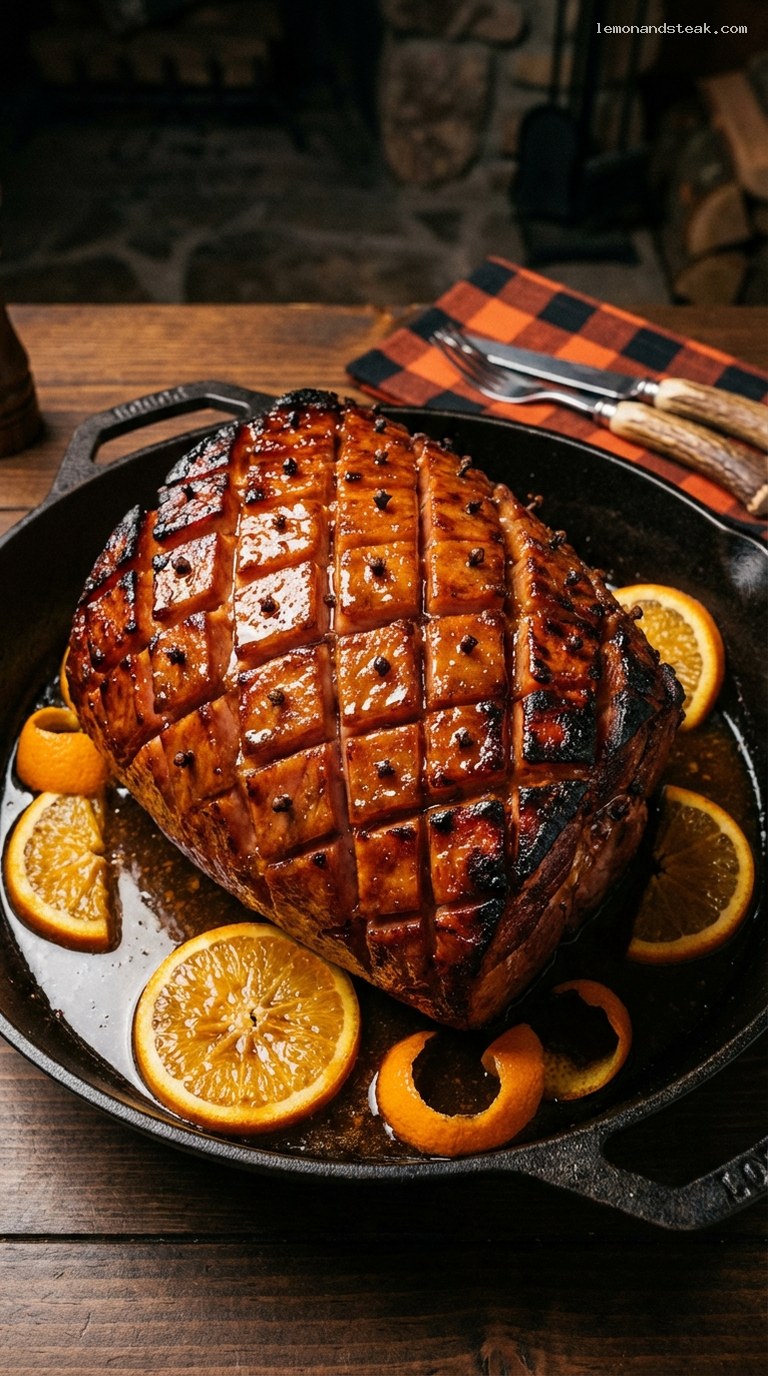
- 2. Trim excess skin, leaving a thin fat cap. Score fat in a diamond pattern (about 1/4 inch deep) and stud intersections with whole cloves.
- 3. Place ham in Dutch oven with 1 1/2 cups liquid, orange slices, and strips of orange peel. Cover.
- 4. Set Dutch oven over/near coals (or in a 325°F oven). Cook 1 1/2–2 hours, rotating pot every 20–30 minutes until ham is 120–130°F inside.
- 5. Simmer glaze: brown sugar, orange juice, butter, mustard, vinegar, salt, pepper, and cinnamon until syrupy, 6–8 minutes.
- 6. Brush ham all over with thick glaze. Cook uncovered 20–30 minutes more, basting several times until internal temp is 135–140°F and edges are caramelized.
- 7. For deeper char, move ham closer to flame or under a broiler for 3–5 minutes. Rest 15 minutes, then slice and drizzle with extra glaze.
Why You’ll Love This Recipe
- Classic sweet-and-savory flavors: smoky ham, brown sugar, cloves, and bright orange peel all slow-cooked together.
- Campfire-friendly method that also works perfectly in a regular oven at home.
- Sticky, glossy glaze that lightly chars at the edges for that irresistible caramelized crust.
- Mostly hands-off cooking, making it ideal for gatherings, holidays, and relaxed weekends at the cabin or campsite.
Grocery List
- Produce: 2 large oranges
- Dairy: Unsalted butter
- Pantry: Fully cooked bone-in smoked ham (4–5 lb), dark brown sugar, whole cloves, Dijon or grainy mustard, apple cider vinegar, ground cinnamon, kosher salt, black pepper, apple cider or apple juice (or water)
Full Ingredients
For the Ham
- 1 fully cooked bone-in smoked ham, 4–5 lb (shank or butt portion, not spiral-sliced)
- 30–40 whole cloves
- 1 cup apple cider, apple juice, or water (for the bottom of the Dutch oven)
- 1 large orange, sliced into 1/4-inch rounds
- Strips of peel from 1 orange (use a vegetable peeler to make wide, pith-free strips)
For the Brown-Sugar–Orange Glaze
- 1 1/2 cups packed dark brown sugar, divided (1/4 cup for rubbing the ham, 1 1/4 cups for the glaze)
- 3/4 cup fresh orange juice (from about 1–2 oranges)
- 2 tbsp unsalted butter
- 2 tbsp Dijon or grainy mustard
- 2 tbsp apple cider vinegar
- 1 tsp kosher salt
- 1/2 tsp freshly ground black pepper
- 1 tsp ground cinnamon (optional but delicious for a warm spice note)
For Preparing the Dutch Oven and Fire
- 5–7 quart cast iron Dutch oven with a tight-fitting lid
- Neutral oil or a bit of butter for greasing the pot
- Campfire with a solid bed of hot coals, or a grill with charcoal banked to one side
- Instant-read thermometer (highly recommended)
Optional for Serving
- Extra orange zest or thin strips of orange peel, for garnish
- Coarse salt and freshly ground black pepper, to finish
- Crusty bread, biscuits, or rolls
- Roasted potatoes or a simple green salad on the side
Step-by-Step Instructions
Step 1: Build the Campfire and Prep the Dutch Oven
If you are cooking over a campfire, start your fire 45–60 minutes before you want to cook. Let it burn down until you have a solid bed of glowing coals with only a gentle flame. You are aiming for an oven-like environment of roughly 325°F: when you hold your hand about 6 inches above the cooking grate, you should be able to keep it there for about 6–7 seconds before it feels too hot.
Lightly grease the inside and lid of a 5–7 quart cast iron Dutch oven with neutral oil or a small amount of butter. This helps prevent the sugary glaze and juices from sticking and makes cleanup easier. If you are cooking at home, preheat your oven to 325°F (165°C) and place a rack in the lower-middle position.
Step 2: Score and Stud the Ham with Cloves
Unwrap the ham and pat it dry with paper towels. If the ham has a thick layer of skin, trim most of it away, leaving about 1/4 inch of fat. This fat cap will baste the meat as it cooks and help the glaze crisp up.
Using a sharp knife, score the fat in a diamond pattern: make parallel cuts about 1 inch apart and 1/4 inch deep across the fat, then turn the ham and make another set of cuts at a diagonal to create diamonds. This gives the glaze and spices more surface area to cling to and helps render the fat.
Press whole cloves into the center of as many diamond intersections as you like, about 30–40 cloves total. They should stand up like tiny spikes. The cloves will perfume the ham and create a beautiful, old-fashioned presentation.
Rub the scored surface of the ham with 1/4 cup of the brown sugar, pressing it into the cuts and all over the exterior. Place the ham, cut-side down if possible, into the greased Dutch oven.
Step 3: Add Orange, Liquid, and Aromatics
Pour 1 cup apple cider (or apple juice or water) into the bottom of the Dutch oven around the ham. This liquid keeps the environment moist and collects flavorful drippings for basting.
Scatter the orange slices and the wide strips of orange peel around the ham and on top. As they cook, the oranges will soften and lend a bright, citrusy aroma that balances the rich, smoky meat and sweet glaze.
Cover the Dutch oven with its lid. For a campfire, you can also place a few coals on top of the lid to create a more even, oven-like heat from all sides. If you are using a home oven, simply place the covered pot in the preheated 325°F oven.
Step 4: Slow-Cook the Ham Until Almost Heated Through
For campfire cooking, set the Dutch oven over a sturdy grate above the coals or nestle it just beside the hottest part of the fire where the heat is steady but not raging. You do not want large flames licking the pot; think gentle, steady heat. Rotate the pot and the lid every 20–30 minutes so the ham cooks evenly. If you are using coals on the lid, refresh them as needed to maintain a moderate heat.
Cook the ham, covered, for about 1 1/2–2 hours, depending on its exact size. If you have a thermometer, you are aiming for an internal temperature of about 120–130°F (49–54°C) at the thickest part now; it will finish cooking after glazing. A fully cooked ham only needs to be reheated to 135–140°F, so go low and slow to keep it juicy.
If you are using an indoor oven, cook the covered ham at 325°F for the same amount of time, checking the internal temperature after 1 1/2 hours.
Step 5: Make the Brown-Sugar–Orange Glaze
While the ham is gently heating, make the glaze. In a small saucepan, combine the remaining 1 1/4 cups packed dark brown sugar, 3/4 cup orange juice, 2 tbsp unsalted butter, 2 tbsp Dijon or grainy mustard, 2 tbsp apple cider vinegar, 1 tsp kosher salt, 1/2 tsp black pepper, and 1 tsp ground cinnamon if using.
Set the saucepan over medium heat. Stir frequently as the butter melts and the sugar dissolves. Bring the mixture to a gentle simmer and cook for 6–8 minutes, stirring often, until it thickens to a glossy, syrupy consistency. It should coat the back of a spoon and slowly drip off in a thick stream. If it is still thin, simmer for another minute or two; if it gets too thick, loosen it with a splash of orange juice or water.
Remove the glaze from the heat and set aside. It will thicken slightly as it cools, which is perfect for clinging to the scored ham.
Step 6: Glaze, Baste, and Caramelize the Ham
Once the ham reaches about 120–130°F, carefully remove the lid from the Dutch oven. Use a ladle or spoon to skim off any excess fat from the cooking liquid, leaving behind the flavorful juices and softened orange slices. These juices are gold for basting.
Brush a generous layer of the warm brown-sugar–orange glaze all over the ham, making sure to work it into the scored cuts. Spoon some of the pan juices over the top as well. Leave the lid off so the glaze can concentrate and caramelize.
Return the uncovered Dutch oven to the campfire or oven. Continue cooking for another 20–30 minutes, basting every 7–10 minutes with more glaze and pan juices. Rotate the pot occasionally for even color. The glaze will darken to a deep amber and become sticky and glossy. Watch closely toward the end so the sugars do not burn.
During this stage, the ham’s internal temperature should rise to 135–140°F (57–60°C). If you reach that temperature early but want a deeper color, move the ham to slightly cooler coals and continue glazing carefully, or baste it off the heat and finish quickly over higher heat as described in the next step.
Step 7: Char the Edges, Rest, Slice, and Serve
For that irresistible campfire char, move the Dutch oven closer to the flame or remove the ham from the pot and set it on a grill grate directly over hotter coals for a brief finish. Brush with a final coat of glaze and cook for 3–5 minutes, turning as needed, just until the outer edges lightly char and the glaze bubbles and blisters in spots. Sugar burns fast, so stay right there and keep an eye on it.
If you are indoors, you can mimic this by transferring the ham to a baking pan and placing it under a preheated broiler for 3–5 minutes, rotating the pan as needed until you see some darkened, caramelized patches.
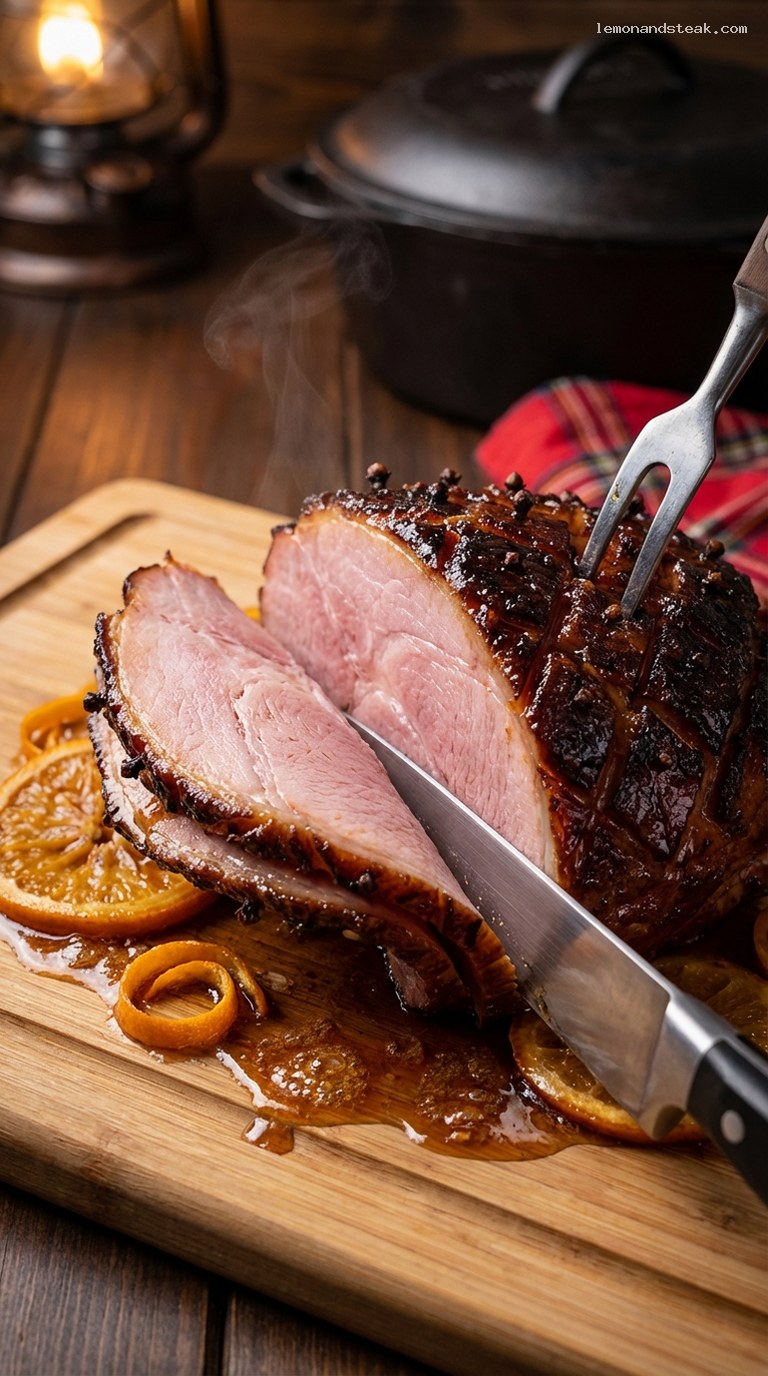
Transfer the ham to a cutting board, tent loosely with foil, and let it rest for 15 minutes. Meanwhile, simmer any remaining glaze and the pan juices together for a minute or two to thicken, then strain if desired.
To serve, slice the ham across the grain into 1/4–1/2 inch slices. Arrange the slices on a warm platter with some of the softened orange slices and orange peel. Spoon the sticky brown-sugar–orange sauce over the top, and finish with a pinch of coarse salt and a little fresh orange zest if you like. Serve hot, with extra glaze on the side.
Pro Tips
- Choose the right ham: A fully cooked, bone-in smoked ham that is not spiral-sliced works best. Spiral hams can dry out and lose too much glaze between the slices.
- Keep the fire gentle: For campfire cooking, think oven, not grill. Moderate, steady coals give you juicy meat and a gradual build-up of caramelization.
- Do not skip the rest: Resting the ham before slicing lets the juices redistribute so every slice stays moist.
- Control the char: Char adds flavor, but sugar burns quickly. Char at the very end, over higher heat and for just a few minutes, watching constantly.
- Thicken the sauce: If you like a thicker, almost syrupy sauce, simmer the glaze with the pan juices a bit longer after the ham is done until it reaches your desired consistency.
Variations
- Maple-Bourbon Campfire Ham: Replace 1/4 cup of the brown sugar with 1/4 cup real maple syrup and add 2–3 tbsp bourbon to the glaze. Simmer a little longer so the alcohol cooks off and the glaze thickens.
- Spiced Apple-Cider Ham: Swap the orange juice for apple cider and add a cinnamon stick and 2–3 whole star anise to the glaze while it simmers. Remove the whole spices before glazing the ham.
- Orange-Chile Glaze: Add 1–2 tsp red pepper flakes or a finely minced fresh chili to the glaze for a sweet-heat contrast that pairs beautifully with the smoky ham.
Storage & Make-Ahead
You can score and stud the ham, rub it with brown sugar, and arrange it in the Dutch oven with the orange slices and peel up to 1 day in advance. Cover tightly and refrigerate. Make the glaze up to 2 days ahead, cool completely, and store it in an airtight container in the refrigerator; warm gently before using so it brushes on easily.
Leftover ham will keep in an airtight container in the refrigerator for 3–4 days. For longer storage, slice the ham, divide into portions, and freeze with a little glaze or pan juice in each bag or container for up to 2 months. Reheat gently, covered, in a 300°F oven or on the cooler side of a grill or campfire until warmed through, adding a splash of water or cider if needed to keep it moist.
Nutrition (per serving)
Approximate values for 1/8 of a 4–5 lb ham, including some glaze: about 430 calories, 36 g protein, 18 g fat, 24 g carbohydrates, 21 g sugar, and 1150 mg sodium. Actual values will vary based on the exact ham, how much fat is trimmed, and how much glaze you serve with each portion.
Leave a Reply