
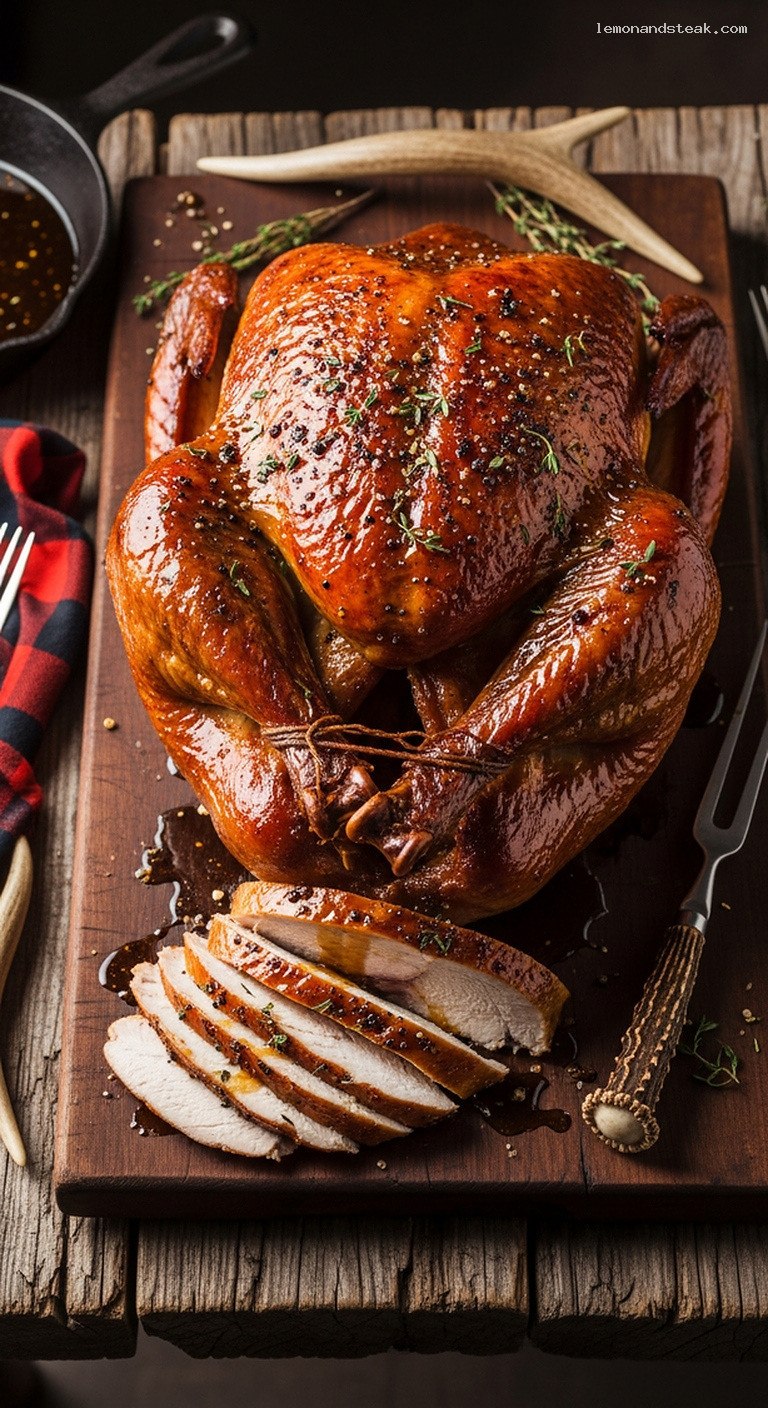
Quick Recipe Version (TL;DR)
Quick Ingredients
- 1 whole turkey, 12–14 lb, thawed
- 4 qt water + 4 cups ice
- 3/4 cup kosher salt (Diamond Crystal) or 1/2 cup Morton’s
- 1 1/2 cups packed brown sugar (divided)
- 1 onion, 1 head garlic, 2 oranges, bay leaves, peppercorns, fresh thyme
- 2 tbsp olive oil or melted butter
- 1 1/2 tsp kosher salt, 2 tsp black pepper, paprika, garlic & onion powder, dried thyme
- 1/2 cup pure maple syrup
- 2 tbsp unsalted butter
- 1 tbsp Dijon mustard, 1 tbsp apple cider vinegar, 1 tsp soy sauce or Worcestershire
- 2 cups low-sodium chicken broth, plus pan vegetables (onion, carrot, celery)
Do This
- 1) Make brine: simmer 2 qt water with salt, 1 cup brown sugar, aromatics until dissolved. Add 2 qt cold water and ice; chill completely.
- 2) Brine turkey 12–18 hours in the cold brine, fully submerged and refrigerated. Rinse briefly, pat very dry, and air-dry uncovered in the fridge 4–24 hours if time allows.
- 3) Preheat oven to 325°F (165°C). Rub turkey with oil/butter, then season lightly with salt, pepper, paprika, garlic/onion powder, and dried thyme.
- 4) Set turkey on a rack over chopped onion, carrot, celery, and 2 cups broth in a roasting pan. Roast 2 hours, basting every 30 minutes with pan juices.
- 5) Make glaze: simmer maple syrup, 1/2 cup brown sugar, butter, Dijon, vinegar, soy/Worcestershire, salt, and pepper until glossy.
- 6) Brush glaze over turkey for the last 30–45 minutes, raising oven to 400°F (200°C) for the final 10–15 minutes to caramelize. Rest 30 minutes before carving.
Why You’ll Love This Recipe
- Brown sugar brine keeps the turkey incredibly juicy and gently sweet from the inside out.
- A glossy maple glaze caramelizes on the skin for a beautiful, holiday-worthy centerpiece.
- Balanced sweet-savory flavors pair perfectly with classic sides like mashed potatoes and stuffing.
- Make-ahead elements (brine and glaze) mean less stress and more time with guests on the big day.
Grocery List
- Produce: 3 onions, 2–3 carrots, 3 celery stalks, 2–3 oranges, 2 heads garlic, fresh thyme, optional rosemary
- Dairy: Unsalted butter
- Pantry: Whole turkey (12–14 lb), kosher salt, brown sugar, pure maple syrup, black pepper, paprika, garlic powder, onion powder, dried thyme, bay leaves, whole black peppercorns, Dijon mustard, apple cider vinegar, soy sauce or Worcestershire sauce, low-sodium chicken broth, olive oil or neutral oil
Full Ingredients
Brown Sugar Brine
- 4 quarts (16 cups) water, divided
- 3/4 cup kosher salt (Diamond Crystal) or 1/2 cup Morton’s kosher salt
- 1 cup packed dark or light brown sugar
- 1 large onion, quartered
- 1 head garlic, halved crosswise
- 2 oranges, quartered
- 3 bay leaves
- 1 tablespoon whole black peppercorns
- 6–8 fresh thyme sprigs
- 4 cups ice cubes
Turkey & Dry Rub
- 1 whole turkey, 12–14 lb, fully thawed (remove giblets and neck)
- 2 tablespoons olive oil or melted unsalted butter
- 1 teaspoon kosher salt (for the skin; the meat is already seasoned from the brine)
- 2 teaspoons freshly ground black pepper
- 2 teaspoons paprika (sweet or smoked, or a mix)
- 1 teaspoon garlic powder
- 1 teaspoon onion powder
- 1 teaspoon dried thyme
Maple Glaze
- 1/2 cup pure maple syrup
- 1/2 cup packed brown sugar
- 2 tablespoons unsalted butter
- 1 tablespoon Dijon mustard
- 1 tablespoon apple cider vinegar
- 1 teaspoon soy sauce or Worcestershire sauce
- 1/2 teaspoon kosher salt
- 1/2 teaspoon freshly ground black pepper
- Pinch cayenne pepper (optional, for gentle heat)
For the Roasting Pan
- 2 cups low-sodium chicken broth
- 2 onions, peeled and quartered
- 2 carrots, cut into large chunks
- 3 celery stalks, cut into large chunks
- 1 orange, thickly sliced (optional, for extra aroma)
- 4–6 fresh thyme sprigs
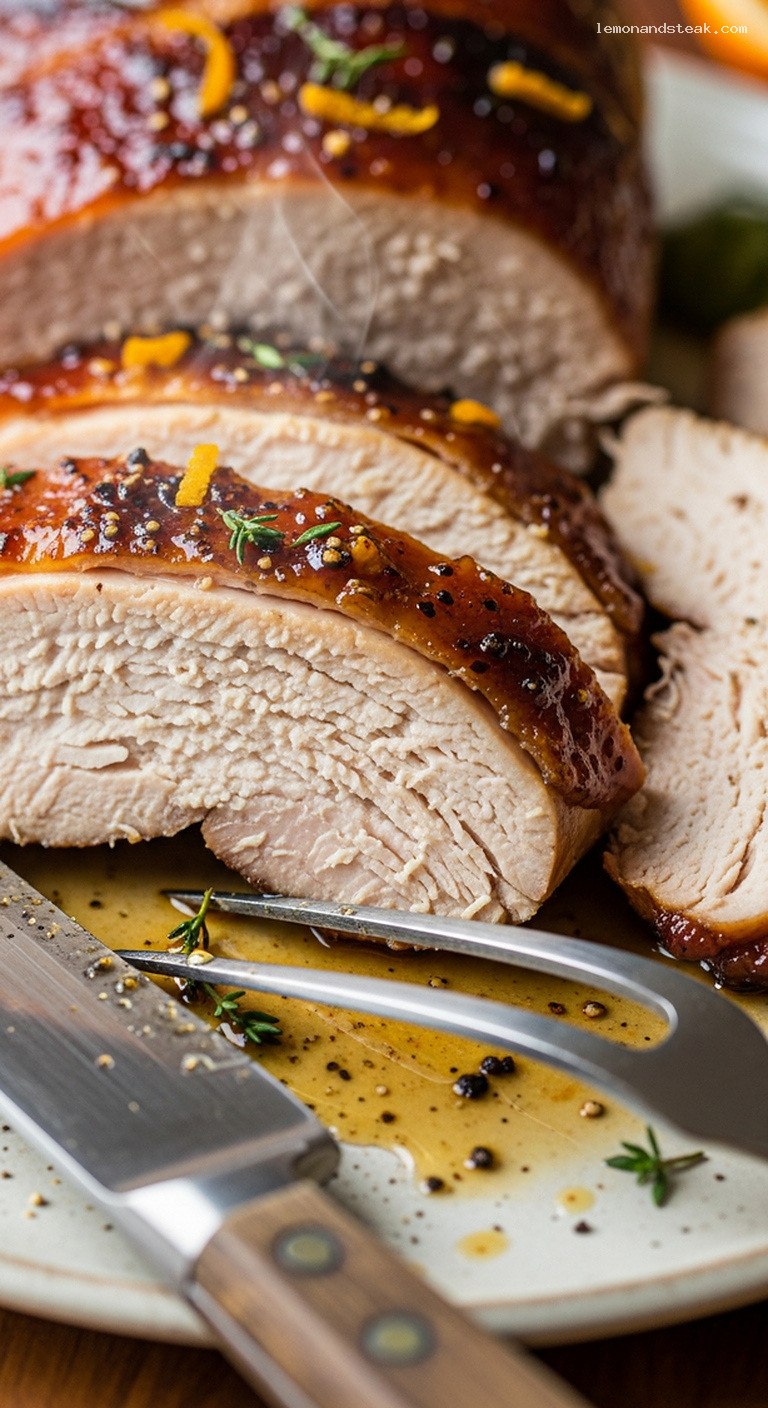
Step-by-Step Instructions
Step 1: Make the Brown Sugar Brine
In a large pot, combine 2 quarts (8 cups) of the water, the kosher salt, 1 cup brown sugar, onion, halved head of garlic, orange quarters, bay leaves, peppercorns, and thyme. Bring just to a simmer over medium heat, stirring until the salt and sugar dissolve. You do not need to boil it; you are mainly extracting flavor and dissolving the salt and sugar.
Remove the pot from the heat and add the remaining 2 quarts (8 cups) cold water and the 4 cups of ice. Stir until the ice has melted and the brine is completely cool. It is very important that the brine is fully chilled before it touches the turkey for food safety.
Step 2: Brine the Turkey
Remove the turkey from its packaging, pulling out the neck and giblet bag from the cavity. Pat the turkey lightly with paper towels to remove excess moisture.
Place the turkey breast-side down in a large food-safe bucket, brining bag, or very large stockpot. Pour the fully chilled brine over the turkey, making sure it is completely submerged. If needed, weigh it down with a plate. Cover and refrigerate for 12–18 hours.
When brining time is up, remove the turkey from the brine. Discard the brine. Rinse the turkey quickly under cool running water to remove excess salt and aromatics, then pat very dry inside and out with paper towels. For extra-crisp skin, place the turkey on a rack set over a rimmed pan and refrigerate uncovered for 4–24 hours to air-dry.
Step 3: Season the Turkey and Prepare the Roasting Pan
About 1 hour before roasting, take the turkey out of the refrigerator to take the chill off. Preheat the oven to 325°F (165°C) with a rack in the lower third position.
In a small bowl, combine the kosher salt, black pepper, paprika, garlic powder, onion powder, and dried thyme. Rub the turkey all over with the olive oil or melted butter, making sure to coat the breast, legs, thighs, and wings. Then sprinkle the seasoning mixture evenly over the entire bird, including under the wings and on the legs. Because the turkey is brined, the seasoning mix is deliberately light on salt.
In a large roasting pan, scatter the onions, carrots, celery, orange slices (if using), and thyme sprigs. Pour the chicken broth into the pan. Set a roasting rack over the vegetables and place the turkey breast-side up on the rack. Tuck the wing tips under the body to prevent burning, and tie the legs loosely together with kitchen twine.
Step 4: Start Roasting the Turkey
Transfer the roasting pan to the oven. Roast the turkey at 325°F (165°C) for about 2 hours, uncovered. Every 30–40 minutes, baste the turkey with the pan juices using a spoon or baster, focusing on the breast and legs. This helps the skin brown evenly and keeps the surface moist.
If any parts of the turkey (usually the wing tips or top of the breast) begin to brown too quickly, tent that area loosely with a small piece of foil. Do not seal the whole turkey tightly, as that will steam it and prevent browning.
Step 5: Cook the Maple Glaze
While the turkey roasts, make the glaze. In a small saucepan, combine the maple syrup, 1/2 cup brown sugar, butter, Dijon mustard, apple cider vinegar, soy sauce or Worcestershire sauce, salt, black pepper, and cayenne (if using). Place over medium heat and bring to a gentle simmer, stirring often.
Simmer for 5–7 minutes, or until slightly thickened and glossy. It should lightly coat the back of a spoon. Remove from heat and let cool; it will thicken a bit more as it cools. Set aside at room temperature. If it thickens too much to brush on later, you can gently rewarm it.
Step 6: Glaze and Finish Roasting
After the turkey has roasted for about 2 hours, begin checking the internal temperature with an instant-read thermometer. Insert the probe into the thickest part of the thigh (without touching bone). You are aiming for about 150–155°F (66–68°C) in the breast and 165–170°F (74–77°C) in the thigh before the final caramelizing step.
Once the turkey is approaching those temperatures (usually with 30–45 minutes of roasting time left), begin brushing the maple glaze generously over the skin. Continue roasting, basting with more glaze every 10–15 minutes.
For the last 10–15 minutes, increase the oven temperature to 400°F (200°C) to encourage the glaze to caramelize and darken. Watch very closely at this stage; if any spots look like they are burning rather than browning, tent them loosely with foil. The turkey is done when the breast reaches 160°F (71°C) and the thigh is 175°F (79°C).
Step 7: Rest the Turkey
Carefully transfer the turkey to a cutting board or serving platter, using sturdy spatulas or carving forks. Tent it loosely with foil and let it rest for at least 30 minutes and up to 45 minutes.
This resting period is crucial: it allows the juices to redistribute throughout the meat so the slices stay moist instead of running dry on the cutting board. While the turkey rests, you can skim and reduce the pan juices into a simple gravy if you like, or gently rewarm any leftover glaze for drizzling at the table.
Step 8: Carve and Serve
To carve, remove the legs first by cutting through the skin between the leg and breast, then following the joint to separate the thigh and drumstick. Slice the dark meat off the thighs. Next, remove the wings. Finally, carve the breast meat by cutting along one side of the breastbone and slicing the breast meat crosswise into thick, even slices.
Arrange slices of white and dark meat on a warm platter. Drizzle a little of the pan juices or reserved maple glaze over the top, and garnish with fresh thyme sprigs or a few orange slices if desired. Serve warm alongside your favorite sides for a sweet-savory, homestyle centerpiece.
Pro Tips
- Keep the brine cold: The brine must be fully chilled before adding the turkey. If it is even slightly warm, add more ice and wait. Always keep the turkey at refrigerator temperature while brining.
- Dry skin = crisp skin: Patting the turkey very dry and, ideally, air-drying it uncovered in the fridge helps the skin roast up shatteringly crisp under the maple glaze.
- Use a thermometer: Oven temperatures and turkey sizes vary. An instant-read thermometer is the most reliable way to avoid undercooked or overcooked meat.
- Rotate the pan: If your oven has hot spots, rotate the roasting pan 180 degrees halfway through cooking for more even browning.
- Do not skip the rest: That 30-minute rest is key to juicy meat and easier carving. Plan it into your meal timing.
Variations
- Maple-Chipotle Turkey: Add 1–2 teaspoons finely minced chipotle in adobo (or chipotle powder) to the maple glaze for a smoky, gently spicy kick.
- Herb-Citrus Brine: Add a handful of fresh rosemary, sage, and extra orange or lemon slices to the brine for a brighter, herbier flavor profile.
- Butter-Heavy Glaze: For an even richer finish, increase the butter in the glaze to 4 tablespoons and reduce the brown sugar by 2 tablespoons.
Storage & Make-Ahead
The brine can be made up to 3 days in advance and kept refrigerated until you are ready to use it. The maple glaze can be prepared 2–3 days ahead and stored in an airtight container in the refrigerator; gently rewarm over low heat before brushing on the turkey.
Leftover turkey will keep in an airtight container in the refrigerator for 3–4 days. For longer storage, freeze sliced meat in freezer bags (pressing out excess air) for up to 2–3 months. Reheat gently in a covered dish with a splash of broth at 300°F (150°C) until just warmed through, or warm briefly in a covered skillet on the stovetop to prevent it from drying out.
Nutrition (per serving)
Approximate values per serving (about 6 oz cooked turkey with skin and glaze): 430 calories; 50 g protein; 18 g fat; 11 g carbohydrates; 8 g sugar; 1 g fiber; 980 mg sodium. Actual values will vary based on the size of the turkey, how much skin is eaten, and how much glaze and pan juices are consumed.
Leave a Reply