
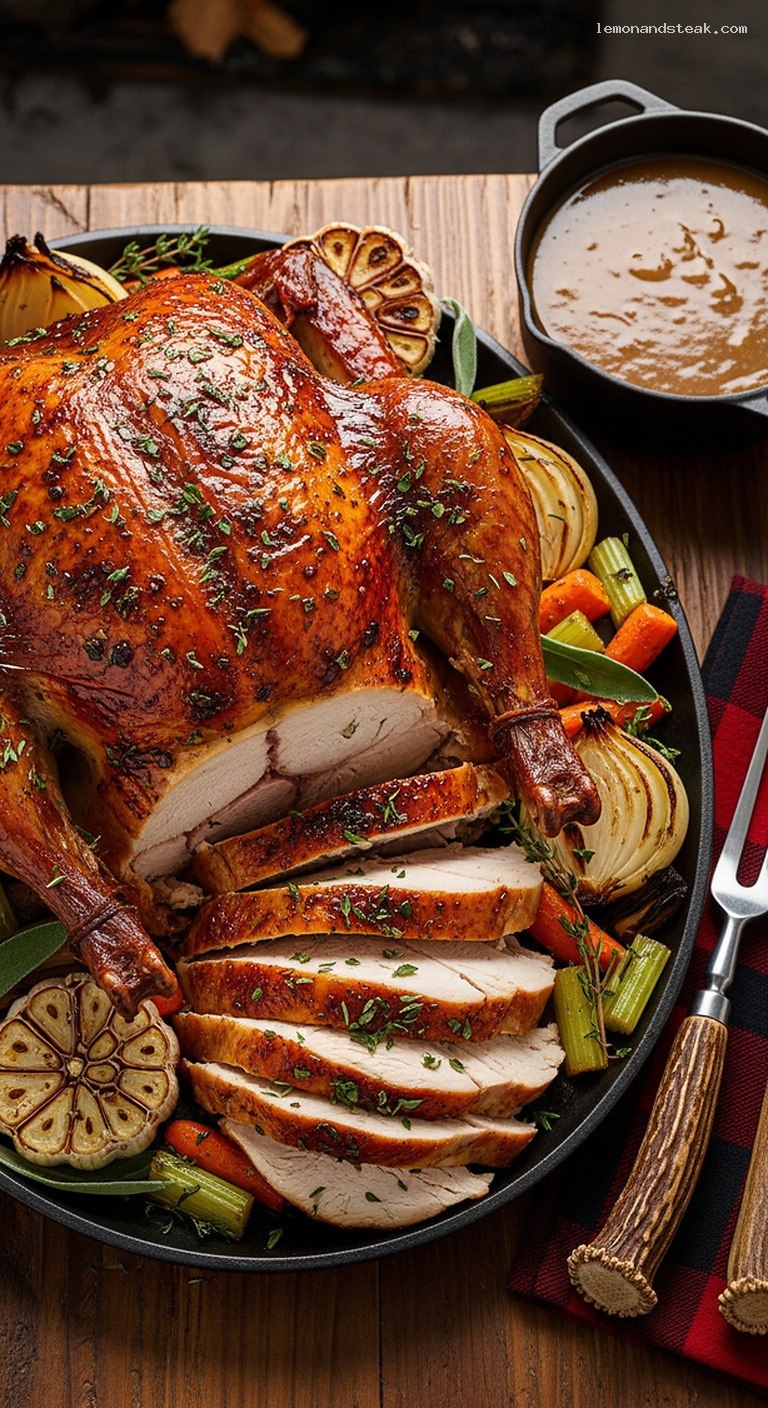
Quick Recipe Version (TL;DR)
Quick Ingredients
- 1 whole turkey (12–14 lb), thawed, giblets removed
- 1 lemon, halved
- 1/3 cup kosher salt
- 1/3 cup packed brown sugar, plus 2 tbsp for butter baste
- 4 tbsp unsalted butter, softened
- 2 tbsp olive oil
- 4 tbsp fresh sage, finely chopped (divided)
- 2 tbsp fresh thyme, chopped (or 2 tsp dried)
- 2 tsp black pepper
- 1 tsp smoked paprika
- 1/2 tsp garlic powder
- 1 large onion, 2 carrots, 2 celery stalks
- 1 head garlic, halved; 2 bay leaves
- 2 1/2–3 cups low-sodium chicken or turkey broth
- 1/4 cup all-purpose flour (for gravy, optional)
Do This
- 1. Pat dry the thawed turkey and remove giblets. Rub cavity with cut lemon.
- 2. Mix salt, 1/3 cup brown sugar, 3 tbsp sage, thyme, pepper, smoked paprika, and garlic powder. Rub all over turkey (outside, inside, and under skin). Refrigerate uncovered 12–24 hours.
- 3. Remove from fridge 1 hour before roasting. Heat oven to 325°F. Arrange onion, carrots, celery, garlic, and bay leaves in a roasting pan with 2 cups broth and place turkey on a rack over them.
- 4. Mix butter, olive oil, remaining 1 tbsp sage, and 2 tbsp brown sugar. Rub over turkey, especially breast and legs.
- 5. Roast at 325°F for 3–3 1/2 hours, basting with pan juices every 30–45 minutes, until breast reaches 160–165°F and thighs 170–175°F. Tent loosely with foil if browning too fast.
- 6. Rest turkey 20–30 minutes before carving. For quick gravy, skim fat from drippings, whisk in flour, then broth; simmer until thickened and serve with carved turkey.
Why You’ll Love This Recipe
- A cozy balance of sweetness and herbiness: brown sugar caramelizes into a gentle glaze while fresh sage keeps everything deeply savory.
- Dry-brined for juicy meat: the seasoned sugar-and-salt rub locks in moisture and seasons the turkey all the way through.
- Familiar, welcoming flavor: it tastes classic and comforting, just with a slightly more aromatic, gently sweet twist.
- Perfect for gatherings: the turkey roasts on a bed of vegetables that turn into an easy, flavorful pan gravy.
Grocery List
- Produce: 1 lemon, 1 large yellow onion, 2 carrots, 2 celery stalks, 1 head garlic, fresh sage, fresh thyme (or dried thyme), optional fresh rosemary (if you choose to add it), fresh parsley for garnish (optional).
- Dairy: Unsalted butter.
- Pantry: 1 whole turkey (12–14 lb), kosher salt, brown sugar, olive oil, black pepper, smoked paprika, garlic powder, bay leaves, low-sodium chicken or turkey broth, all-purpose flour (for gravy).
Full Ingredients
For the Turkey
- 1 whole turkey (12–14 lb), thawed if previously frozen, giblets and neck removed
- 1 lemon, halved
For the Brown Sugar & Sage Dry Rub
- 1/3 cup kosher salt (use less if using fine table salt: about 3 tbsp)
- 1/3 cup packed brown sugar (light or dark)
- 3 tbsp fresh sage, finely chopped
- 1 tbsp fresh thyme, finely chopped (or 1 tsp dried thyme)
- 1 tsp smoked paprika
- 2 tsp freshly ground black pepper
- 1/2 tsp garlic powder
- Optional: 1 tsp finely chopped fresh rosemary or 1/2 tsp dried rosemary
For the Brown Sugar Sage Butter Baste
- 4 tbsp unsalted butter, very soft or lightly melted
- 2 tbsp olive oil
- 2 tbsp packed brown sugar
- 1 tbsp fresh sage, finely chopped
For the Roasting Pan & Optional Gravy
- 1 large yellow onion, peeled and cut into thick wedges
- 2 carrots, cut into large chunks
- 2 celery stalks, cut into large chunks
- 1 head garlic, halved horizontally (no need to peel)
- 2 bay leaves
- 2 1/2–3 cups low-sodium chicken or turkey broth, divided
- 1/4 cup all-purpose flour (for gravy)
- Salt and pepper to taste (for final seasoning of gravy)
Step-by-Step Instructions
Step 1: Thaw and Prep the Turkey
If your turkey is frozen, thaw it in the refrigerator, allowing about 24 hours per 4–5 pounds. For a 12–14 lb bird, plan on 3–4 days of fridge time. Once thawed, remove the turkey from its packaging in a clean sink. Pull out the neck and giblet packet from the cavity (check both ends) and save them for stock or gravy if you like.
Pat the turkey very dry with paper towels inside and out; dry skin is key to getting lovely browning. Place the turkey breast-side up on a rimmed baking sheet or in a roasting pan. Rub the cavity with the cut sides of the lemon to lightly season and freshen it, then tuck the lemon halves inside the cavity for extra aroma.
Step 2: Make the Brown Sugar & Sage Dry Rub
In a medium bowl, combine the kosher salt, 1/3 cup brown sugar, chopped sage, thyme, smoked paprika, black pepper, garlic powder, and optional rosemary. Stir with a fork until everything is evenly combined and no large clumps of sugar remain. This mixture will act as a dry brine, both seasoning the meat deeply and helping it stay juicy.
Sprinkle a little of the rub inside the cavity and spread it around with your hand. Then use your fingers to gently loosen the skin over the breast and upper thighs, being careful not to tear it. Rub some of the mixture directly onto the meat under the skin. Finally, rub the remaining mixture all over the outside of the turkey, including legs and wings, pressing it on so it adheres.
Step 3: Dry Brine the Turkey (12–24 Hours)
Once the turkey is coated with the brown sugar and sage rub, place it breast-side up on a rack set over a rimmed sheet pan (or leave it in a roasting pan if it fits in your fridge). Refrigerate it uncovered for at least 12 hours and up to 24 hours. During this time, the salt and sugar will first draw out some moisture, then the turkey will reabsorb that seasoned liquid, resulting in well-seasoned, tender meat.
Dry brining uncovered also lets the skin dry out slightly, which promotes even browning in the oven. If you need to loosely tent with foil for space reasons, you can, but leaving it uncovered is ideal. Do not rinse the turkey after brining; any moisture you add back will work against crispy skin.
Step 4: Bring to Room Temperature and Prep the Roasting Pan
About 1 hour before you plan to roast, remove the turkey from the refrigerator so it can take the chill off. This helps it cook more evenly. Preheat your oven to 325°F with a rack in the lower third to make room for the turkey.
Scatter the onion wedges, carrot pieces, celery chunks, halved garlic head, and bay leaves in the bottom of a large roasting pan. Pour in 2 cups of the chicken or turkey broth. Set a roasting rack over the vegetables and place the turkey breast-side up on the rack. Tuck the wing tips behind the back to prevent burning. If you like, loosely tie the legs together with kitchen twine for a neater presentation, but it is not strictly necessary.
Step 5: Add the Brown Sugar Sage Butter and Roast
In a small bowl, stir together the softened butter, olive oil, 2 tablespoons brown sugar, and 1 tablespoon chopped sage until smooth. Using clean hands or a pastry brush, spread this mixture all over the turkey, focusing especially on the breast and drumsticks where you want a deep golden brown color. The butter helps with browning and richness; the extra brown sugar adds a gentle caramelized glaze; the sage reinforces that cozy herbal aroma.
Place the prepared turkey in the preheated 325°F oven. Roast for about 3 to 3 1/2 hours, basting every 30–45 minutes with the pan juices. To baste, carefully tilt the pan so juices pool on one side, then spoon them over the breast and legs. If the breast or tips of the wings begin to brown too quickly, tent them loosely with a piece of foil and continue roasting.
Begin checking for doneness around the 2 hour 45 minute mark. Insert an instant-read thermometer into the thickest part of the breast (not touching bone); it should read 160–165°F. Check the thickest part of the thigh; it should read about 170–175°F. The turkey will continue to rise a few degrees as it rests.
Step 6: Rest the Turkey and Separate the Drippings
When the turkey reaches the proper internal temperature, carefully transfer it to a large cutting board or platter. Tent it loosely with foil and let it rest for at least 20–30 minutes. Resting allows the juices to redistribute so they stay in the meat instead of running onto the board when you carve.
Meanwhile, carefully pour the contents of the roasting pan through a fine-mesh strainer into a heatproof bowl or fat separator, pressing on the vegetables to extract as much flavor as possible. Discard the solids. Let the liquid stand for a few minutes so the fat rises to the top. Skim off several tablespoons of fat and reserve it for making gravy, or use the fat separator according to its instructions.
Step 7: Make a Simple Pan Gravy (Optional but Recommended)
In a medium saucepan over medium heat, add 4 tablespoons of the skimmed turkey fat (or a mix of fat and butter if needed). Whisk in the 1/4 cup all-purpose flour and cook, stirring constantly, for 2–3 minutes to form a light golden roux. Slowly pour in about 2 cups of the strained pan juices and any resting juices from the cutting board, whisking constantly to avoid lumps.
Bring the mixture to a gentle simmer and cook for 5–10 minutes, stirring occasionally, until the gravy thickens to your liking. If it is too thick, whisk in a bit more broth; if too thin, simmer a bit longer. Taste and season with salt and pepper as needed (remember the drippings are somewhat salty, so season cautiously). Keep the gravy warm over low heat while you carve the turkey.
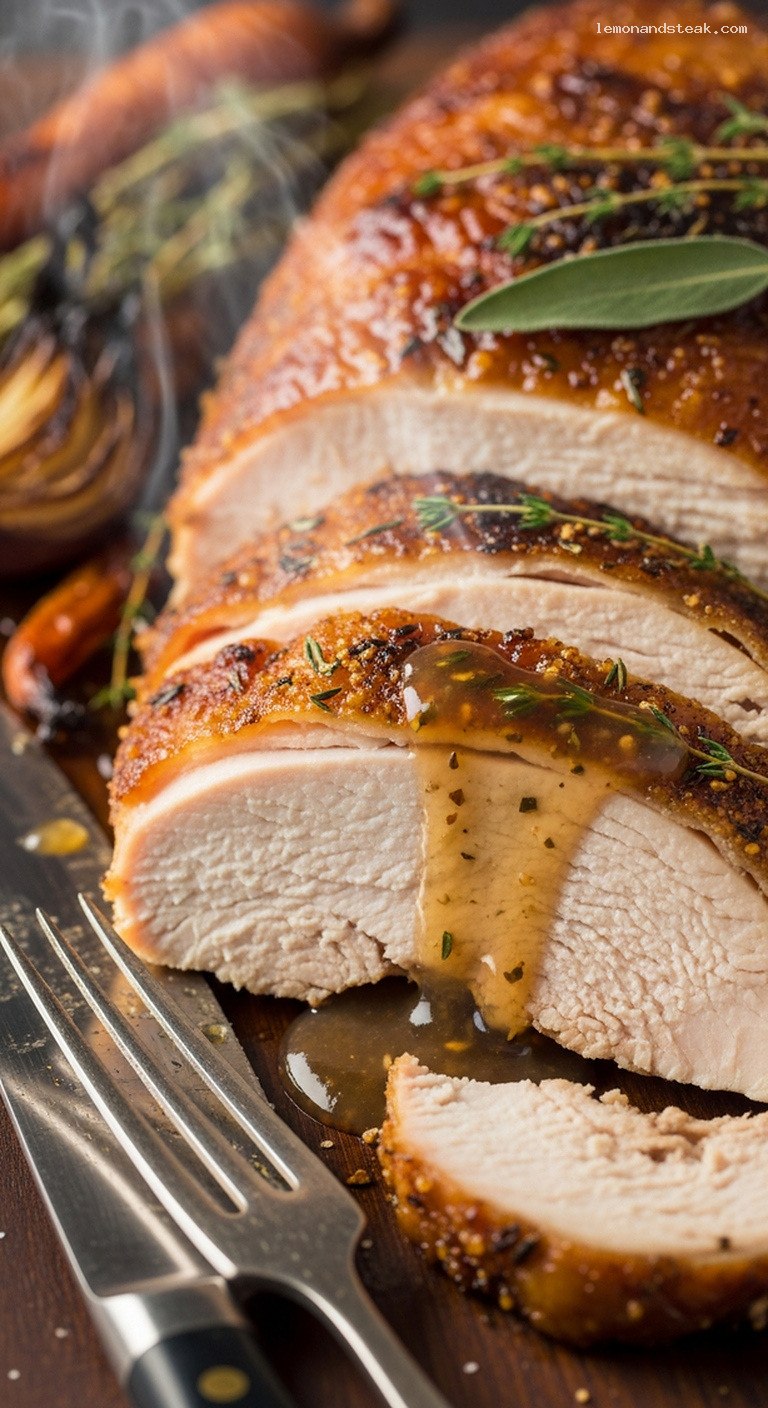
Carve the rested turkey by removing the legs and thighs first, then the wings, then slicing the breast meat against the grain into thick, juicy slices. Arrange the meat on a warm platter, spoon a little gravy over the top for shine and moisture, and serve the remaining gravy on the side.
Pro Tips
- Watch the browning: Sugar helps the skin caramelize, but you do not want it to scorch. If the skin is the color you like before the turkey is done, tent with foil and continue roasting until it reaches temperature.
- Use a thermometer: Every oven and turkey is different. An instant-read thermometer is the most reliable way to get juicy meat without guessing.
- Do not skip the rest: That 20–30 minute resting window is when the turkey finishes cooking gently and the juices settle back into the meat.
- Dry brine ahead: If you can, go the full 24 hours with the dry brine. The flavor and juiciness payoff is noticeable.
- Save the carcass: The bones and any leftover roasted vegetables make an excellent base for turkey stock or soup the next day.
Variations
- Maple accent: Replace 1 tablespoon of the brown sugar in the butter baste with 1 tablespoon of pure maple syrup. Brush a thin layer on during the last 30 minutes of roasting for a maple-sage finish.
- Citrus and sage turkey: Add the zest of 1 orange or lemon to the dry rub and stuff the cavity with additional citrus halves along with the lemon for a brighter, more aromatic profile that still balances the sweetness.
- Herb-forward, less sweet: Reduce the brown sugar in the dry rub to 1/4 cup and omit the 2 tablespoons in the butter baste, increasing the fresh sage to 5 tablespoons total for a more purely savory, herb-driven turkey.
Storage & Make-Ahead
Refrigerate leftover turkey in airtight containers within 2 hours of serving. Sliced turkey keeps well for 3–4 days in the refrigerator. For longer storage, freeze slices in a freezer bag or container (press out extra air) for up to 2–3 months; thaw overnight in the fridge before reheating.
You can fully complete the dry brine 1 day in advance and keep the turkey uncovered in the refrigerator until roasting time. The gravy can also be made up to 2 days ahead: cool completely, refrigerate, then reheat gently on the stove, thinning with a bit of broth as needed.
To reheat turkey without drying it out, place slices in a baking dish with a splash of broth or gravy, cover tightly with foil, and warm at 300°F until heated through, usually 20–25 minutes.
Nutrition (per serving)
Approximate values for one serving (about 6 ounces of cooked turkey with some skin and a few tablespoons of gravy): about 480 calories, 50 g protein, 22 g fat, 16 g carbohydrates, 2 g fiber, 10 g sugar, and 850–950 mg sodium. Actual nutrition will vary based on the exact size of the turkey, how much skin is eaten, and how much gravy is used.
Leave a Reply