
Quick Recipe Version (TL;DR)
Quick Ingredients
- 1 whole turkey (12–14 lb), thawed
- 3 tbsp kosher salt (Diamond Crystal; use 2 tbsp if Morton’s)
- 1 1/2 tsp black pepper, divided
- 2 tsp brown sugar (optional)
- 1 tsp each garlic powder, onion powder, smoked paprika (optional)
- 1 cup (2 sticks) unsalted butter
- 10–12 sprigs fresh rosemary, divided
- 1 head garlic, plus 6 extra cloves
- 1 large onion, 2 carrots, 2 celery stalks
- 1 lemon (zest and wedges)
- 3–4 cups low‑sodium chicken or turkey stock
- 1/4 cup all‑purpose flour (for gravy, optional)
Do This
- 1. Dry-brine turkey: Pat dry. Mix salt, brown sugar, pepper, garlic powder, onion powder, and paprika. Rub all over turkey (and under skin if possible). Chill uncovered 12–24 hours.
- 2. Make brown-butter rosemary baste: Brown butter in a saucepan until deep golden and nutty. Add rosemary sprigs, smashed garlic cloves, lemon zest, salt, and pepper. Keep warm.
- 3. Prep for roasting: Let turkey sit at room temp 45–60 minutes. Stuff cavity with onion, garlic, lemon, rosemary. Place on rack in roasting pan over carrots and celery. Add 2 cups stock to pan.
- 4. Start roasting: Roast at 425°F (220°C) for 30 minutes to brown the skin, basting once with brown butter.
- 5. Lower heat and baste: Reduce oven to 325°F (165°C). Roast 2–2 1/2 more hours, basting with warm brown butter every 20–30 minutes and adding stock as needed, until breast is 160–165°F and thighs about 175°F.
- 6. Rest and make gravy: Rest turkey 30–45 minutes, loosely tented. Make pan gravy with drippings, flour, and extra stock. Carve and serve with warm brown-butter rosemary juices.
Why You’ll Love This Recipe
- Brown butter and fresh rosemary give the turkey a deep, nutty, aromatic flavor that tastes like an old-fashioned holiday in the best way.
- Dry brining keeps the meat juicy and seasoned all the way through without the hassle of a wet brine.
- Simple, repeatable steps and clear times make this approachable for home cooks, even on a busy holiday.
- You get both impressive, burnished turkey and a rich, savory gravy from the same pan.
Grocery List
- Produce: 1 whole head garlic, 6 extra garlic cloves, 1 large yellow onion, 2 carrots, 2 celery stalks, 1 lemon, fresh rosemary (1 large bunch), optional fresh thyme.
- Dairy: 1 cup (2 sticks / 226 g) unsalted butter.
- Pantry: 1 whole turkey (12–14 lb), kosher salt, brown sugar, black pepper, garlic powder, onion powder, smoked paprika (optional), low‑sodium chicken or turkey stock, all‑purpose flour, optional Worcestershire sauce.
Full Ingredients
For the Dry-Brined Turkey
- 1 whole turkey, 12–14 lb, fully thawed, neck and giblets removed
- 3 tbsp kosher salt (Diamond Crystal; if using Morton’s, use about 2 tbsp)
- 2 tsp brown sugar (optional, for deeper browning)
- 1 tsp garlic powder
- 1 tsp onion powder
- 1 tsp smoked paprika (optional, for gentle smokiness and color)
- 1 tsp freshly ground black pepper
For the Brown-Butter Rosemary Baste
- 1 cup (2 sticks / 226 g) unsalted butter
- 6–8 fresh rosemary sprigs
- 6 garlic cloves, lightly smashed (skins on are fine)
- 1 tsp finely grated lemon zest (from about 1/2 lemon)
- 1 tsp kosher salt
- 1/2 tsp freshly ground black pepper
For Roasting the Turkey
- 1 large yellow onion, quartered (leave skin on for more color, if you like)
- 1 head garlic, halved horizontally
- 1 lemon, quartered
- 4–6 fresh rosemary sprigs
- 4 fresh thyme sprigs (optional)
- 2 carrots, cut into 2-inch chunks
- 2 celery stalks, cut into 2-inch chunks
- 3–4 cups low-sodium chicken or turkey stock, divided (2 cups for the pan, more as needed for basting and gravy)
- Freshly ground black pepper, for finishing
- Kitchen twine, for tying legs (optional but helpful)
For the Pan Gravy (Optional but Recommended)
- Pan drippings and browned bits from roasting pan (including some of the brown-butter juices)
- 1/4 cup all-purpose flour
- 2–3 cups low-sodium chicken or turkey stock (use remaining from above)
- Salt and freshly ground black pepper, to taste
- 1–2 tsp Worcestershire sauce (optional, for depth)
- Extra chopped fresh rosemary or thyme (optional, for finishing)
Step-by-Step Instructions
Step 1: Dry-brine the turkey for deeper flavor
Make sure your turkey is fully thawed (this can take several days in the fridge for a large bird). Remove the neck and giblets from the cavity and pat the turkey very dry with paper towels, inside and out. In a small bowl, mix the kosher salt, brown sugar (if using), garlic powder, onion powder, smoked paprika, and black pepper. Sprinkle this mixture evenly all over the turkey: over the breast, legs, thighs, and back. Gently loosen the skin over the breast with your fingers and rub a bit of the seasoning directly onto the meat under the skin if you can.
Place the turkey on a rimmed baking sheet or in a roasting pan fitted with a rack, breast side up. Refrigerate uncovered for at least 12 hours and up to 24 hours. This dry brining time lets the salt work its way into the meat, seasoning it thoroughly and helping it stay juicy while roasting.
Step 2: Brown the butter with rosemary and garlic
About 1 hour before you plan to roast, make the brown-butter rosemary baste. In a medium saucepan, add the butter and set over medium heat. Let it melt, then continue cooking, swirling the pan occasionally, until the butter foams and the milk solids at the bottom turn deep golden brown and smell toasty and nutty, 5–8 minutes. Watch closely so it does not burn.
Once nicely browned, remove from the heat. Stir in the rosemary sprigs, smashed garlic cloves, lemon zest, kosher salt, and black pepper. The butter will sizzle around the herbs and garlic. Let this sit and infuse while you prep the turkey; the flavors will bloom as it rests. Just before using, gently rewarm over low heat if it has thickened.
Step 3: Prep the turkey and aromatics for roasting
Take the dry-brined turkey out of the refrigerator and let it sit at room temperature for 45–60 minutes; this helps it cook more evenly. Meanwhile, preheat your oven to 425°F (220°C), with a rack in the lower third of the oven.
In the bottom of a large roasting pan, scatter the carrot and celery chunks. Pour in 2 cups of stock. Place a roasting rack over the vegetables. Stuff the turkey cavity loosely with the quartered onion, halved head of garlic, lemon wedges, and several sprigs of rosemary and thyme. Do not pack it too tightly; you want hot air to circulate.
Tuck the wing tips under the bird to prevent burning. If desired, tie the legs together loosely with kitchen twine for a tidy shape. Place the turkey breast side up on the rack. Give the brown butter a stir and spoon or brush a light layer over the entire surface of the turkey, reserving most of it for basting during roasting.
Step 4: Start hot to brown the skin
Transfer the turkey to the 425°F (220°C) oven. Roast for 30 minutes to set the skin and start building a deep golden color. After the first 15–20 minutes, quickly open the oven and spoon or brush some of the brown butter mixture over the breast, legs, and thighs. Work quickly to avoid letting too much heat escape.
At the 30-minute mark, check that the skin is taking on a nice golden tint but not getting too dark. If any area is browning much faster than the rest, you can lightly tent that part with a small piece of foil later during the longer roast.
Step 5: Lower the temperature and baste until juicy and tender
Reduce the oven temperature to 325°F (165°C). Continue roasting the turkey, basting every 20–30 minutes with the warm brown-butter rosemary mixture and some of the pan juices. To baste, tilt the pan slightly, spoon up the buttery juices, and drizzle them generously over the breast and legs. Add more stock to the pan, 1/2 cup at a time, if the bottom starts to look dry or the vegetables threaten to burn.
Total roasting time will be about 3–3 1/2 hours for a 12–14 lb turkey, including the initial high-heat phase, but this can vary with your oven and the exact size of the bird. Begin checking the internal temperature after about 2 1/2 hours of total cook time. Insert an instant-read thermometer into the thickest part of the breast (without touching the bone); you are aiming for 160–165°F (71–74°C), and around 175°F (80°C) in the thigh. If the skin is browning too quickly at any point, tent loosely with foil while it finishes roasting.
Step 6: Rest the turkey for juicy slices
When the turkey reaches the target temperatures, carefully remove the roasting pan from the oven. Transfer the turkey to a cutting board or platter, reserving the pan and its contents for gravy. Loosely tent the turkey with foil and let it rest for at least 30 minutes and up to 45 minutes.
This rest is crucial: it allows the juices to redistribute throughout the meat so they stay in the turkey instead of running all over the cutting board. During this time, the internal temperature will continue to rise a few degrees, bringing the breast meat safely to at least 165°F (74°C). While the turkey rests, you can make the gravy and finish any side dishes.
Step 7: Make rich brown-butter rosemary pan gravy and carve
Pour the pan drippings and vegetables into a heatproof measuring cup or bowl. Let the fat rise to the top, then skim off and discard most of the fat, leaving a few tablespoons for flavor. If you prefer, briefly strain out the vegetables and any large herb stems, pressing them to extract extra flavor before discarding.
Set the roasting pan on the stove over medium heat (use two burners if needed). Add about 3 tbsp of the skimmed fat back to the pan. Sprinkle in the flour and whisk, scraping up any browned bits. Cook this roux for 2–3 minutes until lightly golden and fragrant. Slowly whisk in 2 cups of stock plus the remaining defatted drippings, whisking constantly to prevent lumps. Bring to a gentle simmer and cook 5–10 minutes, until thickened to your liking. If it is too thick, splash in more stock; if too thin, simmer a few minutes longer. Season with salt, pepper, and Worcestershire sauce (if using). Stir in a pinch of chopped fresh rosemary or thyme, if you like.
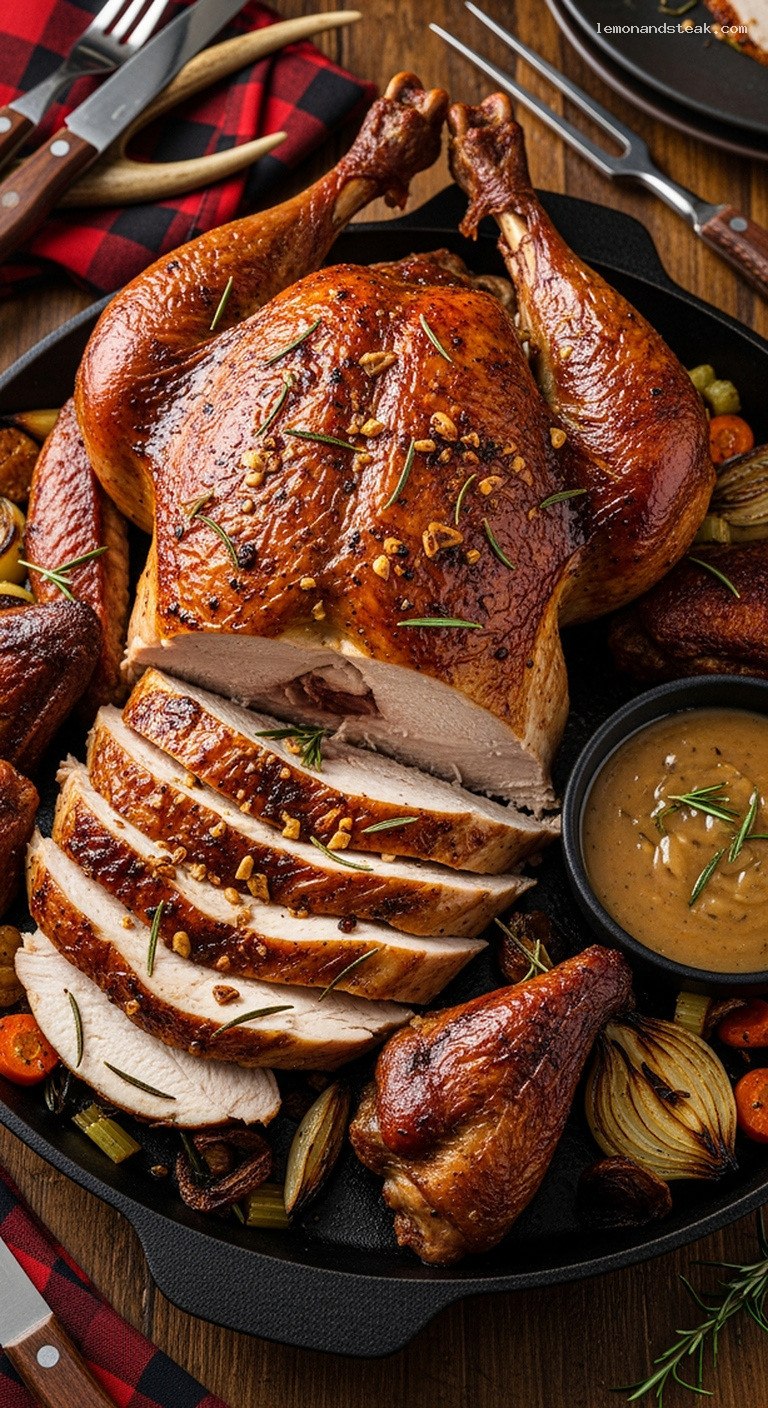
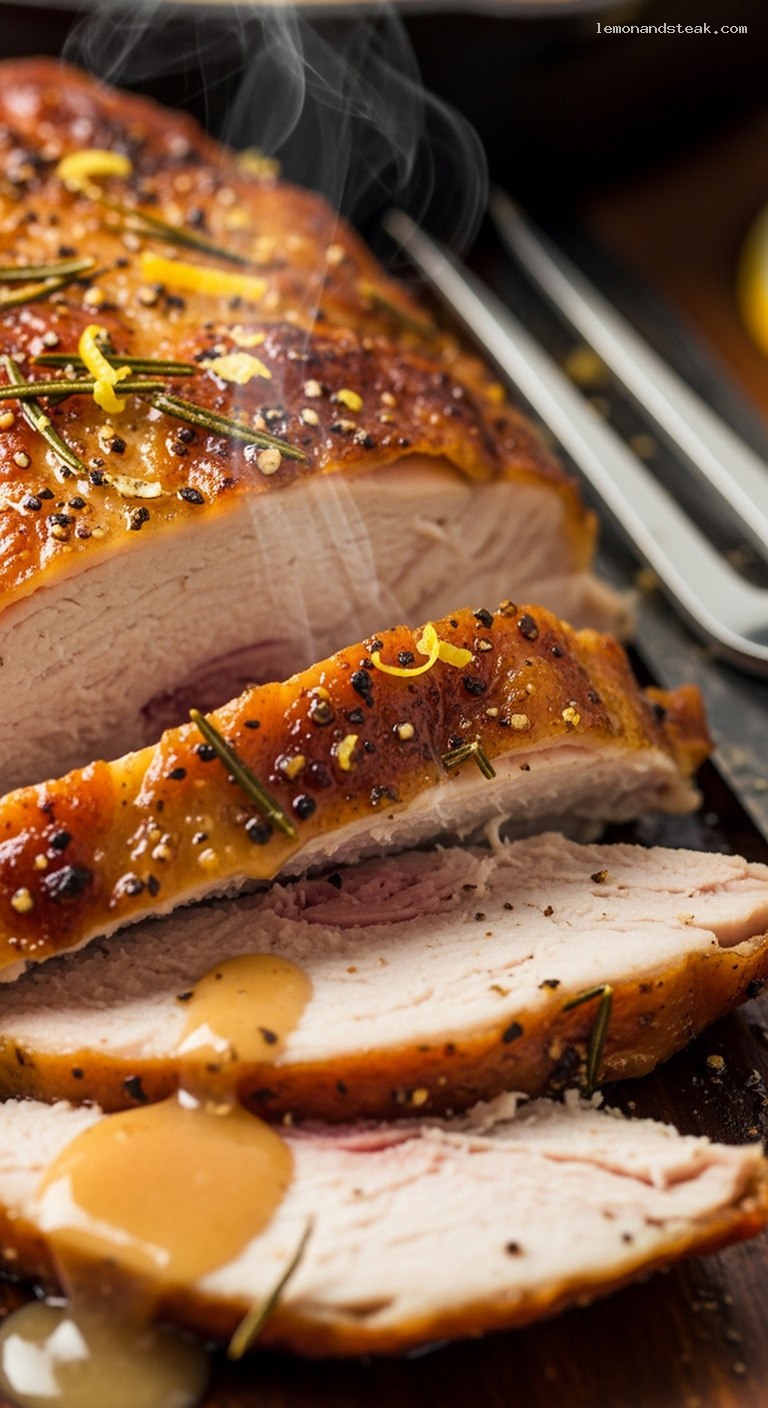
To carve, remove the legs and thighs, then the wings, and finally slice the breast meat across the grain into thick, even slices. Arrange on a warm platter, spoon a little of the brown-butter rosemary gravy over the top, and garnish with a few fresh rosemary sprigs. Serve the remaining gravy at the table.
Pro Tips
- Give the dry brine time to work. A full 12–24 hours in the fridge (uncovered) not only seasons the meat but also dries the skin so it roasts up extra crisp and bronzed.
- Watch your brown butter carefully. Butter can go from perfectly nutty to burnt quickly. Once it smells like toasted nuts and the solids are deep golden, pull it off the heat.
- Use a thermometer, not just the clock. Ovens vary, and turkey sizes do too. An instant-read thermometer is the best way to avoid dry breast meat or undercooked thighs.
- Keep the pan moistened. Adding a little stock when the pan looks dry protects the drippings from burning and gives you a flavorful base for gravy.
- Do not skip the rest. Even if you are running late, give the turkey at least 30 minutes to rest. You can keep it warm by tenting loosely with foil while you finish sides.
Variations
- Citrus and herb twist: Add orange zest to the brown butter along with the lemon, and tuck a few orange slices in the cavity for a brighter, fruitier aroma.
- Garlic-sage version: Swap half the rosemary for fresh sage leaves in the brown butter, and add a teaspoon of Dijon mustard to the pan gravy for a subtle, savory tang.
- Spatchcocked turkey: Ask your butcher to remove the backbone so the turkey lies flat. Roast at 400°F (205°C) for faster, more even cooking, still basting with brown-butter rosemary; start checking internal temperature around 1 1/2 hours.
Storage & Make-Ahead
You can dry-brine the turkey 24–48 hours in advance; just leave it uncovered in the fridge on a rack set over a pan. The brown-butter rosemary baste can be made up to 3 days ahead: store it in an airtight container in the refrigerator, then gently rewarm over low heat before roasting. After serving, cool leftover turkey within 2 hours. Store carved meat in shallow containers, moistened with a little gravy or stock, for up to 3–4 days in the refrigerator. For longer storage, freeze in airtight containers or heavy-duty freezer bags for up to 2–3 months. Reheat gently, covered, in a 300°F (150°C) oven or in a skillet with a splash of stock, just until warmed through, to keep the meat from drying out. Gravy will keep 3–4 days in the fridge or up to 3 months in the freezer; thin with stock when reheating if needed.
Nutrition (per serving)
Approximate values for one serving (about 6 oz roasted turkey with skin plus a generous spoonful of gravy): 480 calories; 30 g protein; 34 g fat; 9 g saturated fat; 4 g carbohydrates; 0 g fiber; 1 g sugar; 980 mg sodium. Actual values will vary based on the exact size of the turkey, how much skin and gravy are served, and the specific stock and salt used.
Leave a Reply